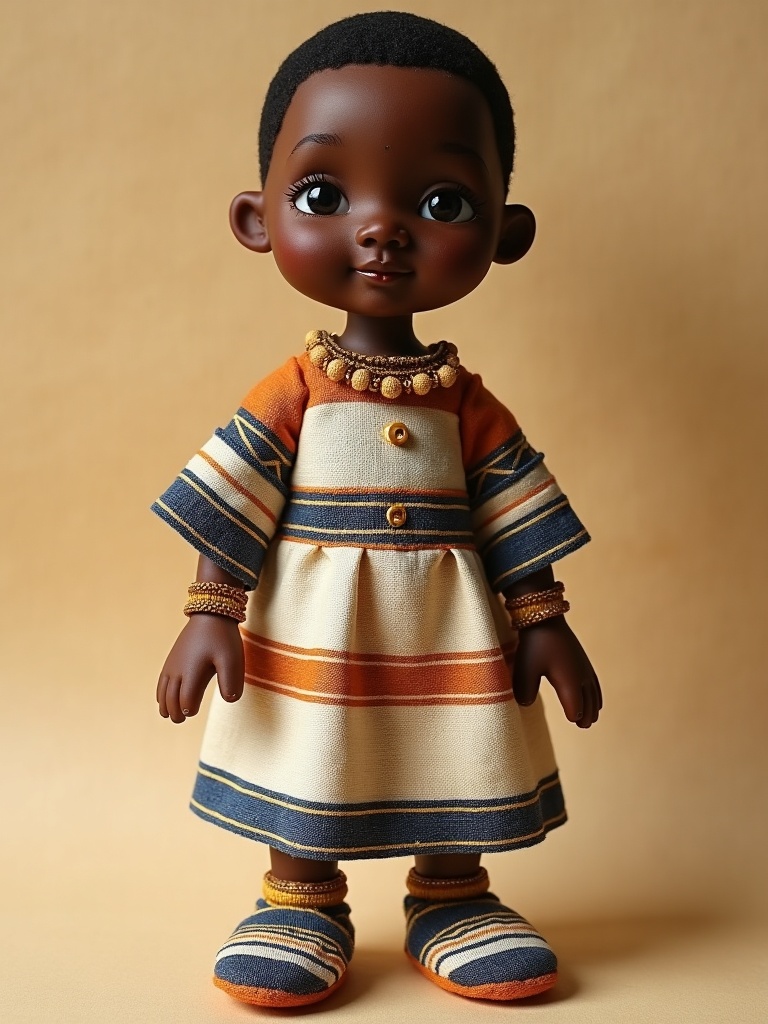
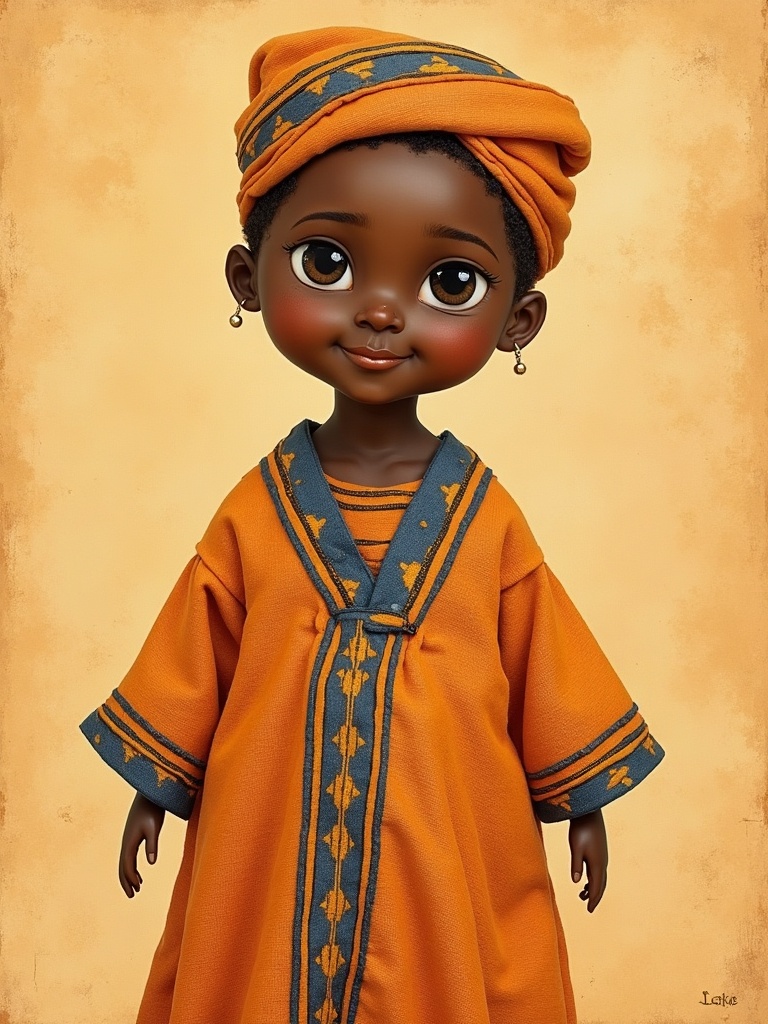
AI design preview — not a photo of the finished handmade doll
Integrity & Self-Reliance
Thomas Sankara
He renamed his country "the land of upright people" — and then spent four short years trying to make the name true.
- People
- Mossi
- Country
- Burkina Faso
- Region
- West Africa
- Era
- 1949–1987
- Theme
- Integrity & Self-Reliance
⚖ A respectful concept
Real person. Consent of the family (Mariam Sankara) & Burkinabè authorities is mandatory. Only documented quotes. Homage rather than likeness; dark sides (coup/tribunals) honestly & age-appropriately.
Make your own
Design your Thomas Sankara
Pick a garment, a hairstyle and a scene, enter the PIN and generate a fresh image of Thomas Sankara with AI.
⚖ AI homage concept — not a likeness of the real person.
Each image is generated live with fal.ai.
Generated images
AI design preview — not a photo of the finished handmade doll
No images generated yet — be the first.
Tradition & Origin
He renamed his country "the land of upright people" — and then spent four short years trying to make the name true.
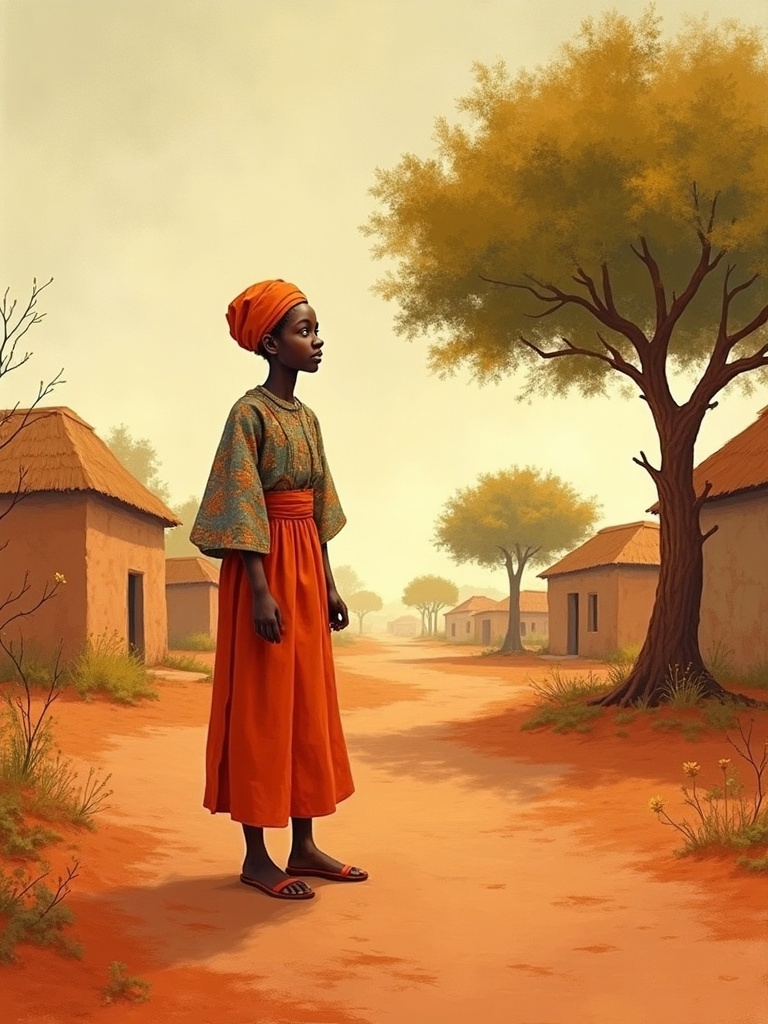
His government vaccinated roughly 2.5 million children against meningitis, yellow fever and measles in a matter of weeks.
DetailsENBorn in Yako on 21 December 1949, Thomas Sankara came to lead one of the world's poorest nations and refused to govern it like a beggar. On 4 August 1984 he discarded the colonial name Upper Volta and fused two of his country's languages — Mooré and Dyula — into Burkina Faso, "the land of upright (honest) people." The new name was itself a manifesto: dignity before dependence.
His revolution was practical, not just poetic. In a campaign that astonished public-health workers, his government vaccinated roughly 2.5 million children against meningitis, yellow fever and measles in a matter of weeks; it built schools and clinics, planted millions of trees against the advancing desert, and pushed literacy in a country then around 90% illiterate. He championed self-reliance through the hand-woven cotton cloth Faso Dan Fani — "woven cloth of the homeland" — making it the dress of his ministers and calling it an economic, cultural and political act of resistance.
Sankara was also, for his era, a remarkable advocate for women: his government banned female genital mutilation, forced marriage and polygamy, promoted contraception, and appointed women to senior posts. Speaking at the United Nations in 1984 he declared that "the slave who is not able to take charge of his own revolt deserves no pity." On 15 October 1987 he was assassinated in Ouagadougou at the age of 37 — but across Africa he is remembered not for how he died, but for what he dared to build.
Timeline
- 1949Geboren in Yako (Obervolta); katholische Familie; statt Priester wird er Soldat.
- 1970erOffiziersausbildung in Madagaskar (erlebt Volksaufstände) & Fallschirmschule in Frankreich; spielt Gitarre in „Tout-à-Coup Jazz".
- 4. Aug 1983Kommt mit 33 durch einen Putsch an die Macht; Beginn der „Demokratischen & Volksrevolution".
- 1984Benennt Obervolta in Burkina Faso um („Land der Aufrechten"); neue Flagge & Hymne (die er selbst schrieb).
- 1983–87Impfung von ~2,5 Mio. Kindern, Alphabetisierung, 10 Mio. Bäume, Frauenrechte, Selbstversorgung, Antikorruption.
- Juli 1987Berühmte Schuldenrede vor der OAU in Addis Abeba: „Schulden sind eine geschickt gesteuerte Rückeroberung Afrikas."
- 15. Okt 1987Im Putsch seines früheren Freundes Compaoré ermordet, mit 37 Jahren.
- 2022Compaoré in Abwesenheit verurteilt; Sankara längst rehabilitiert & als Nationalheld geehrt.
Did you know?
- His government banned female genital mutilation, forced marriage and polygamy, and appointed women to high office — radical for West Africa in the 1980s.DetailsEN
- He made the locally woven Faso Dan Fani cloth the official dress of his ministers, calling it "an economic, cultural and political" challenge to imperialism.DetailsEN
- Addressing the UN General Assembly in October 1984, he said "the slave who is not able to take charge of his own revolt deserves no pity for his lot."DetailsEN
He asked his people to stand upright — and in four years showed them it was possible.
Values & Capabilities
Capabilities
◆◆◆◆◆ shows how central a gift is — five diamonds mark a signature strength, fewer mark a supporting one.
Clean hands instead of self-enrichment: Mercedes sold, a Renault 5 as the official car, his own salary cut. In play: whoever holds Sankara wins through credibility, not through wealth.
„He who feeds you, controls you." He taught people to live by their own strength and to take pride in what they made themselves — from food to the Faso Dan Fani cloth.
2.5 million children vaccinated within weeks, a literacy campaign for the whole country. He teaches: true power cares first for the health and education of the weakest.
„Women hold up the other half of the sky." He brought women into government & fought for their rights — unprecedented in the West Africa of his time.
Over 10 million trees against the desert — decades before the great wave of climate awareness. He teaches us to protect the Earth and to plant for generations to come.
Development
1 of 3 stages unlocked
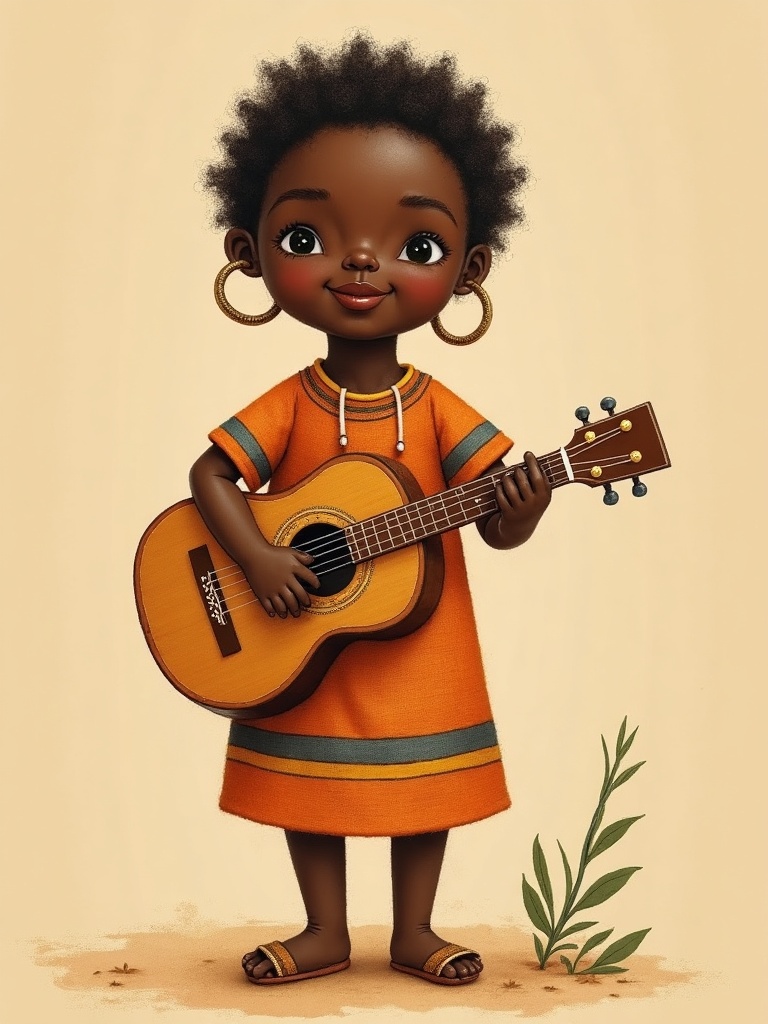
The young Thomas, a disciplined pupil whose true passion is music — with a guitar, curious and just. Simple clothing. Gift: The upright man (in the making).[11]
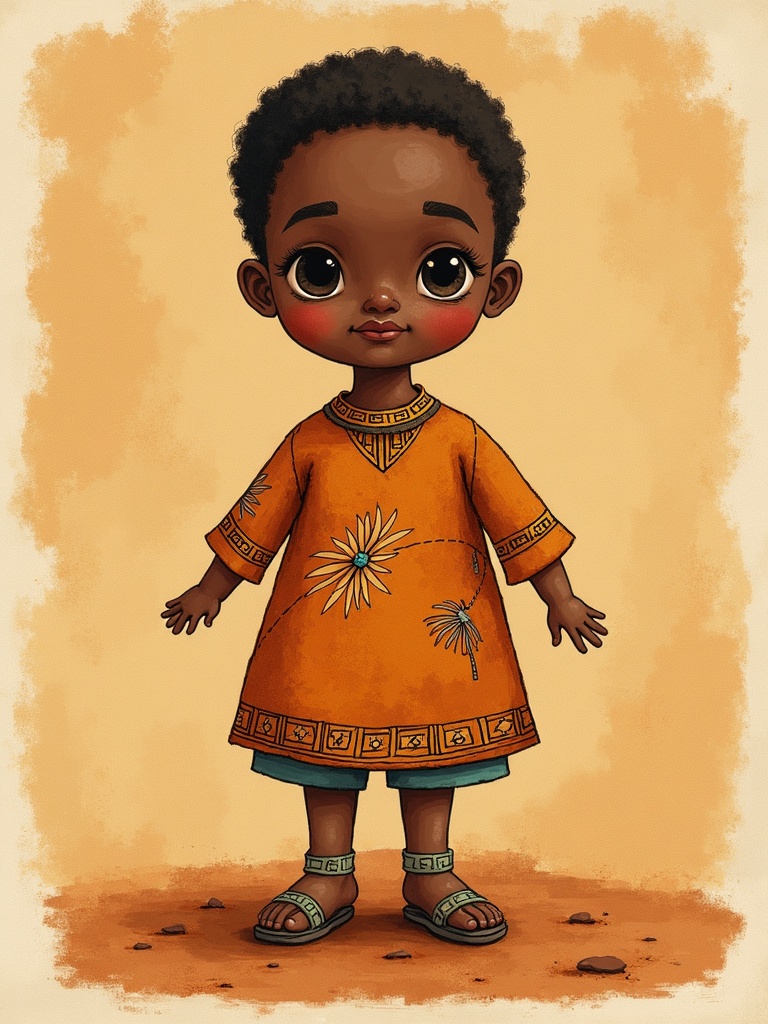
Answer all three to unlock this stage.
Unlock the previous stage first.
Crafting the doll
Fabrics & Production Notes
With Sankara, the making itself is a message: The Faso Dan Fani, which he turned into a source of national pride, is handwoven cotton — the doll embodies his idea of "consume what we produce".
The materials list
The garment: genuine Faso Dan Fani
Sankara's tunic is — where possible — made from genuine, hand-woven Faso Dan Fani crafted (100% cotton, woven in narrow strips, in cream, indigo & ochre). This is not decoration but a statement: sourcing his cloth from Burkinabè weavers enacts precisely what he stood for. Plus the iconic red beret with a small gold star.
The signature attributes: guitar & sapling
Two small, firmly sewn-on attributes tell the whole person: a tiny guitar (the musician behind the president) and a small tree seedling in a little pot (the 10 million trees). Optionally a mini bicycle as a sign of his modesty. No weapons. No small swallowable parts in the school/toddler line.
Signature & Education Card
Embroidered into the hem: the name of the seamstress (and, only with the family's approval, „Thomas Sankara"). Enclosed is an Education Card with real, documented quotes (with source!), a short, honest biography and an age-appropriate framing of the difficult sides (“Elder Approval & Sources”). Optional QR thread to the Mémorial Thomas Sankara.
Production Stages & Effort
Faso Dan Fani tunic, red beret, mini guitar, tree seedling, education card with quotes. The „Upright" doll of the series.
Simplified tunic, beret, small guitar. Affordable entry-level option.
Washable, reinforced seams, sturdy attributes. With a quote/values card — ideal for ethics & social studies lessons from middle school upward.
How this doll is made
A respectful homage to Thomas Sankara grounds the look in Burkinabè Faso Dan Fani textile culture - the hand-spun, hand-woven local cotton cloth he made a national symbol, declaring that wearing it was 'an economic, cultural and political act of defiance against imperialism.' The doll honours documented facts and dignity, not a militarised likeness.
- Garments 2
- Accessories 3
- Materials 2
- Techniques 3
Garments
- Faso Dan Fani tunicA simple top or boubou-style robe sewn from Faso Dan Fani ('woven cloth of the homeland'), the hand-woven Burkinabè cotton Sankara required officials to wear. Earth-toned stripes (green, ochre) reflect the cloth he favoured; pieces are made by sewing narrow loom strips together.DetailsEN
- Simple cotton trousersPlain hand-woven cotton trousers in earth tones, matching the Faso Dan Fani top. Sankara only wore clothing made from cotton grown, spun, dyed and woven in Burkina Faso - a homage to self-reliance rather than a military uniform.DetailsEN
Accessories
- Red beretA small soft red beret - Sankara's documented signature. As an educational homage it reads as a cap of conviction and pan-African pride, kept simple and non-militarised. Stitched from felted or woven wool/cotton in plain red.DetailsEN
- Hand-stitched leather sandalsOpen leather sandals of the kind made by Burkinabè leatherworkers in Ouagadougou and Bobo-Dioulasso, often vegetable-tanned and hand-stitched. For the doll: small pieces of locally tanned leather cut and hand-sewn into simple straps.DetailsEN
- Woven striped sash / pagne bandA narrow band of Faso Dan Fani worn as a sash or trim, showing the signature stripes (and occasional check or hounds-tooth motifs) that artisans weave into the cloth. A small offcut of the same hand-woven strip used for the garments.DetailsEN
Materials
- Hand-spun local cottonBurkinabè-grown cotton: separated from the buds with a brick and small metal stick, rolled on a wooden paddle and spun into thread. Sankara's point was that 'in all the villages, women know how to spin cotton.' This is the base fibre for the whole outfit.DetailsEN
- Natural indigo & earth dyesCotton thread dyed with natural plant dyes - especially indigo for deep blue, alongside ochre and earth tones. Mossi indigo cloth was historically time-intensive to dye and associated with status; Sankara favoured green and ochre Faso Dan Fani.DetailsEN
Techniques
- Faso Dan Fani narrow-strip handloom weavingThe defining craft: thread is woven on a horizontal narrow loom into strips roughly 15-30 cm wide, which are then sewn edge-to-edge to form a larger 'pagne' or garment. Loom set-up alone takes 3-7 days depending on the design; stripes are the signature pattern. Traditionally men wove and women spun, though both now weave.DetailsEN
- Hand-spinning the cotton threadBefore weaving, raw cotton is hand-spun into yarn: ginned by hand, rolled on a wooden paddle and spun into a continuous thread. This village-level skill is exactly what Sankara invoked in his 'produce and wear Burkinabè' policy.DetailsEN
- Natural indigo / vegetable dyeingSpun cotton is coloured with natural plant-based dyes - cloth is repeatedly dipped in indigo vats for deep blue, or coloured with other vegetable dyes for earth tones, before being woven into striped strips.DetailsEN
How it's made
Every doll is sewn by hand from natural materials — built to last a lifetime and to be repaired, not replaced. Here is the shopping list and the work steps. Sizes: Classic 32 cm (heirloom) · Kidogo 18–20 cm (toddlers, no small parts) · Shule 28 cm (school edition).
Shopping list
- Natural cotton or linen for the body (skin tone), ~0.5 m
- Wool or cotton stuffing — no plastic
- Cotton thread and embroidery floss in matching colours
- Garment fabric in this doll's colours (see the fabrics above)
- Yarn for the hairstyle
- Beads, cowrie shells and trims as shown
- Sharps and embroidery needles, pins, fabric scissors, fabric marker
Work instructions
- Trace and cut the body pattern at your chosen size (Classic 32 cm / Kidogo 18–20 cm / Shule 28 cm).
- Sew the body pieces right sides together, leave an opening, turn and stuff firmly with natural fibre, then close by hand.
- Embroider the face gently and with dignity — no plastic parts for the toddler line.
- Make the hair from yarn following the chosen hairstyle and attach it securely.
- Cut and sew the garment from this doll's fabric, then dress the doll.
- Add the beadwork, shells, trims and any attribute by hand.
- Check every seam and reinforce it — the doll should be lifelong and repairable, with no loose small parts for small children.
Ten Name suggestions
The real name is preserved. These ten names — Burkinabè (Mossi/Dyula) & from the Sahel — are suitable for companion figures, „Children of the Revolution" or the series around Sankara. To be confirmed by Burkinabè authorities & the family before use.
Lovely for the classroom: "Yennenga" opens the older Mossi hero story — a bridge from Sankara back to the legendary roots of his own people.
Origin & Ethics
How we know this
On honesty (Redlichkeit): Thomas Sankara is a historically very well-documented figure of recent contemporary history (his own speeches, contemporary witnesses, the 2022 trial). Because he is a real person who died only in 1987, strict rights discipline applies: only documented quotes with a source (none invented, unlike the ancient figures), and each doll only with the consent of the family & the Burkinabè authorities — as an homage, not as an exact likeness. Individual figures are disputed or rounded (such as the often-cited increase in literacy); such data should be read as estimates. The dark sides are clearly named: seizure of power by coup, People's Revolutionary Tribunals & CDRs with encroachments on civil rights. The figure celebrates the undisputed values (integrity, self-reliance, women's rights, the environment) and is intended rather for older children & guided conversations; the child's promise shown in "Transfer" is expressly marked as a retelling in spirit, not as an original quote. Final approval: the Sankara family & Burkina Faso.
Family/Elder Approval & Sources to Watch
As with Mandela, approval here is especially strict, because Sankara is a real, more recent person whose memory belongs to living people. First and foremost comes his Family (widow Mariam Sankara), then the official commemoration of Burkina Faso. And an honest dimension is added: his rule had dark sides, which must not be concealed.
The Approval Committee
The five-step protocol
First contact with the Sankara family, then with the Mémorial & the Burkinabè cultural offices. Presentation of the vision, 42% rule, veto right.
Hand over this compendium as a draft — especially the “homage, not likeness” line, the documented quotes & the honest assessment of the dark sides for review.
Family on dignity & image, Mémorial on legacy, weavers on Faso Dan Fani, historians on the fair portrayal of light & shadow.
Written approval — or a fully accepted veto. Without the family's consent, no image, no name, no doll.
Weaver cooperatives & community funds share in the proceeds; part of the revenue flows into reforestation in the Sahel & the Sankara memorial — his work is carried on, not merely depicted.
Honestly stated — the dark sides: Sankara came to power through a military coup to power; his revolution had People's Revolutionary Tribunals and Revolutionary Committees (CDRs), which curtailed civil rights and struck opponents hard. His own words apply here too: „If we only praise him, we overlook the warnings; if we only criticize him, we overlook the courage." Both belong — in an age-appropriate way — in the accompanying material for older children, neither glossed over nor loaded onto the doll as a „heroic deed."
Sources to watch
Sources
- 1984 renaming of Upper Volta → Burkina Faso, "Land of the upright/incorruptible people" (Mooré & Dyula); new flag & anthem (written by him). thomassankara.net; aclasses.org; bsgistnews.com.
- Reforms in 4 years: ~2.5 million children vaccinated, literacy campaign, >10 million trees, roads/railways built through community labor, land redistribution; sale of the Mercedes fleet, Renault 5 as the official car. thomassankara.net: Facts about Thomas Sankara; World History Edu.
- Women's rights: many women in government, ban on female genital cutting, against polygamy/forced marriage; first African country to openly name AIDS as a threat. thomassankara.net; studysmarter.co.uk.
- Born 21 Dec 1949 in Yako; officer training in Madagascar (witnessed uprisings), parachute school in France; known since the Agacher border conflict of 1974. hitimu.academy; britannica.com.
- His parents wished for a career in the priesthood; chose the military path; coup on 4 Aug 1983; assassinated on 15 Oct 1987 in Compaoré's coup. britannica.com: Thomas Sankara.
- 4 Aug 1983 "August Revolution"; National Council of the Revolution; focus on anti-corruption, women, health, education. World History Edu; thomassankara.net.
- "Africa's Che Guevara"; among Africa's youth a symbol of dignity, self-reliance, clean government; in 2022 Compaoré sentenced to life imprisonment in absentia; 27 years of Compaoré's rule had followed. todayafrica.co; studysmarter.co.uk.
- "He who feeds you, controls you"; rejection of aid dependency; "consume what we produce"; debt as the "skillfully managed reconquest of Africa" (OAU speech 1987). bsgistnews.com; azquotes.com; inspiringquotes.us.
- Promotion of local production & of the handwoven Faso Dan Fani as a source of national pride (as part of the "consume local" policy). thomassankara.net; academia.edu (Sankara, anticolonial memory).
- Documented quotes (with source): "We must dare to invent the future" & "… a certain amount of madness …" (Thomas Sankara Speaks, Pathfinder 1988; Ziegler interview 1986); "The revolution and women's liberation go together … women hold up the other half of the sky" (We Are Heirs of the World's Revolutions, Pathfinder 2007). azquotes.com; goodreads.com.
- Guitarist of the band "Tout-à-Coup Jazz" (Sankara on guitar, Compaoré on the microphone); taught to play the guitar as a child, with music his "true passion". en.wikipedia.org: Tout-à-Coup Jazz; The Guardian.
- African Heritage / afrolegends - The Faso Dan Fani: Woven Cloth of the Homeland (meaning, Mossi origin, Sankara's 1986 decree, spinning by women / weaving by men)
- Ethical Fashion Initiative - Faso Dan Fani: From Ouagadougou to the world (cotton processing, hand-spinning, 3-7 day loom set-up, narrow loom, stripes, weaver cooperatives)
- Storie EU - Faso Dan Fani, Burkina Faso's Cotton Fit for Kings (Mossi origin, 15-30cm narrow strips, horizontal loom, sewn into pagne, Sankara quote, cotton economics)
- Thomas Sankara Website (official) - L'homme qui voulait liberer l'Afrique par le vetement (Sankara's clothing decree, earth-tone Faso Dan Fani, red beret, 'don't we have weavers here?')
- Maison Integre - Faso Dan Fani (Sankara quote: 'in all the villages women know how to spin cotton, men know how to weave', cultural significance)
- World Cultural Threads - Burkinabe Traditional Clothing: Mossi and Other Ethnic Traditions (boubou, tunic of handspun cotton, indigo/ochre dyes, embroidery, accessories)
- The Baobab - The Red Beret: Africa's Symbol of Revolution (Sankara's red beret as documented signature and pan-African symbol)
- Indigo Arts - Indigo Textiles from West Africa (West African / Mossi indigo dyeing, narrow-strip woven cloth, natural plant indigo)
- Tribalgh - Authentic Mossi Indigo Cloth, Burkina Faso (Mossi women hand-spin, men weave narrow strips, natural indigo, strips sewn into panels)
- OneVasco - Things to Buy in Burkina Faso: Handmade Crafts (hand-stitched leatherwork and sandals, eco-friendly/vegetable tanning, Ouagadougou and Bobo-Dioulasso artisans)
- Smithsonian Institution - Faso dan fani: Marka textiles in Burkina Faso (Genevieve Hill-Thomas) (scholarly record of Burkinabe narrow-strip weaving)
- NoirPress - Burkina Faso's Textile Revolution: Honoring Sankara's Vision (Faso Dan Fani policy, local cotton-to-cloth chain, contemporary revival)