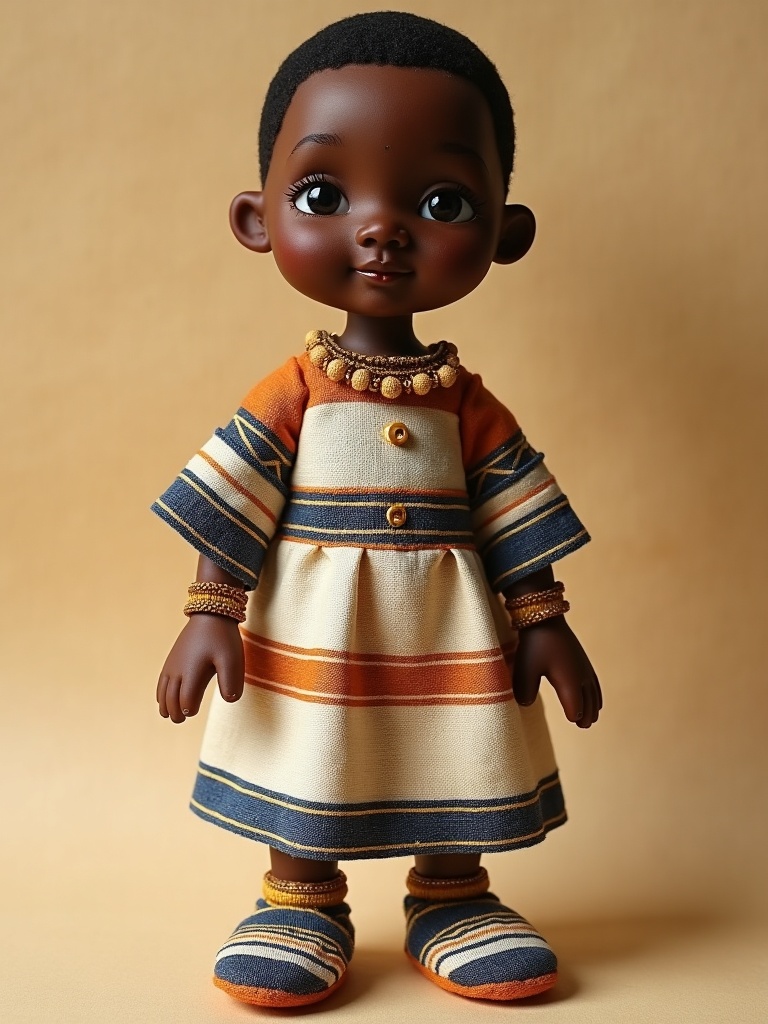
Modern Heroes
Thomas Sankara
Thomas Sankara was born on 21 December 1949 in Yako in what was then Upper Volta, a French colony. His Catholic parents wished him to become a priest — he chose the military. [5] As a young officer he was sent to Madagascar, where he…
- People
- Mossi
- Country
- Burkina Faso
- Region
- West Africa
- Era
- 1949–1987
- Theme
- Integrity & Self-Reliance
Make your own
Design your Thomas Sankara
Pick a garment, a hairstyle and a scene, enter the PIN and generate a fresh image of Thomas Sankara with AI.
Each image is generated live with fal.ai.
Generated images
No images generated yet — be the first.
History & Meaning
①Tradition, Life & the Upright Path
Thomas Sankara was born on 21 December 1949 in Yako in what was then Upper Volta, a French colony. His Catholic parents wished him to become a priest — he chose the military.[5] As a young officer he was sent to Madagascar, where he witnessed popular uprisings that shaped his political outlook; a paratrooper training in France brought him into contact with leftist ideas.[4][5] On 4 August 1983 he came to power at the age of 33 through a coup — and immediately set about radically rebuilding the poorest country in the region.[6]
★ "Land of the upright people"
Sankara's greatest message lies in the very name he gave his country: Burkina Faso — from the Mooré and Dyula languages, "Land of the upright / incorruptible people".[1] And he lived it himself. While other heads of state enriched themselves, he sold off the government's Mercedes limousines and made the inexpensive Renault 5 the official ministerial car.[2] He cut his own salary, rejected luxury, and demanded: Live what you preach. These very clean hands and dignity made him an icon — and for a child it is the most beautiful lesson: true greatness shows itself not in wealth, but in integrity.
What he achieved in four years is breathtaking: In just a few weeks he had around 2.5 million children vaccinated against measles, meningitis and yellow fever; launched a nationwide literacy campaign; had over 10 million trees planted to fight desertification; built roads and a railway line through communal labor; distributed land to women and men farmers and brought the country closer to self-sufficiency.[2] And he placed women's rights at the center: women in government, a ban on female genital cutting, a stand against forced marriage — unprecedented in West Africa at the time.[3]
Self-reliance instead of dependence
His core idea: Africa should live from its own strength, not on foreign aid. „Whoever feeds you controls you,“ he said, in essence, about dependence on foreign aid.[8] He called on the Burkinabè to consume what they produce themselves — and made the handwoven cotton cloth Faso Dan Fani a source of national pride, to strengthen the country's own weavers and cotton.[8][9] On the stage of world politics, he called for an end to the crushing foreign debt.
The Guitar and the Betrayal — honestly told
A human, tragic trait: Sankara was a gifted guitarist. In the 1970s he played in the band „Tout-à-Coup Jazz" — at the microphone stood his best friend Blaise Compaoré.[11] It was precisely this friend who overthrew and killed him on 15 October 1987 in a coup. Sankara was only 37 years old.[5][7] Justice came only decades later: in 2022 Compaoré was convicted in absentia of the murder; in Burkina Faso, Sankara is today officially rehabilitated and honored.[7]
Ten million trees. A different idea of power.
You can kill a person — but not an idea.
⑤Transfer to the Present
How does Sankara's life become a lesson for a child in 2050?
The Upright Man
A clean hand instead of riches.
Integrity, anti-corruption, being a role model. To be credible means doing what you say. An attitude that makes every leader — and every child — strong.
Self-Reliance
Living by one's own strength.
Self-confidence, local economy, pride in what is one's own. Exactly the heart of this project: valuing the handmade — from Faso Dan Fani to the hand-sewn doll.
Friend of the Earth
10 million trees.
Environment & climate. Planted against the desert back in the 1980s — an early environmental hero, perfect for the generation that will inherit the climate.
Courage and moderation
Change, yes — but at what price?
Critical thinking, the ethics of power. With elders: Even a courageous idealist can make mistakes. Praise and question — both are part of it.
Sankara's question to a child: „You don't have to be rich to change something — you have to stand upright. Dare to imagine the future you want to live." freely retold in the spirit of his documented words — not as an original quotation
Abilities & Development
Abilities
Clean hands instead of self-enrichment: Mercedes sold, a Renault 5 as the official car, his own salary cut. In play: whoever holds Sankara wins through credibility, not through wealth.
„He who feeds you, controls you." He taught people to live by their own strength and to take pride in what they made themselves — from food to the Faso Dan Fani cloth.
2.5 million children vaccinated within weeks, a literacy campaign for the whole country. He teaches: true power cares first for the health and education of the weakest.
„Women hold up the other half of the sky." He brought women into government & fought for their rights — unprecedented in the West Africa of his time.
Over 10 million trees against the desert — decades before the great wave of climate awareness. He teaches us to protect the Earth and to plant for generations to come.
Through the years
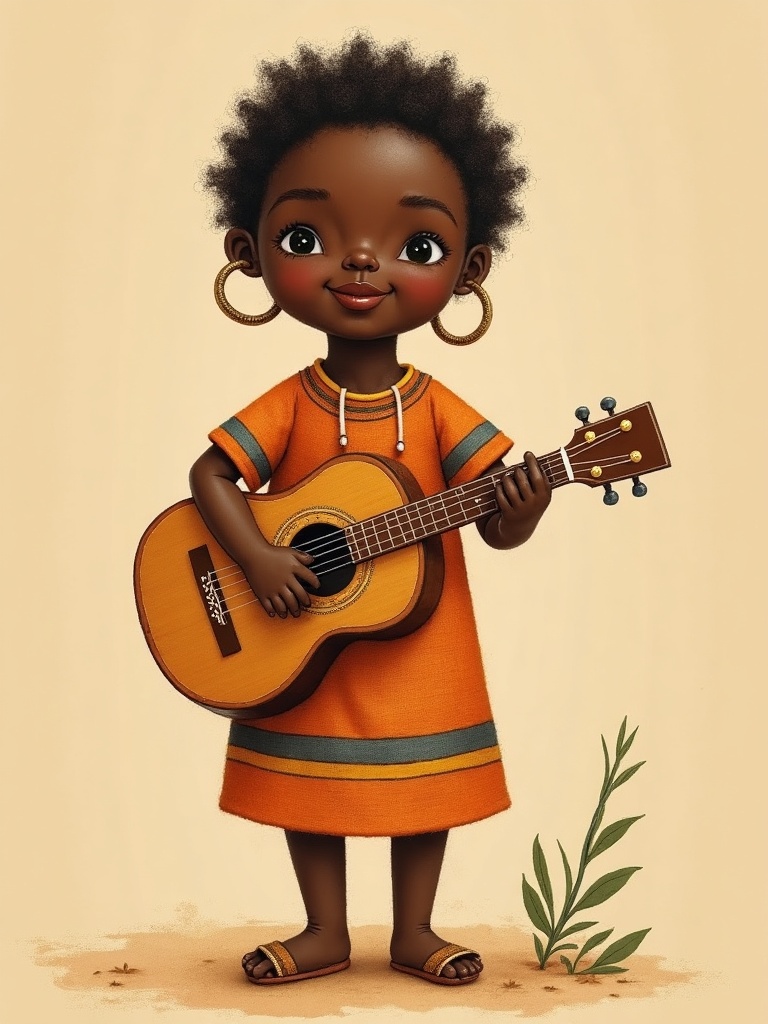
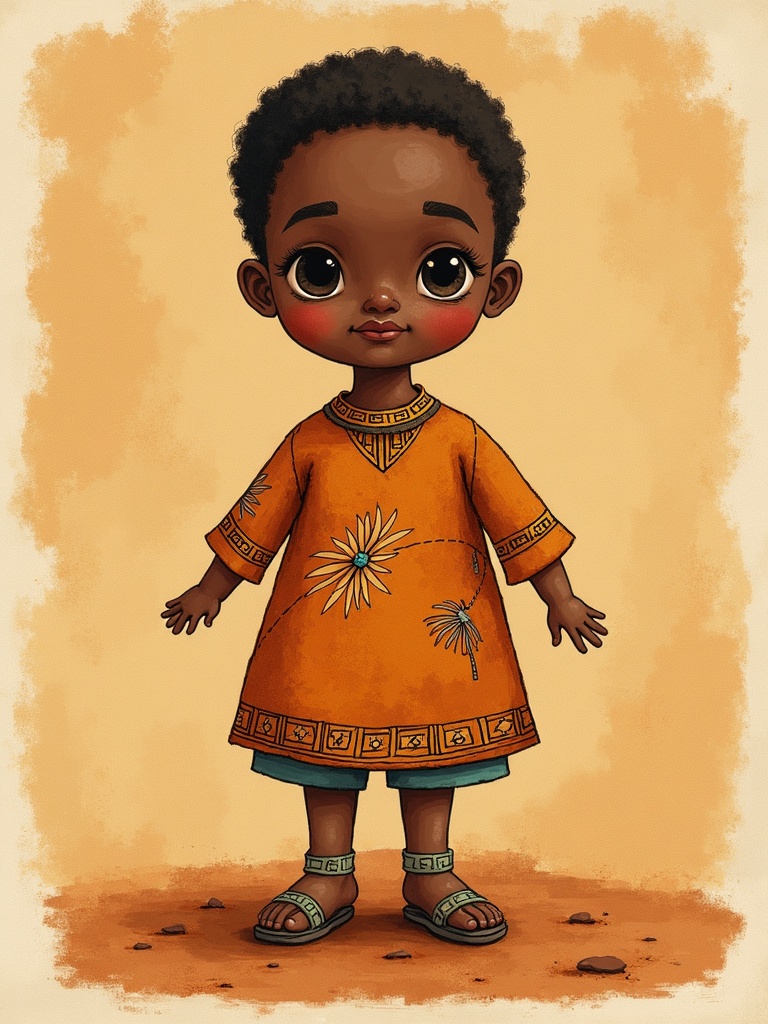
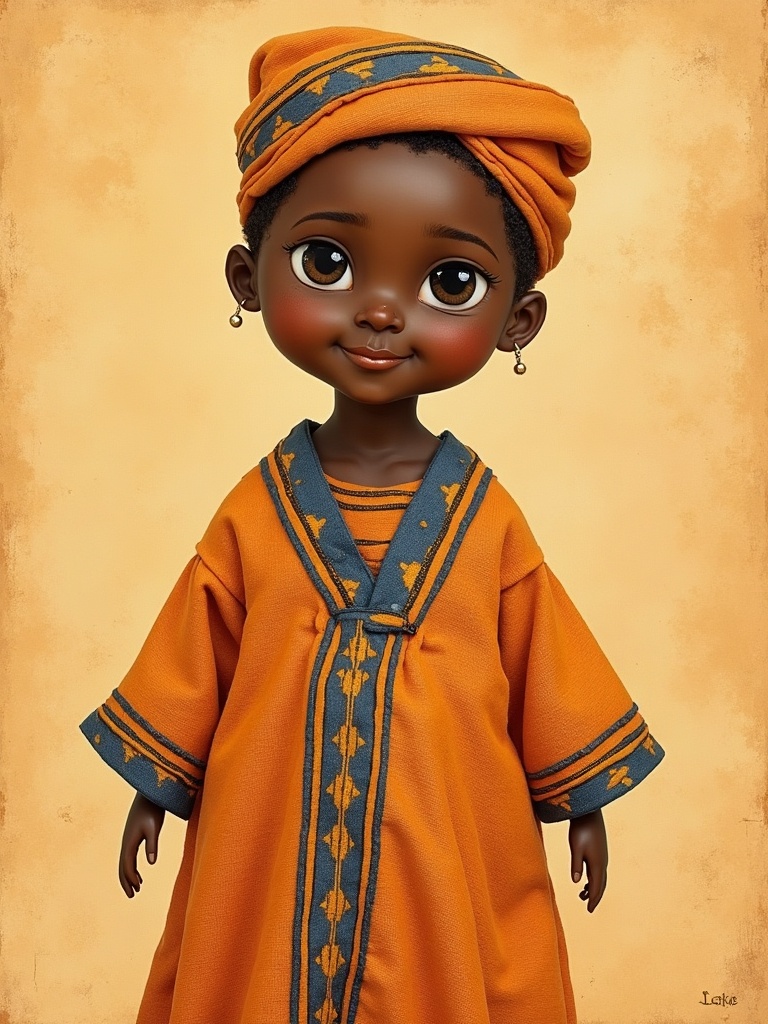
③Life Stages (historical)
The three stages follow his path — from the musical child through the young revolutionary to the upright president.
The young Thomas, a disciplined pupil whose true passion is music — with a guitar, curious and just. Simple clothing. Gift: The upright man (in the making).[11]
Sankara at 33, with a red beret & uniform, full of energy — the moment the revolution begins. Signature gift & Self-reliance.[6]
Sankara as President in the Faso Dan Fani, planting trees & teaching his people — dignified, humble, beloved. Gift united with Friend of the Earth.[2][9]
Beautiful for children: Stage 1 shows a boy who would rather make music — and yet changed a country. Greatness does not begin with power, but with character.
Make & Learn
⑦Fabrics & Production Notes
With Sankara, the making itself is a message: The Faso Dan Fani, which he turned into a source of national pride, is handwoven cotton — the doll embodies his idea of "consume what we produce".
The materials list
The garment: genuine Faso Dan Fani
Sankara's tunic is — where possible — made from genuine, hand-woven Faso Dan Fani crafted (100% cotton, woven in narrow strips, in cream, indigo & ochre). This is not decoration but a statement: sourcing his cloth from Burkinabè weavers enacts precisely what he stood for. Plus the iconic red beret with a small gold star.
The signature attributes: guitar & sapling
Two small, firmly sewn-on attributes tell the whole person: a tiny guitar (the musician behind the president) and a small tree seedling in a little pot (the 10 million trees). Optionally a mini bicycle as a sign of his modesty. No weapons. No small swallowable parts in the school/toddler line.
Signature & Education Card
Embroidered into the hem: the name of the seamstress (and, only with the family's approval, „Thomas Sankara"). Enclosed is an Education Card with real, documented quotes (with source!), a short, honest biography and an age-appropriate framing of the difficult sides (Section ⑨). Optional QR thread to the Mémorial Thomas Sankara.
Production Stages & Effort
Faso Dan Fani tunic, red beret, mini guitar, tree seedling, education card with quotes. The „Upright" doll of the series.
Simplified tunic, beret, small guitar. Affordable entry-level option.
Washable, reinforced seams, sturdy attributes. With a quote/values card — ideal for ethics & social studies lessons from middle school upward.
How it's made
Every doll is sewn by hand from natural materials — built to last a lifetime and to be repaired, not replaced. Here is the shopping list and the work steps. Sizes: Classic 32 cm (heirloom) · Kidogo 18–20 cm (toddlers, no small parts) · Shule 28 cm (school edition).
Shopping list
- Natural cotton or linen for the body (skin tone), ~0.5 m
- Wool or cotton stuffing — no plastic
- Cotton thread and embroidery floss in matching colours
- Garment fabric in this doll's colours (see the fabrics above)
- Yarn for the hairstyle
- Beads, cowrie shells and trims as shown
- Sharps and embroidery needles, pins, fabric scissors, fabric marker
Work instructions
- Trace and cut the body pattern at your chosen size (Classic 32 cm / Kidogo 18–20 cm / Shule 28 cm).
- Sew the body pieces right sides together, leave an opening, turn and stuff firmly with natural fibre, then close by hand.
- Embroider the face gently and with dignity — no plastic parts for the toddler line.
- Make the hair from yarn following the chosen hairstyle and attach it securely.
- Cut and sew the garment from this doll's fabric, then dress the doll.
- Add the beadwork, shells, trims and any attribute by hand.
- Check every seam and reinforce it — the doll should be lifelong and repairable, with no loose small parts for small children.
⑥Ten Name suggestions
The real name is preserved. These ten names — Burkinabè (Mossi/Dyula) & from the Sahel — are suitable for companion figures, „Children of the Revolution" or the series around Sankara. To be confirmed by Burkinabè authorities & the family before use.
Lovely for the classroom: "Yennenga" opens the older Mossi hero story — a bridge from Sankara back to the legendary roots of his own people.
⑧Curriculum mapping & Subjects
Sankara is a godsend for modern topics: through him one can illustrate integrity, economy, environment and critical thinking connect — and he is, especially for older children & teenagers, an electrifying yet honestly contextualized role model.
"Land of the Upright"
Anti-corruption, role model.
Values / Social Studies. What is integrity? Why does corruption harm everyone? Credibility as a leadership quality.
Self-reliance
Consume what we produce.
Economics / Geography. Local vs. global economy; dependency & self-sufficiency; the value of craftsmanship.
Friend of the Earth
The fight against the desert.
General Studies / Biology. Desertification, reforestation, climate protection — an African environmental pioneer.
Coup & Tribunals
Change with its dark sides.
Ethics / History (older students). May one restrict civil rights for good ends? Hero and warning at once — judging without an easy answer.
Children gather what „being upright" means in everyday life (sharing honestly, not cheating, owning up to mistakes). Learning goal: integrity, role model, clean conduct.
The class plants & tends seedlings like Sankara's 10 million trees. Learning goal: ecology, responsibility for coming generations, patience.
Moderated: Sankara's courage and the dark sides (coup, tribunals). Learning goal: nuanced judgment, not turning anyone into a flawless saint.
Origin & Ethics
⚖ A respectful concept
Real person. Consent of the family (Mariam Sankara) & Burkinabè authorities is mandatory. Only documented quotes. Homage rather than likeness; dark sides (coup/tribunals) honestly & age-appropriately.
How we know this
On honesty (Redlichkeit): Thomas Sankara is a historically very well-documented figure of recent contemporary history (his own speeches, contemporary witnesses, the 2022 trial). Because he is a real person who died only in 1987, strict rights discipline applies: only documented quotes with a source (none invented, unlike the ancient figures), and each doll only with the consent of the family & the Burkinabè authorities — as an homage, not as an exact likeness. Individual figures are disputed or rounded (such as the often-cited increase in literacy); such data should be read as estimates. The dark sides are clearly named: seizure of power by coup, People's Revolutionary Tribunals & CDRs with encroachments on civil rights. The figure celebrates the undisputed values (integrity, self-reliance, women's rights, the environment) and is intended rather for older children & guided conversations; the child's promise shown in "Transfer" is expressly marked as a retelling in spirit, not as an original quote. Final approval: the Sankara family & Burkina Faso.
⑨Family/Elder Approval & Sources to Watch
As with Mandela, approval here is especially strict, because Sankara is a real, more recent person whose memory belongs to living people. First and foremost comes his Family (widow Mariam Sankara), then the official commemoration of Burkina Faso. And an honest dimension is added: his rule had dark sides, which must not be concealed.
The Approval Committee
The five-step protocol
First contact with the Sankara family, then with the Mémorial & the Burkinabè cultural offices. Presentation of the vision, 42% rule, veto right.
Hand over this compendium as a draft — especially the “homage, not likeness” line, the documented quotes & the honest assessment of the dark sides for review.
Family on dignity & image, Mémorial on legacy, weavers on Faso Dan Fani, historians on the fair portrayal of light & shadow.
Written approval — or a fully accepted veto. Without the family's consent, no image, no name, no doll.
Weaver cooperatives & community funds share in the proceeds; part of the revenue flows into reforestation in the Sahel & the Sankara memorial — his work is carried on, not merely depicted.
Honestly stated — the dark sides: Sankara came to power through a military coup to power; his revolution had People's Revolutionary Tribunals and Revolutionary Committees (CDRs), which curtailed civil rights and struck opponents hard. His own words apply here too: „If we only praise him, we overlook the warnings; if we only criticize him, we overlook the courage." Both belong — in an age-appropriate way — in the accompanying material for older children, neither glossed over nor loaded onto the doll as a „heroic deed."
Sources to watch
Sources
- 1984 renaming of Upper Volta → Burkina Faso, "Land of the upright/incorruptible people" (Mooré & Dyula); new flag & anthem (written by him). thomassankara.net; aclasses.org; bsgistnews.com.
- Reforms in 4 years: ~2.5 million children vaccinated, literacy campaign, >10 million trees, roads/railways built through community labor, land redistribution; sale of the Mercedes fleet, Renault 5 as the official car. thomassankara.net: Facts about Thomas Sankara; World History Edu.
- Women's rights: many women in government, ban on female genital cutting, against polygamy/forced marriage; first African country to openly name AIDS as a threat. thomassankara.net; studysmarter.co.uk.
- Born 21 Dec 1949 in Yako; officer training in Madagascar (witnessed uprisings), parachute school in France; known since the Agacher border conflict of 1974. hitimu.academy; britannica.com.
- His parents wished for a career in the priesthood; chose the military path; coup on 4 Aug 1983; assassinated on 15 Oct 1987 in Compaoré's coup. britannica.com: Thomas Sankara.
- 4 Aug 1983 "August Revolution"; National Council of the Revolution; focus on anti-corruption, women, health, education. World History Edu; thomassankara.net.
- "Africa's Che Guevara"; among Africa's youth a symbol of dignity, self-reliance, clean government; in 2022 Compaoré sentenced to life imprisonment in absentia; 27 years of Compaoré's rule had followed. todayafrica.co; studysmarter.co.uk.
- "He who feeds you, controls you"; rejection of aid dependency; "consume what we produce"; debt as the "skillfully managed reconquest of Africa" (OAU speech 1987). bsgistnews.com; azquotes.com; inspiringquotes.us.
- Promotion of local production & of the handwoven Faso Dan Fani as a source of national pride (as part of the "consume local" policy). thomassankara.net; academia.edu (Sankara, anticolonial memory).
- Documented quotes (with source): "We must dare to invent the future" & "… a certain amount of madness …" (Thomas Sankara Speaks, Pathfinder 1988; Ziegler interview 1986); "The revolution and women's liberation go together … women hold up the other half of the sky" (We Are Heirs of the World's Revolutions, Pathfinder 2007). azquotes.com; goodreads.com.
- Guitarist of the band "Tout-à-Coup Jazz" (Sankara on guitar, Compaoré on the microphone); taught to play the guitar as a child, with music his "true passion". en.wikipedia.org: Tout-à-Coup Jazz; The Guardian.