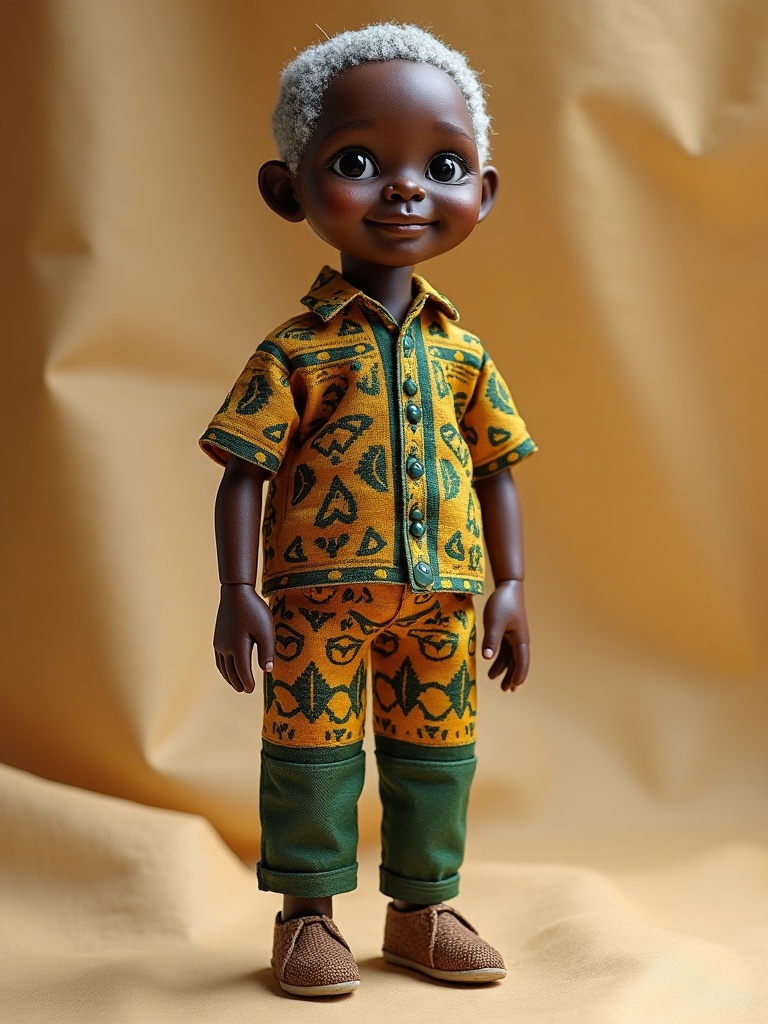
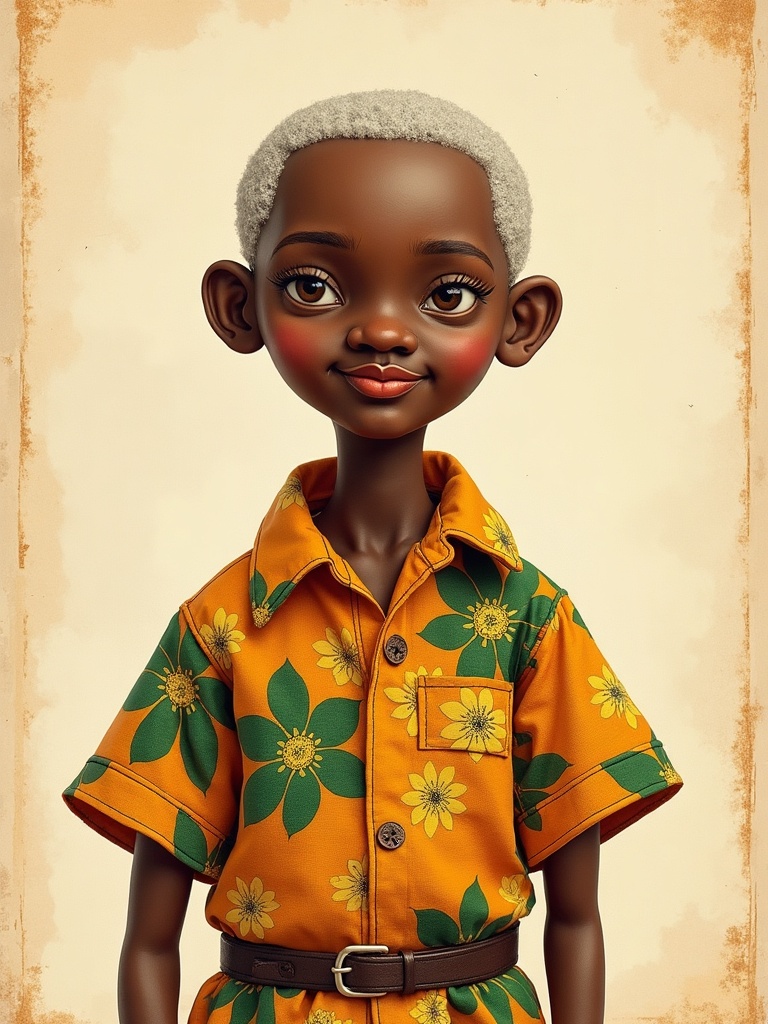
AI design preview — not a photo of the finished handmade doll
Reconciliation & Ubuntu
Nelson Mandela
From a herd-boy's village in the rolling hills of the Eastern Cape to the world's most beloved statesman, Nelson Rolihlahla Mandela turned twenty-seven years of imprisonment into the moral foundation of a reconciled nation.
- People
- Thembu/Xhosa
- Country
- South Africa
- Region
- Southern Africa
- Era
- 1918–2013
- Theme
- Reconciliation & Ubuntu
⚖ A respectful concept
Real person. License of the Nelson Mandela Foundation mandatory. Only documented quotes. Homage, not a likeness.
Make your own
Design your Nelson Mandela
Pick a garment, a hairstyle and a scene, enter the PIN and generate a fresh image of Nelson Mandela with AI.
⚖ AI homage concept — not a likeness of the real person.
Each image is generated live with fal.ai.
Generated images
AI design preview — not a photo of the finished handmade doll
No images generated yet — be the first.
Tradition & Origin
From a herd-boy's village in the rolling hills of the Eastern Cape to the world's most beloved statesman, Nelson Rolihlahla Mandela turned twenty-seven years of imprisonment into the moral foundation of a reconciled nation.
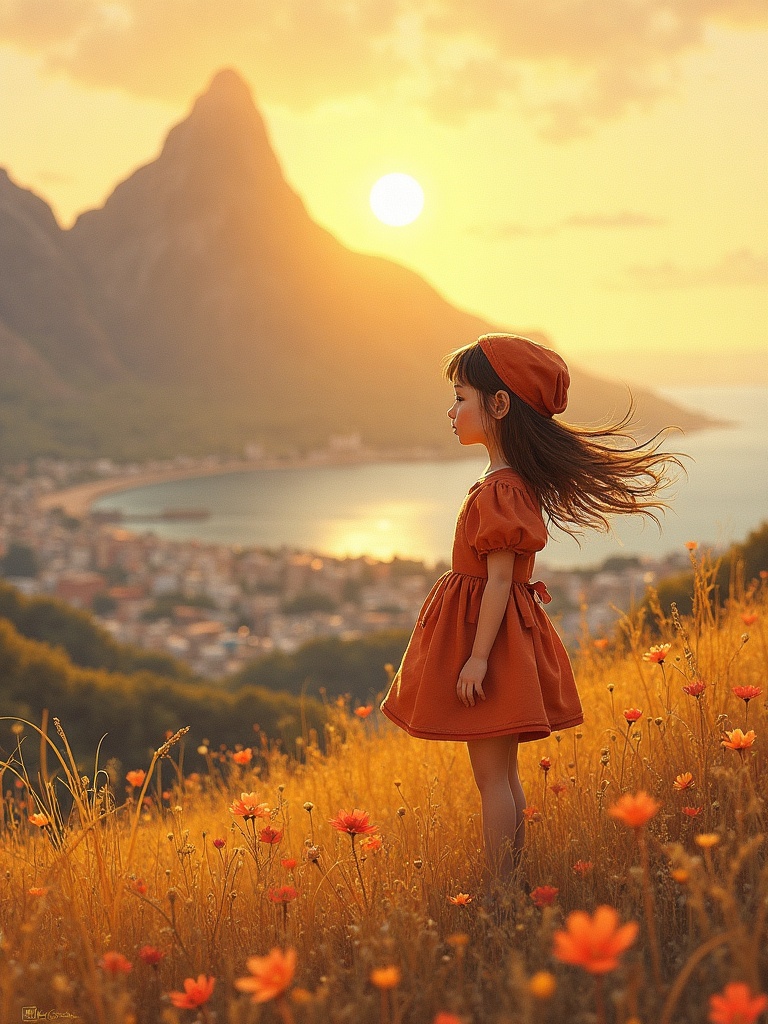
Mandela Day asks for 67 minutes of service — one minute for each of the 67 years he devoted to public life.
DetailsENHe was born on 18 July 1918 in the small village of Mvezo, on the banks of the Mbashe River in the Eastern Cape. The son of a counsellor to the Thembu royal house, he belonged to a branch of the Xhosa-speaking Thembu people; his given name, Rolihlahla, is often rendered as "pulling the branch of a tree" — colloquially, "troublemaker." The name Nelson was given to him by a teacher on his first day of school. To South Africans he became simply Madiba, his clan name.
Trained as a lawyer, Mandela rose through the African National Congress to lead the campaign against apartheid, the state system of racial segregation. Arrested and tried for sabotage in the Rivonia Trial, he closed his statement from the dock in 1964 with words that would echo for generations: "I have cherished the ideal of a democratic and free society in which all persons live together in harmony and with equal opportunities. It is an ideal which I hope to live for and to achieve. But if needs be, it is an ideal for which I am prepared to die." He was sentenced to life imprisonment.
For most of his 27 years behind bars — eighteen of them in a single cell on Robben Island — he refused to let captivity harden into hatred. Released on 11 February 1990, he chose negotiation over revenge. With President F.W. de Klerk he was awarded the 1993 Nobel Peace Prize "for their work for the peaceful termination of the apartheid regime." In 1994 he was elected South Africa's first democratically chosen and first Black president, and his government established the Truth and Reconciliation Commission to heal a divided country with honesty rather than vengeance.
Inaugurated on 10 May 1994, Mandela served a single term and stepped down voluntarily — a rare grace in modern politics. He died on 5 December 2013, aged 95. In his honour the United Nations declared his birthday, 18 July, Nelson Mandela International Day, calling on people everywhere to devote time in service to others.
Timeline
- 1918Geboren in Mvezo (Madiba-Clan, Thembu/Xhosa); erster seiner Familie in der Schule.
- 1944Aktiv im ANC; Aufstieg zur führenden Stimme gegen die Apartheid.
- 1964Rivonia-Prozess: lebenslange Haft; Beginn der 27 Jahre, davon 18 auf Robben Island.
- 1990Nach 27 Jahren frei — als weltweites Sinnbild des Widerstands.
- 1993Friedensnobelpreis (mit de Klerk) für den friedlichen Übergang.
- 1994Erster schwarzer Präsident Südafrikas; Wahrheits- & Versöhnungskommission.
- 1999Freiwilliger Rücktritt; Gründung der Nelson Mandela Foundation.
- 2013Tod mit 95; der 18. Juli wird zum weltweiten Mandela-Tag.
Did you know?
- His birth name, Rolihlahla, literally means "pulling the branch of a tree" and is commonly understood as "troublemaker"; the name "Nelson" was given to him by a schoolteacher.DetailsEN
- Mandela International Day asks people to give 67 minutes of service — one minute for each of the 67 years he devoted to public life.DetailsEN
- After becoming president he asked Archbishop Desmond Tutu to chair the Truth and Reconciliation Commission, choosing public confession and forgiveness over trials of revenge.DetailsEN
- The Rivonia Trial sentenced Mandela to life imprisonment on 12 June 1964 — yet thirty years later he would lead the very nation that had jailed him.DetailsEN
He walked out of prison without bitterness, and taught a wounded country that to forgive is the greater strength.
Values & Capabilities
Capabilities
◆◆◆◆◆ shows how central a gift is — five diamonds mark a signature strength, fewer mark a supporting one.
His greatest act: after 27 years of injustice, taking no revenge but reconciling instead. In the game: whoever holds Mandela can turn an enemy into an ally — the strongest „weapon" of all.
27 years of imprisonment, repeatedly offered freedom in exchange for giving up — he always refused. He teaches: You can imprison the body, but never a free spirit and a firm conscience.
He believed that liberation must free everyone — the opponents too. He teaches the South African Ubuntu: No person is whole alone; we belong to one another.
Even in prison he continued to study law. Education was for him the tool of liberation. He teaches: Learning is power — and no one can take it away from you.
After a single term in office he stepped down voluntarily — he did not cling to power. He teaches: True greatness knows when to make way and trust others.
Development
1 of 3 stages unlocked
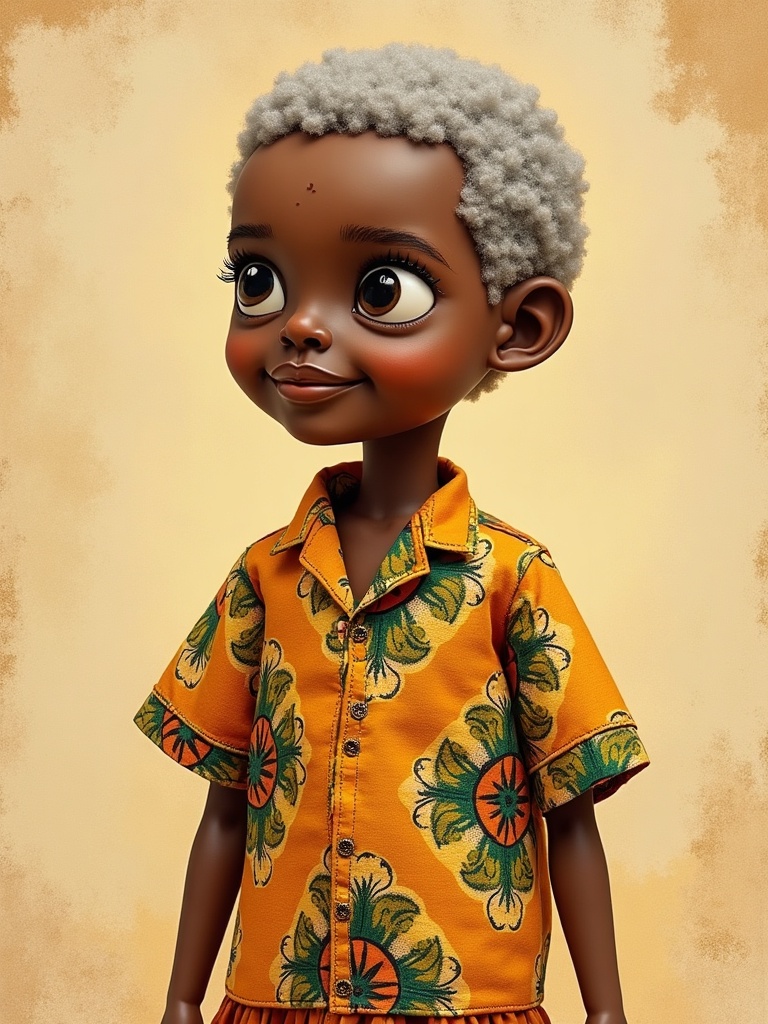
Young Rolihlahla, who herds the cattle and is the first in his family to attend school — curious, justice-loving. Simple rural clothing. Gift: Education as a weapon (in the making).[1]
Answer all three to unlock this stage.
Unlock the previous stage first.
Crafting the doll
Fabrics & Manufacturing Notes
Real natural fibers, honest workmanship, lifelong repairability — and with Mandela the most joyful hallmark of the entire series: the colorful Madiba shirt.
The Materials List
The Garment: the Madiba shirt
Mandela's unmistakable mark is the loose, colorfully patterned „Madiba shirt" — made of 100 % cotton/silk-look in gold, green and turquoise, with a generous pattern. It is the warmest, most joyful outfit in the collection. For the statesman stage, a plain dark suit with a green band. Important: Patterns only in respectful homage, not an exact copy of protected designs.
Signature attributes: open hand, book, dove
Instead of a weapon, Mandela carries the open hand (extended in greeting) as his trademark, plus a small fabriclaw book (education) and optionally a feltdove of peace. Deliberately no chains, no prisoner symbols as a "toy" — dignity, not suffering. No small parts that can be swallowed in the school/toddler line.
Signature, License & Educational Card
The name "Mandela"/"Madiba" may only go on the hem under license from the foundation. Enclosed is a Education card with life dates, the Ubuntu idea and a real, authenticated Mandela quote (checked against the foundation's quote database). Optional QR thread to the Nelson Mandela Foundation.
Production stages & effort
Madiba shirt, open hand, fabric law book, education card with real quote. The reconciliation figure (licensed only).
Simplified shirt, small book. Affordable entry point.
Washable, reinforced seams. With an educational card for values and history lessons.
How this doll is made
This homage doll honours Nelson Mandela by celebrating his Thembu/Xhosa material culture rather than his face: the ochre-dyed cloth, geometric glass beadwork and long isidanga neck-ornaments of the Eastern Cape, set beside his world-famous loose, brightly printed "Madiba shirt." Together they tell a story of dignity, heritage and reconciliation through fabric and beads, not likeness.
- Garments 3
- Accessories 2
- Materials 2
- Techniques 3
Garments
- Madiba shirtA loose-fitting, untucked shirt of brightly patterned silk or cotton, worn open at the collar without a necktie. Adapted from Indonesian batik (popularised at Indonesia's independence), it became Mandela's signature after 1994 as a deliberate move away from the Western suit toward an approachable, African-rooted style. Homage element only, not a likeness.DetailsEN
- Umbhaco / isikhakha wrapXhosa/Mfengu wrap skirt and cloth made from a white cotton blanket dyed with ochre, decorated across the front with rows of black wool strips, beadwork and mother-of-pearl shell buttons. The everyday ochre-toned cloth of Mandela's Eastern Cape homeland; pair with a draped shoulder-cloth for the doll.DetailsEN
- Ochre shoulder blanket / draped clothA simple rectangular cloth or blanket coloured with red ochre, worn draped over one shoulder and wrapped at the body in Xhosa custom. Use undyed natural cotton or wool tinted a deep brick-red to evoke the traditional ochre cloth.DetailsEN
Accessories
- Isidanga (long beaded neck-ornament)The long beaded necklace worn looped around the neck and chest (its short counterpart is the isichebe). Make it from threaded glass seed-beads in white, blue and pink — the classic Xhosa combination — strung in straight rows; a marker of status and life-stage.DetailsEN
- Beaded collar, bands & ankletsFlat geometric beaded panels worn at the neck, wrists and ankles. Patterns carry meaning — chevrons for trees, zig-zags for rivers, diamonds for stars — stitched in small openwork that covers large areas with few beads. Add as removable beaded trims on the doll.DetailsEN
Materials
- Glass seed-beadsSmall glass trade beads, introduced by 19th-century European traders and long since adopted as the core medium of Nguni/Xhosa adornment. Choose white (purity, wellbeing), blue (spiritual immersion/youth), red (royalty, beloved of the ancestors) and green (new life, fertility).DetailsEN
- Red ochre pigmentNatural red ochre (iron-rich clay) used to colour cloth, blankets and the body in Xhosa custom, giving the characteristic deep brick-red tone the Thembu favour. For the doll, use a fast, child-safe ochre/terracotta dye or pigment on natural cloth.DetailsEN
Techniques
- Ukuhlala (Xhosa bead threading)The Xhosa beadwork technique: beads are threaded and the work is stitched onto a flat fabric or hide backing (historically cowhide or goatskin, now cloth). Originally threaded on animal sinew or twisted aloe (ikhala) plant fibre without a needle; today cotton or nylon thread with a needle. Build the doll's bead pieces as small stitched panels.DetailsEN
- Batik wax-resist printingThe wax-resist dyeing method behind the Madiba shirt's vivid prints: designer Desré Buirski learned traditional batik and silk production in Bali, hand-painting and wax-resist dyeing the silk before presenting Mandela his first shirt in 1994. For a doll, mimic the look with a bright printed cotton.DetailsEN
- Ochre cloth-dyeing & wool appliquéHow the umbhaco is made: a white cotton blanket is dyed with ochre, then decorated by appliquéing narrow strips of black wool in straight rows and zig-zags, alternating with rows of shell buttons and beadwork sewn over the front. Replicate with tinted cloth and stitched dark trim plus button rows.DetailsEN
How it's made
Every doll is sewn by hand from natural materials — built to last a lifetime and to be repaired, not replaced. Here is the shopping list and the work steps. Sizes: Classic 32 cm (heirloom) · Kidogo 18–20 cm (toddlers, no small parts) · Shule 28 cm (school edition).
Shopping list
- Natural cotton or linen for the body (skin tone), ~0.5 m
- Wool or cotton stuffing — no plastic
- Cotton thread and embroidery floss in matching colours
- Garment fabric in this doll's colours (see the fabrics above)
- Yarn for the hairstyle
- Beads, cowrie shells and trims as shown
- Sharps and embroidery needles, pins, fabric scissors, fabric marker
Work instructions
- Trace and cut the body pattern at your chosen size (Classic 32 cm / Kidogo 18–20 cm / Shule 28 cm).
- Sew the body pieces right sides together, leave an opening, turn and stuff firmly with natural fibre, then close by hand.
- Embroider the face gently and with dignity — no plastic parts for the toddler line.
- Make the hair from yarn following the chosen hairstyle and attach it securely.
- Cut and sew the garment from this doll's fabric, then dress the doll.
- Add the beadwork, shells, trims and any attribute by hand.
- Check every seam and reinforce it — the doll should be lifelong and repairable, with no loose small parts for small children.
Ten Name Suggestions
Mandela's name itself is protected. These ten names — from his world, the Xhosa & South Africa — are suitable for companion figures or a respectful series in the spirit of Mandela (not as a substitute "Mandela"). To be confirmed by South African bodies before use.
Lovely for the classroom: „Amandla!" (Power!) — together with the response „Awethu!" („it belongs to us!") — became the rallying cry of the freedom movement: a whole story in a single word.
Origin & Ethics
How we know this
On honesty: Mandela is fully documented (★★★★★) — his own autobiography, speeches, archives, the foundation. Unlike the centuries-old figures, here only real, documented quotes with their occasion & source are used — no „loosely invented" ones. The foundation explicitly warns against falsely attributed quotes. Mandela's story also has difficult parts (the armed wing of the ANC, personal & political conflicts) — these are not hidden, but placed in context in an age-appropriate way & with guidance. Above all, however: name & likeness are legally protected; this compendium is a respectful draft, and a real doll would only be possible with the explicit license of the Nelson Mandela Foundation. Final approval rests strictly with the foundation & family.
Approval (the foundation!) & Sources
Here Mandela differs fundamentally from all other figures: It is not (only) about cultural appreciation, but about tangible rights. Mandela's name, image and voice are protected; the Nelson Mandela Foundation is the central, binding authority. Without its license there is no doll — period.
The approval body
The five-step protocol
Unlike usual, here the formal licensing request to the Nelson Mandela Foundation right at the very beginning — before any design. Presentation of the vision, 42% rule, educational revenue model.
Draft & have all texts/quotes authenticated via the official quote database of the foundation (strictly avoid misattributed quotes).
Foundation & family for rights/dignity, cultural bodies for remembrance, Xhosa/Thembu voice for clan references.
Written License — or a refusal that is fully accepted. Without a license, nothing is produced, shown or sold.
An agreed share of the proceeds flows (in addition to the seamstresses' 42 %) to the Foundation & its educational work — the doll serves his legacy, not just his image.
Golden rules regarding Mandela: no portrayal without a license, only authenticated quotes, dignity instead of suffering (no prisoner clichés as toys), no party promotion and the honest, age-appropriate framing of the difficult parts of his history (the armed wing of the ANC).
Sources to watch
Sources
- Nelson Rolihlahla Mandela, born 18 July 1918 in Mvezo (Madiba clan, Thembu/Xhosa), the first in his family to attend school; 18 of his 27 years of imprisonment on Robben Island. libguides.nypl.org: Nelson Mandela Biography.
- Military ANC leader, sentenced to life imprisonment in 1964; negotiations from 1982 onward; freed on 11 February 1990 after 27 years; voluntary withdrawal in 1999. nobelprize.org: Nobel Peace Prize 1993.
- Joined the ANC, Defiance Campaign, armed wing Umkhonto we Sizwe; 27 years of imprisonment as a symbol of resistance. ebsco.com: Nelson Mandela.
- Nobel Peace Prize 1993 (with de Klerk); first Black president in 1994; Truth & Reconciliation Commission 1995, new constitution 1996; Nelson Mandela Foundation 1999; Mandela Day. britannica.com: Nelson Mandela.
- Best-known leader of the resistance against apartheid; Robben Island 1964–82; first Black president 1994–99. britannica.com: Nelson Mandela (overview).
- Personal sacrifice: 27 years of imprisonment, offers of release in exchange for giving up the struggle always refused; after his release no revenge, but reconciliation; died 5 December 2013 at the age of 95. businessandleadership.com: Mandela's Leadership.
- Robben Island: tiny cell, hard labor in the limestone quarry, one letter/visit every six months; 1994 inauguration speech 'time to heal the wounds'. polsci.institute: Apartheid to Reconciliation.
- "Education is the most powerful weapon which you can use to change the world." — Speech at the launch of the Mindset Network, July 2003. globalcitizen.org: Mandela Quotes.
- "No one is born hating …" — from "Long Walk to Freedom" (1994/95). goodreads.com: Nelson Mandela Quotes; humanrightscareers.com.
- The Nelson Mandela Foundation maintains authenticated quotations and warns against misattributed ones (e.g. "our deepest fear" is by Marianne Williamson, NOT by Mandela); the official rights and remembrance authority. nelsonmandela.org: FAQs.
- Wikipedia, Madiba shirt — fabric, batik origin, designers, Mandela's adoption
- Wikipedia, Desré Buirski — creator of the Madiba shirt, batik/silk technique, 1994 gift, 150+ shirts
- Selvedge Magazine, Mandela's Madiba Shirts — silk batik prints, Indonesian origin, meaning
- The Metropolitan Museum of Art, Umbhaco wrap skirt (Xhosa or Mfengu) — cotton/wool/glass beads/shell buttons/ochre, construction
- Amathole Museum (Eastern Cape, South Africa), The Significance of Beadwork — ukuhlala threading, materials, isidanga, colour meaning
- Museums Victoria, Southern Nguni Beadwork — glass beads, Xhosa colour meanings, neck ornaments, forms
- alache, Thembu beadwork, communicating through craft — Thembu/Xhosa colours, ochre brick-red, patterns, ukuhlala
- The Language of Xhosa Beadwork and Symbolic Colors, Living Traditions — colour symbolism in Xhosa beadwork