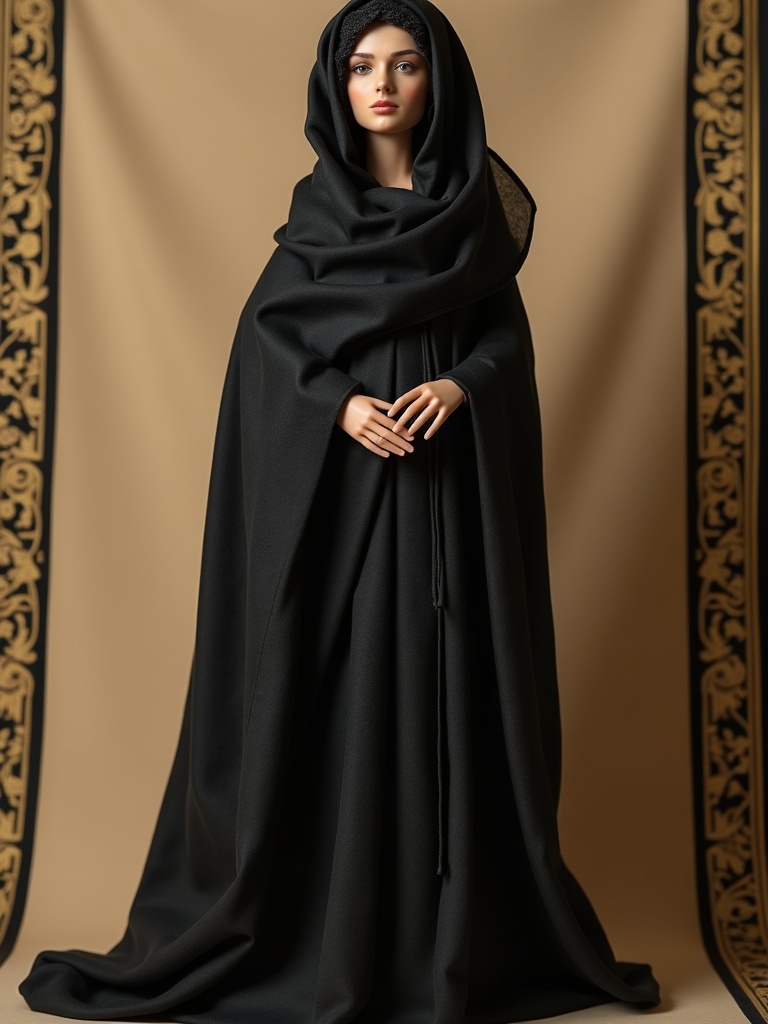
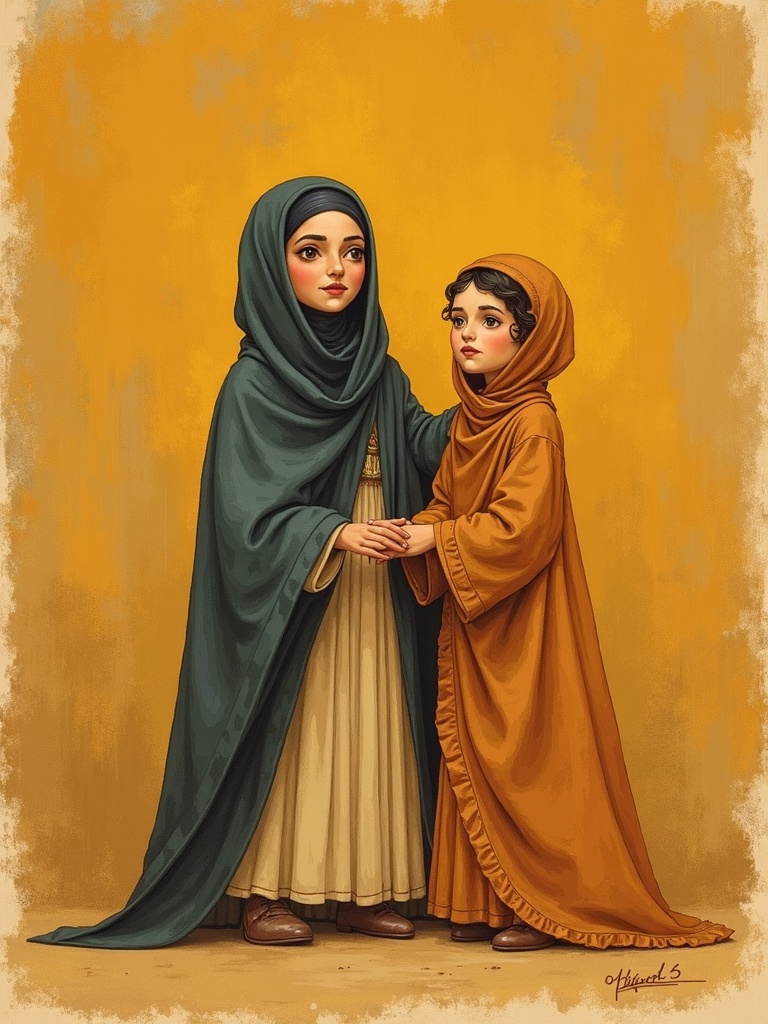
AI design preview — not a photo of the finished handmade doll
Pioneer of Arab Feminism
Huda Sha'arawi
She grew up behind latticed screens, where women could look out at the world but never be seen — and she spent her life pulling those screens away. Huda Sha'arawi turned a single lifted veil into the beginning of a movement.
- People
- Egyptian
- Country
- Egypt
- Region
- North Africa
- Era
- 1879–1947
- Theme
- Pioneer of Arab Feminism
⚖ A respectful concept
Huda Sha'arawi was a real, documented public figure who died in 1947; Egypt's heritage community and historians keep her memory. This doll is a respectful homage, never an exact likeness of her face — only documented words attributed to her in published sources are quoted, and the design is offered as a draft for review, not a finished portrait. The consent of Egyptian cultural institutions and her descendants is implied and welcomed. Her dignity is honoured throughout; the violence of colonial repression around her is named soberly, never depicted.
Make your own
Design your Huda Sha'arawi
Pick a garment, a hairstyle and a scene, enter the PIN and generate a fresh image of Huda Sha'arawi with AI.
⚖ AI homage concept — not a likeness of the real person.
Each image is generated live with fal.ai.
Generated images
AI design preview — not a photo of the finished handmade doll
No images generated yet — be the first.
Tradition & Origin
She grew up behind latticed screens, where women could look out at the world but never be seen — and she spent her life pulling those screens away. Huda Sha'arawi turned a single lifted veil into the beginning of a movement.
Huda Sha'arawi was born on 23 June 1879 in Minya, in Upper Egypt, into one of the country's most powerful families; her father, Muhammad Sultan Pasha, would become president of Egypt's Chamber of Deputies. Like other girls of her class she lived in seclusion, yet she was educated alongside her brothers, studied grammar and calligraphy, and had memorised the Qur'an by the age of nine. Married at thirteen to her much older cousin Ali Sha'arawi, she separated from him soon after — and those years of independence, spent reading and thinking, quietly shaped the woman she became.
She first changed Egypt not through politics but through care. In 1909 she founded the Mabarrat Muhammad Ali, the first philanthropic society run by Egyptian women, opening medical services to poor women and children, and she helped establish a school for girls that taught real academic subjects rather than only household skills. When Egypt rose against British occupation in 1919, Sha'arawi stepped from the harem into the street: on 16 March she helped lead a march of some three hundred women through Cairo, holding their nationalist placards as British troops closed around them. One woman, Hamida Khalil, was killed — among the first martyrs of the revolution.
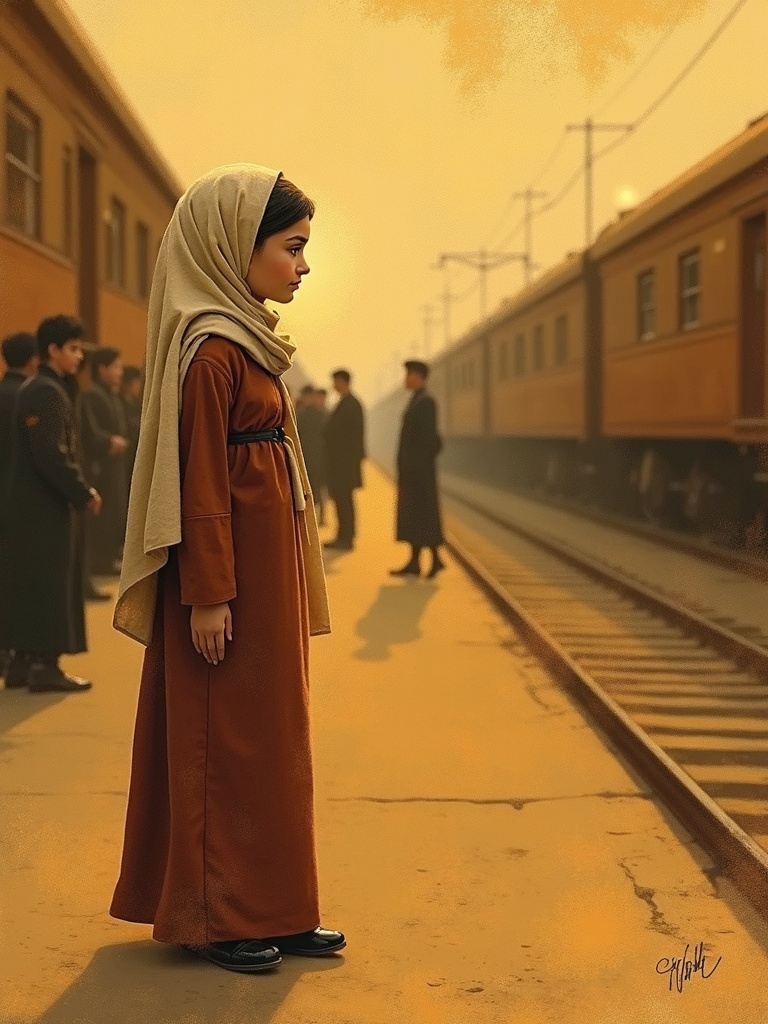
In 1923 she founded the Egyptian Feminist Union and became its lifelong president, campaigning to raise the marriage age for girls to sixteen, widen girls' education, and reform marriage, divorce and custody law, and carrying the message in two journals, the French L'Égyptienne and the Arabic al-Misriyya. Returning that same year from a suffrage congress in Rome, she performed the act for which she is best remembered: she lifted her face veil on a Cairo railway platform. The women who had come to greet her, after a stunned silence, lifted theirs too. Her memoir's editor wrote that the gesture 'signaled the end of the harem system in Egypt.'
Sha'arawi widened her vision beyond Egypt, convening the first Arab Feminist Conference in 1944 and leading the Arab Feminist Union, where she told Arab statesmen their new League was 'only one half of the League, the League of half the Arab people.' She died on 12 December 1947, decorated with Egypt's highest civilian honour — and yet, after a lifetime of struggle, still without the right to vote. Egyptian women would not gain the franchise until 1956, nearly a decade after her death.
Timeline
- 1879Born 23 June in Minya, Upper Egypt, into the leading Sultan family.
- 1909Founds the Mabarrat Muhammad Ali, the first philanthropic society run by Egyptian women.
- 1919Helps lead the first women's demonstration against British rule on 16 March.
- 1923Founds the Egyptian Feminist Union and lifts her face veil at a Cairo railway station.
- 1944Convenes the first Arab Feminist Conference and leads the Arab Feminist Union.
- 1947Dies 12 December, honoured with Egypt's highest decoration.
Did you know?
- By the age of nine Huda had memorised the entire Qur'an, even though a tutor had told her that, as a girl, she would have little need to master Arabic.DetailsEN
- Historians credit Sha'arawi with causing the abandonment of the yashmak — the fine muslin face veil of elite Egyptian women — across Egypt in the 1920s.DetailsEN
- The veil she lifted was the burqu', the face-cover reaching from below the eyes to the chest, one part of the black habara that was called 'the national Egyptian dress for upper-class women.'DetailsEN
- Her memoir, Harem Years, gives a rare first-hand view of women's lives behind the wooden lattice screens through which they could watch the world unseen.DetailsEN
She never cast a single vote, yet she opened the door through which millions of women would one day walk.
Values & Capabilities
Capabilities
◆◆◆◆◆ shows how central a gift is — five diamonds mark a signature strength, fewer mark a supporting one.
With one quiet gesture on a train platform she helped open the public world to a generation of women.
She led the first great street demonstration of Egyptian women against colonial rule.
She built Egypt's first lasting movement for women's rights and led it for the rest of her life.
Before politics, she opened doors of learning and care for women and girls.
She carried the cause of women's dignity across the whole Arab world, not Egypt alone.
Development
1 of 6 stages unlocked
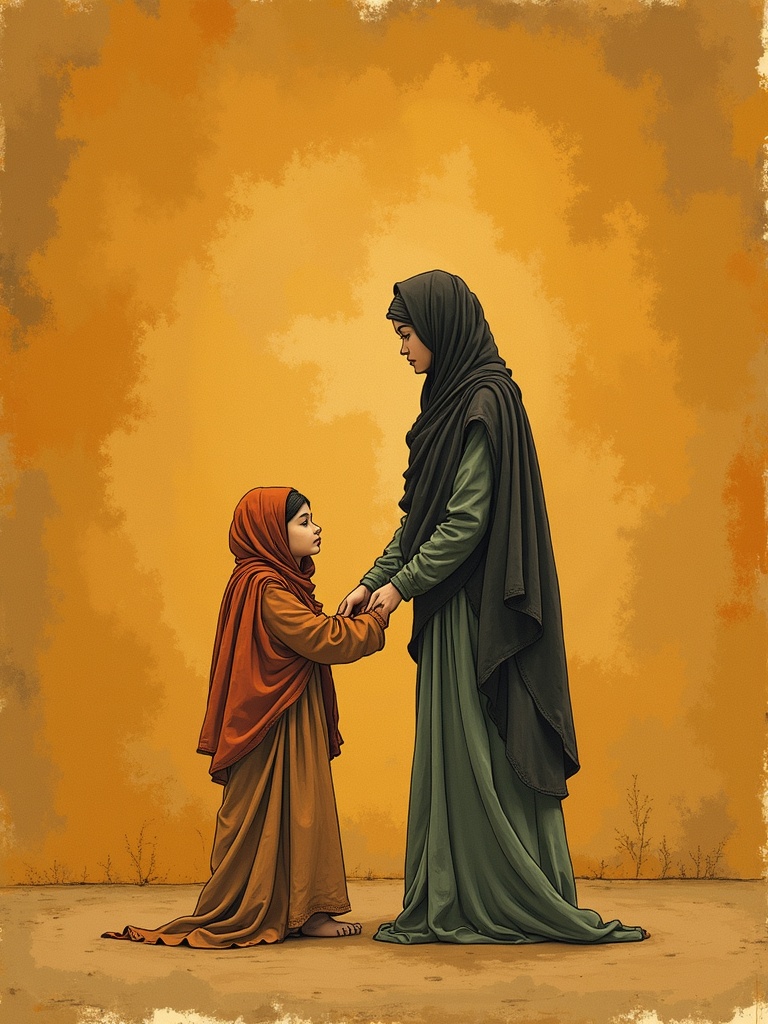
Born in 1879 into a leading Egyptian family, she grew up secluded yet learned to read, write and recite the Qur'an alongside her brothers.
Answer all three to unlock this stage.
Unlock the previous stage first.
Unlock the previous stage first.
Unlock the previous stage first.
Unlock the previous stage first.
Crafting the doll
This doll is grounded in the dress of early-20th-century Cairo: the flowing black silk habara over-wrap and the fine muslin face veil (yashmak / burqu') that elite Egyptian women wore — and that Sha'arawi famously set aside. Her signature attribute is that lowered veil, held in the hand rather than worn, alongside a small printed journal for the Egyptian Feminist Union's magazine. The education card on the back tells how one quiet gesture and one lasting organisation opened public life to women. Sizes: Classic 32 / Kidogo 18–20 / Shule 28. A share of proceeds supports girls' education and women's rights programmes in Egypt and the wider region.
How this doll is made
Her look is built from the elite dress of early-20th-century Cairo — the black silk habara over-wrap and the fine muslin face veil that she, more than anyone, helped Egyptian women set aside.
- Garments 2
- Accessories 3
- Materials 2
- Techniques 3
Garments
- Habara Over-WrapThe 'national Egyptian dress for upper-class women': a flowing black wrap of a full-length skirt and head cover worn outdoors in the city.DetailsEN
- High-Collared 1920s GownThe elegant European-influenced dress elite Egyptian women adopted once they entered public life unveiled, often cream or dark silk with fine tailoring.DetailsEN
Accessories
- Yashmak Face VeilA fine muslin face-and-head veil worn by upper-class Egyptian and Ottoman women; Sha'arawi 'caused the abandonment of the yashmak in Egypt during the 1920s'.DetailsEN
- Burqu' Face-CoverThe face-cover from below the eyes to the chest, part of the habara ensemble — the very piece Sha'arawi lifted at the railway station.DetailsEN
- Order of Virtues DecorationEgypt's high civilian honour (Nishan al-Kamal / Order of Virtues), awarded to Sha'arawi near the end of her life, worn as a small breast decoration.DetailsEN
Materials
Techniques
- Veil TyingThe yashmak was arranged from two muslin pieces — one tied across the face below the nose, one across the forehead — and draped over the head.DetailsEN
- Silk Wrapping and DrapingThe habara was not tailored but wrapped and draped about the body and head, an art of folding the long black cloth so it fell gracefully when walking.DetailsEN
- Letterpress Journal PrintingThe Egyptian Feminist Union spread its ideas through printed journals — the French L'Égyptienne (1925) and Arabic al-Misriyya (1937) — produced on the letterpress of the day.DetailsEN
How it's made
Every doll is sewn by hand from natural materials — built to last a lifetime and to be repaired, not replaced. Here is the shopping list and the work steps. Sizes: Classic 32 cm (heirloom) · Kidogo 18–20 cm (toddlers, no small parts) · Shule 28 cm (school edition).
Shopping list
- Natural cotton or linen for the body (skin tone), ~0.5 m
- Wool or cotton stuffing — no plastic
- Cotton thread and embroidery floss in matching colours
- Garment fabric in this doll's colours (see the fabrics above)
- Yarn for the hairstyle
- Beads, cowrie shells and trims as shown
- Sharps and embroidery needles, pins, fabric scissors, fabric marker
Work instructions
- Trace and cut the body pattern at your chosen size (Classic 32 cm / Kidogo 18–20 cm / Shule 28 cm).
- Sew the body pieces right sides together, leave an opening, turn and stuff firmly with natural fibre, then close by hand.
- Embroider the face gently and with dignity — no plastic parts for the toddler line.
- Make the hair from yarn following the chosen hairstyle and attach it securely.
- Cut and sew the garment from this doll's fabric, then dress the doll.
- Add the beadwork, shells, trims and any attribute by hand.
- Check every seam and reinforce it — the doll should be lifelong and repairable, with no loose small parts for small children.
Origin & Ethics
How we know this
This record is highly documented: her dates, family, the 1909 Mabarrat, the 1919 march, the 1923 founding of the Egyptian Feminist Union and the unveiling, the 1944 Arab Feminist Union and her 1947 death with Egypt's highest honour are all attested in encyclopaedic and scholarly sources, several drawing on her own translated memoir. The exact month of the unveiling and the precise size of the 1919 march vary between sources; we use the careful, widely-cited versions. As a real recent person she is treated under rights discipline: homage not likeness, documented quotes only, dignity never violence.
This homage is offered for the review of Sha'arawi's descendants and of Egyptian cultural and heritage bodies (such as Egypt's national archives, women's-rights organisations and museums that carry her legacy). Only documented, published words are attributed to her, and the figure is presented as a respectful draft rather than a finished or authorised likeness, to be amended on request.
Sources
- Huda Sha'arawi — Wikipedia
- Huda Sharawi, Egyptian Feminist & Nationalist — Encyclopaedia Britannica
- 1919: Egyptian Feminist Leads Liberation March — Women's eNews
- Shaarawi, Huda (1879–1947) — Encyclopedia.com
- Harem Years: The Memoirs of an Egyptian Feminist (1879–1924), trans. Margot Badran — Internet Archive
- Niqāb in Egypt (habara, burqu', Sha'arawi's unveiling) — Wikipedia
- Yashmak (veil worn and abandoned by Egyptian women) — Wikipedia
- Arab Feminist Union — Encyclopaedia Britannica
- The Centennial of the Egyptian Feminist Union (1923–2023): Remembering Huda Shaarawi — Women of Egypt Mag