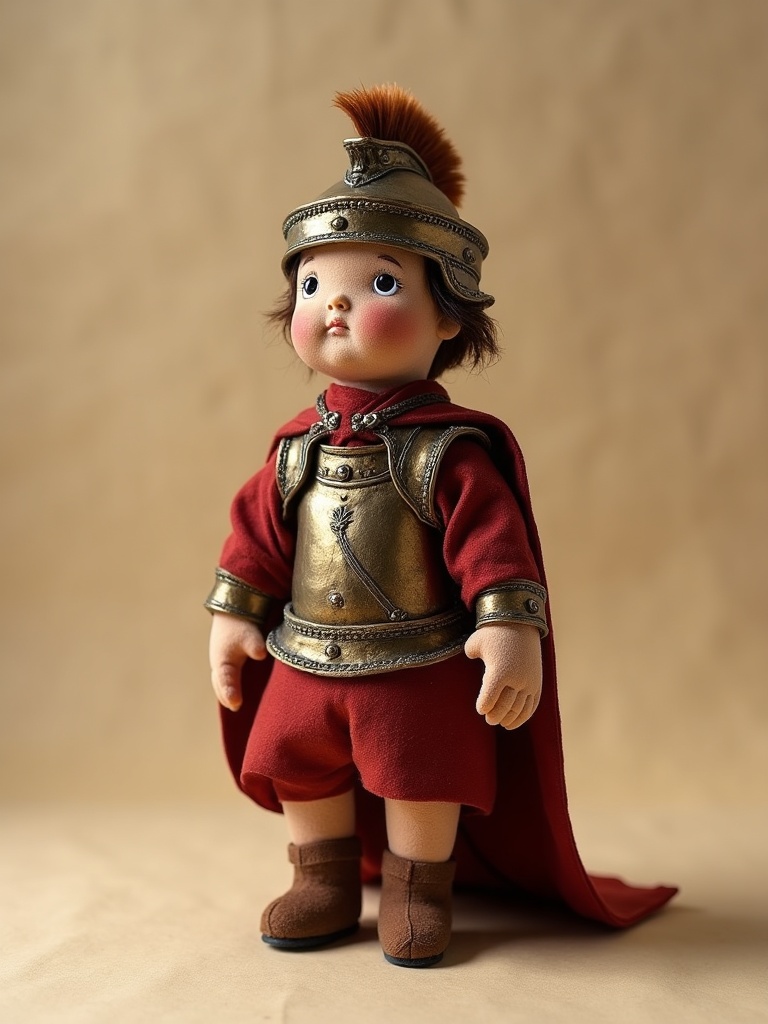
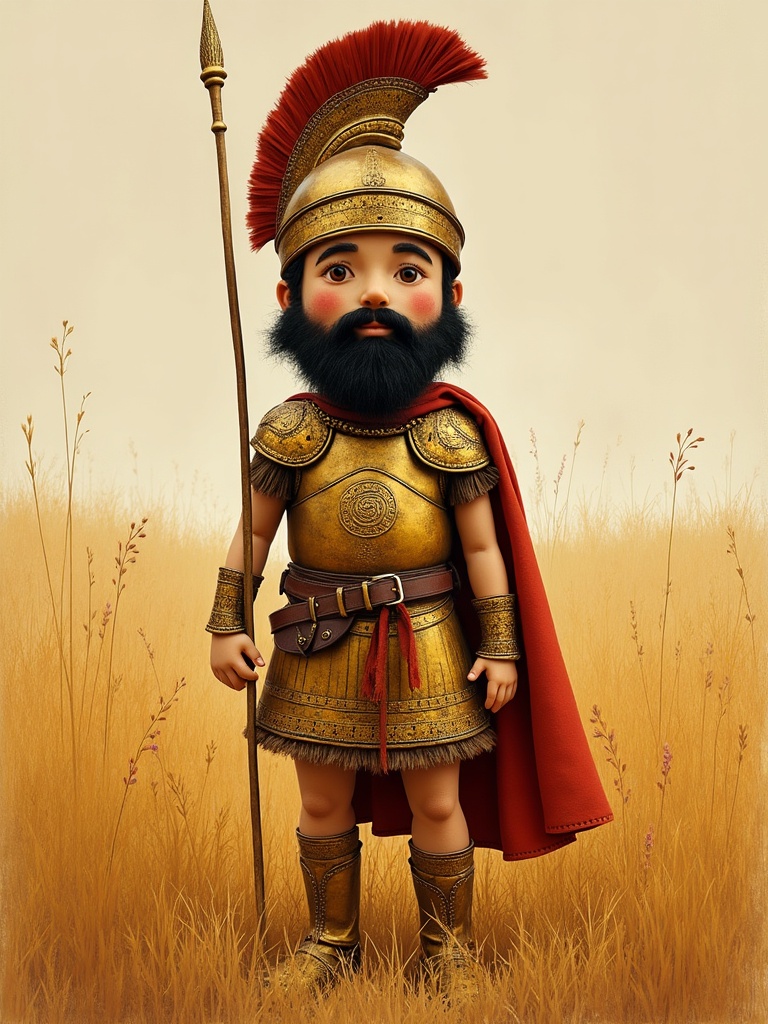
AI design preview — not a photo of the finished handmade doll
Strategy & Daring
Hannibal Barca
From the great African-Mediterranean city of Carthage came a general who turned movement itself into a weapon — marching war elephants over the snow-bound Alps to carry the fight into the heart of Rome, and at Cannae teaching the world a lesson in strategy that armies still study more than two thousand years later.
- People
- Carthaginian (Punic)
- Country
- Tunisia
- Region
- North Africa
- Era
- 247–183 BCE
- Theme
- Strategy & Daring
Make your own
Design your Hannibal Barca
Pick a garment, a hairstyle and a scene, enter the PIN and generate a fresh image of Hannibal Barca with AI.
Each image is generated live with fal.ai.
Generated images
AI design preview — not a photo of the finished handmade doll
No images generated yet — be the first.
Tradition & Origin
From the great African-Mediterranean city of Carthage came a general who turned movement itself into a weapon — marching war elephants over the snow-bound Alps to carry the fight into the heart of Rome, and at Cannae teaching the world a lesson in strategy that armies still study more than two thousand years later.
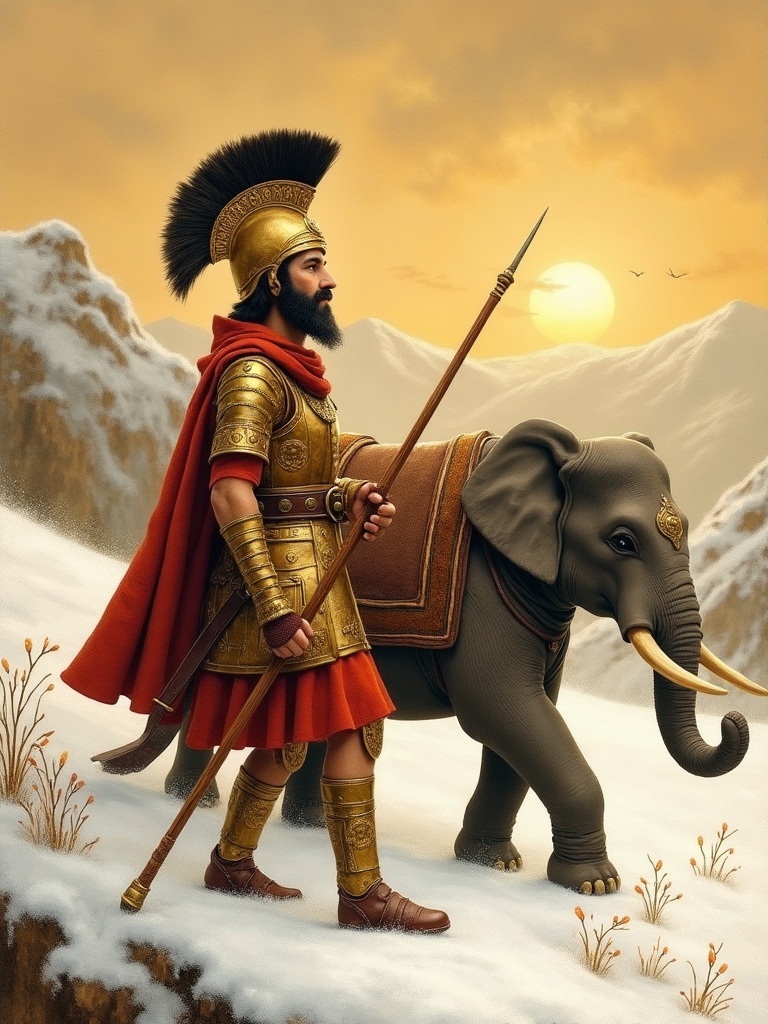
Per Polybius, citing Hannibal's own inscription, 37 elephants reached Italy — most perished in the cold that winter.
DetailsENRoughly 50,000 against about 86,000 Romans — yet his double envelopment swallowed the larger force whole.
DetailsENHannibal Barca was born in 247 BCE in Carthage, the powerful Phoenician (Punic) city on the North African coast near modern Tunis, Tunisia. He was the eldest son of the celebrated commander Hamilcar Barca, and grew up inside a remarkable military family — his brothers Hasdrubal and Mago would also command armies. Carthage was no provincial outpost: founded by Phoenician colonists from Tyre (tradition dates it to 814 BCE), it became a Mediterranean superpower built on seafaring and trade. Its engineers built the famous cothon, a vast circular double harbour — commercial and military — that was among the largest in the ancient world and a symbol of Punic maritime genius.
When the Second Punic War broke out, Hannibal made one of the boldest decisions in military history. Rather than wait for Rome, in 218 BCE he marched an army out of Spain, ferried elephants across the Rhône on rafts, and led his men over the Alps in the teeth of winter — a feat long thought impossible. According to the Greek historian Polybius, who read an inscription Hannibal himself had set up, the army that reached Italy still numbered some 20,000 infantry, 6,000 cavalry and 37 war elephants, though most of those elephants did not survive the bitter cold that followed. (The colourful tale, told by Livy, of soldiers splitting Alpine rocks with fire and vinegar is now regarded by historians as legend, not fact.)
On 2 August 216 BCE, near the village of Cannae in southern Italy, Hannibal delivered his masterpiece. Heavily outnumbered, he let his centre bow backward into a crescent while his seasoned African infantry and superb cavalry closed the flanks — a perfect double envelopment that swallowed a much larger Roman army whole. It remains the textbook example of encirclement, taught in war colleges to this day. Yet for all his brilliance on the field, Hannibal campaigned in Italy for some fifteen years without ever taking the city of Rome itself; eventually recalled to defend Carthage, he was defeated at Zama in 202 BCE.
What is often forgotten is that Hannibal's second act was as a statesman and reformer. Elected suffete (chief magistrate) in 196 BCE, he revived the authority of the office, reorganised Carthage's revenues, and reformed the Council so its members were elected rather than self-appointed — letting the city pay its heavy war indemnity without crushing new taxes. His reforms alarmed the entrenched oligarchy, who turned on him; he chose exile, advising kings in the Seleucid and Bithynian courts. Cornered at last by Rome's demands, he took poison rather than surrender, dying in the winter of 183/182 BCE — a strategist to the very end.
Timeline
- 247 BCEborn in Carthage, son of Hamilcar
- 218 BCEthe daring Alpine crossing with ~46,000 troops & 37 elephants
- 218–217 BCEvictories at Trebia and Lake Trasimene
- 216 BCECannae — his masterpiece encirclement
- 216–203 BCEsixteen years undefeated in Italy, yet unable to take Rome
- 202 BCEdefeated at Zama by Scipio; later exile
- 146 BCERome destroys Carthage
Did you know?
- To get his elephants across the wide Rhône River, Hannibal's engineers built huge earth-covered rafts disguised as solid ground, then floated the animals over before the long climb into the Alps.DetailsEN
- The dramatic story that Hannibal's soldiers split blocking boulders by heating them and dousing them with vinegar comes from the historian Livy and is now treated as legend rather than documented fact.DetailsEN
- After the war, Hannibal reinvented himself as a reformer: as suffete of Carthage in 196 BCE he overhauled the city's finances so effectively that it could pay Rome's enormous indemnity without raising new taxes.DetailsEN
- Carthage's heart was the cothon, a vast circular double harbour — one military, one commercial — counted among the greatest engineering works of the ancient Mediterranean.DetailsEN
A mind that moved mountains, armies, and a whole city's fortunes — proof that strategy, born in Africa, can change the shape of the world.
Values & Capabilities
Capabilities
◆◆◆◆◆ shows how central a gift is — five diamonds mark a signature strength, fewer mark a supporting one.
At Cannae he deliberately weakened his own centre so the Romans pushed in; his cavalry smashed their wings, then swung behind to seal the trap, encircling a far larger army. It is still taught at military academies as the textbook encirclement.
He took an entire army, baggage and war elephants over the Alps in winter to attack from the one direction Rome thought impossible.
He swam rivers ahead of his men and slept on the bare ground as they did, holding a multi-ethnic army loyal for sixteen years far from home.
Before Cannae he seized the Aufidus River — the only water for miles — so the larger Roman force fought thirsty in the August heat.
Cut off in enemy country, outnumbered and unsupplied, he never lost a pitched battle for sixteen years — yet never took Rome itself.
Development
1 of 3 stages unlocked
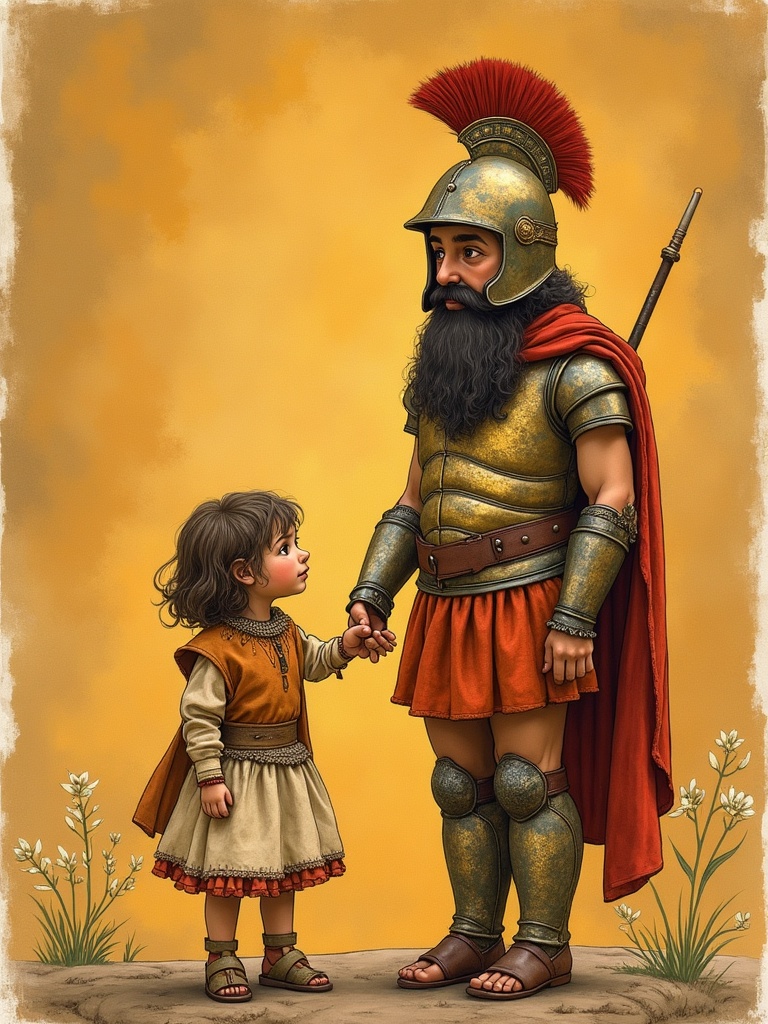
Young Hannibal in his father’s camp, learning the trade of command.
Answer all three to unlock this stage.
Unlock the previous stage first.
Crafting the doll
Garment: a bronze-look cuirass (felt/leather) over a deep-red tunic, a crested helmet, a cloak. Signature attribute: a small war elephant and a battle map. Education card: the Alps crossing and the Cannae encirclement (with a simple diagram), Carthage as a North African power, and the honest debate over claiming Hannibal as "African." Sizes as standard. Proceeds → Tunisian/Carthaginian heritage (the ruins of Carthage).
How this doll is made
Hannibal's look is rooted in Carthaginian (Punic) material culture: prestige wool-and-linen garments coloured with the city's signature murex purple, bronze body-armour of Italiote and Celtic type traded across the western Mediterranean, and the fine glass-bead and gold jewellery for which Phoenician craftsmen were famous. The doll honours a strategist and statesman through the dignity of Carthage's craft traditions, not the violence of war.
- Garments 2
- Accessories 4
- Materials 1
- Techniques 3
Garments
- Purple-dyed tunic and cloakElite Punic dress drew on Greek-influenced forms: a sleeved chiton-style tunic with a draped himation cloak over it, made of wool and linen. The prestige version was coloured with Tyrian (Phoenician) purple, the dye Carthage inherited from Tyre.DetailsEN
- Numidian cavalry tunicHannibal's famous Numidian light horsemen wore only a simple belted or unbelted tunic, with a round leather (hide-covered) shield or a leopard skin and no body armour — a North African cavalry look closely tied to his army.DetailsEN
Accessories
- Triple-disc bronze cuirassThe Ksour Essef cuirass — found in a Punic tomb near Mahdia, Tunisia, now in the Bardo National Museum — is a gilded-bronze 'triple-disc' breastplate, one disc bearing the helmeted goddess Minerva. It shows the Italiote-style body armour worn in the Carthaginian world.DetailsEN
- Montefortino-type bronze helmetA bronze helmet, semicircular at the base, spin-formed and chased to a conical shape and topped with a mushroom-shaped knob, with hinged cheek-guards. Examples were recovered from the 241 BCE Battle of the Aegates that ended the First Punic War.DetailsEN
- Grotesque-mask glass head pendantA classic item of Carthaginian jewellery: a small pendant bead shaped as a bearded male head or mask with bulging eyes, curly hair and protruding nose, strung on a necklace. Worn as an amulet against the evil eye.DetailsEN
- Punic gold jewelleryCarthaginian goldsmiths made pendants, discoid amulets, earrings and pins, often with Egyptianising motifs (solar disk, crescent, ankh). Gold was hammered, cast, granulated, worked in repoussé and applied as gold leaf.DetailsEN
Materials
- Tyrian (murex) purpleThe signature Phoenician/Punic colour, ranging from deep purple to crimson, extracted from sea-snail glands. Carthage ran dye works at sites such as Kerkouane and Djerba; its prestige made purple cloth worth more than its weight in gold.DetailsEN
Techniques
- Murex purple dyeingWorkers crushed and putrefied thousands of murex shells (Bolinus brandaris, Hexaplex trunculus), baked the mash in the sun, then boiled it with salt and dipped fleece in it. Roughly 10,000–12,000 snails yielded about 1 gram of dye — enough only for a garment's hem — and processing had to happen near the coast while the glands were fresh.DetailsEN
- Core-formed glass bead makingPunic glassworkers shaped opaque glass on a rod or core into heads and faces, then trailed and applied threads of contrasting black, white and yellow opaque glass for the eyes, hair and beard while the glass was still hot.DetailsEN
- Gold granulation and repousséPhoenician and Punic goldsmiths fused tiny gold grains onto a surface (granulation) and worked thin gold sheet from behind to raise relief (repoussé), alongside filigree and casting — techniques the Phoenicians spread across the Mediterranean.DetailsFR
How it's made
Every doll is sewn by hand from natural materials — built to last a lifetime and to be repaired, not replaced. Here is the shopping list and the work steps. Sizes: Classic 32 cm (heirloom) · Kidogo 18–20 cm (toddlers, no small parts) · Shule 28 cm (school edition).
Shopping list
- Natural cotton or linen for the body (skin tone), ~0.5 m
- Wool or cotton stuffing — no plastic
- Cotton thread and embroidery floss in matching colours
- Garment fabric in this doll's colours (see the fabrics above)
- Yarn for the hairstyle
- Beads, cowrie shells and trims as shown
- Sharps and embroidery needles, pins, fabric scissors, fabric marker
Work instructions
- Trace and cut the body pattern at your chosen size (Classic 32 cm / Kidogo 18–20 cm / Shule 28 cm).
- Sew the body pieces right sides together, leave an opening, turn and stuff firmly with natural fibre, then close by hand.
- Embroider the face gently and with dignity — no plastic parts for the toddler line.
- Make the hair from yarn following the chosen hairstyle and attach it securely.
- Cut and sew the garment from this doll's fabric, then dress the doll.
- Add the beadwork, shells, trims and any attribute by hand.
- Check every seam and reinforce it — the doll should be lifelong and repairable, with no loose small parts for small children.
Origin & Ethics
How we know this
Very well documented through Polybius and Livy — but no contemporary Carthaginian account survives, so the story reaches us mostly through Rome, his enemy (a built-in media-literacy lesson). Name the brutality of the Punic Wars and Carthage’s destruction (146 BCE) honestly; present the "African/Phoenician" debate openly.
Committee: Tunisian heritage & antiquities bodies, classical historians, the Carthage museums. 5-step protocol; frame him as a strategist, not a glorifier of war.
Sources
- Britannica — Battle of Cannae
- Wikipedia — Hannibal
- World History — The Battle of Cannae
- Britannica — Hannibal
- World History Encyclopedia, Carthaginian Art (dress, gold techniques, glass head beads, materials)
- World History Encyclopedia, Tyrian Purple (murex dye process, prestige, Carthage dye works)
- Wikipedia, Tyrian purple (murex species, gland extraction, snail yield, Phoenician/Carthage role)
- Smithsonian Magazine, Rare Traces of the First Ancient Factory Dedicated to Purple Dye
- National Geographic, The Phoenicians built their trade empire with a monopoly on purple dye
- Wikipedia, Ksour Essef cuirass (gilded-bronze triple-disc cuirass, Punic tomb, Bardo Museum)
- Wikipedia, Montefortino helmet (construction, Punic War finds)
- Ancient Origins, Bronze Montefortino Helmet Recovered from Battle of the Aegates Site
- Wikipedia, Numidian cavalry (tunic, leather shield, no saddle/bridle, javelins, role under Hannibal)
- The Metropolitan Museum of Art, Glass face bead, Phoenician or Carthaginian
- The Metropolitan Museum of Art, Glass bead with knobs, Phoenician or Carthaginian
- British Museum, Punic necklace with pendant and beads (G_1872-0604-656)
- Les Phéniciens, The jewels (granulation, filigree, cloisonné, repoussé goldwork)