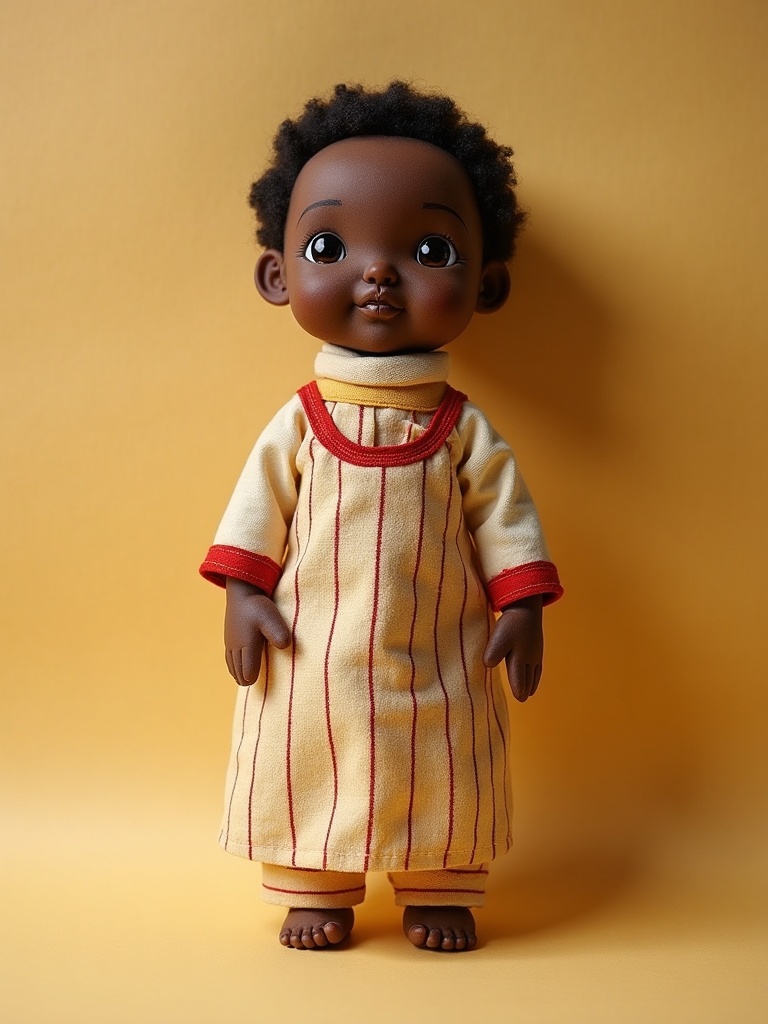
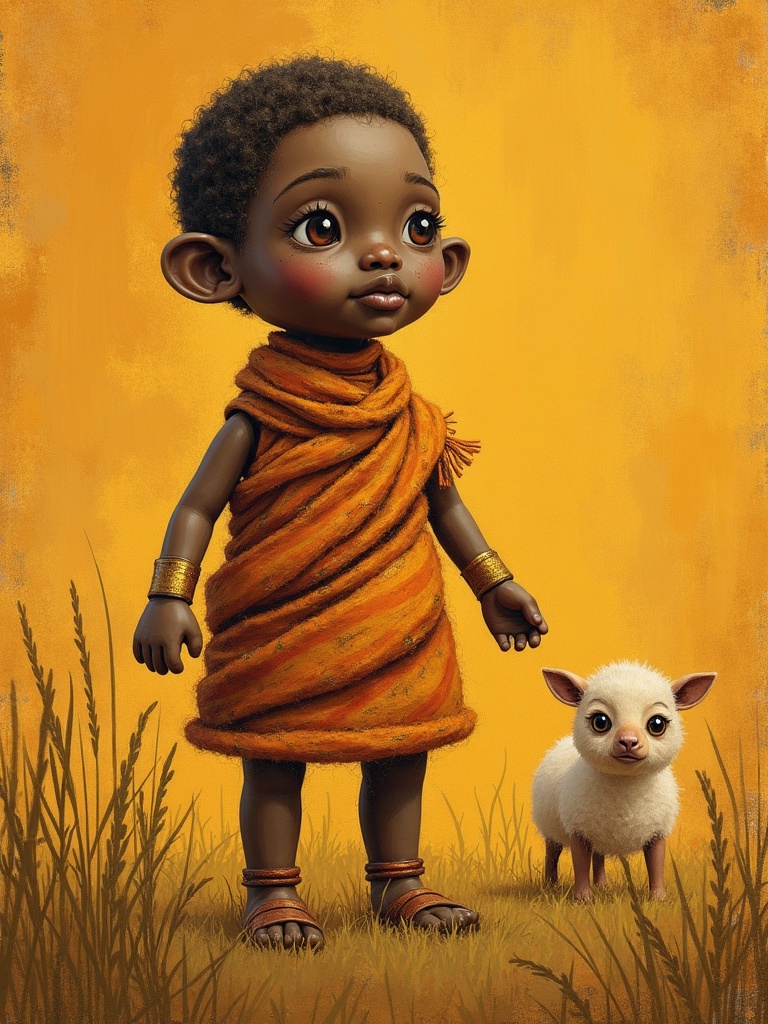
AI design preview — not a photo of the finished handmade doll
Unity & Law
Andrianampoinimerina
From the fortified hill of Ambohimanga, Andrianampoinimerina ended nearly eighty years of civil war and bound the highland kingdoms of Madagascar into one — declaring with a single phrase the boundless reach of his ambition: "the sea is the boundary of my rice field."
- People
- Merina
- Country
- Madagascar
- Region
- East Africa
- Era
- ≈1745–1810 (reigned ≈1787–1810)
- Theme
- Unity & Law
Make your own
Design your Andrianampoinimerina
Pick a garment, a hairstyle and a scene, enter the PIN and generate a fresh image of Andrianampoinimerina with AI.
Each image is generated live with fal.ai.
Generated images
AI design preview — not a photo of the finished handmade doll
No images generated yet — be the first.
Tradition & Origin
From the fortified hill of Ambohimanga, Andrianampoinimerina ended nearly eighty years of civil war and bound the highland kingdoms of Madagascar into one — declaring with a single phrase the boundless reach of his ambition: "the sea is the boundary of my rice field."
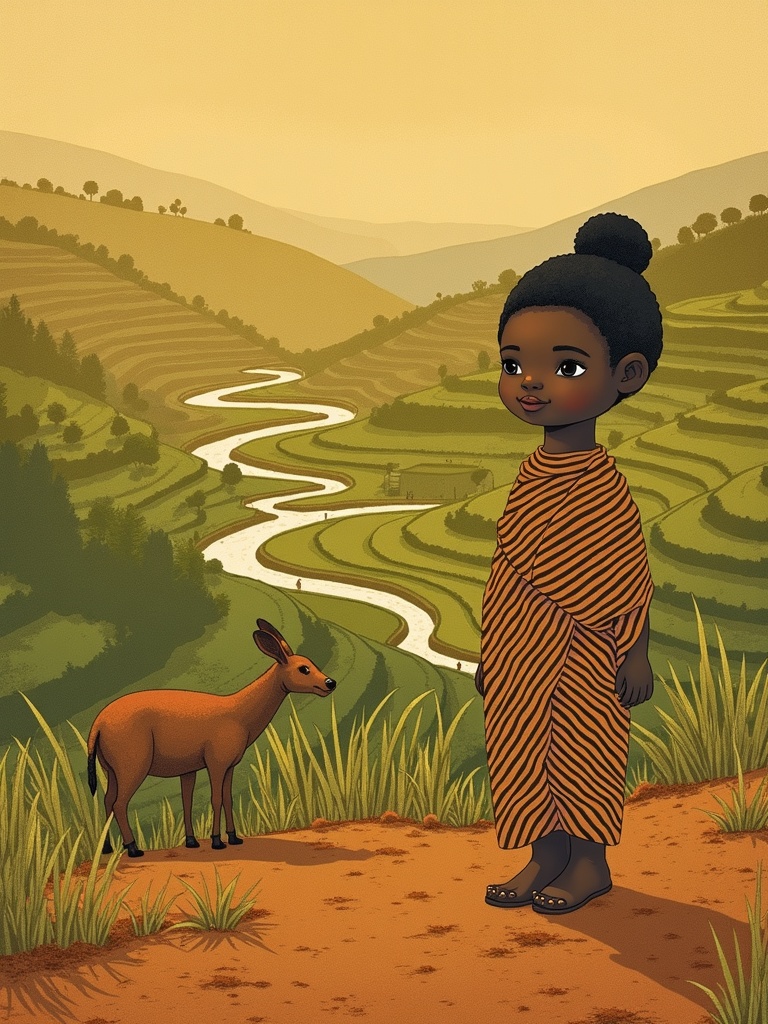
Taking the throne about 1787, he reunited the splintered highland statelets — whole again under one king by around 1795.
DetailsENHe was born around 1745 at Ikaloy and rose to power as the Merina highlands lay shattered by 77 years of civil war that had followed the death of King Andriamasinavalona. Taking the throne about 1787, he made the sacred hill of Ambohimanga his base and, town by town, reunited the splintered statelets of Imerina. By 1793 he had taken the old capital of Antananarivo, and the following year he restored the royal court there while keeping Ambohimanga as the kingdom's spiritual heart. By around 1795 the historic territory of Imerina was whole again under one king.
Andrianampoinimerina governed with as much care as he conquered. He was the first Merina king to set down formal civil and penal codes, and he reorganised land and society around the staple that sustained the highlands: rice. He had vast paddy systems engineered on the marshy Betsimitatatra plains around Antananarivo — irrigation works that still water the fields today — and ordered rice stores kept for widows and orphans. He founded the great Zoma Friday market, laid down laws on cleanliness and public order, and organised the Merina clans into their own city districts.
His most famous words distil his vision into a single image. "Ny ranomasina no valamparihiko" — "the sea is the boundary of my rice field" — was less a description than a command: that the whole island, all the way to its coasts, should one day be united under Merina rule. He died in 1810, and his son Radama I carried that ambition outward, extending Merina power toward the sea his father had claimed.
Ambohimanga, the royal hill from which he rose, remains a place of pilgrimage and reverence and was inscribed as a UNESCO World Heritage Site in 2001 — a fortified royal city, burial ground and sacred place associated for centuries with the identity of the Malagasy people. Andrianampoinimerina holds an almost mythic status among the Merina, remembered as one of the greatest political and military minds in the island's history.
Timeline
- ≈1745born at Ikaloy
- ≈1787takes power, ends 77 years of civil war, reunites Imerina
- reignbuilds rice-paddy irrigation & canals; reforms land & markets; strengthens the fokonolona
- reignexpands toward “the sea is the boundary of my rice field”
- 1810dies; his son Radama I continues unifying Madagascar
Did you know?
- Andrianampoinimerina was the first Merina king to lay down formal civil and penal codes, governing by explicit law rather than custom alone.DetailsEN
- He had rice-paddy irrigation systems engineered on the Betsimitatatra plains around Antananarivo that are still in use today.DetailsEN
- He kept reserves of stored rice for widows and orphans and founded the Zoma, Antananarivo's great Friday market.DetailsEN
- His deathbed words — that the sea was the limit of his rice fields — were taken up by his son Radama I, who pushed Merina rule toward the coasts of Madagascar.DetailsEN
He measured his kingdom not by the land he held, but by the horizon he refused to stop at.
Values & Capabilities
Capabilities
◆◆◆◆◆ shows how central a gift is — five diamonds mark a signature strength, fewer mark a supporting one.
He ended generations of civil war and made one kingdom.
He gave his people clear laws, fair markets and order.
His irrigation canals still water the highlands today.
He strengthened the village assembly where people govern themselves.
“The sea is the boundary of my rice field” — one island, one people.
Development
1 of 3 stages unlocked
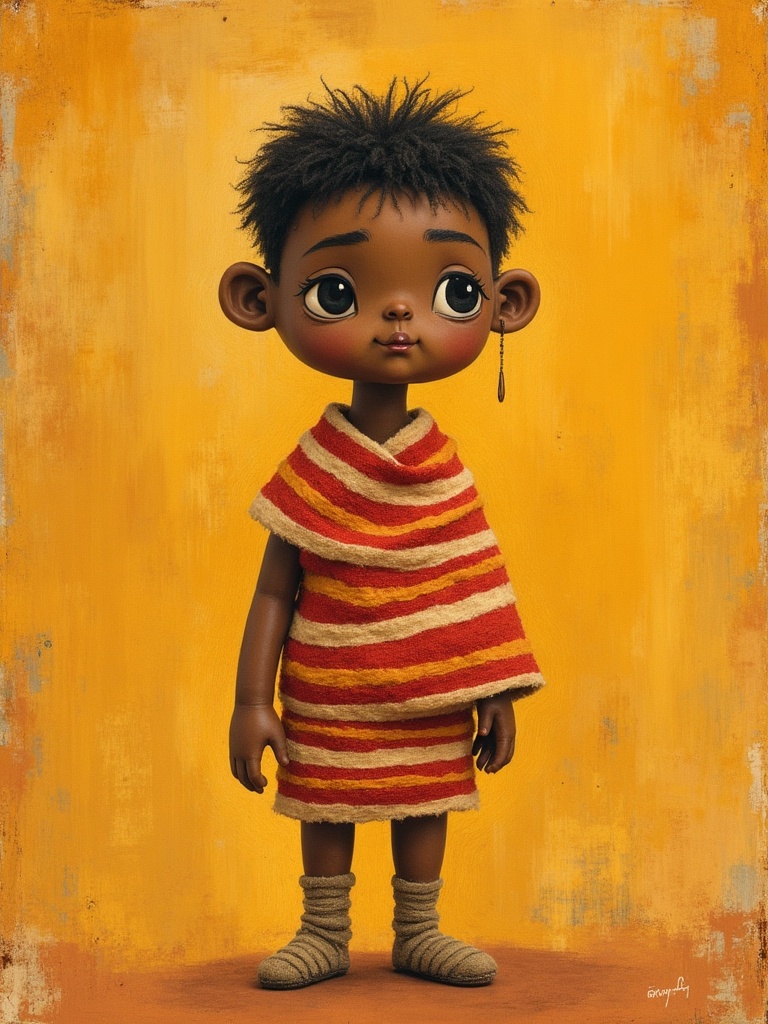
Young Andrianampoinimerina on the sacred hill.
Answer all three to unlock this stage.
Unlock the previous stage first.
Crafting the doll
Garment: a woven lamba (cotton/silk, cream with coloured stripes). Signature attribute: a bundle of rice seedlings and a carved speaking staff. Education card: explains the unification of Madagascar, the still-working irrigation, the fokonolona assembly, and Madagascar’s unique Austronesian-African heritage. Sizes as standard. Proceeds → Malagasy highland craft & heritage (lamba weaving). The lamba and Ambohimanga are living Malagasy heritage — render with Malagasy cultural approval.
How this doll is made
Andrianampoinimerina ruled the highland Merina kingdom of Imerina, whose elite dress centered on the lamba — a rectangular woven wrap draped over the shoulders — most prestigiously the patterned silk lamba akotofahana favored by the pre-colonial Merina aristocracy. To dress the figure authentically, ground it in Malagasy highland material culture: handloom-woven cloth of indigenous wild landibe silk, raffia and cotton, with the lamba worn according to Merina protocol of dignity and rank.
- Garments 3
- Accessories 2
- Materials 2
- Techniques 3
Garments
- Lamba (shoulder wrap)A rectangular length of cloth wrapped around the body and traditionally draped over the shoulders as a shawl; for men it is typically slung over one shoulder. Among the Merina it is the core everyday and ceremonial garment, and a narrow white lamba over the shoulders signals elegance, dignity and respect for tradition.DetailsEN
- Lamba akotofahanaA richly patterned supplementary-weft silk lamba with complex multicoloured geometric designs, historically the prestige mantle of the pre-colonial Merina aristocracy. The Met holds a contemporary king's mantle (lamba mpanjaka marevaka) in this tradition by weaver Martin Rakotoarimanana.DetailsEN
- Lambamena (red silk)The 'red' silk lamba: a multi-panel landibe-silk cloth, woven separately then sewn lengthwise, carrying royal and ancestral prestige. Its 'red' status recalls royal authority more than literal colour; it is the cloth in which the highland dead are wrapped.DetailsEN
Accessories
- Raffia straw hatA wide-brimmed sun hat hand-braided from raffia palm fibre, a long-standing Malagasy craft; raffia is also a traditional everyday cloth fibre on the coasts. Suits a highland figure as a practical, regionally authentic head covering.DetailsEN
- Warp-striped border bandsAuthentic lamba ends carry warp stripes of varying widths in colours such as brown, white, purple, blue, green, magenta and pale turquoise; reproducing these striped borders is essential to the look of a Merina silk cloth.DetailsEN
Materials
- Landibe wild silk (Borocera cajani)Silk reeled from cocoons (soherina) of the endemic wild moth Borocera cajani, which feeds on the tapia tree (Uapaca bojeri) of the central highlands. Landibe thread is notably thicker than common Bombyx mori silk, giving the cloth a substantial, lustrous hand — the prestige fibre of Merina royal cloth.DetailsEN
- Raffia and cottonEveryday Malagasy lambas were woven from raffia, cotton and bast fibres rather than fine silk; cotton and wild silk dominate the central highlands and south. Use these fibres for a plainer working-wear version of the wrap.DetailsEN
Techniques
- Akotofahana silk weavingWorked on a horizontal single-/fixed-heddle handloom with continuous warp and weft; the geometric designs are built by adding supplementary weft threads that float over the woven ground, and by using extra heddles to create banded patterns between the main warps.DetailsEN
- Silk reeling and panel assemblyCocoons of the wild landibe are unravelled and reeled into thread, woven into multiple narrow panels on the highland handloom, then the panels are sewn together lengthwise to form a full lamba — a craft passed mother-to-daughter.DetailsEN
- Plant and mineral dyeingWomen traditionally colour landibe silk with plant-based dyes, mud and charcoal to make earthy tones; from the 19th century imported aniline dyes broadened the bright palette of aristocratic akotofahana cloth.DetailsEN
How it's made
Every doll is sewn by hand from natural materials — built to last a lifetime and to be repaired, not replaced. Here is the shopping list and the work steps. Sizes: Classic 32 cm (heirloom) · Kidogo 18–20 cm (toddlers, no small parts) · Shule 28 cm (school edition).
Shopping list
- Natural cotton or linen for the body (skin tone), ~0.5 m
- Wool or cotton stuffing — no plastic
- Cotton thread and embroidery floss in matching colours
- Garment fabric in this doll's colours (see the fabrics above)
- Yarn for the hairstyle
- Beads, cowrie shells and trims as shown
- Sharps and embroidery needles, pins, fabric scissors, fabric marker
Work instructions
- Trace and cut the body pattern at your chosen size (Classic 32 cm / Kidogo 18–20 cm / Shule 28 cm).
- Sew the body pieces right sides together, leave an opening, turn and stuff firmly with natural fibre, then close by hand.
- Embroider the face gently and with dignity — no plastic parts for the toddler line.
- Make the hair from yarn following the chosen hairstyle and attach it securely.
- Cut and sew the garment from this doll's fabric, then dress the doll.
- Add the beadwork, shells, trims and any attribute by hand.
- Check every seam and reinforce it — the doll should be lifelong and repairable, with no loose small parts for small children.
Origin & Ethics
How we know this
Near-mythic, via oral tradition (★★★★☆); unified through war + marriage + administration (not pure peace); slavery existed. Keep the focus on law, irrigation, unity and the fokonolona — and honour living Malagasy heritage.
Committee: Malagasy cultural & heritage bodies, the Ambohimanga/Rova custodians, historians, lamba-weaving communities. 5-step protocol.
Sources
- Wikipedia — Andrianampoinimerina
- Wikipedia — Tantara ny Andriana
- Wikipedia — Ambohimanga
- Wikipedia — Kingdom of Imerina
- Exodus Africa — History of Madagascar
- Wikipedia, Lamba (garment) — types, materials, how worn, Merina significance
- Wikipedia, Malagasy weaving — loom types, fibres by region, landibe silk into lambamena
- Wikipedia, Borocera cajani — landibe wild silk moth, tapia forest, cocoons, dyeing
- Smarthistory, Silk textile (lamba akotofahana), Merina peoples — akotofahana supplementary-weft technique, loom, shroud use, aniline dyes
- The Metropolitan Museum of Art, Lamba mpanjaka marevaka (king's bright mantle), Martin Rakotoarimanana, Merina
- British Museum, burial-cloth; shawl (lamba akotofahana), Madagascar — silk, panels sewn together, warp-stripe palette
- Cleveland Museum of Art, Stunning Patterns: Woven Textiles from Madagascar's Merina Kingdom — lamba akotofahana revival, silk, tapia/silkworm ecology
- Saint Louis Art Museum, Cloth (lamba akotofahana) — Merina silk lamba in a US museum collection
- Fowler Museum at UCLA, Revival cloth (Merina lamba) — contemporary revival of 19th-century akotofahana designs
- Smarthistory, Martin Rakotoarimanana, Mantle (Lamba Mpanjaka) — king's mantle, akotofahana weaving, Merina context
- Hope Artisan Collective, Wild Borocera Silk: The Gem of Madagascar — landibe silk, lambamena red shrouds, lambalandy outer layer