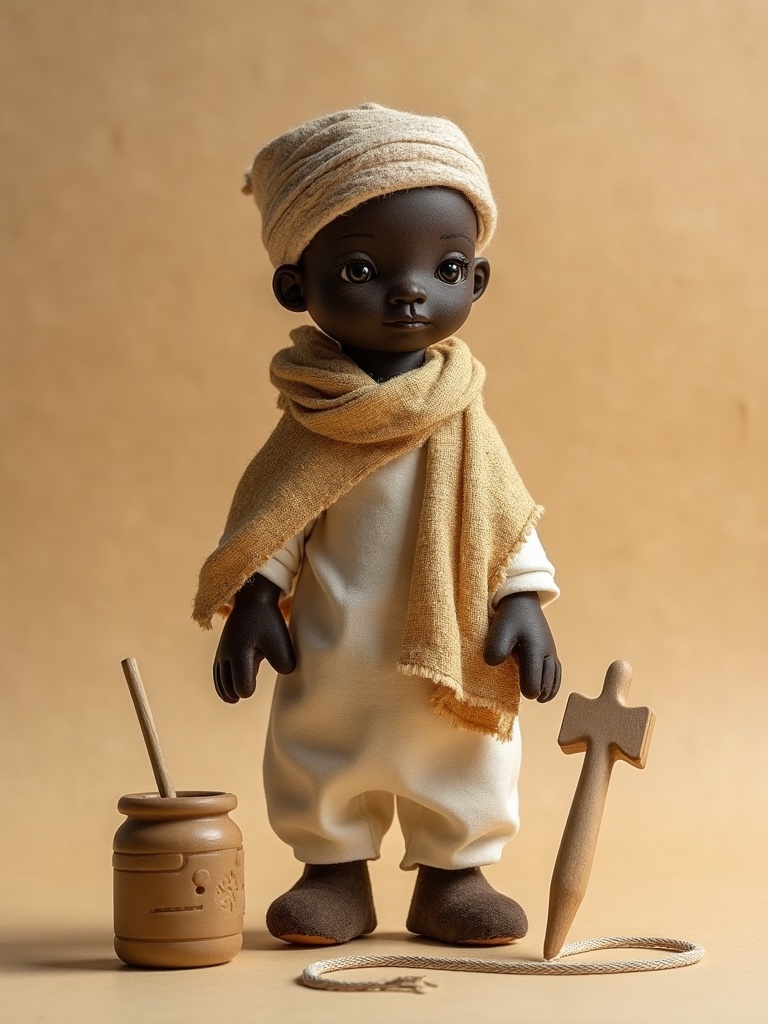
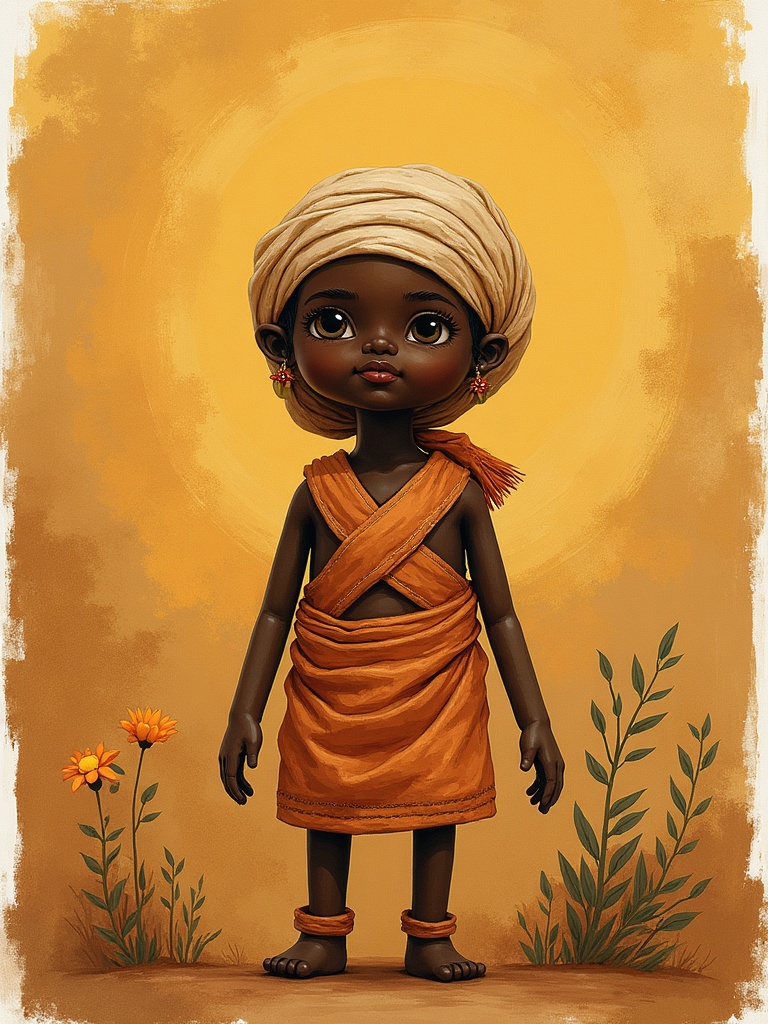
AI design preview — not a photo of the finished handmade doll
Engineering & Stewardship
The Water-Builder of Ajuran
She is not one person but a memory carried in stone — the engineers, masons and water-stewards of the Ajuran Sultanate who taught a dry land to hold the rain. Some of the wells they cut still give water today.
- People
- Somali (Ajuran Sultanate, House of Garen)
- Country
- Somalia
- Region
- Horn of Africa
- Era
- 13th–17th century
- Theme
- Engineering & Stewardship
Make your own
Design your The Water-Builder of Ajuran
Pick a garment, a hairstyle and a scene, enter the PIN and generate a fresh image of The Water-Builder of Ajuran with AI.
Each image is generated live with fal.ai.
Generated images
AI design preview — not a photo of the finished handmade doll
No images generated yet — be the first.
Tradition & Origin
She is not one person but a memory carried in stone — the engineers, masons and water-stewards of the Ajuran Sultanate who taught a dry land to hold the rain. Some of the wells they cut still give water today.
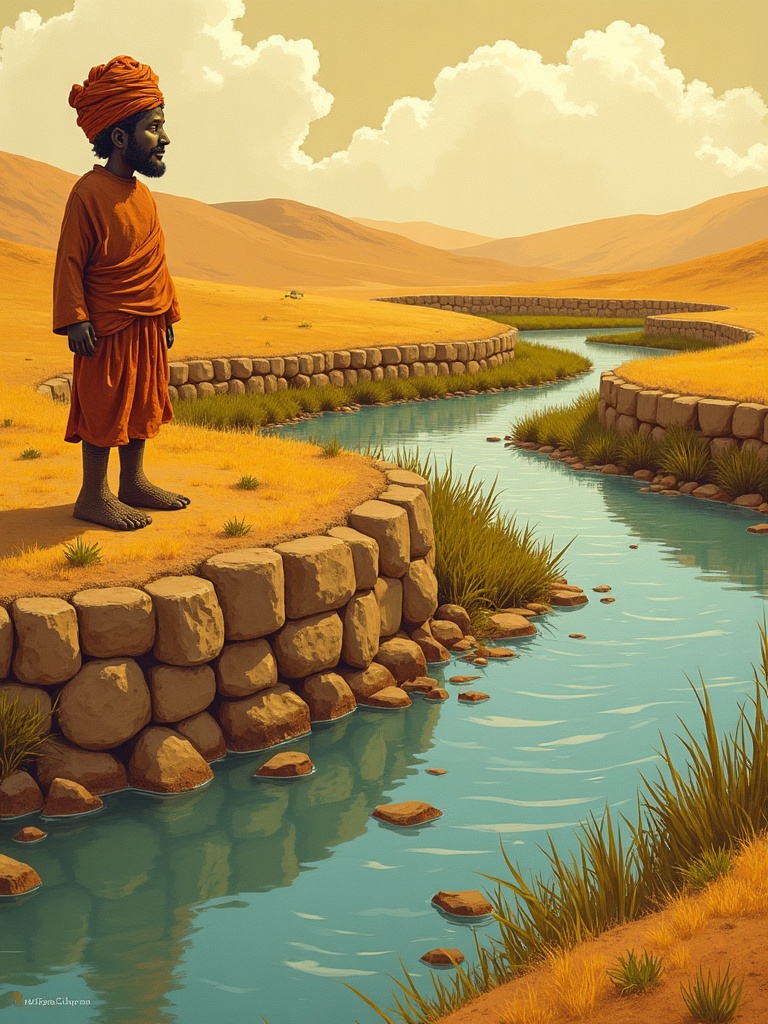
Scholars count the Ajuran alongside ancient Egypt and Kush as one of only three African states organised around the command of water.
DetailsENFrom roughly the 13th to the 17th century, the Ajuran Sultanate ruled the inter-riverine heart of what is now southern Somalia and made something rare on the continent: a true hydraulic empire. Scholars place it alongside ancient Egypt and Kush as one of only a handful of African states to organize itself around the deliberate command of water. The Water-Builder stands for everyone behind that achievement — the well-cutters, the canal-diggers, the keepers of the dams — rather than any single named individual.
Beginning in the 13th century the Ajuran moved to monopolize the waters of the Shabelle (Shebelle) and Jubba rivers. Their engineers cut deep wells and cisterns out of limestone, placing them across the arid countryside so that nomads and their livestock would gather where the state controlled the water. Along the rivers, a network of irrigation ditches known locally as Kelliyo drew floodwater directly into the plantations, backed by numerous dikes and dams that turned flood-prone lowlands into farmland. There the seasonal rains of the gu (spring) and xagaa (summer) raised sorghum, maize, beans, grain and cotton.
Under this centralized supervision, the farming towns of the inter-riverine zone — Afgooye, Kismayo and others in the Jubba and Shabelle valleys — saw their productivity rise, while the coastal cities of Mogadishu and Merca funneled the surplus into the Indian Ocean trade. Water was not only food; it was revenue and power. The same rulers built new systems of agriculture and taxation that outlived their empire, persisting in parts of the Horn as late as the 19th century.
What makes the Water-Builder worth remembering is the durability of the craft. The limestone wells and cisterns were cut so well that many remained in use for centuries after the sultanate itself had faded — some are still drawn from by pastoralists in our own time. The figure is an archetype, a way of honoring the anonymous hands of an entire era that engineered survival into stone.
Timeline
- 13th c.the Ajuran rise on the Shebelle–Jubba rivers
- 13th–16th c.build canals, limestone wells & cisterns, stone forts; lush farmland in a dry land
- 13th–16th c.trade from the Benadir ports to Arabia, India and China
- 16th c.ally with Ottoman corsairs to repel the Portuguese
- late 17th c.harsh later rule → rebellions → the empire breaks apart
- todaythe wells still give water
Did you know?
- Through hydraulic engineering the Ajuran built many of the state's limestone wells and cisterns that are still in use today, strategically placed to draw nomads and livestock to state-controlled water.DetailsEN
- A system of irrigation ditches known locally as Kelliyo fed floodwater directly from the Shebelle and Jubba rivers into plantations of sorghum, maize, beans, grain and cotton, supported by numerous dikes and dams.DetailsEN
- Under Ajuran supervision the farms of Afgooye, Kismayo and other towns in the Jubba and Shabelle valleys increased their productivity, while the rulers' agriculture and taxation systems survived in parts of the Horn into the 19th century.DetailsEN
A people remembered not for their names, but for the water they left running.
Values & Capabilities
Capabilities
◆◆◆◆◆ shows how central a gift is — five diamonds mark a signature strength, fewer mark a supporting one.
Ajuran engineers built canals and dikes to steer the Shebelle and Jubba rivers across dry land, turning desert plains into farmland.
Their limestone wells and cisterns are still drawn from today, eight centuries on.
They created land-measurement and tax systems so steady that neighbours kept using them for centuries.
With Ottoman allies they pushed the Portuguese back from the Somali ports and kept their trade — reaching as far as China.
The diggers and masons (the Madinle) left no names — only the water.
Development
1 of 3 stages unlocked
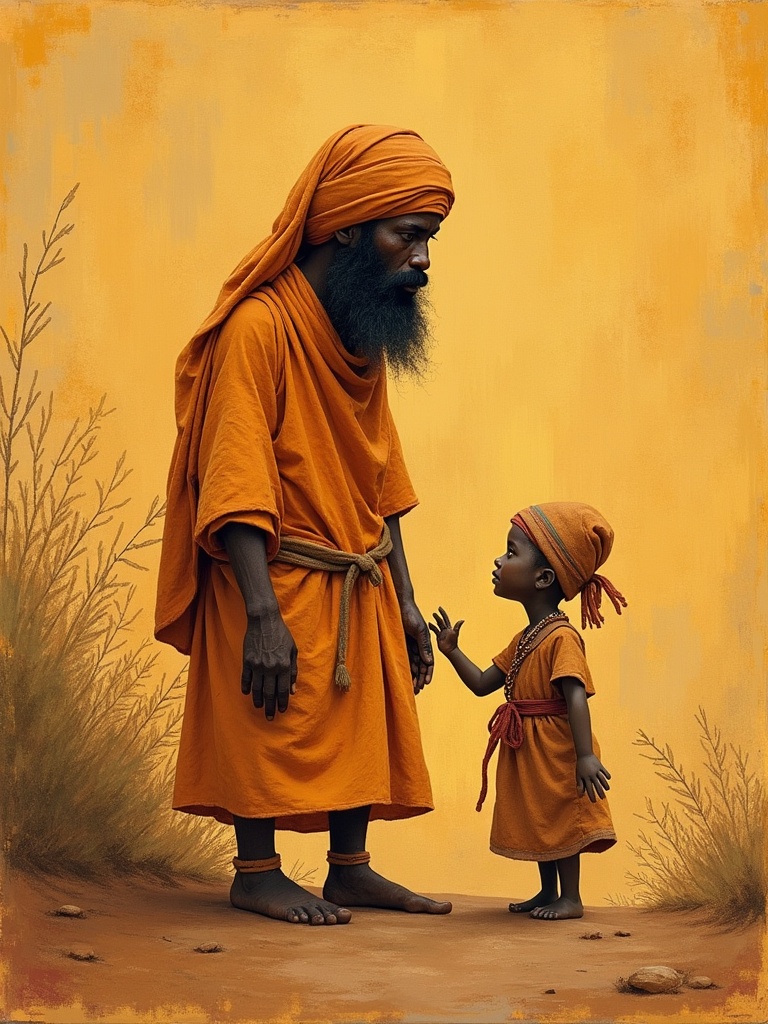
A young digger learning to line a well with limestone.
Answer all three to unlock this stage.
Unlock the previous stage first.
Crafting the doll
Garment: a macawiis wrap and light robe with a head-cloth and a belt of builder’s tools (child-safe). Signature attribute: a small stone well-head and a measuring cord. Education card: the Ajuran "hydraulic empire," that its wells still work today, and the nameless engineers — and honestly the empire’s later harsh rule. Sizes as standard. Proceeds → Somali water & heritage projects.
How this doll is made
The Ajuran Water-Builder embodies the anonymous Somali artisan-engineers of the Ajuran Sultanate, famed by the 15th century as the Horn of Africa's only hydraulic empire. The look grounds in coastal Somali material culture: handwoven cotton dress, amber-and-silver jewellery worked by a hereditary silversmith caste, and the limestone wells, cisterns and dykes that the Ajuran cut and stacked along the Shabelle and Jubba.
- Garments 3
- Accessories 2
- Materials 2
- Techniques 3
Garments
- Macawiis (men's sarong)A sarong-style cloth wrapped around the hips and fastened with a belt or knot, leaving the upper body free — the everyday garment of Somali men. Usually woven in checkered or striped patterns; coastal versions use lighter, brighter fabric, inland versions deeper protective colours. Rooted in pastoral life for ease of movement with modest coverage.DetailsEN
- Garbasaar (men's shawl)A light cloth, often plain white, draped over the shoulders to cover the upper body and doubling as a head covering when needed. Worn over the bare torso above the macawiis; breathable cotton suited to the warm climate.DetailsEN
- Guntiino (women's draped cloth)The oldest documented Somali women's garment: a length of cloth (about four metres) wrapped around the waist and draped symmetrically over one shoulder, historically a status marker for married women. Made from handwoven cotton, most prestigiously the striped aliindi (alindi) fabric of the coastal towns, often with an embroidered border.DetailsEN
Accessories
- Koofiyad (embroidered cap)A close-fitting embroidered skullcap worn by Somali men for modesty and sun protection, richly embroidered for special occasions; a turban may be wound over or instead of it.DetailsEN
- Amber-and-silver dowry necklaceA heavy necklace of graduated natural amber beads strung with hollow silver beads on a silver chain, sometimes separated by hide discs; worn by women as portable wealth and a dowry gift the bride keeps. Amber was prized both as conspicuous wealth and for believed protective (prophylactic) qualities.DetailsEN
Materials
- Aliindi / handspun cottonCotton grown along the Shabelle River and handwoven on the Benadir coast into striped aliindi (Futa Benadir) cloth, traditionally coloured with vegetable dyes such as saffron. Hundreds of named patterns exist (e.g. 'goats in the sand dunes', 'teeth'); the most prestigious is midab boqoreed, 'royal colours'.DetailsEN
- LimestoneSoft, locally quarried limestone was the core building stone of Ajuran water works — large stone wells and cisterns were cut and built from it, many still in use into the 20th century and beyond.DetailsEN
Techniques
- Limestone well & cistern constructionAjuran engineers cut and stacked limestone into large deep wells and cisterns to capture and store water across arid country, drawing in pastoralists and their livestock. Paired with systems of dykes and dams on the Shabelle and irrigation ditches (kelliyo) feeding fields of sorghum, maize, beans and cotton — the hydraulic works that made the Ajuran Africa's only 'water dynasty'.DetailsEN
- Benadiri handloom weavingCloth is woven by hand on a pit/floor loom: warp threads are stretched across upright sticks (the darisi method), threaded through bamboo heddle loops, and extended some eight metres to an iron floor hook. A master weaver produces only about five yards a day; thread is the main import, everything else handmade.DetailsEN
- Silver filigree & granulationCoastal Somali silver- and goldwork is made by a hereditary guild of smiths regarded as an artisan caste. Silver crescent pendants, tubular xirsi (Koran/amulet) cases and small hanging bells are decorated with applied filigree spirals, flat discs, lozenges of twisted wire and small pyramids of granules (granulation), then assembled with amber and glass beads into dowry necklaces.DetailsEN
How it's made
Every doll is sewn by hand from natural materials — built to last a lifetime and to be repaired, not replaced. Here is the shopping list and the work steps. Sizes: Classic 32 cm (heirloom) · Kidogo 18–20 cm (toddlers, no small parts) · Shule 28 cm (school edition).
Shopping list
- Natural cotton or linen for the body (skin tone), ~0.5 m
- Wool or cotton stuffing — no plastic
- Cotton thread and embroidery floss in matching colours
- Garment fabric in this doll's colours (see the fabrics above)
- Yarn for the hairstyle
- Beads, cowrie shells and trims as shown
- Sharps and embroidery needles, pins, fabric scissors, fabric marker
Work instructions
- Trace and cut the body pattern at your chosen size (Classic 32 cm / Kidogo 18–20 cm / Shule 28 cm).
- Sew the body pieces right sides together, leave an opening, turn and stuff firmly with natural fibre, then close by hand.
- Embroider the face gently and with dignity — no plastic parts for the toddler line.
- Make the hair from yarn following the chosen hairstyle and attach it securely.
- Cut and sew the garment from this doll's fabric, then dress the doll.
- Add the beadwork, shells, trims and any attribute by hand.
- Check every seam and reinforce it — the doll should be lifelong and repairable, with no loose small parts for small children.
Origin & Ethics
How we know this
The empire is well documented; the figure is an honest archetype (★★★★☆) honouring the nameless engineers, like the Builder of Great Zimbabwe. Celebrate the engineering and water-stewardship while naming the empire’s tribute system and harsh later rule honestly.
Committee: Somali heritage & community bodies, historians of the Horn, hydrology/heritage conservators. 5-step protocol.
Sources
- Wikipedia — Ajuran Sultanate
- Lumen Learning — The Sultanates of Somalia
- Google Arts & Culture — Ajuran Sultanate
- History Rise — The Ajuran Empire
- Google Arts & Culture, Ajuran Sultanate: The Story of the Royals from Somali — canals on the Shabelle and Jubba, wells and cisterns still in use
- Wikipedia, Alindi — Benadir handwoven striped cotton (Futa Benadir), saffron dye, named patterns, Ibn Battuta 1330
- Radio Dalsan / Bilan Media, Keeping a tradition alive against all odds — Benadiri aliindi handloom process and weavers
- Victoria & Albert Museum, Necklace (probably Somalia, 1850–1890) — amber beads, silver crescent pendant, filigree/granulation, amulet case, dowry use
- Michael Backman Ltd, Horn of Africa Large Amber Dowry Necklace — graduated amber and hollow silver beads, hide discs, dowry custom
- Michael Backman Ltd, Somalian Silver & Amber Dowry Necklace with Syrian Silver Trade Beads — locally crafted silver beads, amber, trade beads
- One2Eleven, Somali Traditional Clothing: A Colourful Tapestry of Culture and Craft — macawiis, garbasaar shawl, koofiyad cap, guntiino, materials
- Outfiten, Explore Traditional Clothing in Somalia — guntiino draping, aliindi fabric, dirac, cotton
- Somali Museum of Minnesota, Jewelry artifacts — traditional Somali jewellery including silver and shell necklaces