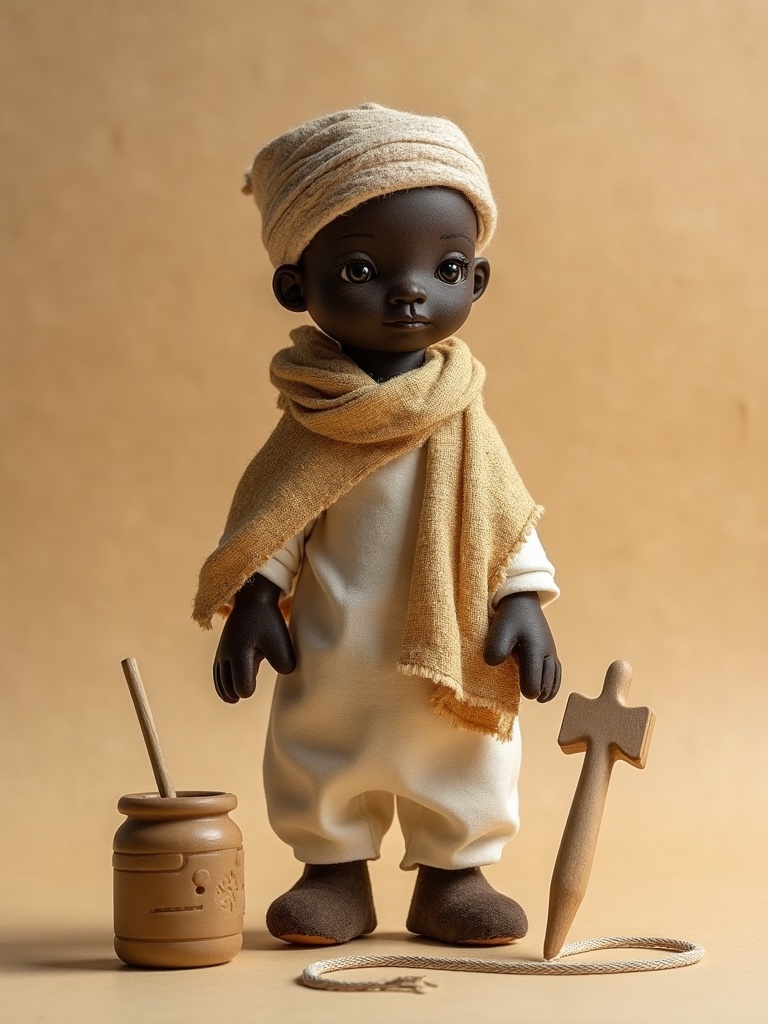
Engineering & Stewardship
The Water-Builder of Ajuran
Between the 13th and 17th centuries , the Ajuran Sultanate (House of Garen) was one of the great powers of the Horn of Africa , covering much of today’s Somalia . Its wealth and survival in a dry land rested on one thing above all: water.
- People
- Somali (Ajuran Sultanate, House of Garen)
- Country
- Somalia
- Region
- Horn of Africa
- Era
- 13th–17th century
- Theme
- Engineering & Stewardship
Make your own
Design your The Water-Builder of Ajuran
Pick a garment, a hairstyle and a scene, enter the PIN and generate a fresh image of The Water-Builder of Ajuran with AI.
Each image is generated live with fal.ai.
Generated images
No images generated yet — be the first.
Tradition & Origin
Between the 13th and 17th centuries, the Ajuran Sultanate (House of Garen) was one of the great powers of the Horn of Africa, covering much of today’s Somalia. Its wealth and survival in a dry land rested on one thing above all: water.
★ Wells that still give water
Ajuran was Africa’s only "hydraulic empire" besides ancient Egypt and Kush. Its engineers controlled the Shebelle and Jubba rivers, digging canals, dikes, limestone wells and cisterns to make dry plains "lush with crops." The most astonishing part: many of those wells and cisterns are still in use today, hundreds of years later. They also built stone forts (qalcads), ran a fair land-measurement and tax system, traded as far as China, and — allied with Ottoman sailors — drove the Portuguese back from the Somali coast. Like the Builder of Great Zimbabwe, this figure honours the nameless engineers (the Madinle) whose skill made the miracle.
Honesty: the Ajuran were also conquerors who taxed and dominated others, and their later rulers became harsh — rebellions broke the empire apart by the late 17th century. We celebrate the engineering and stewardship while telling that honestly.
They could not make it rain. So they taught the rivers to come to them. The kings are dust; the wells still pour.
Values & Capabilities
Capabilities
◆◆◆◆◆ shows how central a gift is — five diamonds mark a signature strength, fewer mark a supporting one.
Ajuran engineers built canals and dikes to steer the Shebelle and Jubba rivers across dry land, turning desert plains into farmland.
Their limestone wells and cisterns are still drawn from today, eight centuries on.
They created land-measurement and tax systems so steady that neighbours kept using them for centuries.
With Ottoman allies they pushed the Portuguese back from the Somali ports and kept their trade — reaching as far as China.
The diggers and masons (the Madinle) left no names — only the water.
Development
1 of 3 stages unlocked
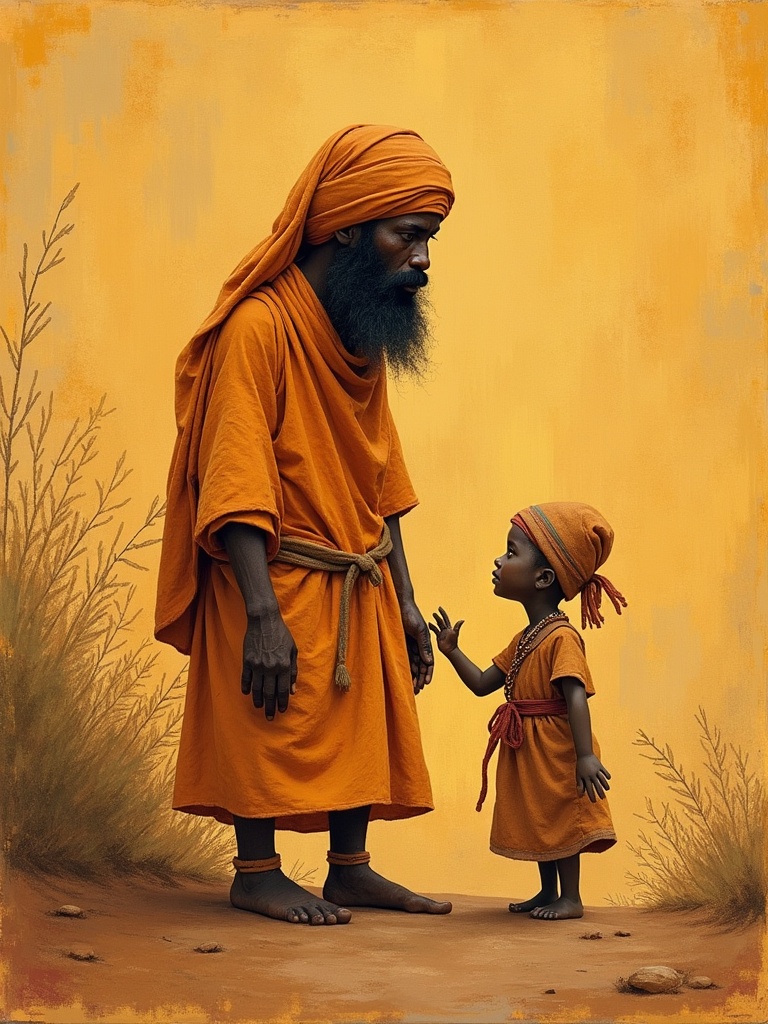
A young digger learning to line a well with limestone.
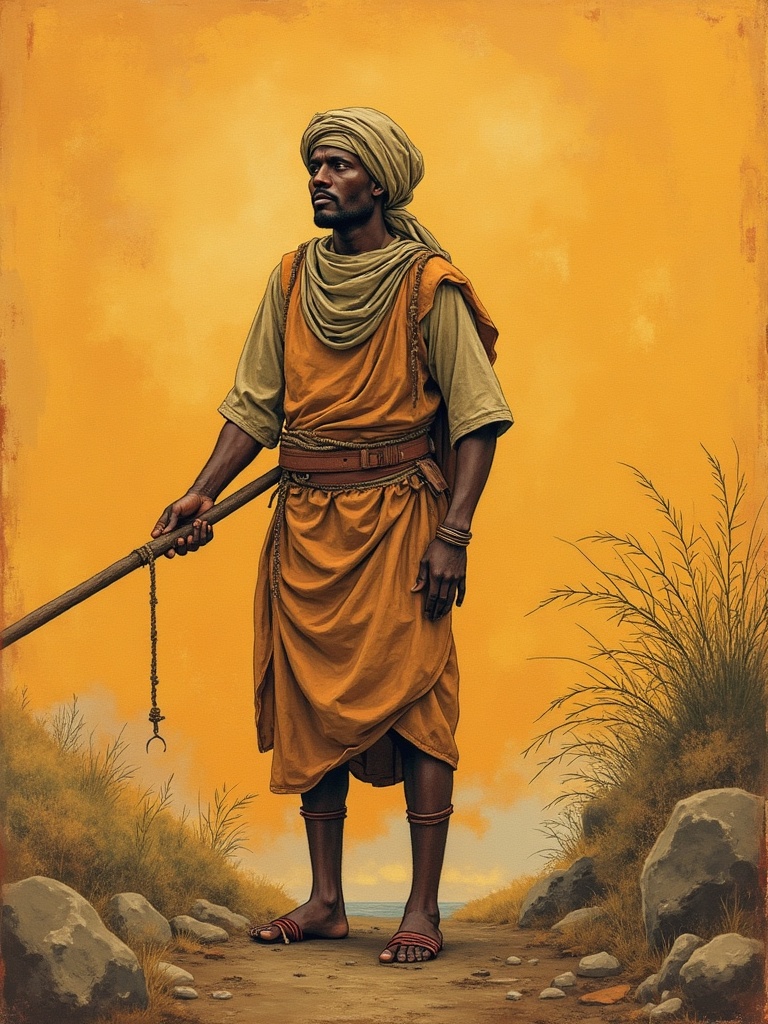
Answer all three to unlock this stage.
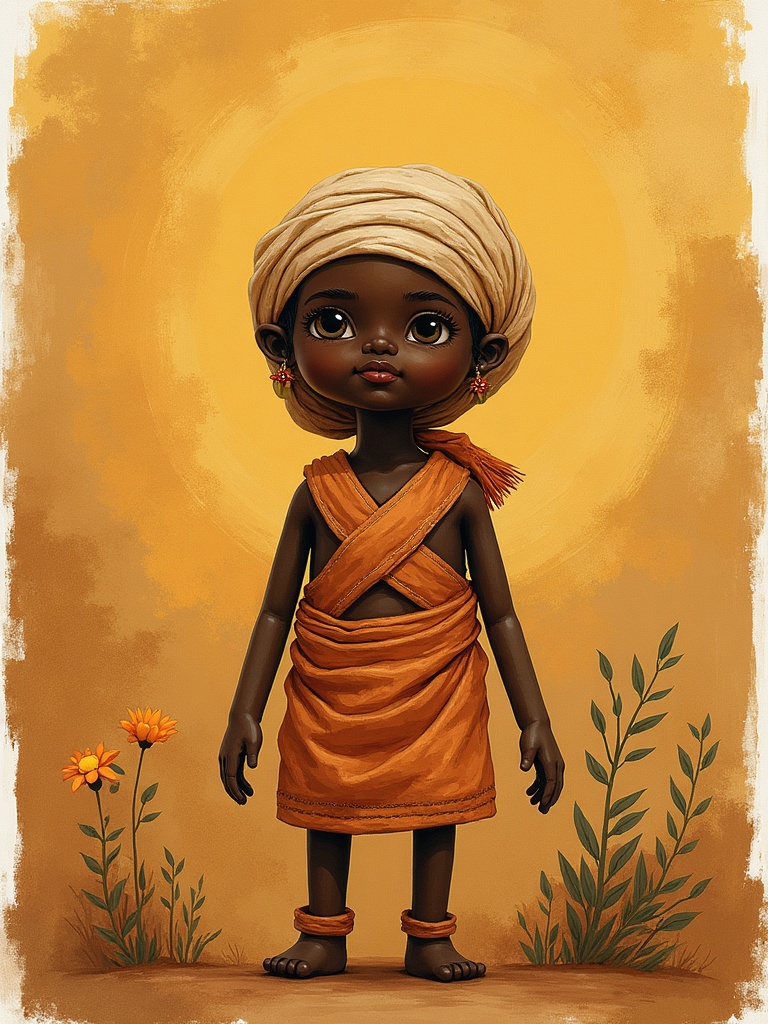
Unlock the previous stage first.
Make & Learn
Garment: a macawiis wrap and light robe with a head-cloth and a belt of builder’s tools (child-safe). Signature attribute: a small stone well-head and a measuring cord. Education card: the Ajuran "hydraulic empire," that its wells still work today, and the nameless engineers — and honestly the empire’s later harsh rule. Sizes as standard. Proceeds → Somali water & heritage projects.
How it's made
Every doll is sewn by hand from natural materials — built to last a lifetime and to be repaired, not replaced. Here is the shopping list and the work steps. Sizes: Classic 32 cm (heirloom) · Kidogo 18–20 cm (toddlers, no small parts) · Shule 28 cm (school edition).
Shopping list
- Natural cotton or linen for the body (skin tone), ~0.5 m
- Wool or cotton stuffing — no plastic
- Cotton thread and embroidery floss in matching colours
- Garment fabric in this doll's colours (see the fabrics above)
- Yarn for the hairstyle
- Beads, cowrie shells and trims as shown
- Sharps and embroidery needles, pins, fabric scissors, fabric marker
Work instructions
- Trace and cut the body pattern at your chosen size (Classic 32 cm / Kidogo 18–20 cm / Shule 28 cm).
- Sew the body pieces right sides together, leave an opening, turn and stuff firmly with natural fibre, then close by hand.
- Embroider the face gently and with dignity — no plastic parts for the toddler line.
- Make the hair from yarn following the chosen hairstyle and attach it securely.
- Cut and sew the garment from this doll's fabric, then dress the doll.
- Add the beadwork, shells, trims and any attribute by hand.
- Check every seam and reinforce it — the doll should be lifelong and repairable, with no loose small parts for small children.
Origin & Ethics
How we know this
The empire is well documented; the figure is an honest archetype (★★★★☆) honouring the nameless engineers, like the Builder of Great Zimbabwe. Celebrate the engineering and water-stewardship while naming the empire’s tribute system and harsh later rule honestly.
Committee: Somali heritage & community bodies, historians of the Horn, hydrology/heritage conservators. 5-step protocol.