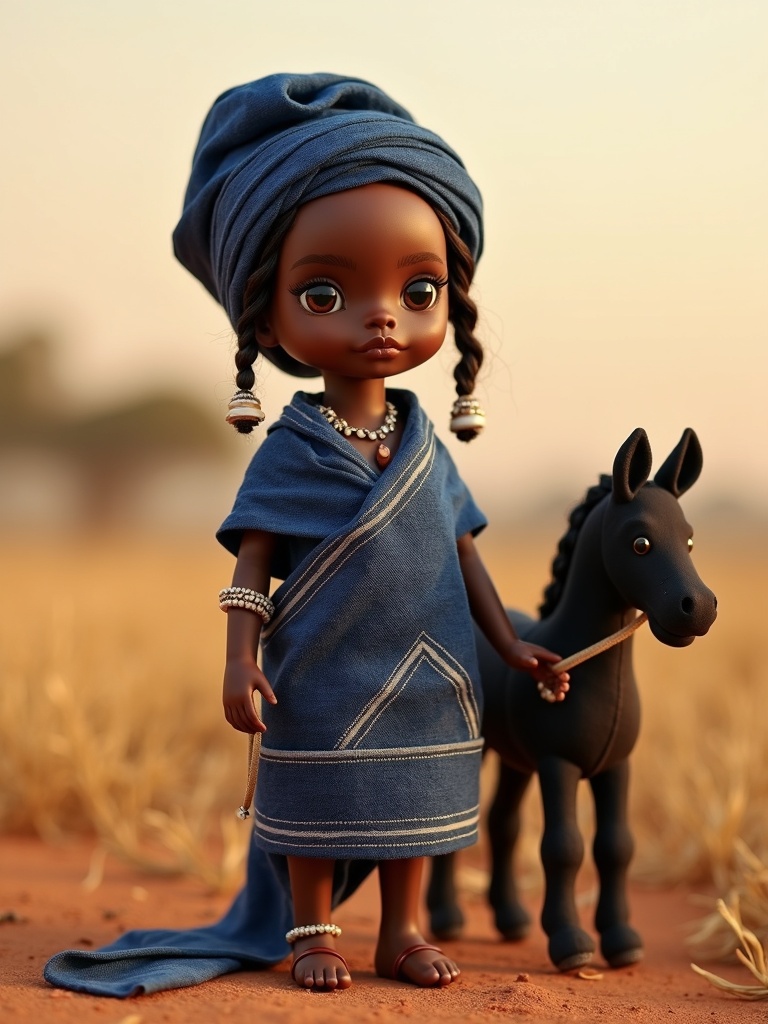
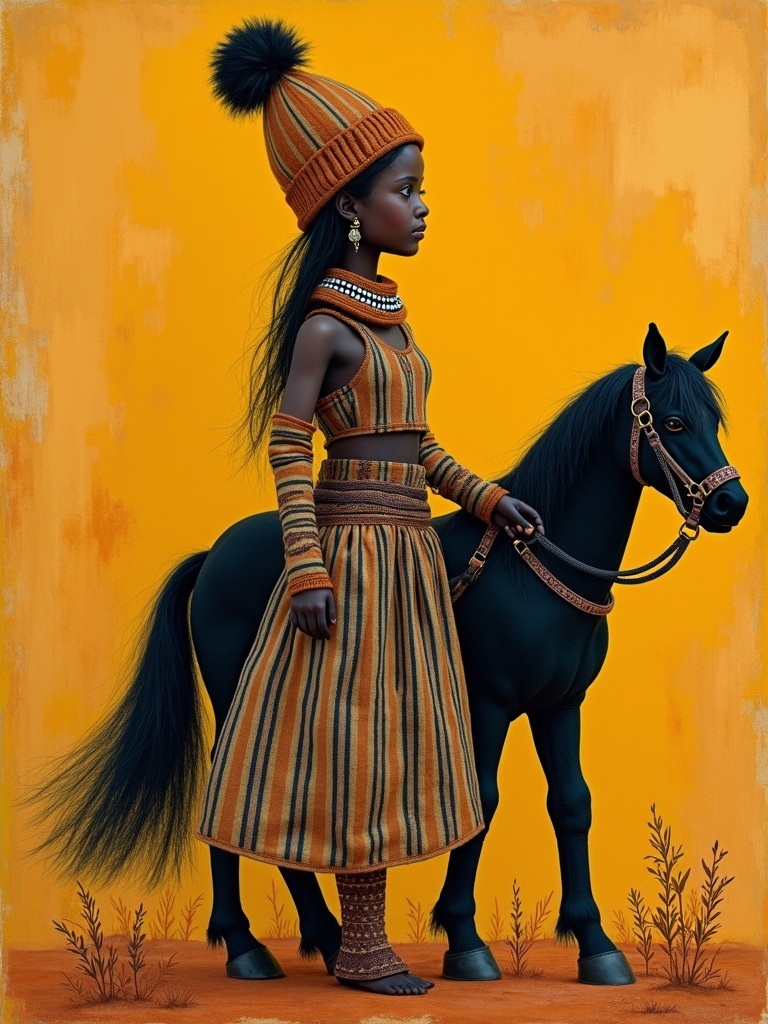
AI design preview — not a photo of the finished handmade doll
Mother of the Mossi
Yennenga
She was too good a warrior to be set free — so the princess planted a field and let it rot, then rode out of her father's kingdom into the dark, and a whole nation began where her horse finally stopped.
- People
- Mossi
- Country
- Burkina Faso
- Region
- West Africa
- Era
- legendary (~11th–12th c.)
- Theme
- Mother of the Mossi
Make your own
Design your Yennenga
Pick a garment, a hairstyle and a scene, enter the PIN and generate a fresh image of Yennenga with AI.
Each image is generated live with fal.ai.
Generated images
AI design preview — not a photo of the finished handmade doll
No images generated yet — be the first.
Tradition & Origin
She was too good a warrior to be set free — so the princess planted a field and let it rot, then rode out of her father's kingdom into the dark, and a whole nation began where her horse finally stopped.
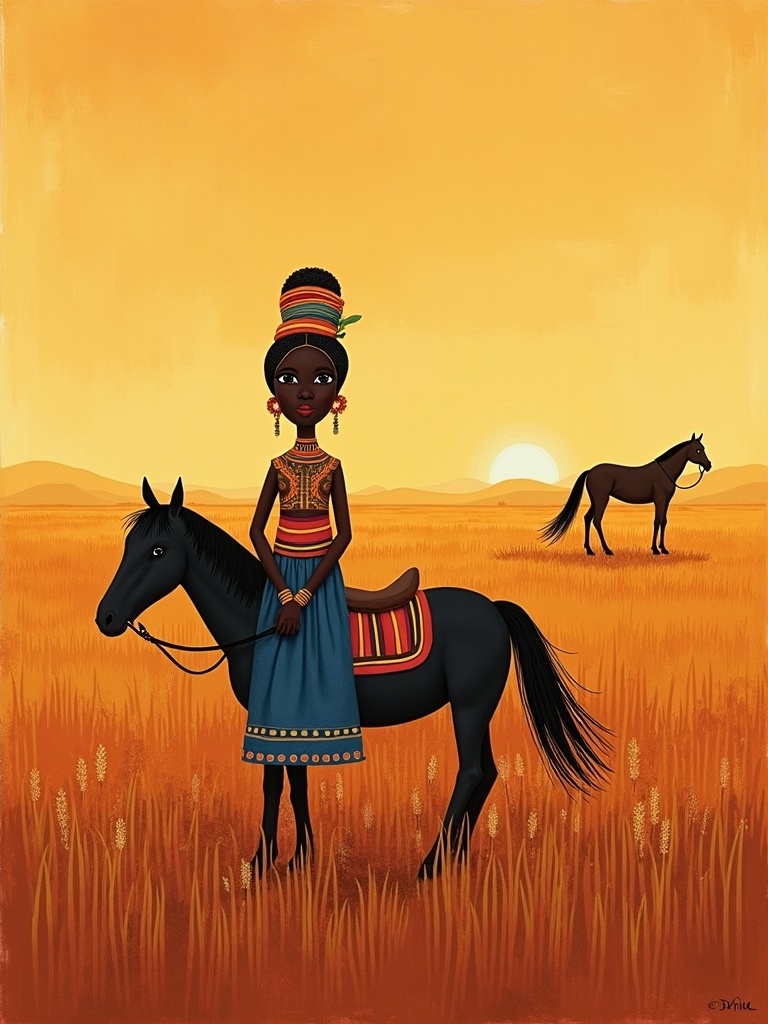
Yennenga — a name traditionally said to mean "the slim" — belongs to the founding legend of the Mossi, today the largest people of Burkina Faso (the Mossi number roughly 11 million and make up about half the country). By tradition she was the daughter of Nedega (also remembered as Naa Gbewaa), a king of Dagbon in what is now northern Ghana. From about age fourteen she fought her father's battles as an expert horsewoman, skilled with javelins, spears and bows, and even commanded her own band of fighters.
She was so prized as a warrior that her father refused to let her marry or leave — so, the story goes, she planted a field of wheat and let it spoil in the sun, a wordless message that her own life was being kept from growing. He understood, and locked her away instead. But a loyal royal horseman helped her escape in disguise on her stallion. Riding north and alone into a strange land, she met a solitary elephant hunter named Rialé; their son was named Ouedraogo — "male horse" — in honour of the stallion that had carried her to him.
That son grew up to found the Mossi kingdoms, a federation of states — Ouagadougou, Tenkodogo, Fada N'gourma, Yatenga and Boussouma — whose feared horse-warriors dominated the upper Volta for centuries. Their power rested on cavalry: the Mossi turned back the Songhai jihads of Askia Muhammad around 1497 and kept their own religion and rulers (under the paramount Mogho Naaba, "King of the World") right up until the French conquest of 1896. So through her legendary son, Yennenga is honoured as the mother of the Mossi nation.
Her memory is anything but faded. Statues of her stand in the capital, Ouagadougou, and since 1972 Africa's oldest and largest film festival, FESPACO, has named its grand prize the Étalon d'or de Yennenga — a golden stallion that is the most coveted trophy in African cinema. Even Burkina Faso's national football team carries the echo: they are nicknamed Les Étalons, "the Stallions."
Timeline
- 11th–15th c. (traditional)Yennenga, daughter of King Nedega of Dagbon, is a famed young horse-warrior commanding her own band
- in the legendher father forbids her to marry; she plants wheat and lets it rot in silent protest, and is locked away
- in the legenda royal horseman helps her escape in disguise on her stallion; she rides north and meets the hunter Rialé
- in the legendtheir son Ouedraogo ("male horse") is born — named for the stallion that carried her to freedom
- 11th–15th c.Ouedraogo founds the Mossi kingdoms and builds Tenkodogo; the Mossi spread across the upper Volta
- 1972 / todayFESPACO names its grand prize the Étalon (d'or) de Yennenga; statues of her stand in Ouagadougou
Did you know?
- The surname Ouedraogo — one of the most common in Burkina Faso — literally means "male horse," named after the very stallion that carried Yennenga to freedom.DetailsEN
- The Mossi cavalry was so strong that when the Songhai emperor Askia Muhammad launched a holy war to convert them around 1497, they kept their own faith and rulers instead.DetailsEN
- The golden trophy named for Yennenga actually depicts her — it shows the princess on her horse with her weapon, sculpted by the Burkinabè artist Ali Nikiéma.DetailsEN
- Mossi girls grow up caring for a carved wooden 'child' called a biiga — washing and carrying it like a real baby — a tradition tying the whole people back to motherhood and the future.DetailsEN
A field left to rot, a horse in the night, a name that still crowns a continent's storytellers — legend or not, she chose her own road, and millions trace their beginning to it.
Values & Capabilities
Capabilities
◆◆◆◆◆ shows how central a gift is — five diamonds mark a signature strength, fewer mark a supporting one.
By tradition she rode into battle at fourteen, commanding her own band with javelin, spear and bow.
Forbidden her own life, she planted a field and let it rot — a silent message about a life not allowed to grow.
Disguised as a man, she escaped on her stallion and rode north alone into a strange land.
Her son Ouedraogo grew up to found the Mossi kingdoms — so a whole people trace their story back to her.
Centuries later her name crowns Africa's greatest film prize — the Étalon d'or de Yennenga.
Development
1 of 5 stages unlocked
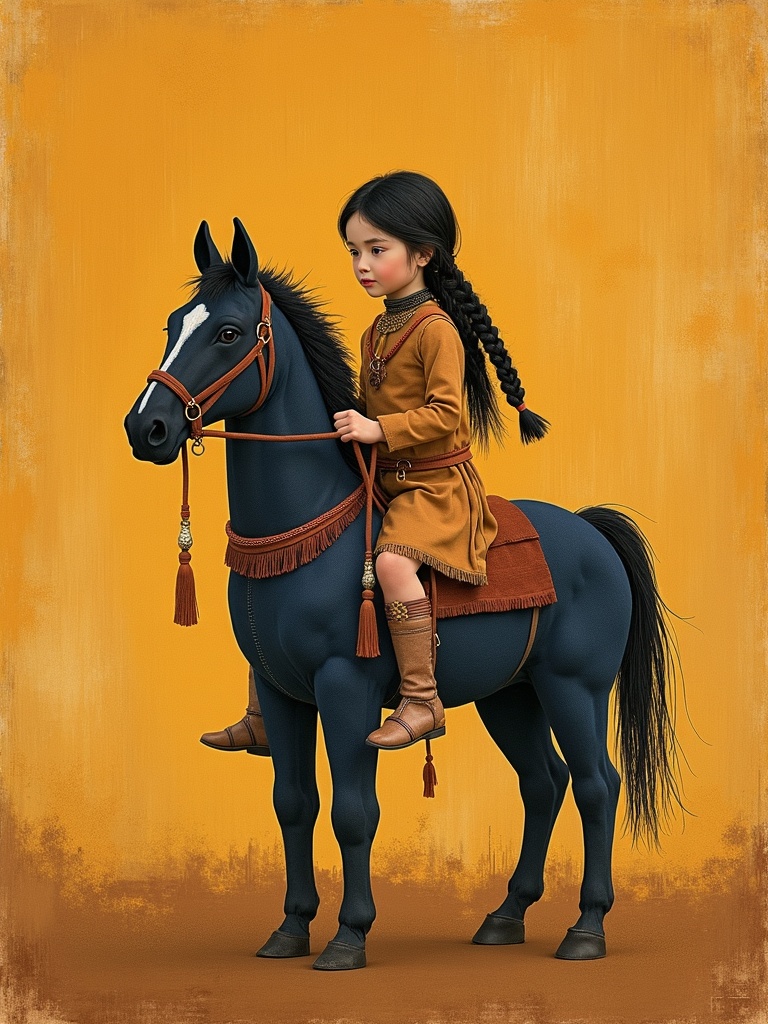
Young Yennenga rides for her father's kingdom of Dagbon, leading her own band with spear and bow.
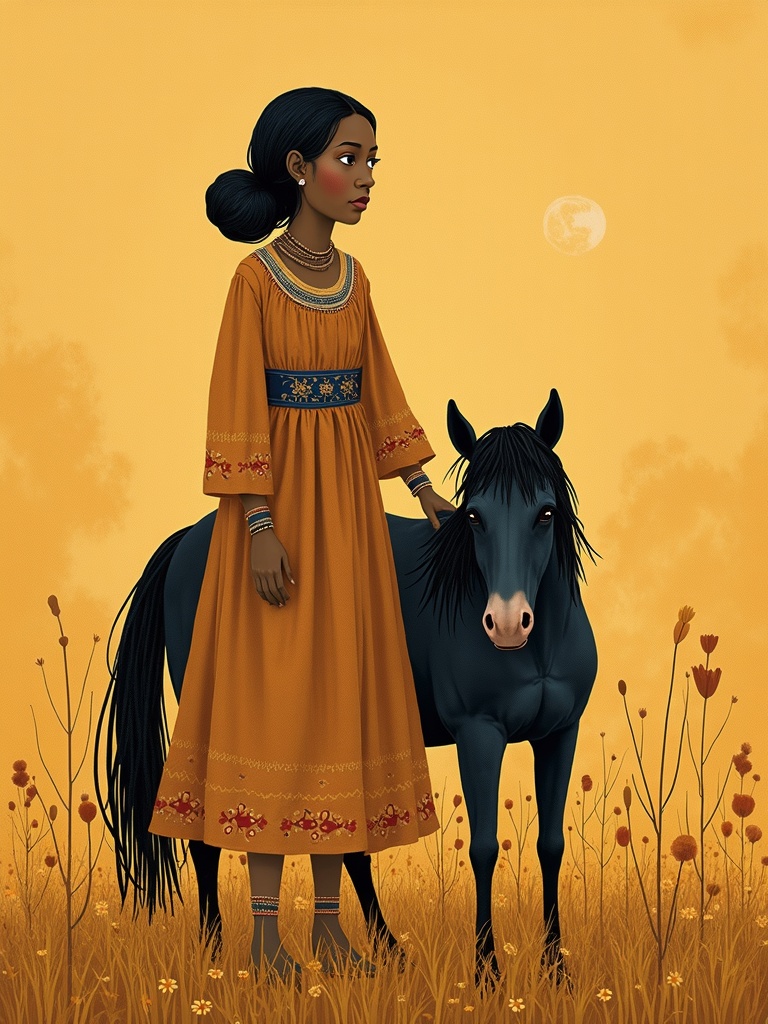
Answer all three to unlock this stage.
Unlock the previous stage first.
Unlock the previous stage first.
Unlock the previous stage first.
Crafting the doll
Garment: 100% hand-spun cotton Mossi strip-weave in deep indigo blues — narrow handwoven bands stitched edge-to-edge into a woman's wrapper, with a tied head cloth and an indigo-and-ochre warrior tunic variant; finished with cowrie shells and amber/brass-style beads (child-safe, firmly sewn). Signature attribute: a small noble dark stallion, with a slim ceremonial spear and a tiny carved Mossi biiga keepsake doll. Education card: explains that Yennenga is a treasured Mossi oral-tradition heroine — mother of the Mossi through her son Ouedraogo — that her story is legend with a possible core of truth, and that her name today crowns the FESPACO Étalon d'or de Yennenga. Sizes Classic 32 / Kidogo 18–20 / Shule 28. Proceeds → Mossi cotton-weaving and indigo-dyeing cooperatives in Burkina Faso.
How this doll is made
Yennenga's look is grounded in real Mossi material culture: the deep-indigo, hand-spun strip-woven cotton cloth that women spin and men weave across Burkina Faso, adorned with cowrie shells and beads, and the carved wooden biiga doll that Mossi girls cherish as a 'wooden child.' Her stallion is no mere prop — the horse is at the very root of the Mossi story and even of the name Ouedraogo. Every element is made by hand, honouring living Mossi craft rather than costume invention.
- Garments 2
- Accessories 3
- Materials 2
- Techniques 3
Garments
- Indigo strip-weave wrapperA woman's wrapper of narrow hand-spun cotton strips stitched edge-to-edge and dyed in many indigo blues through repeated dye baths — the signature Mossi cloth worn as wrappers and used in ceremonies and gifts.DetailsEN
- Tied head clothA wound and folded cotton head cloth completing the Mossi woman's everyday and festival dress, often in the same indigo strip-weave as the wrapper.DetailsEN
Accessories
- Cowrie-shell ornamentsStrands and bands of cowrie shells used by Mossi women as adornment and on cherished objects — historically money and a symbol of prestige and fertility across West Africa.DetailsEN
- Carved biiga keepsake dollA small carved wooden 'wooden child' (biiga) figure shaped as a woman with hairstyle and scarification marks; Mossi girls wash, feed and carry it, and it accompanies women into motherhood — referenced here respectfully.DetailsEN
- Slim ceremonial spearA slender spear (and leather quiver) shown at rest, echoing the javelins, spears and bows the legend says Yennenga mastered as a young commander — never aimed, no violence.DetailsEN
Materials
- Hand-spun cottonNative cotton hand-spun by Mossi women into yarn, then woven by men on narrow looms — the raw fibre behind every piece of Mossi strip-cloth.DetailsEN
- Natural indigo dyePlant-based indigo, applied in repeated dye baths to build the deep blues of Mossi cloth — the colour long linked to wealth, prestige and protection.DetailsEN
Techniques
- Narrow-strip weavingMen weave long, narrow bands of cotton on a horizontal narrow loom; the finished strips are then sewn together side by side to make a full cloth — the hallmark construction of Mossi textiles.DetailsEN
- Indigo resist & dye-bath dyeingCotton yarn or cloth is dipped again and again in fermented indigo vats; the number of baths sets the depth of blue, and tied or stitched areas can resist the dye to form patterns.DetailsEN
- Wood-carving (biiga & figures)Village smiths and carvers shape a single piece of wood into figures — including the biiga doll — adding facial features, elaborate hairstyles and incised scarification by hand.DetailsEN
How it's made
Every doll is sewn by hand from natural materials — built to last a lifetime and to be repaired, not replaced. Here is the shopping list and the work steps. Sizes: Classic 32 cm (heirloom) · Kidogo 18–20 cm (toddlers, no small parts) · Shule 28 cm (school edition).
Shopping list
- Natural cotton or linen for the body (skin tone), ~0.5 m
- Wool or cotton stuffing — no plastic
- Cotton thread and embroidery floss in matching colours
- Garment fabric in this doll's colours (see the fabrics above)
- Yarn for the hairstyle
- Beads, cowrie shells and trims as shown
- Sharps and embroidery needles, pins, fabric scissors, fabric marker
Work instructions
- Trace and cut the body pattern at your chosen size (Classic 32 cm / Kidogo 18–20 cm / Shule 28 cm).
- Sew the body pieces right sides together, leave an opening, turn and stuff firmly with natural fibre, then close by hand.
- Embroider the face gently and with dignity — no plastic parts for the toddler line.
- Make the hair from yarn following the chosen hairstyle and attach it securely.
- Cut and sew the garment from this doll's fabric, then dress the doll.
- Add the beadwork, shells, trims and any attribute by hand.
- Check every seam and reinforce it — the doll should be lifelong and repairable, with no loose small parts for small children.
Origin & Ethics
How we know this
On honesty: legendary (★★☆☆☆). Yennenga is a Mossi oral-tradition heroine, not a documented historical individual — her age, weapons, the rotting wheat, the disguise and the hunter Rialé are folklore, and her era is given variously from the 11th to the 15th century. What is real and documented is the Mossi people and their kingdoms (founded through her legendary son Ouedraogo), the Mossi craft shown here (hand-spun indigo strip-weave, cowrie adornment, the carved biiga doll), and the modern honours — her statues in Ouagadougou and the FESPACO Étalon d'or de Yennenga.
Made in respectful homage with the guidance of Mossi cultural authorities — in the spirit of the Mogho Naba's custodianship of Mossi tradition in Ouagadougou, Burkinabè historians and griots who keep Yennenga's story, and Mossi cotton-weaving and indigo-dyeing cooperatives. The biiga doll, a sacred fertility/motherhood object, is referenced respectfully and never trivialised; the figure is presented as honoured founding legend, not a finished claim of dated history.
Sources
- Wikipedia — Yennenga (warrior-princess of Dagbon, Nedega/Napoko, age 14, javelins/spears/bows, rotting wheat, escape on stallion, hunter Rialé, son Ouedraogo, statues, FESPACO prize, "core of truth")
- Wikipedia — Mossi Kingdoms (five kingdoms; Yennenga flees Naa Gbewaa, marries Rialé; son Ouedraogo founds Mossi 11th–15th c.; builds Tenkodogo; Mogho Naaba)
- Wikipedia — Mossi people (largest people of Burkina Faso, ~11 million, Mooré language, cavalry, Mogho Naaba, Nakomse/Tengabisi)
- Wikipedia — Étalon de Yennenga (FESPACO grand prize since 1972; gold/silver/bronze; resembles Yennenga with horse; named for the legendary princess)
- Wikipedia — FESPACO (founded 1969, biennial, Ouagadougou, Africa's main film festival; Étalon d'or de Yennenga top prize)
- Britannica — Mossi states (Mossi kingdoms of the upper Volta, cavalry power, resistance to Islam, French conquest 1896)
- World History Commons (Roy Rosenzweig Center / Univ. of Iowa Art & Life in Africa) — Girl with Mossi Doll (the biiga 'wooden child', carved by smiths, cowrie/bead/leather decoration, motherhood ritual)
- FESPACO (official) — Dani Kouyaté honoured with the Golden Stallion of Yennenga at the 29th FESPACO
- Face2Face Africa — Yennenga, the warrior princess whose son founded the Mossi Kingdom