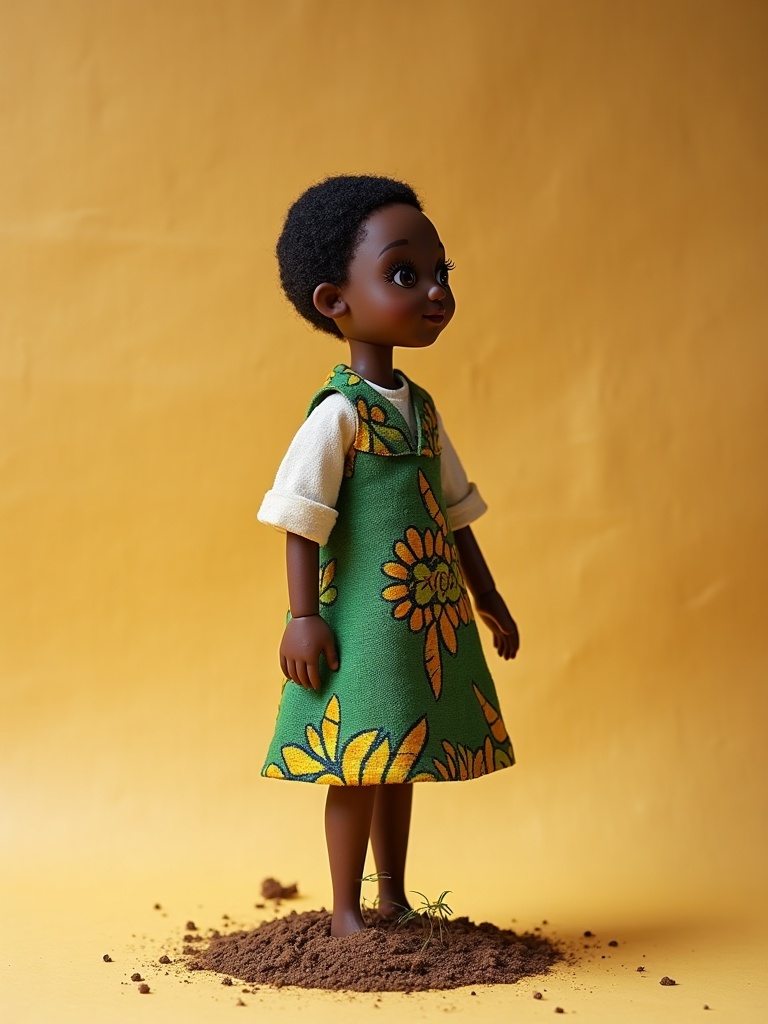
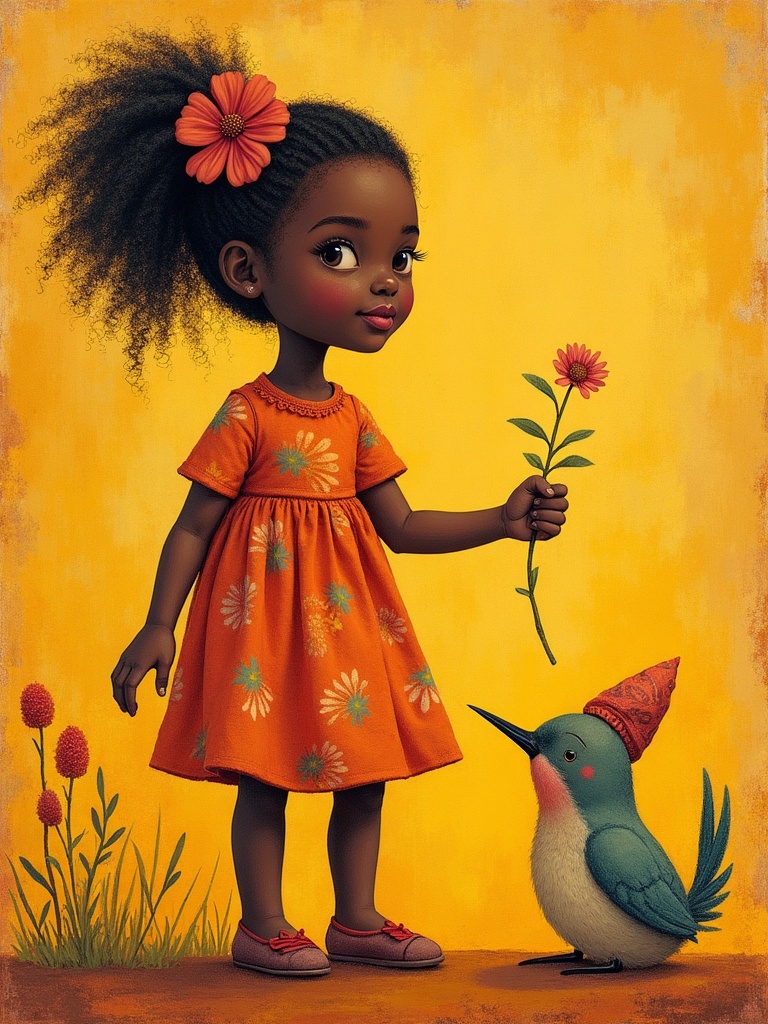
AI design preview — not a photo of the finished handmade doll
Environment & Courage
Wangari Maathai
She answered a continent's despair with the simplest act imaginable — planting a tree — and grew it into a movement that won the Nobel Peace Prize.
- People
- Kikuyu
- Country
- Kenya
- Region
- East Africa
- Era
- 1940–2011
- Theme
- Environment & Courage
⚖ A respectful concept
A respectful concept. Wangari Maathai died in 2011; she is a real person of recent history. This compendium uses only documented quotes with sources — never invented ones. A doll could exist only with the explicit consent of her family, the Green Belt Movement and the Wangari Maathai Foundation. This is a respectful draft, not a finished product; a homage, not an exact likeness.
Make your own
Design your Wangari Maathai
Pick a garment, a hairstyle and a scene, enter the PIN and generate a fresh image of Wangari Maathai with AI.
⚖ AI homage concept — not a likeness of the real person.
Each image is generated live with fal.ai.
Generated images
AI design preview — not a photo of the finished handmade doll
No images generated yet — be the first.
Tradition & Origin
She answered a continent's despair with the simplest act imaginable — planting a tree — and grew it into a movement that won the Nobel Peace Prize.
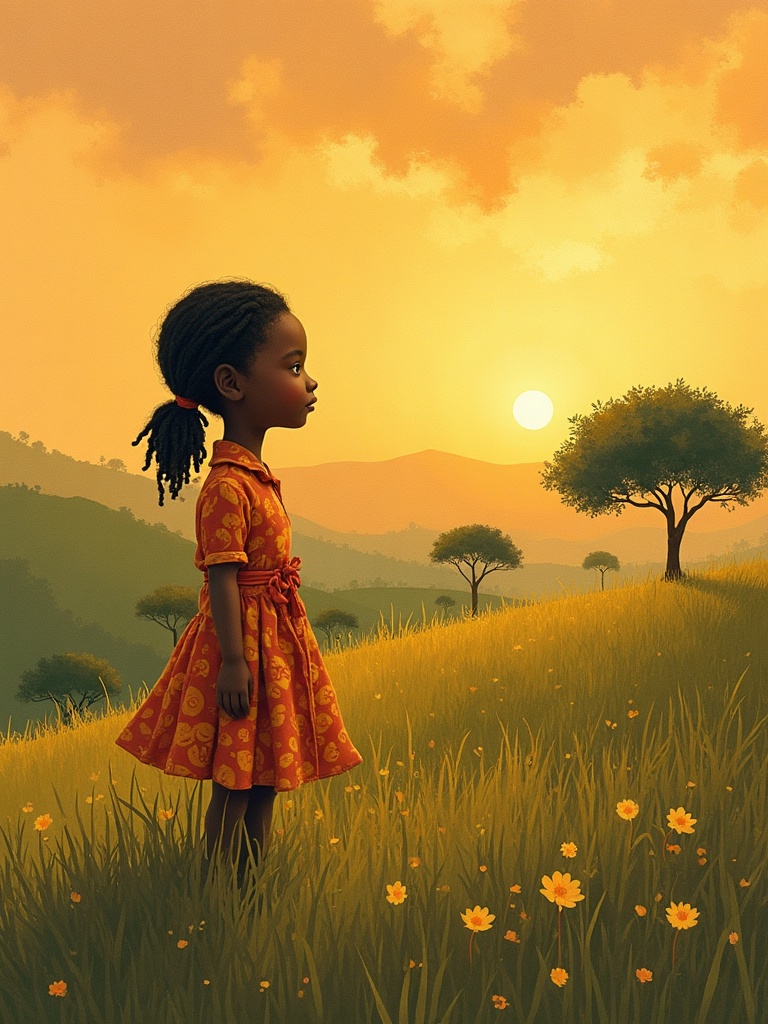
The Green Belt Movement has planted over 50 million trees — one seedling at a time.
DetailsENWangari Maathai was born in 1940 in the village of Ihithe near Nyeri, in the Kikuyu highlands of central Kenya. Brilliant and determined, she studied biology in the United States and Germany before earning a doctorate at the University of Nairobi in 1971 — becoming the first woman in East or Central Africa to hold a PhD, in veterinary anatomy.
Seeing how deforestation and erosion were draining the lives of rural women — less firewood, less clean water, poorer soil — she founded the Green Belt Movement in 1977. Her idea was disarmingly direct: pay women to plant indigenous trees in their own communities. Over the decades the movement planted tens of millions of trees and put income and standing into the hands of thousands of women, binding together conservation, democracy and human rights.
Her work brought her into open conflict with Kenya's authorities, but she never backed down. In 2004 she became the first African woman — and the first environmentalist — to win the Nobel Peace Prize, honoured "for her contribution to sustainable development, democracy and peace." She loved to tell the parable of the hummingbird, carrying single drops of water to a burning forest while the bigger animals looked on: "I will be a hummingbird; I will do the best I can." She died in 2011.
Timeline
- 1940born in Nyeri, Kenya
- 1977founds the Green Belt Movement
- 1980s–90sjailed & beaten for activism; keeps planting
- 2004wins the Nobel Peace Prize (first African woman)
- 2011dies in Nairobi; the Wangari Maathai Foundation carries on
Did you know?
- The Nobel Committee honoured her "for her contribution to sustainable development, democracy and peace" — the first time the Peace Prize centred on the environment.DetailsEN
- Her favourite parable was of a hummingbird carrying single drops of water to a forest fire: "I will be a hummingbird; I will do the best I can."DetailsEN
- She earned her doctorate in 1971 — the first woman in either East or Central Africa to do so.DetailsEN
- Her Green Belt Movement deliberately fused tree-planting with women's empowerment, treating a seedling as both ecology and democracy.DetailsEN
One woman, one seedling at a time — and a continent began to turn green again.
Values & Capabilities
Capabilities
◆◆◆◆◆ shows how central a gift is — five diamonds mark a signature strength, fewer mark a supporting one.
Tens of millions of trees, one seedling at a time.
Do the best you can, even when others stand frozen.
She put income, dignity and power into the hands of rural women.
“Protecting the environment is peace work.”
Jailed and beaten, she never bent.
Development
1 of 3 stages unlocked
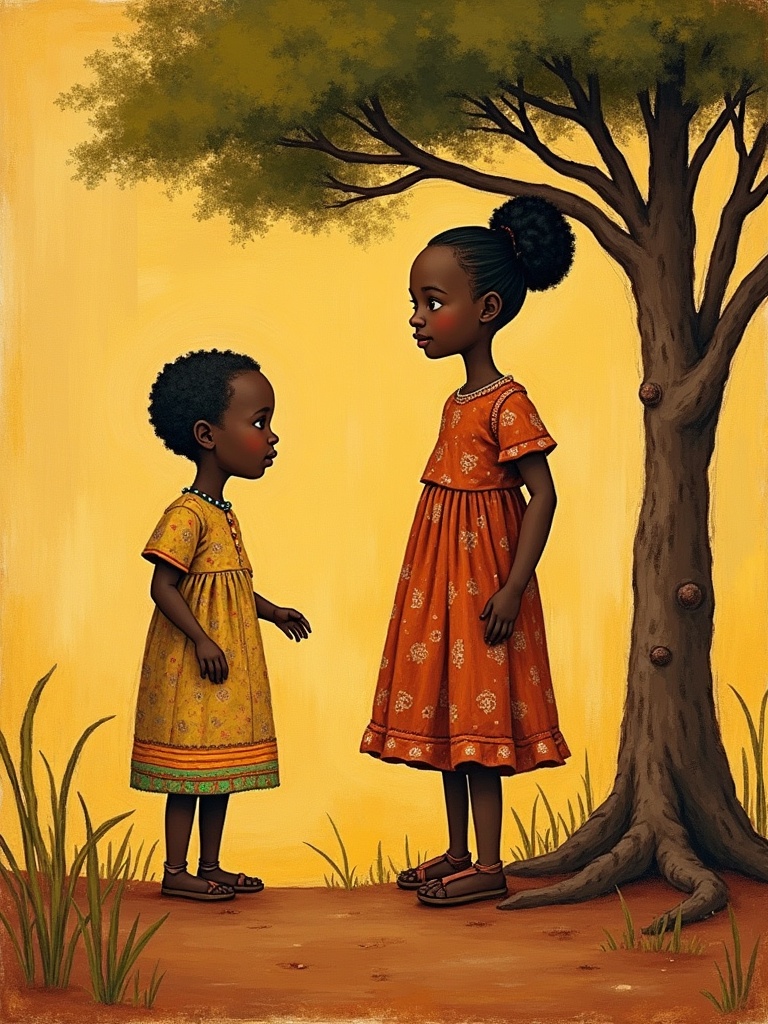
Young Wangari in Nyeri, by her grandmother's sacred tree and the clear stream.
Answer all three to unlock this stage.
Unlock the previous stage first.
Crafting the doll
Garment: 100% cotton kitenge/kanga in greens and earth tones. Signature attribute: a felt seedling in soil and a tiny hummingbird; optional watering can. Education card: real, documented quotes with sources, the hummingbird parable, and an honest short biography; an invitation to plant a tree. Sizes Classic 32 / Kidogo 18–20 / Shule 28. Proceeds → the Green Belt Movement (tree-planting) — her work continues, not just her image.
How this doll is made
A respectful homage to Wangari Maathai (1940-2011), Kikuyu environmentalist and first African woman to win the Nobel Peace Prize: her look honours her documented public style of bright East African printed cottons (kitenge/kanga) with a matching headwrap, grounded in Kikuyu material culture of leather garments and beadwork from central Kenya, and the tree seedling that became her lifelong symbol.
- Garments 3
- Accessories 3
- Materials 2
- Techniques 3
Garments
- Kitenge / kanga print dressA vibrant printed-cotton dress in the East African style Maathai wore proudly in public. The kanga is a rectangular 100% cotton printed cloth (about 1.5 m x 1 m), sold in pairs, with a bordered, brightly coloured design and a Swahili saying.DetailsEN
- Matching headwrap (kitenge head-tie)A coordinating wrapped head-tie of the same African print, worn folded and tied around the head. The kanga itself is traditionally used as a head-wrap as well as a shawl, skirt and shoulder cover.DetailsEN
- Kikuyu leather wrap-skirt (muthuru)A heritage Kikuyu element: the muthuru, a simple leather wrap-around skirt made from two sheep skins, tapered at the back for ease of movement during work; the upper body was covered by a softened goat-skin cloak fastened at the right shoulder.DetailsEN
Accessories
- Beaded ornaments and apronsKikuyu beadwork: cloaks were decorated with beads along seams, and beaded aprons such as the gicoco (for uninitiated girls, trimmed with antelope hooves) and the fully beaded muniuru were worn. Beadwork was primarily women's labour-intensive work.DetailsEN
- Beaded ear and neck ornaments (hangi)Traditional Agikuyu ear ornaments such as the hangi (numerous beaded rings in the ear, supported by a beaded leather band over the head) and neck ornaments made with coloured beads, shells and discs acquired through trade.DetailsEN
- Tree seedling (held accessory)A small tree seedling for the doll to hold or plant - the central symbol of Maathai's Green Belt Movement (founded 1977), through which rural women raised seedlings in nurseries; she always believed the tree is a symbol of hope and self-improvement.DetailsEN
Materials
- Printed cotton (kitenge / kanga)100% printed cotton cloth - the core fabric of her dress and headwrap. African wax/kitenge print is cotton patterned by a wax-resist (batik) technique so the design reads the same on both sides; Kenyan mills such as Rivatex and Thika Cloth Mills print kanga.DetailsEN
- Glass beads & leather (Kikuyu adornment)Kikuyu ornaments combined glass trade beads with leather, plus iron and copper wire, shells, seeds, bone and ivory; leather thongs and beaded leather bands supported and strung the ornaments.DetailsEN
Techniques
- Kitenge dressmaking & headwrap tyingCutting and hemming printed cotton into a dress, then folding and wrapping a length of the same cloth around the head into a tied head-wrap (about 2 yards of fabric is used for one head-wrap).DetailsEN
- Kikuyu beadwork & leatherworkThreading coloured beads onto leather and wire to build ornaments and decorated aprons, and dressing skins: goat skins were treated with ochre and castor oil until soft to make the wrap garments. Beadwork was varied, labour-intensive women's craft.DetailsEN
- Raising and planting tree seedlingsThe Green Belt Movement method Maathai taught: women gathered native seeds, grew them in tree nurseries, and transplanted the seedlings - the act the doll re-enacts. Over 51 million trees have been planted in Kenya.DetailsEN
How it's made
Every doll is sewn by hand from natural materials — built to last a lifetime and to be repaired, not replaced. Here is the shopping list and the work steps. Sizes: Classic 32 cm (heirloom) · Kidogo 18–20 cm (toddlers, no small parts) · Shule 28 cm (school edition).
Shopping list
- Natural cotton or linen for the body (skin tone), ~0.5 m
- Wool or cotton stuffing — no plastic
- Cotton thread and embroidery floss in matching colours
- Garment fabric in this doll's colours (see the fabrics above)
- Yarn for the hairstyle
- Beads, cowrie shells and trims as shown
- Sharps and embroidery needles, pins, fabric scissors, fabric marker
Work instructions
- Trace and cut the body pattern at your chosen size (Classic 32 cm / Kidogo 18–20 cm / Shule 28 cm).
- Sew the body pieces right sides together, leave an opening, turn and stuff firmly with natural fibre, then close by hand.
- Embroider the face gently and with dignity — no plastic parts for the toddler line.
- Make the hair from yarn following the chosen hairstyle and attach it securely.
- Cut and sew the garment from this doll's fabric, then dress the doll.
- Add the beadwork, shells, trims and any attribute by hand.
- Check every seam and reinforce it — the doll should be lifelong and repairable, with no loose small parts for small children.
Origin & Ethics
How we know this
On honesty: very well documented (her own books, the Nobel lecture, the Green Belt Movement). Rights-sensitive recent person → documented quotes only, homage not likeness; she was human and imperfect, but her courage and life's work are beyond dispute.
Committee: the family of Wangari Maathai (first voice), the Green Belt Movement, the Wangari Maathai Foundation, Kenyan cultural bodies. Without consent, no image, no name, no doll. Documented quotes only; homage, not likeness.
Sources
- Britannica — Wangari Maathai
- Green Belt Movement — Wangari Maathai
- Nobel Prize — Maathai lecture 2004
- Green Belt Movement — Nobel Peace Prize
- YES! Magazine — Wangari Maathai
- Green Belt Movement, Wangari Maathai biography (1940-2011, founder, Nobel Peace laureate)
- Green Belt Movement / Google Arts & Culture, Wangari Maathai: Mother of Trees (tree nurseries, seedlings, tree symbolism)
- Nobel Prize, Wangari Maathai Facts 2004 (first African woman Nobel Peace laureate)
- Kamuiru J.C.W. & Maina S.M., University of Nairobi School of the Arts and Design, Traditional Jewellery of Agikuyu of Central Kenya: Material and Use (iron, copper, brass, leather, beads, shells; hangi ear ornaments)
- Gikuyu Centre for Cultural Studies (Mukuyu), Kikuyu traditional dress (muthuru leather skirt, goat-skin cloak, beaded aprons)
- National Museums of Kenya / Google Arts & Culture, A Journey Into the History and Symbolism of Kenyan Ornaments (leather, beads, shells, iron; women's beadwork)
- National Museums of Kenya / Google Arts & Culture, 6 Facts About Kenyan Beadwork
- Wikipedia, Kanga (garment) (printed cotton, pindo/mji/jina, worn as head-wrap, Kenyan mills)
- National Museums of Kenya / Google Arts & Culture, Kanga: A Cloth That Unites
- Bard College, Textiles That Talk - East African Kangas and Their Meanings
- Brighton & Hove Museums, Three Kangas from Kenya
- Kitenge Store, Fabric Guide for African Headwraps (kitenge/wax print cotton, batik wax-resist, headwrap fabric)
- Ethical Fashion Initiative, Beadwork in Kenya: Culture, Craft and Community
- Right Livelihood, Wangari Maathai laureate profile