Environment & Courage
Wangari Maathai
Wangari Muta Maathai (1940–2011) grew up in rural Nyeri, Kenya , where her grandmother taught her that a great fig tree near their home was sacred. She became the first woman in East and Central Africa to earn a doctorate (in biology).
- People
- Kikuyu
- Country
- Kenya
- Region
- East Africa
- Era
- 1940–2011
- Theme
- Environment & Courage
⚖ A respectful concept
A respectful concept. Wangari Maathai died in 2011; she is a real person of recent history. This compendium uses only documented quotes with sources — never invented ones. A doll could exist only with the explicit consent of her family, the Green Belt Movement and the Wangari Maathai Foundation. This is a respectful draft, not a finished product; a homage, not an exact likeness.
Make your own
Design your Wangari Maathai
Pick a garment, a hairstyle and a scene, enter the PIN and generate a fresh image of Wangari Maathai with AI.
Each image is generated live with fal.ai.
Generated images
No images generated yet — be the first.
History & Meaning
Wangari Muta Maathai (1940–2011) grew up in rural Nyeri, Kenya, where her grandmother taught her that a great fig tree near their home was sacred. She became the first woman in East and Central Africa to earn a doctorate (in biology).
🌳 Plant a tree, plant hope
Working with rural women, Maathai saw that bare hills, dry streams and poverty were one problem — and that the cure could start with a seedling. In 1977 she founded the Green Belt Movement, paying village women a few coins to plant and tend trees; the movement planted tens of millions of trees. But it was never only about trees: it was about women taking charge of their own land, livelihoods and democracy. For this she was beaten and jailed — and never gave up. In 2004 she became the first African woman, and the first environmentalist, to win the Nobel Peace Prize. She loved the parable of the hummingbird who carries tiny drops of water to a forest fire: “I am doing the best I can.”
The big animals watched the forest burn. The hummingbird carried one drop, then another. “I am doing the best I can.”
Abilities & Development
Abilities
◆◆◆◆◆ shows how central a gift is — five diamonds mark a signature strength, fewer mark a supporting one.
Tens of millions of trees, one seedling at a time.
Do the best you can, even when others stand frozen.
She put income, dignity and power into the hands of rural women.
“Protecting the environment is peace work.”
Jailed and beaten, she never bent.
Development through the years
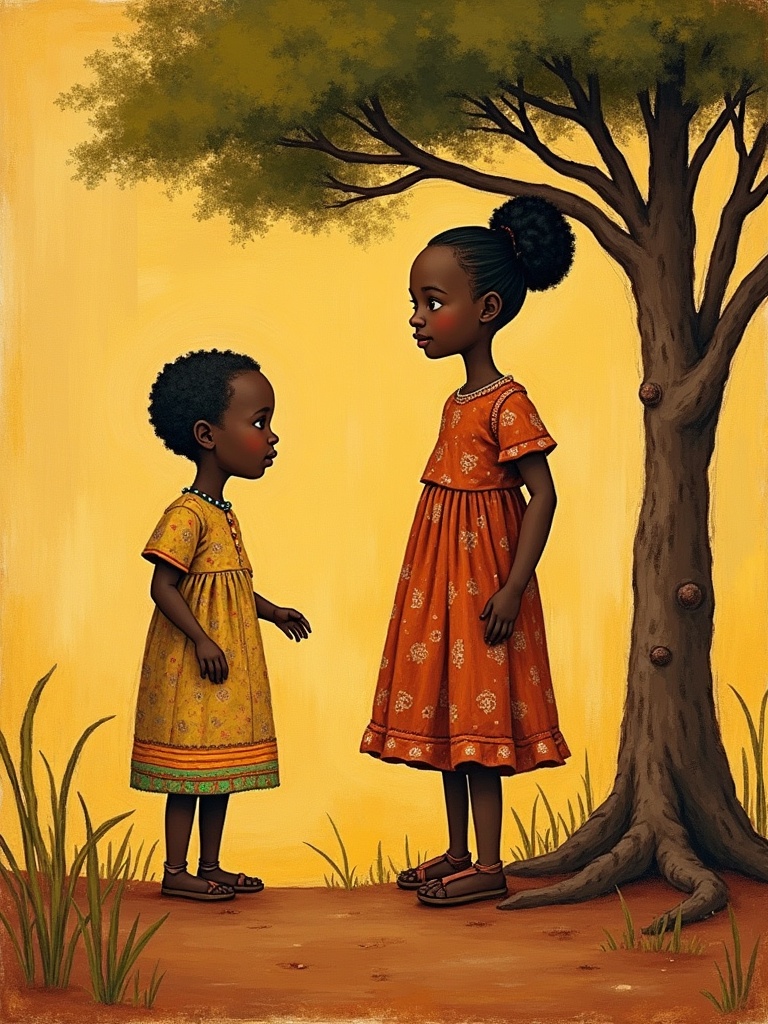
Young Wangari in Nyeri, by her grandmother's sacred tree and the clear stream.
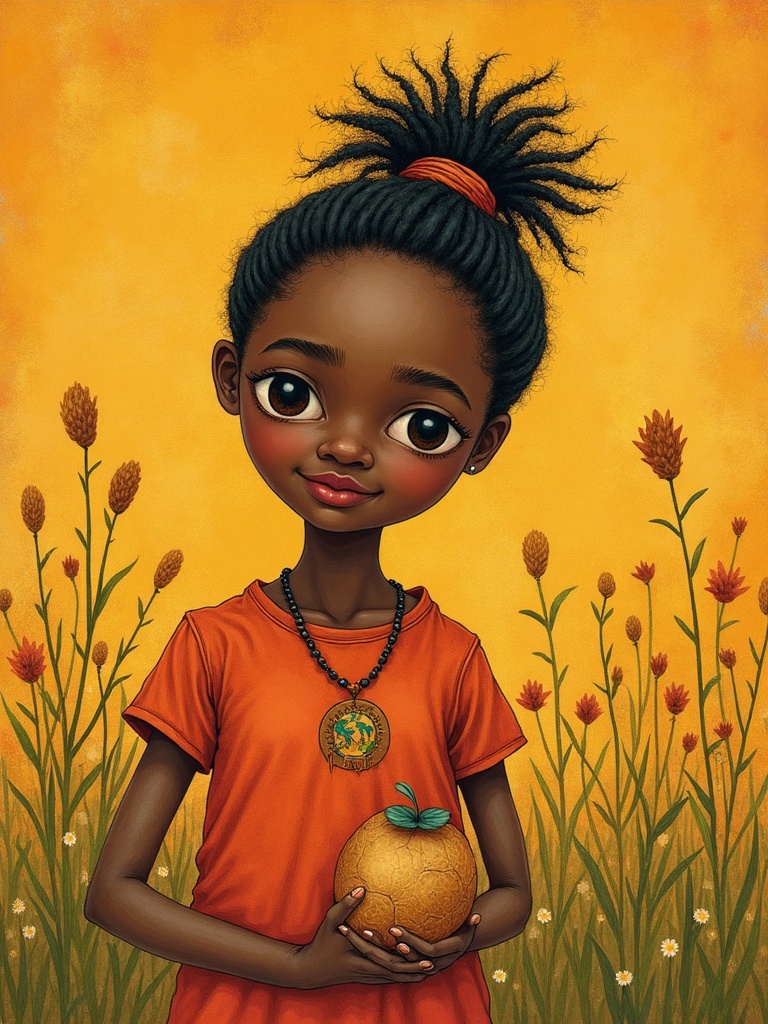
Maathai planting trees with a circle of village women (1977).
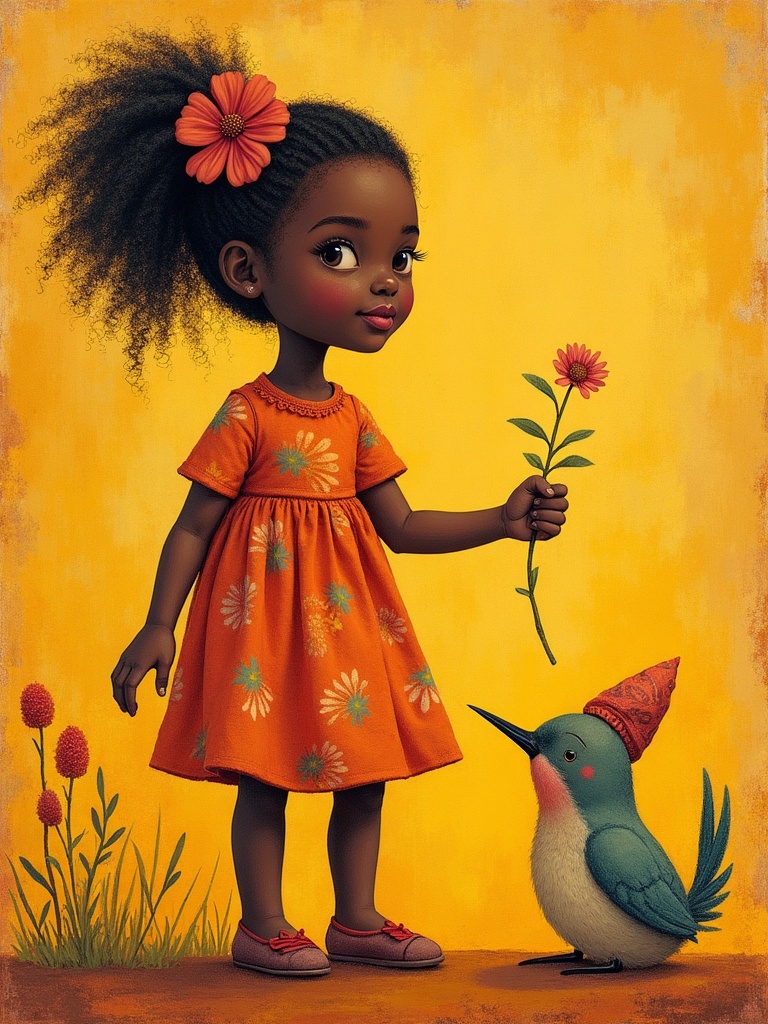
The mature Maathai (2004), a seedling in hand, a tiny hummingbird nearby.
Make & Learn
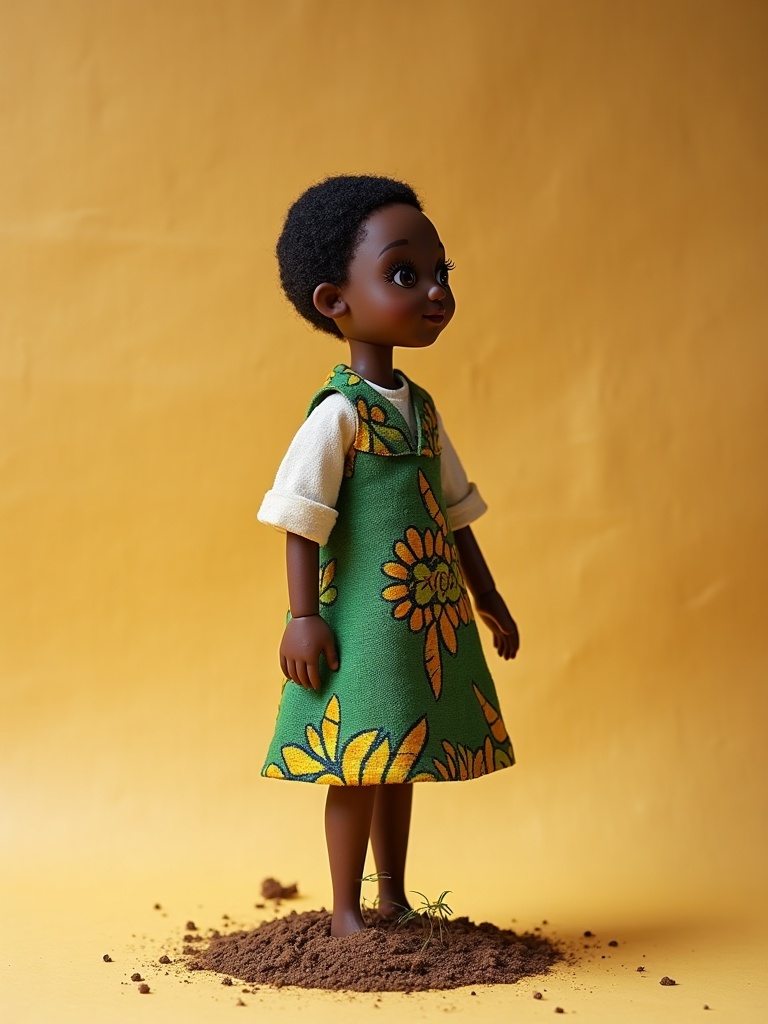
Garment: 100% cotton kitenge/kanga in greens and earth tones. Signature attribute: a felt seedling in soil and a tiny hummingbird; optional watering can. Education card: real, documented quotes with sources, the hummingbird parable, and an honest short biography; an invitation to plant a tree. Sizes Classic 32 / Kidogo 18–20 / Shule 28. Proceeds → the Green Belt Movement (tree-planting) — her work continues, not just her image.
How it's made
Every doll is sewn by hand from natural materials — built to last a lifetime and to be repaired, not replaced. Here is the shopping list and the work steps. Sizes: Classic 32 cm (heirloom) · Kidogo 18–20 cm (toddlers, no small parts) · Shule 28 cm (school edition).
Shopping list
- Natural cotton or linen for the body (skin tone), ~0.5 m
- Wool or cotton stuffing — no plastic
- Cotton thread and embroidery floss in matching colours
- Garment fabric in this doll's colours (see the fabrics above)
- Yarn for the hairstyle
- Beads, cowrie shells and trims as shown
- Sharps and embroidery needles, pins, fabric scissors, fabric marker
Work instructions
- Trace and cut the body pattern at your chosen size (Classic 32 cm / Kidogo 18–20 cm / Shule 28 cm).
- Sew the body pieces right sides together, leave an opening, turn and stuff firmly with natural fibre, then close by hand.
- Embroider the face gently and with dignity — no plastic parts for the toddler line.
- Make the hair from yarn following the chosen hairstyle and attach it securely.
- Cut and sew the garment from this doll's fabric, then dress the doll.
- Add the beadwork, shells, trims and any attribute by hand.
- Check every seam and reinforce it — the doll should be lifelong and repairable, with no loose small parts for small children.
Origin & Ethics
How we know this
On honesty: very well documented (her own books, the Nobel lecture, the Green Belt Movement). Rights-sensitive recent person → documented quotes only, homage not likeness; she was human and imperfect, but her courage and life's work are beyond dispute.
Committee: the family of Wangari Maathai (first voice), the Green Belt Movement, the Wangari Maathai Foundation, Kenyan cultural bodies. Without consent, no image, no name, no doll. Documented quotes only; homage, not likeness.