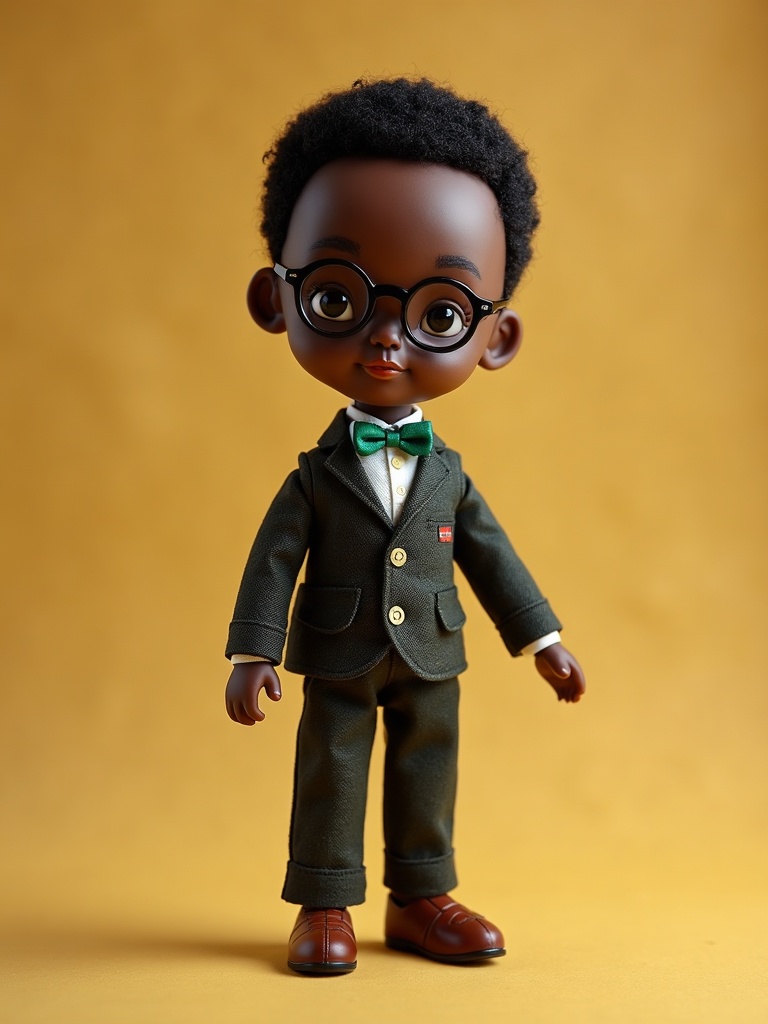
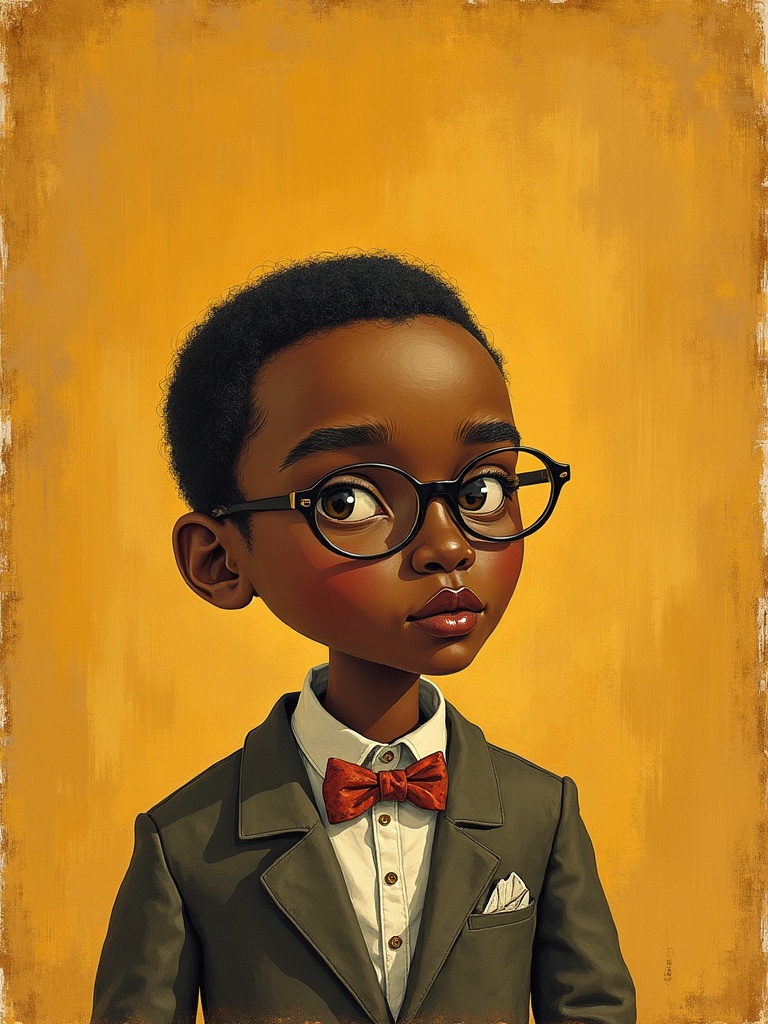
AI design preview — not a photo of the finished handmade doll
Independence & Dignity
Patrice Lumumba
On independence day he looked a king in the eye and refused to be grateful — "no Congolese will ever forget that independence was won in struggle."
- People
- Tetela
- Country
- DR Congo
- Region
- Central Africa
- Era
- 1925–1961
- Theme
- Independence & Dignity
⚖ A respectful concept
Real person (d. 1961). Any product requires the explicit consent of his family and Congolese authorities. Only documented quotes. A homage, not an exact likeness — and we show his dignity, never the violence of his death.
Make your own
Design your Patrice Lumumba
Pick a garment, a hairstyle and a scene, enter the PIN and generate a fresh image of Patrice Lumumba with AI.
⚖ AI homage concept — not a likeness of the real person.
Each image is generated live with fal.ai.
Generated images
AI design preview — not a photo of the finished handmade doll
No images generated yet — be the first.
Tradition & Origin
On independence day he looked a king in the eye and refused to be grateful — "no Congolese will ever forget that independence was won in struggle."
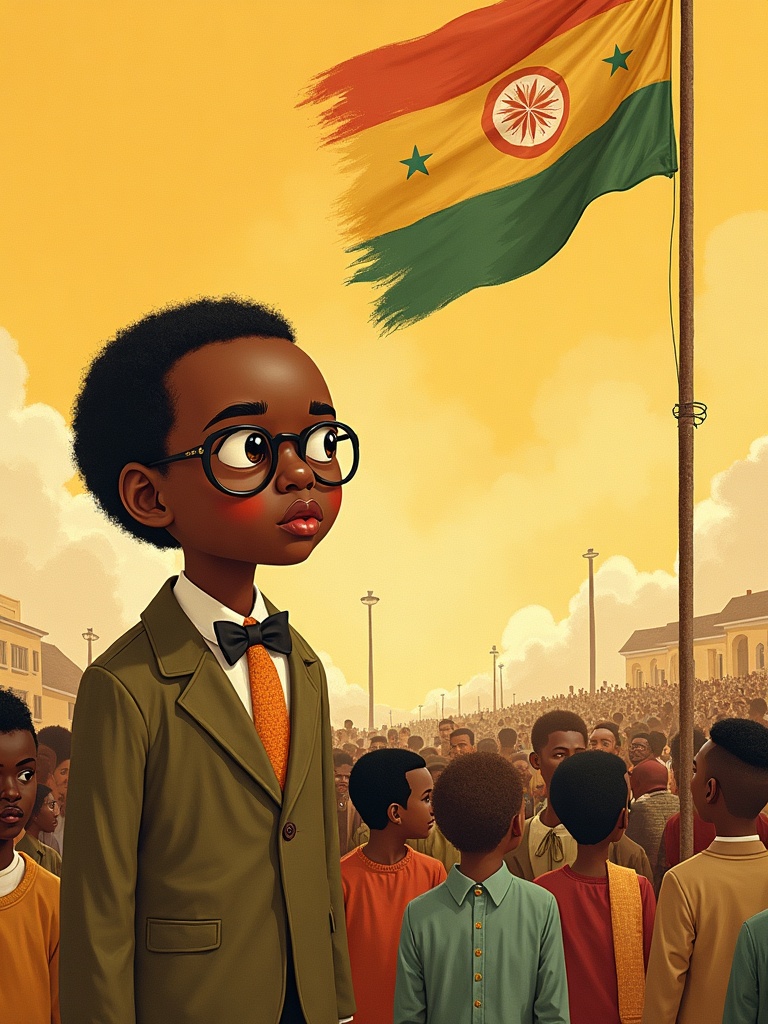
Killed at 35; the truth was buried for decades before a formal reckoning and his final return home.
DetailsENPatrice Émery Lumumba was born on 2 July 1925 in Onalua, in the Kasai region of the Belgian Congo. Largely self-taught, he worked for years as a postal clerk and a travelling beer salesman before politics. In 1958 he co-founded the Mouvement National Congolais (MNC) — pointedly not built on any single ethnic group, but on the idea of one Congo and a wider Pan-African future.
When the Congo won independence from Belgium on 30 June 1960, Lumumba became its first Prime Minister. At the ceremony, after King Baudouin praised colonial rule, Lumumba rose and delivered a speech that became the new nation's birth certificate. He spoke plainly of "the humiliating bondage forced upon us" and of how "morning, noon and night we were subjected to jeers, insults and blows" — then turned to the future: "We shall show the world what the black man can do when working in liberty, and we shall make the Congo the pride of Africa."
His government lasted barely 73 days before being torn apart by secession, foreign interference and Cold War rivalries. Lumumba was killed on 17 January 1961, at just 35. The truth was buried for decades — until in 2002 Belgium formally acknowledged its moral responsibility, and in 2022 returned his last remains to his family for burial at home. Across Africa, his name endures as a symbol of dignity and self-determination.
Timeline
- 1925born in Onalua (Tetela), Kasai
- 1958co-founds the MNC; All-African People’s Conference, Accra
- May 1960the MNC wins the elections
- 30 Jun 1960independence; becomes first PM; the Independence Day speech
- Jul 1960army mutiny & Katanga secession — the Congo Crisis
- 17 Jan 1961assassinated (age 35)
- 2002 / 2022Belgium expresses regret; returns his relic to the family
Did you know?
- His independence-day speech is remembered as the "birth certificate" of modern Congo — delivered, unscripted in tone, directly after the Belgian king praised colonial rule.DetailsEN
- He ended his speech with a promise, not a grievance: "We shall make the Congo the pride of Africa."DetailsEN
- Before politics he was a postal clerk and a travelling beer salesman — largely self-educated, he rose to lead a nation.DetailsEN
- He deliberately built the MNC as a movement for all Congolese rather than for one ethnic group — a Pan-African vision of unity.DetailsEN
They could end his 73 days; they could not end his sentence — "independence was won in struggle."
Values & Capabilities
Capabilities
◆◆◆◆◆ shows how central a gift is — five diamonds mark a signature strength, fewer mark a supporting one.
On Independence Day he spoke the dignity of a free people aloud, even to a king.
He fought to hold a vast, diverse country together as one nation, beyond ethnic division.
At Accra he joined the dream of a free, united Africa.
He insisted the Congo’s vast wealth must serve the Congolese first.
Silenced at 35, remembered across a continent.
Development
1 of 3 stages unlocked
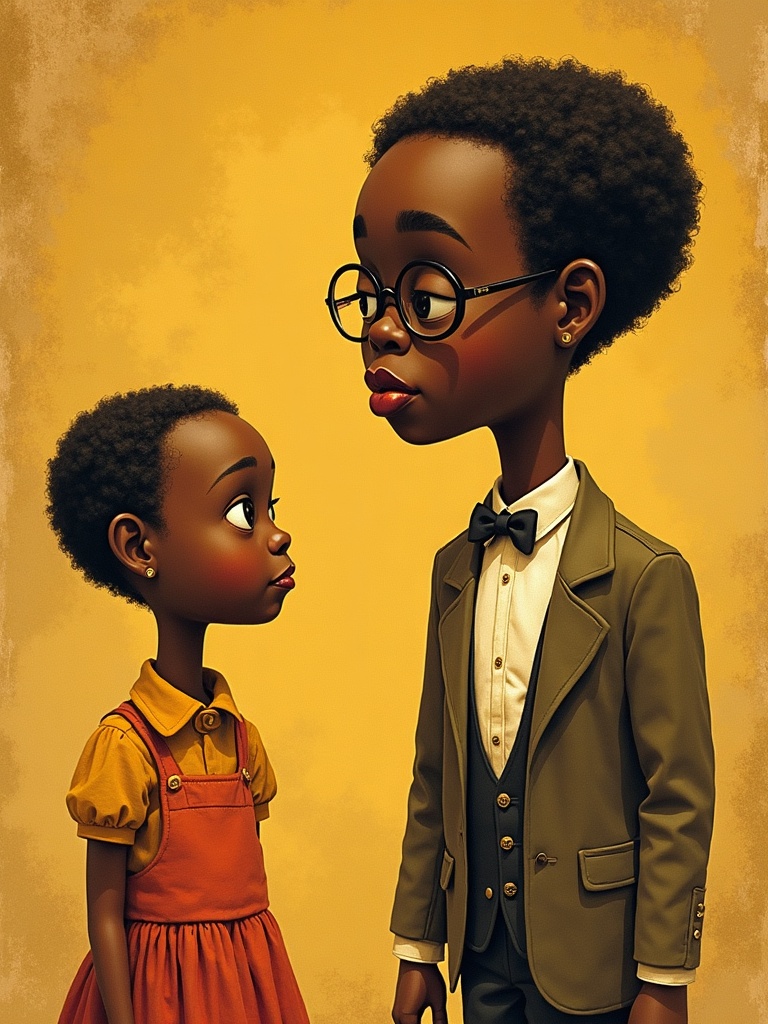
The curious, self-teaching young Patrice in Kasai, with a book.
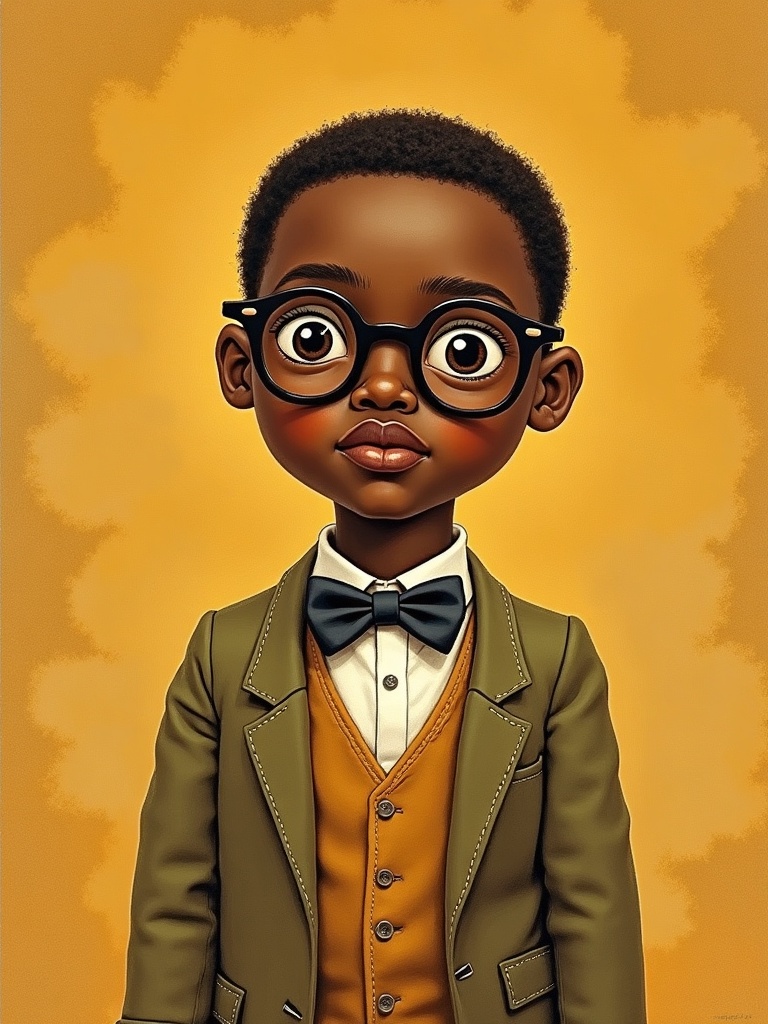
Answer all three to unlock this stage.
Unlock the previous stage first.
Crafting the doll
Garment: a neat little suit with a bow tie (cotton/wool) and tiny round glasses (child-safe, firmly fixed); optional Pan-African pin. Signature attribute: a small Congo flag and a book. Education card: real documented quotes with sources (the Independence Day speech; lines from his last letter to his wife Pauline), a short honest biography, and an age-appropriate framing of the Congo Crisis — never the violence of his death. Sizes as standard. Proceeds → Congolese education/heritage initiatives.
How this doll is made
A respectful homage to Patrice Lumumba (1925-1961), first Prime Minister of the independent Congo, whose documented 1960 look paired a slim mid-century tailored suit, bow tie, round glasses and goatee with the Pan-African dignity he embodied. The doll's accessories can nod to Congo's deep textile heritage - Kuba raffia cloth and the famed Kasai-velvet cut-pile embroidery of the Kasai region.
- Garments 2
- Accessories 3
- Materials 2
- Techniques 3
Garments
- Slim tailored suitA mid-century single-breasted lounge suit in wool or wool-blend suiting, cut slim through the body - the business suit Lumumba is documented wearing in 1960 press photographs. Structured tailoring with shaped jacket and matching trousers.DetailsEN
- White dress shirtA crisp cotton dress shirt with a turn-down collar worn under the suit, the standard foundation for mid-century formal menswear and the base for a bow tie.DetailsEN
Accessories
- Bow tieA self-tie bow tie, typically silk, knotted at the collar - part of Lumumba's recognizable formal look. The bow tie narrowed and slimmed through the late 1950s and 1960s to match slimmer suits.DetailsEN
- Round metal-frame glassesThin wire/metal round spectacles with circular lenses, a documented feature of his appearance (AP photo, July 1960, describes him 'goateed, glasses'). Round wire frames had been a mark of the studious and self-educated since the early 20th century.DetailsEN
- GoateeA neatly trimmed goatee beard, consistently documented in his 1960 photographs and a defining part of his recognizable silhouette (homage, not caricature).DetailsEN
Materials
- Raffia palm fiberThe supple fiber stripped from the fronds of the raffia palm (Raphia vinifera) - the foundational material of all Kuba and wider Congolese cloth, used to make accents or a sash that nods to Congo's textile heritage.DetailsEN
- Wool/cotton suitingThe mid-century suit fabric itself - woven wool or wool-cotton blend suiting for the jacket and trousers, and crisp cotton for the shirt.DetailsEN
Techniques
- Kuba raffia weavingHow it is made: Kuba men weave the foundation cloth from raffia fiber on a single-heddle inclined loom into small plain-weave panels (roughly 26 x 28 inches), which are then softened by repeated wetting and pounding in a mortar to a linen-like texture.DetailsEN
- Kasai-velvet cut-pile embroideryHow it is made: raffia thread is rubbed soft, then stitched with a large-eye iron needle under one or two warp/weft threads of the base cloth; each completed row is trimmed close with a small knife, raising a dense velvet-like pile only a few millimetres high (the famed 'Kasai velvet').DetailsEN
- Raffia appliqueHow it is made: cut-out raffia cloth shapes are laid on a base panel and secured with an embroidery stitch in single or double rows around each shape's perimeter, allowing freer, bolder geometric patterning than embroidery worked into the weave - women traditionally do the applique and decoration.DetailsEN
How it's made
Every doll is sewn by hand from natural materials — built to last a lifetime and to be repaired, not replaced. Here is the shopping list and the work steps. Sizes: Classic 32 cm (heirloom) · Kidogo 18–20 cm (toddlers, no small parts) · Shule 28 cm (school edition).
Shopping list
- Natural cotton or linen for the body (skin tone), ~0.5 m
- Wool or cotton stuffing — no plastic
- Cotton thread and embroidery floss in matching colours
- Garment fabric in this doll's colours (see the fabrics above)
- Yarn for the hairstyle
- Beads, cowrie shells and trims as shown
- Sharps and embroidery needles, pins, fabric scissors, fabric marker
Work instructions
- Trace and cut the body pattern at your chosen size (Classic 32 cm / Kidogo 18–20 cm / Shule 28 cm).
- Sew the body pieces right sides together, leave an opening, turn and stuff firmly with natural fibre, then close by hand.
- Embroider the face gently and with dignity — no plastic parts for the toddler line.
- Make the hair from yarn following the chosen hairstyle and attach it securely.
- Cut and sew the garment from this doll's fabric, then dress the doll.
- Add the beadwork, shells, trims and any attribute by hand.
- Check every seam and reinforce it — the doll should be lifelong and repairable, with no loose small parts for small children.
Origin & Ethics
How we know this
Very well documented (his speeches, the historical record, the 2001 Belgian parliamentary inquiry); rights-sensitive recent person → documented quotes only, homage not likeness, dignity not suffering (never depict torture or death); his brief government and the Congo Crisis named honestly and age-appropriately.
Committee: the family of Patrice Lumumba (first voice), Congolese cultural & state institutions, Pan-African historians. 5-step protocol; without consent, no image, no name, no doll.
Sources
- Britannica — Patrice Lumumba
- Wikipedia — Patrice Lumumba
- NYPL LibGuides — Lumumba
- Friends of the Congo — Lumumba
- EBSCO Research Starters — Patrice Lumumba
- Encyclopaedia Africana — Lumumba, P. E.
- NYPL Research Guides - Patrice Lumumba Biography (postal clerk, self-educated, Pan-Africanism, 1960 PM, assassinated 1961)
- Alamy / AP - Patrice Lumumba in business suit, goateed, glasses, Leopoldville July 26 1960
- FIT Fashion History Timeline - Raffia Cloth (Kuba weaving, cut-pile, applique, prestige use)
- WAAC Newsletter (Conservation OnLine) - Kuba Textiles: An Introduction (weaving, pounding, cut-pile, applique, dyeing)
- TRC Leiden Digital Exhibition - Kuba or Kasai 'velvet' (cut-pile embroidery technique)
- The Metropolitan Museum of Art - Man's Prestige Cloth, Kuba peoples (raffia prestige textile)
- The Metropolitan Museum of Art - Patterns without End: Techniques and Designs of Kongo Textiles
- MyVision - Glasses Through the Decades (round wire-frame eyeglasses history)
- Gentleman's Gazette - Were These 50 Years THE BEST for Men's Suits & Ties (mid-century slim tailoring)
- Vintage Dancer - Men's Ties History of the 1920s to 1970s (bow tie / necktie construction and styles)
- Marxists.org Archive - Lumumba 1960 Congo Independence Speech, June 30 1960