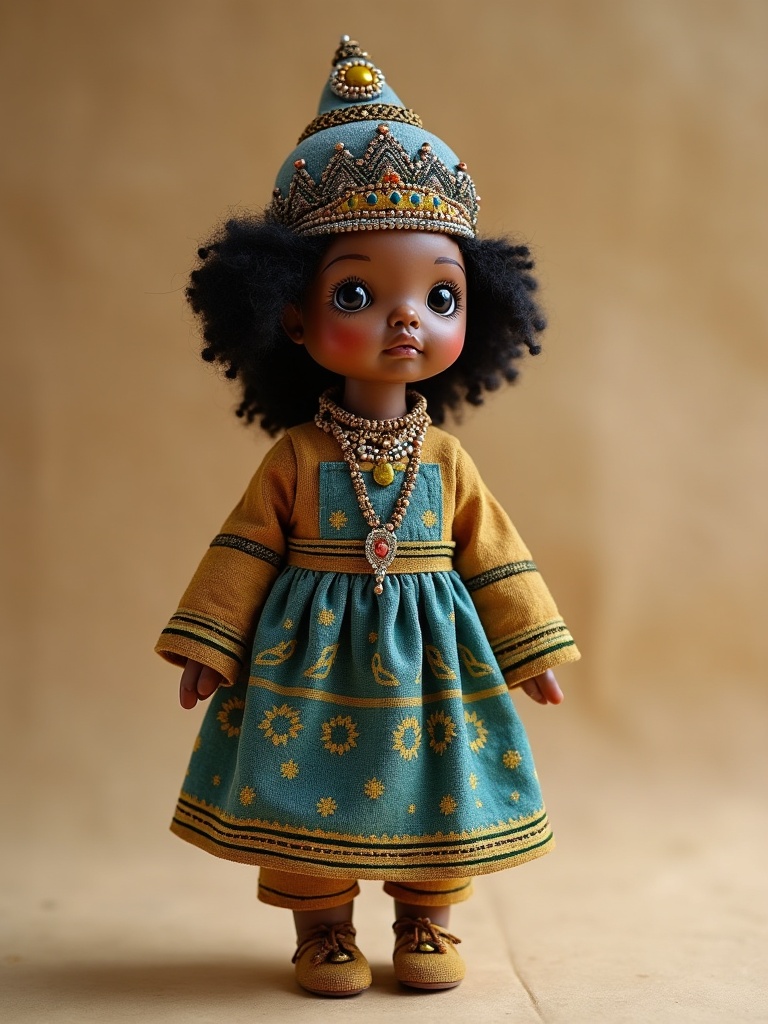
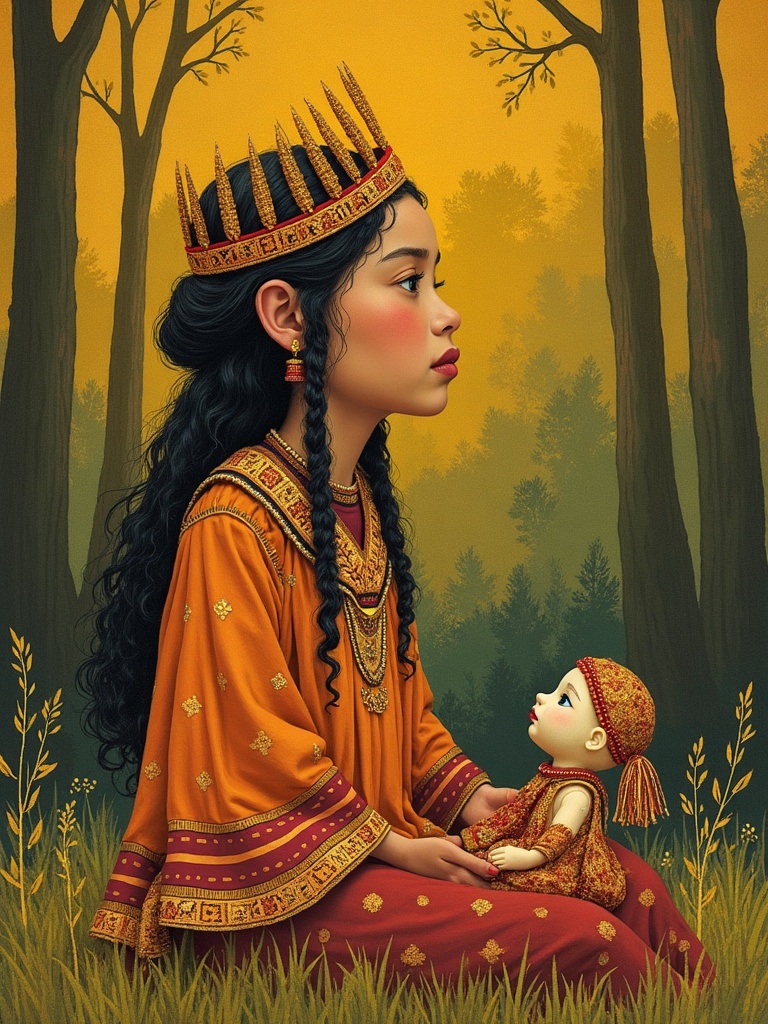
AI design preview — not a photo of the finished handmade doll
Continuity & Harmony with Nature
Modjadji — the Rain Queen
For more than two centuries, the Balobedu of South Africa's Limpopo Province have been led not by a king but by a Rain Queen — Modjadji, "ruler of the day" — a hereditary line of women believed to hold the clouds in their keeping.
- People
- Balobedu (Lobedu)
- Country
- South Africa
- Region
- Southern Africa
- Era
- from ≈1800 (living line)
- Theme
- Continuity & Harmony with Nature
⚖ A respectful concept
A living royal house. Any product requires the consent of the Balobedu Royal Council and the reigning Queen. Present rainmaking respectfully as living cultural & spiritual belief — never as caricature or “magic trick.” No portrait of any living queen.
Make your own
Design your Modjadji — the Rain Queen
Pick a garment, a hairstyle and a scene, enter the PIN and generate a fresh image of Modjadji — the Rain Queen with AI.
⚖ AI homage concept — not a likeness of the real person.
Each image is generated live with fal.ai.
Generated images
AI design preview — not a photo of the finished handmade doll
No images generated yet — be the first.
Tradition & Origin
For more than two centuries, the Balobedu of South Africa's Limpopo Province have been led not by a king but by a Rain Queen — Modjadji, "ruler of the day" — a hereditary line of women believed to hold the clouds in their keeping.
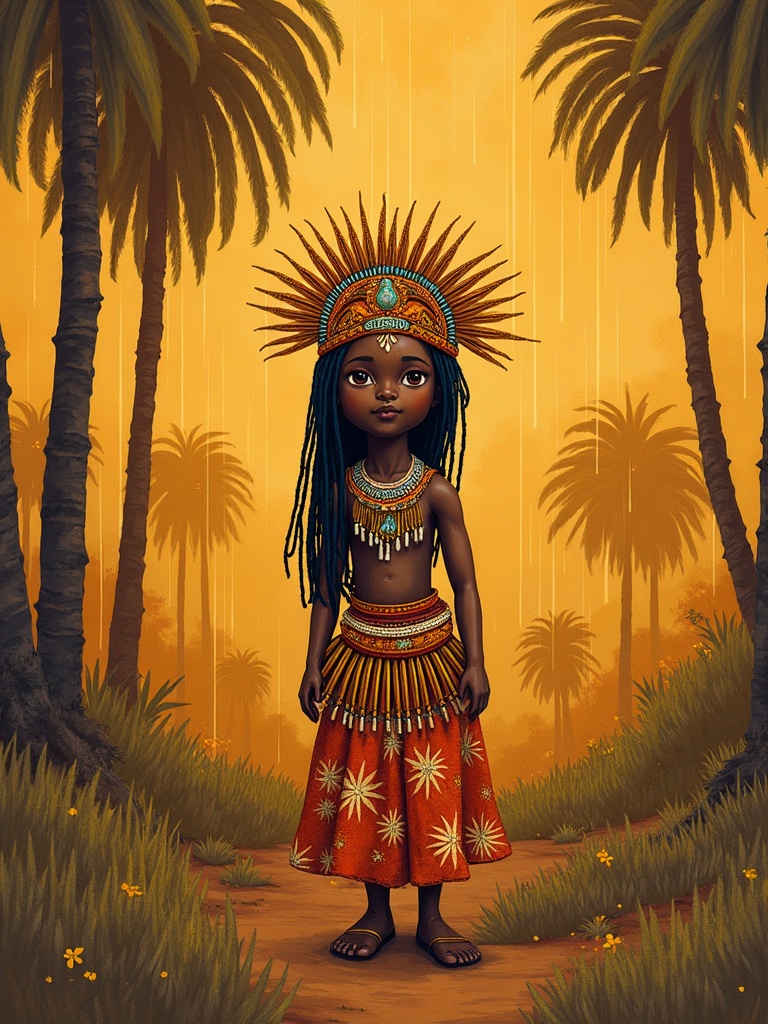
The Balobedu (Lobedu) people trace their queendom to the early 1800s, when Maselekwane Modjadji I became the first officially recognised Rain Queen. Older oral tradition reaches back further still: it tells of a princess who fled the upheavals of the Karanga kingdom of Monomotapa, in what is now Zimbabwe, carrying a sacred rain-charm south into the lush Molotsi Valley. Whatever the legendary prologue, the documented institution that crystallised around 1800 was remarkable — a hereditary throne passed from mother to daughter, in a region and era where rule was overwhelmingly the business of men.
The Rain Queen's defining duty is rain itself. The Modjadji was believed to command the clouds — bringing life-giving showers to allies and withholding them from enemies — and so great was her reputation that even King Moshoeshoe I of Lesotho and the Swati kings sent tribute to her for rain. Her people guarded her dignity with elaborate seclusion and ceremony: when Mokope Modjadji V befriended President Nelson Mandela in 1994, custom still held, and he was permitted to address her only through a traditional intermediary. The throne's mystique travelled far beyond Limpopo — the second queen, Masalanabo Modjadji II (reigned 1854–1894), is widely cited as the inspiration for H. Rider Haggard's 1887 adventure novel She and its immortal phrase, "She-who-must-be-obeyed."
Honesty matters here: the colonial-era fascination that made the Rain Queen a literary legend also flattened a living African institution into European fantasy, and the line itself has weathered hard modern history — successions cut short by early deaths, drawn-out legal disputes, and the slow work of state recognition. The reigning queen, Masalanabo Modjadji VII (born 20 January 2005), lost her mother as an infant and saw her claim contested for years before President Cyril Ramaphosa formally recognised her in December 2024 under the Traditional and Khoi-San Leadership Act. The institution endures — not as myth, but as a real, contemporary royal house.
Around the queen's seat grows a living monument to the tradition: the Modjadji Cycad Reserve, holding the largest concentration of a single cycad species on Earth — the rare endemic Encephalartos transvenosus, some reaching 13 metres tall. The Balobedu royal house has protected this primeval forest for generations, a place where female sovereignty and stewardship of the land grow from the same root.
Timeline
- ≈1800Maselekwane Modjadji I founds the matrilineal Rain-Queen line
- over 200 yearsthe queens rule “by mystique,” keepers of rain & the cycad forest; annual November rainmaking
- 1972apartheid demotes the queenship to “chief”
- post-1994democracy restores it; 2016 first legal recognition
- 2024Queen Masalanabo Modjadji VII recognised — the line continues
Did you know?
- The name Modjadji means "ruler of the day," and the queen was believed to control the clouds — sending rain to allies and drought to enemies.DetailsEN
- When the Balobedu crowned Makobo Modjadji VI on 16 April 2003, a light drizzle fell during the ceremony — taken as a good omen from the Rain Queen herself.DetailsEN
- When President Nelson Mandela befriended Rain Queen Mokope Modjadji V in 1994, custom held: he could speak to her only through a traditional intermediary — and he later bought her a Japanese car to climb the steep roads to her royal compound.DetailsEN
A queen who keeps the rain — and a people who, for two hundred years, have trusted the sky to a woman.
Values & Capabilities
Capabilities
◆◆◆◆◆ shows how central a gift is — five diamonds mark a signature strength, fewer mark a supporting one.
She is honoured as guardian of the rains and the living land.
She led not with weapons but with respect and reputation.
Mother to daughter for over 200 years.
Her land holds the world’s greatest cycad forest.
A small people kept safe through respect, not war.
Development
1 of 3 stages unlocked
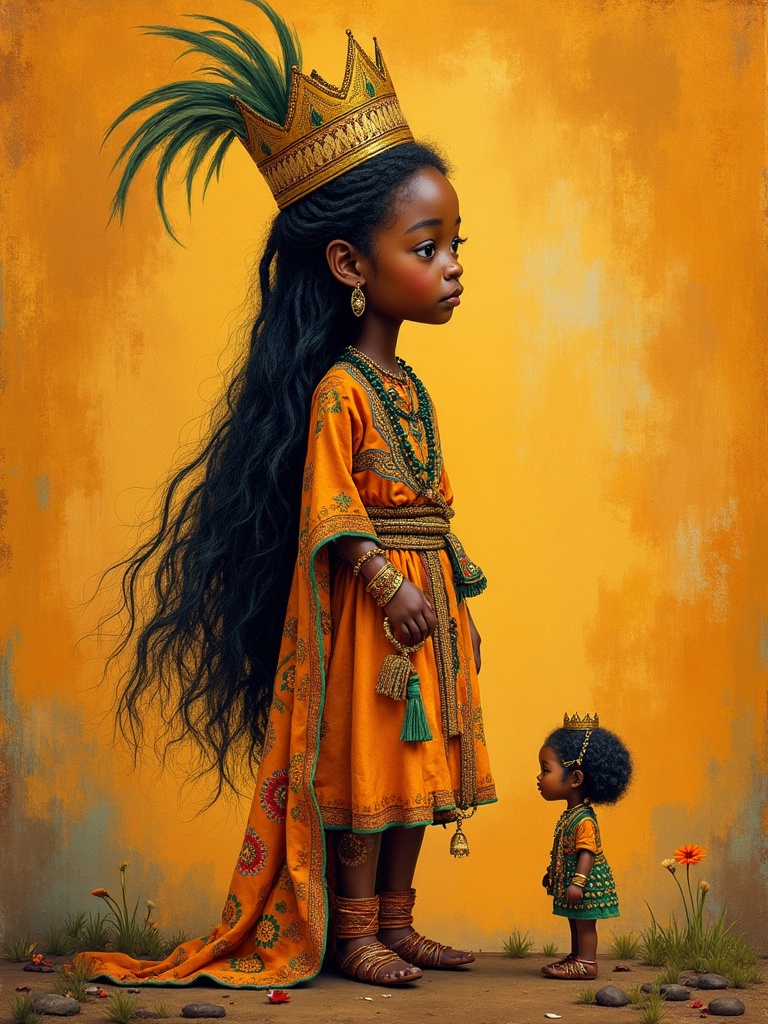
The young princess raised in ritual knowledge and herbal lore.
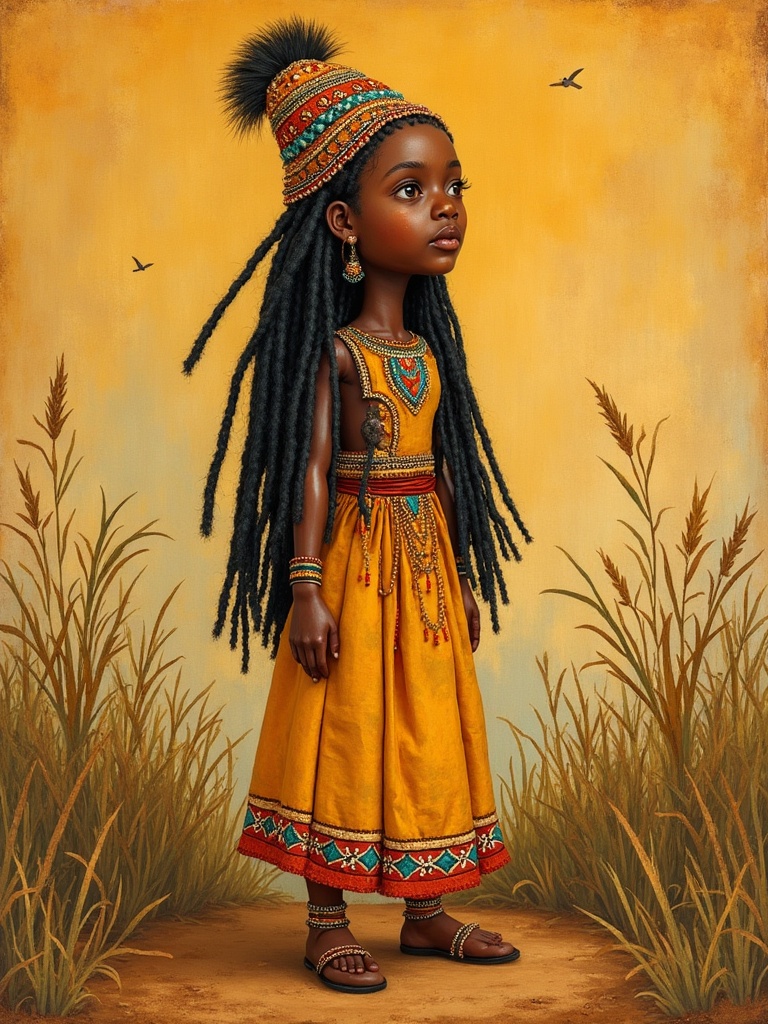
Answer all three to unlock this stage.
Unlock the previous stage first.
Crafting the doll
Garment: royal beadwork and patterned cloth in rain-blues/greens/earth tones, a beaded crown (child-safe). Signature attribute: a small cycad and rain clouds; optionally the rain-horn (cultural, handled with care). Education card: explains the matrilineal Rain-Queen line, rule by mystique, the cycad forest, and that rainmaking is presented respectfully as living belief & ecological stewardship. Sizes as standard. Proceeds → Balobedu community & cycad-forest conservation.
How this doll is made
The Modjadji is a hereditary line of Balobedu (Lobedu) rain queens in Limpopo, South Africa, whose authority rests not on lavish royal regalia but on sacred rainmaking objects and an everyday Lobedu women's dress of cotton wraps, beaded ornaments and rolled-wire bangles. This doll honours the institution and Balobedu/Northern Sotho material culture in general, not the likeness of any living queen.
- Garments 3
- Accessories 3
- Materials 2
- Techniques 3
Garments
- Cotton wrap and cloakThe everyday and ceremonial dress of Lobedu women, including the rain queen, was a length of cotton cloth (often a striped salampore trade cloth) wrapped around the body and a cloak or wrap draped over one shoulder — deliberately plain, as Lobedu status is not signalled by elaborate royal attire.DetailsEN
- Cowhide skirt with red ochreAfter initiation (vuhwera), young Lobedu women wore cowhide (leather) skirts and anointed their skin with red ochre; girls in early initiation stages wore short hip wraps.DetailsEN
- Northern Sotho beaded reed front apronA girls' front apron made of upright reeds with glass beads attached, worn through initiation school across Northern Sotho (Bapedi/Balobedu) groups; the reeds symbolise the common ancestors uniting all Northern Sotho speakers. Pedi pairs a front apron (kgakgo) with a back apron (nthepa).DetailsEN
Accessories
- Masega rolled-wire bangles and ankletsDistinctively Lobedu ornaments made by rolling wire around a circlet of cow tail-hair; Modjadji III was photographed wearing many rolled-wire masega bangles. Not reserved for royalty, worn on wrists and ankles.DetailsEN
- Beaded necklaces and panelsBeaded necklaces (some carrying two beaded leather medallions) and beaded chest/back panels worn by Lobedu girls and women on special occasions; pieces were treasured and often owned since girlhood.DetailsEN
- Sacred rain charm (horn and ancestral beads)The institution's most sacred objects: a rain horn (dinaga, filled with rain medicine / dithugula) and secret ancestral rain beads, kept hidden in a rain hut near the queen's residence — emblems of rainmaking authority rather than display ornaments.DetailsEN
Materials
- Glass seed beadsImported glass seed beads are the core ornament material across Southern Africa, sewn or strung by women with needle and thread; before glass, ostrich-eggshell discs, seeds, shells and bone were used. Colour combinations carry regional and social meaning.DetailsEN
- Grass, reeds and cowhidePlaited grass bandoliers worn by initiates, reeds forming the base of front aprons (tied to ancestors and rain symbolism), and cowhide for skirts — the natural fibre and leather base of Balobedu/Northern Sotho dress.DetailsEN
Techniques
- Beadwork: threading and sewingBeads are worked by women with needle and thread — strung into necklaces, girdles and bangles, or sewn in interlocked patterns onto narrow cloth or leather strips and panels; colour coding and motif juxtaposition express identity and meaning.DetailsEN
- Reed-and-bead apron makingLengths of reed are bound side by side into a panel, with glass beads attached to the reeds to form the patterned front apron; the standing reeds give the garment its structure and symbolic ancestral meaning.DetailsEN
- Rolled-wire ornament making (masega)Metal wire is coiled tightly around a core of cow tail-hair to build up bangles and anklets — the rolling/coiling technique behind the distinctively Lobedu masega worn on wrists and ankles.DetailsEN
How it's made
Every doll is sewn by hand from natural materials — built to last a lifetime and to be repaired, not replaced. Here is the shopping list and the work steps. Sizes: Classic 32 cm (heirloom) · Kidogo 18–20 cm (toddlers, no small parts) · Shule 28 cm (school edition).
Shopping list
- Natural cotton or linen for the body (skin tone), ~0.5 m
- Wool or cotton stuffing — no plastic
- Cotton thread and embroidery floss in matching colours
- Garment fabric in this doll's colours (see the fabrics above)
- Yarn for the hairstyle
- Beads, cowrie shells and trims as shown
- Sharps and embroidery needles, pins, fabric scissors, fabric marker
Work instructions
- Trace and cut the body pattern at your chosen size (Classic 32 cm / Kidogo 18–20 cm / Shule 28 cm).
- Sew the body pieces right sides together, leave an opening, turn and stuff firmly with natural fibre, then close by hand.
- Embroider the face gently and with dignity — no plastic parts for the toddler line.
- Make the hair from yarn following the chosen hairstyle and attach it securely.
- Cut and sew the garment from this doll's fabric, then dress the doll.
- Add the beadwork, shells, trims and any attribute by hand.
- Check every seam and reinforce it — the doll should be lifelong and repairable, with no loose small parts for small children.
Origin & Ethics
How we know this
History + living tradition + legend (★★★★☆); present rainmaking respectfully (belief & stewardship, not literal magic or caricature); omit the mature elements of the origin legend from children’s material; name the apartheid-era demotion and democratic restoration honestly; no exact likeness of any living queen — a homage to the institution.
Committee: the Balobedu Royal Council & reigning Queen (first and binding voice), Limpopo cultural bodies, conservationists (cycads), historians. Living royal house → real veto.
Sources
- Wikipedia — Rain Queen
- Ditsong Museums — Queen Modjadji of the Balobedu
- Atlas Obscura — South Africa’s Rain Queen
- SciELO South Africa, Visualizing the Realm of a Rain-Queen: Eileen and Jack Krige's Lobedu fieldwork photographs (Lobedu dress, masega, cotton wraps)
- 101 Last Tribes, Lobedu people (dress, beadwork, cowhide, sacred rain objects)
- Google Arts & Culture, Northern Sotho girls' front apron (reeds + beads, Origins Centre / Wits Art Museum)
- Google Arts & Culture, Beadwork from Southern Africa, South African National Gallery (materials, technique, colour meaning)
- Kwekudee, Balobedu (Lobedu) people: South African tribe with the only famous rain queens
- Kwekudee, Pedi (Bapedi / Northern Sotho) people: dress kgakgo, nthepa, nyebelese
- National Museum Publications (South Africa), Modjadji — The Rain Queen
- Google Arts & Culture, Hierarchies of Womanhood and the Aprons of Nguni Women, Phansi Museum (beaded aprons, hide, colour)
- Mythlok, Modjadji: The Matrilineal Monarch of Rain and Power