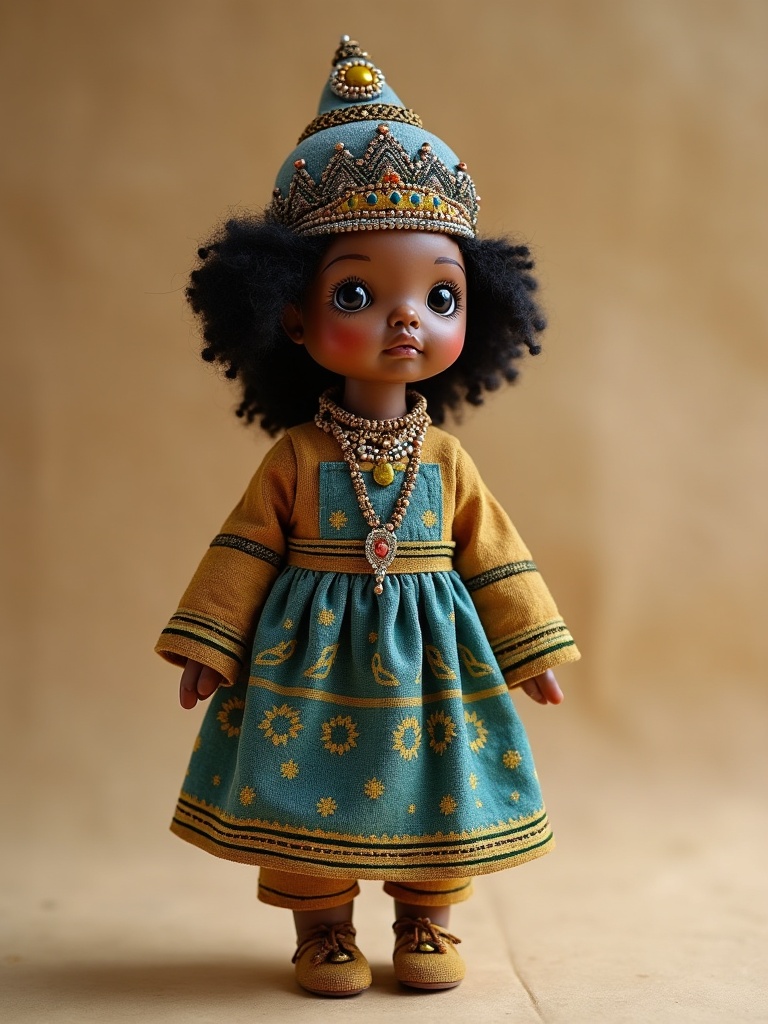
Continuity & Harmony with Nature
Modjadji — the Rain Queen
Modjadji is the title of the hereditary Rain Queen of the Balobedu people in Limpopo, South Africa — the country’s only queendom. The line is strictly matrilineal : the throne passes from mother to eldest daughter, and only women rule. The…
- People
- Balobedu (Lobedu)
- Country
- South Africa
- Region
- Southern Africa
- Era
- from ≈1800 (living line)
- Theme
- Continuity & Harmony with Nature
⚖ A respectful concept
A living royal house. Any product requires the consent of the Balobedu Royal Council and the reigning Queen. Present rainmaking respectfully as living cultural & spiritual belief — never as caricature or “magic trick.” No portrait of any living queen.
Make your own
Design your Modjadji — the Rain Queen
Pick a garment, a hairstyle and a scene, enter the PIN and generate a fresh image of Modjadji — the Rain Queen with AI.
⚖ AI homage concept — not a likeness of the real person.
Each image is generated live with fal.ai.
Generated images
No images generated yet — be the first.
Tradition & Origin
Modjadji is the title of the hereditary Rain Queen of the Balobedu people in Limpopo, South Africa — the country’s only queendom. The line is strictly matrilineal: the throne passes from mother to eldest daughter, and only women rule. The first queen, Maselekwane Modjadji I, established the line around 1800.
★ Rule by mystique, not by army
The Rain Queen is honoured as a keeper of rainmaking — a sacred role tying together spiritual power, ecological care and leadership. Lacking military power, the early queens governed through the “politics of mystique”: even mighty neighbours sought their favour for the rains, so the small, peaceful Balobedu were protected by respect rather than war. Her seat lies among the Modjadji Reserve, home to the world’s largest concentration of cycads (ancient tree-ferns); each November a rainmaking ceremony is held at the royal village.
Honesty: this is history + living tradition + legend. We present rainmaking respectfully, as the Balobedu’s own cultural and spiritual belief — not as literal magic and never as caricature. The origin legend contains mature elements we leave out of children’s material. Apartheid demoted the queens to “chief” status in 1972; democratic South Africa restored the queenship, and Queen Masalanabo Modjadji VII was officially recognised in 2024. This is a living royal house → design only with the Balobedu Royal Council.
No army guarded her. Kings still sent gifts for the rain. Some power grows like a forest — quietly, for centuries.
Values & Capabilities
Capabilities
◆◆◆◆◆ shows how central a gift is — five diamonds mark a signature strength, fewer mark a supporting one.
She is honoured as guardian of the rains and the living land.
She led not with weapons but with respect and reputation.
Mother to daughter for over 200 years.
Her land holds the world’s greatest cycad forest.
A small people kept safe through respect, not war.
Development
1 of 3 stages unlocked
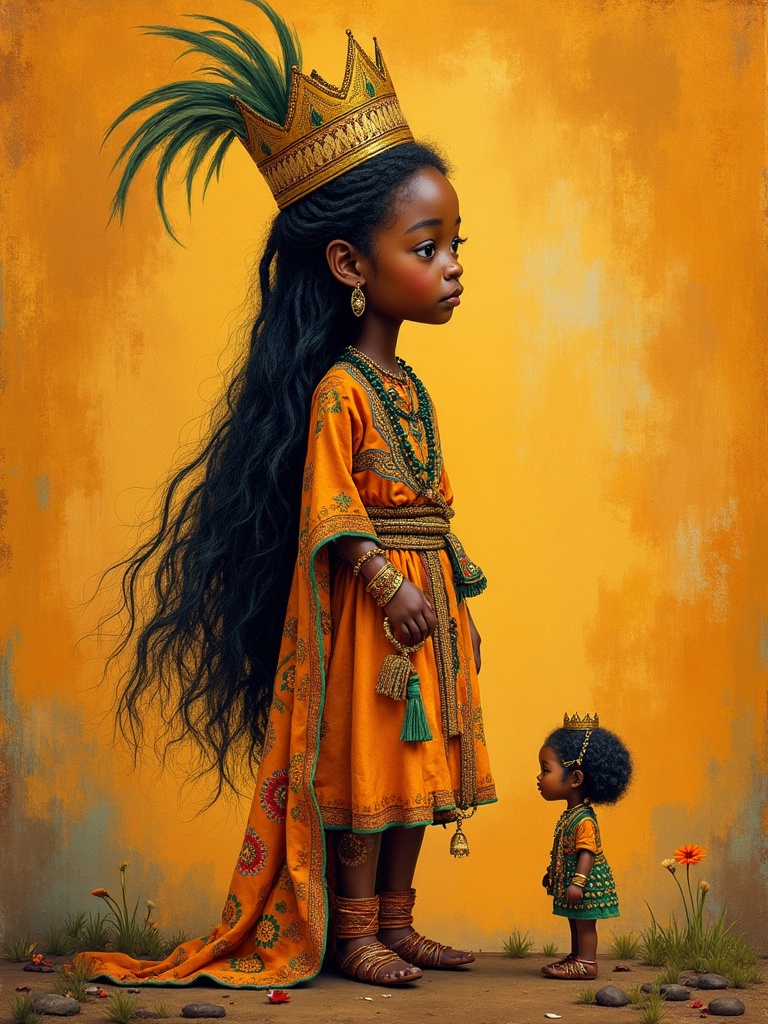
The young princess raised in ritual knowledge and herbal lore.
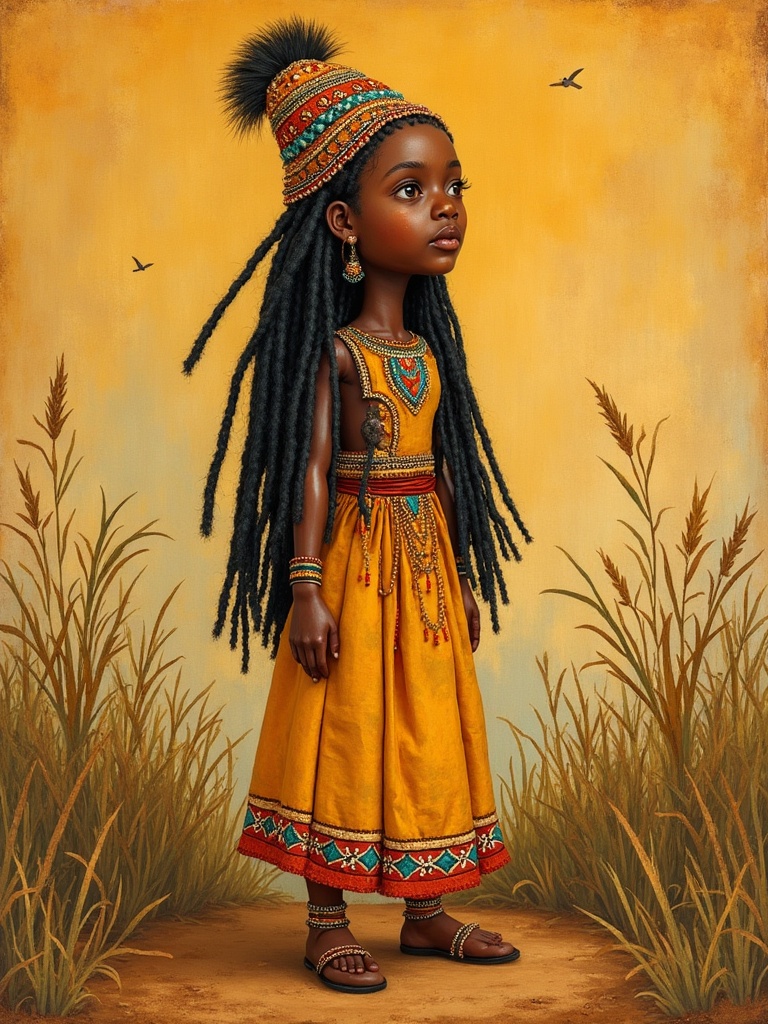
Answer all three to unlock this stage.
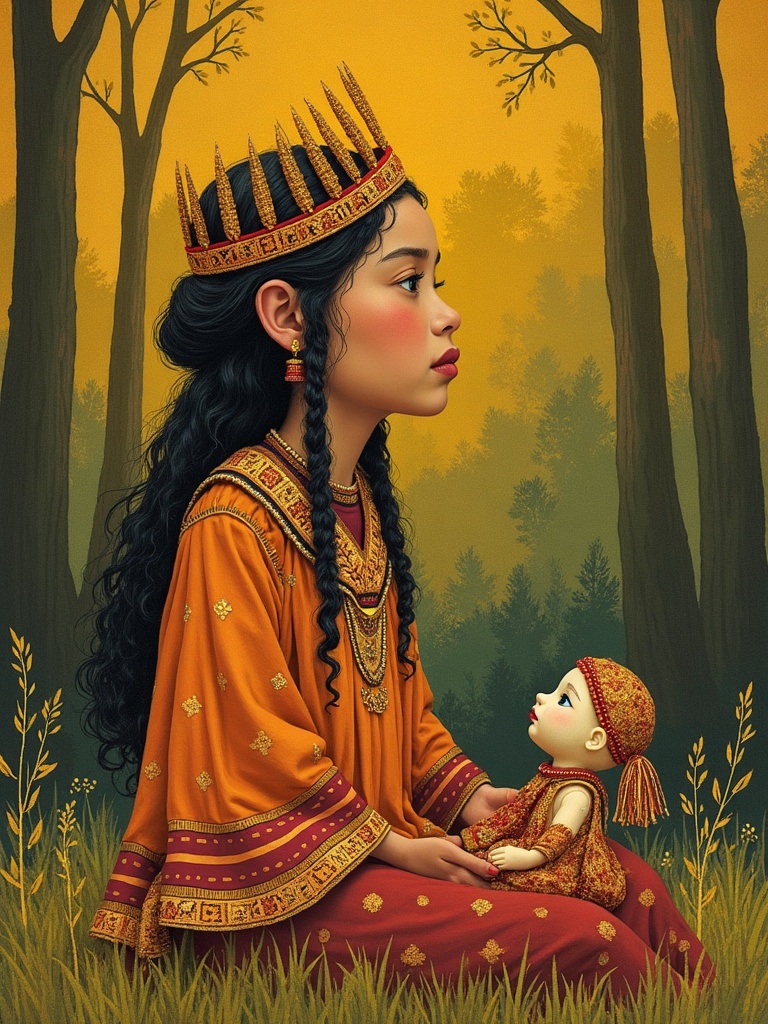
Unlock the previous stage first.
Make & Learn
Garment: royal beadwork and patterned cloth in rain-blues/greens/earth tones, a beaded crown (child-safe). Signature attribute: a small cycad and rain clouds; optionally the rain-horn (cultural, handled with care). Education card: explains the matrilineal Rain-Queen line, rule by mystique, the cycad forest, and that rainmaking is presented respectfully as living belief & ecological stewardship. Sizes as standard. Proceeds → Balobedu community & cycad-forest conservation.
How it's made
Every doll is sewn by hand from natural materials — built to last a lifetime and to be repaired, not replaced. Here is the shopping list and the work steps. Sizes: Classic 32 cm (heirloom) · Kidogo 18–20 cm (toddlers, no small parts) · Shule 28 cm (school edition).
Shopping list
- Natural cotton or linen for the body (skin tone), ~0.5 m
- Wool or cotton stuffing — no plastic
- Cotton thread and embroidery floss in matching colours
- Garment fabric in this doll's colours (see the fabrics above)
- Yarn for the hairstyle
- Beads, cowrie shells and trims as shown
- Sharps and embroidery needles, pins, fabric scissors, fabric marker
Work instructions
- Trace and cut the body pattern at your chosen size (Classic 32 cm / Kidogo 18–20 cm / Shule 28 cm).
- Sew the body pieces right sides together, leave an opening, turn and stuff firmly with natural fibre, then close by hand.
- Embroider the face gently and with dignity — no plastic parts for the toddler line.
- Make the hair from yarn following the chosen hairstyle and attach it securely.
- Cut and sew the garment from this doll's fabric, then dress the doll.
- Add the beadwork, shells, trims and any attribute by hand.
- Check every seam and reinforce it — the doll should be lifelong and repairable, with no loose small parts for small children.
Origin & Ethics
How we know this
History + living tradition + legend (★★★★☆); present rainmaking respectfully (belief & stewardship, not literal magic or caricature); omit the mature elements of the origin legend from children’s material; name the apartheid-era demotion and democratic restoration honestly; no exact likeness of any living queen — a homage to the institution.
Committee: the Balobedu Royal Council & reigning Queen (first and binding voice), Limpopo cultural bodies, conservationists (cycads), historians. Living royal house → real veto.