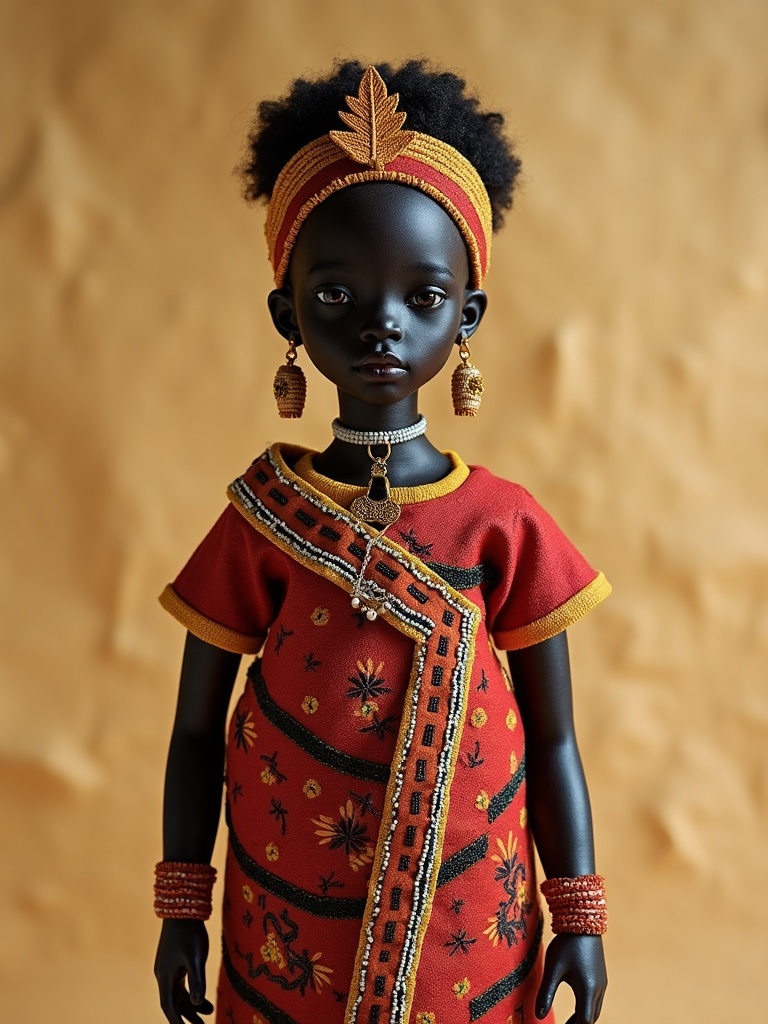
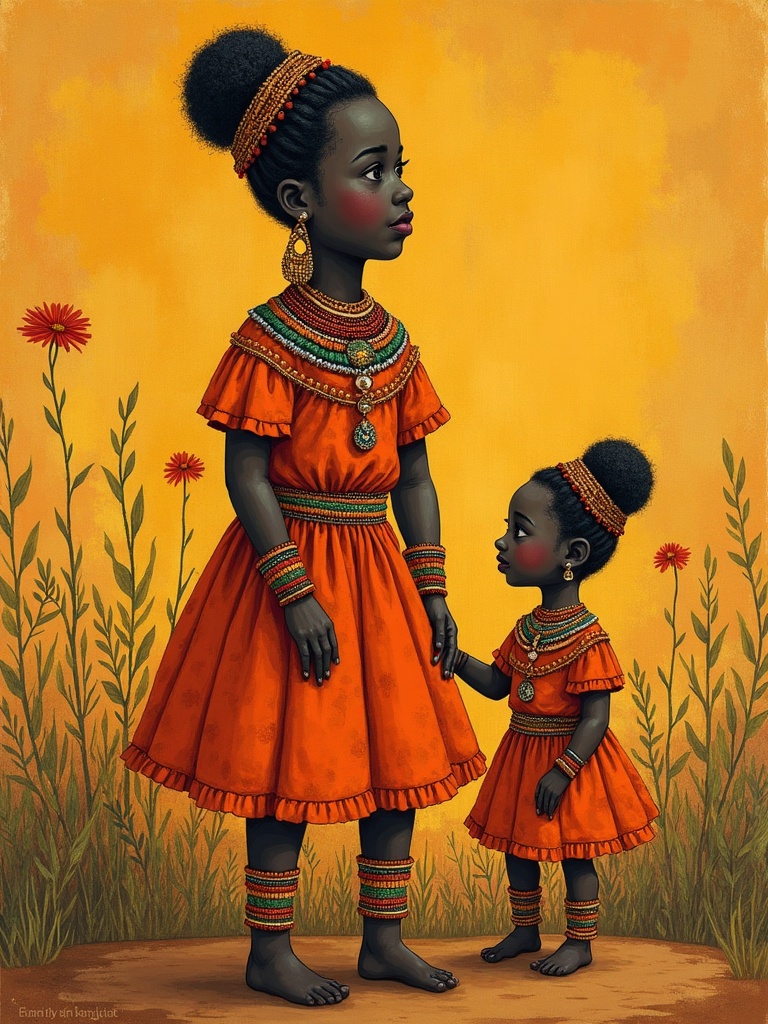
AI design preview — not a photo of the finished handmade doll
Wisdom, Land & Education
Labotsibeni “Gwamile” Mdluli
They called her Gwamile — the indomitable one. For more than two decades, Labotsibeni Mdluli held the Swazi nation together against colonial pressure, and bet its future on a school.
- People
- Swazi (Ndlovukati)
- Country
- eSwatini
- Region
- Southern Africa
- Era
- ≈1858–1925
- Theme
- Wisdom, Land & Education
Make your own
Design your Labotsibeni “Gwamile” Mdluli
Pick a garment, a hairstyle and a scene, enter the PIN and generate a fresh image of Labotsibeni “Gwamile” Mdluli with AI.
Each image is generated live with fal.ai.
Generated images
AI design preview — not a photo of the finished handmade doll
No images generated yet — be the first.
Tradition & Origin
They called her Gwamile — the indomitable one. For more than two decades, Labotsibeni Mdluli held the Swazi nation together against colonial pressure, and bet its future on a school.
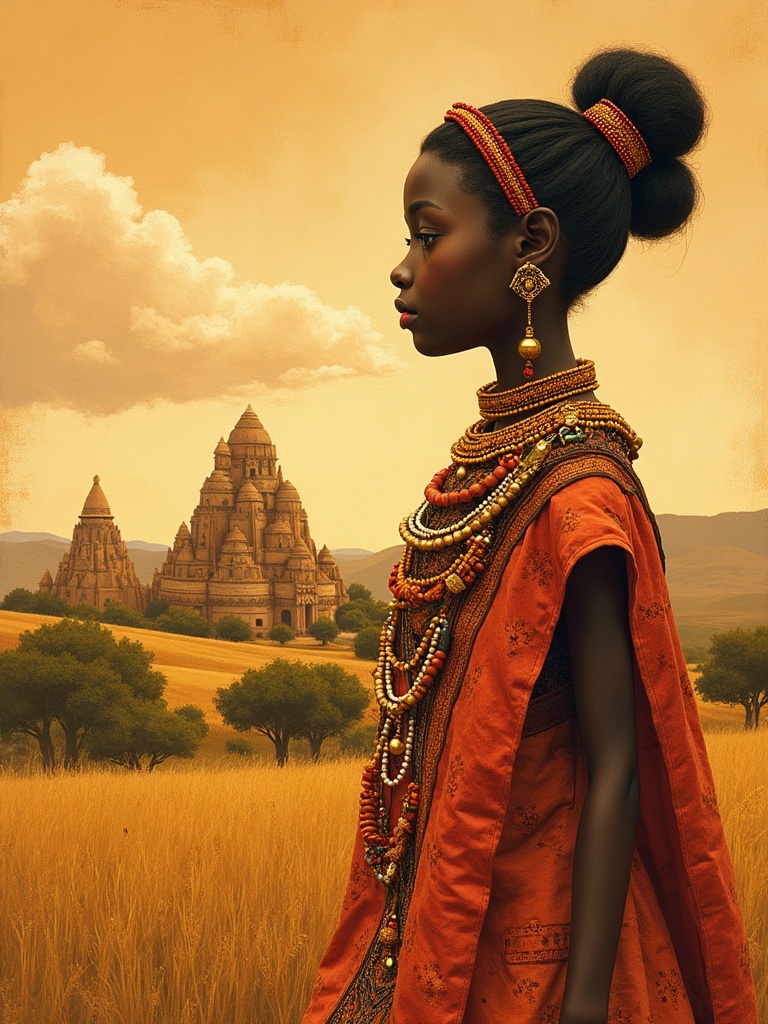
Born around 1858 at the Luhlekweni homestead in what is today eSwatini, Labotsibeni of the Mdluli clan became the chief wife of King Mbandzeni. Mbandzeni's reign was consumed by the concessions crisis: under pressure from Boer and British settlers, vast tracts of Swazi land, minerals and grazing rights were signed away in concessions that would haunt the nation for generations. When their son Bhunu (King Ngwane V) died young in 1899, leaving an infant heir, Labotsibeni stepped into power as Ndlovukati — Queen Mother — and then as Queen Regent.
She ruled as regent from 1899 to 1921, and her authority spanned roughly three decades from her years as Queen Mother. After the South African War, Britain imposed colonial administration over Swaziland in 1902 and moved to partition Swazi land, confirming the settler concessions. Labotsibeni fought back through deputations, petitions and shrewd diplomacy — a British administrator described her as a woman of extraordinary diplomatic ability. In 1914 she helped launch a land-buyback fund (the Lifa fund) so the Swazi could purchase back their own soil.
Her most far-sighted gamble was education. A traditionalist who nonetheless grasped that the new century demanded new weapons, she championed Western schooling for her people over aristocratic objection — arranging schooling for her grandson and heir, Mona, at Zombodze and then at the Lovedale institution in South Africa's Eastern Cape. She also became a patron of the early Pan-African movement, helping finance the newspaper Abantu-Batho in 1912. On 22 December 1921 she ceremonially handed power to her grandson, who reigned as King Sobhuza II. She died in 1925.
Timeline
- ≈1858born at Luhlekweni; marries King Mbandzeni
- 1889husband dies → becomes Ndlovukati (Queen Mother)
- 1899her son Bhunu dies → regent for infant grandson (later Sobhuza II)
- 1899–1902keeps Swaziland neutral through the Boer War
- 1907land proclamation takes two-thirds of Swazi land → she founds the Lifa Fund
- 1915builds Zombodze national school; sends Sobhuza & 8 youths to study
- 1921 / 1925hands power to Sobhuza II; dies in 1925
Did you know?
- Her name <strong>Gwamile</strong> means "the indomitable one" — a tribute to the steel with which she defended the Swazi nation against colonial encroachment.DetailsEN
- She championed Western education despite aristocratic opposition and arranged for her grandson, the future King Sobhuza II, to study at Zombodze and then at the Lovedale institution in South Africa.DetailsEN
- After Britain imposed colonial rule following the South African War, she devoted her reign to challenging the colonial state over Swazi land and legal authority, and in 1914 helped establish a fund to buy back land lost to settler concessions.DetailsEN
She could not undo the concessions of her husband's reign — so she armed the next generation with a school, and a king who could read the law that bound them.
Values & Capabilities
Capabilities
◆◆◆◆◆ shows how central a gift is — five diamonds mark a signature strength, fewer mark a supporting one.
A woman whose clan wasn’t even next in line, chosen for sheer intelligence and character, who then ruled longer than any Swazi monarch before her and held a small nation together through turbulent years.
When two-thirds of Swazi land was taken, she rallied her people to pool their cattle and savings and buy it back — a resourceful, non-violent answer to dispossession.
She built the first Swazi national school and sent the future king and eight youths to study, believing learning, not weapons, would defend her people’s future.
She out-talked Boers and the British to keep her kingdom neutral and intact through a war that swallowed its neighbours.
She backed the early ANC’s newspaper, Abantu-Batho — supporting a shared African voice and a free press.
Development
1 of 3 stages unlocked
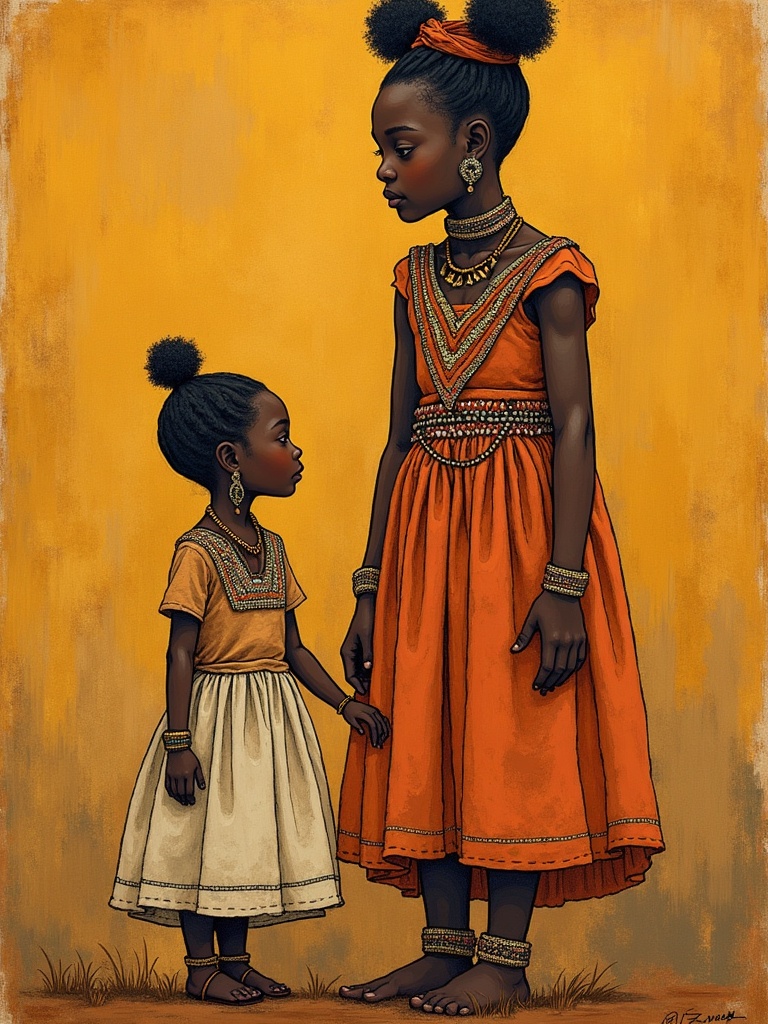
Young Labotsibeni, picked for her sharp mind.
Answer all three to unlock this stage.
Unlock the previous stage first.
Crafting the doll
Garment: beaded Swazi cloth in red/black/ochre with emahiya wraps and a beaded crown (child-safe). Signature attribute: a school-book and a land deed. Education card: the Swazi dual monarchy, the Lifa Fund (buying back the land — with her own words), and her belief in education as power. Sizes as standard. Proceeds → eSwatini education & heritage.
How this doll is made
This figure honours the regalia tradition of a Swazi (emaSwati) queen mother of the late 19th and early 20th centuries, grounded in Eswatini material culture: the printed emahiya cloth, the married woman's hide skirt and beehive hairstyle, and richly coded beadwork. It represents the heritage and tradition respectfully, not any living member of the present royal house.
- Garments 3
- Accessories 4
- Materials 1
- Techniques 2
Garments
- Emahiya / lihhiya cloth wrapToga-like printed cloth worn draped over the body; lihhiya is a single cloth and emahiya the plural. Worn by both women and men, traditionally in bold red, white and black prints carrying Swazi motifs. Married women secure the wrap over the left shoulder.DetailsEN
- Sidvwaba hide skirtA heavy wraparound skirt of cattle or ox hide worn exclusively by married women and mothers, marking marital status; in the Fowler collection it was described as so substantial it 'broke the waist.' Tied as the bottom garment before the cloth wrap.DetailsEN
- Umgcula cloak / shawlA woman's cloak or shawl worn over the other garments, hanging from shoulder to ankle; documented examples carry Swazi shield designs and national colours, giving the regal silhouette of a senior woman.DetailsEN
Accessories
- Ligcebesha beaded neck-ornamentThe traditional Swazi beaded necklace worn with regalia, made of two matching beaded panels woven on a string; a related form without the two front pieces is the ingciba. Worn at the throat as a centrepiece of adornment.DetailsEN
- Sigcizo beaded bandsBeaded bands worn around the wrists and ankles, part of the layered beadwork that signalled status and identity for women.DetailsEN
- Sicholo beehive hairstyleThe married woman's hairstyle: hair is teased upward into a tall beehive form with a porcupine quill, and a pin is worn in it. It distinguishes a married woman and is part of the dignified regalia of a senior woman.DetailsEN
- Royal feathers (ligwalagwala) — heritage onlyRed feathers of the purple-crested turaco (ligwalagwala) are historically reserved for the Dlamini royal clan ('Children of the Sun'). Depict only as heritage and tradition; if shown, treat as a respectful nod to royal status, not an endorsement by the living monarchy.DetailsEN
Materials
- Glass trade beadsImported glass seed beads were the core material of Southern African (Nguni, incl. Swazi) beadwork from the 19th century; once costly, they became widely available and were strung and sewn by women into necklaces, panels and bands.DetailsEN
Techniques
- Hide-skirt preparationThe married woman's leather skirt is hand-tanned: the hide is stretched and sun-dried, soaked, scraped of hair, smoked, brushed to a suede texture, softened and dyed (black from oil and wood ash/charcoal), then rubbed with fat to waterproof it. The same Nguni method underlies the Swazi sidvwaba.DetailsEN
- Beadwork threading and colour codingWomen thread glass beads with needle and thread, stringing and sewing them into geometric panels. Colours carry coded meaning — e.g. white for purity/love, red for passion or pain, green for fertility or discord, yellow for wealth, black for readiness to marry — read in combination, so reproduce patterns thoughtfully.DetailsEN
How it's made
Every doll is sewn by hand from natural materials — built to last a lifetime and to be repaired, not replaced. Here is the shopping list and the work steps. Sizes: Classic 32 cm (heirloom) · Kidogo 18–20 cm (toddlers, no small parts) · Shule 28 cm (school edition).
Shopping list
- Natural cotton or linen for the body (skin tone), ~0.5 m
- Wool or cotton stuffing — no plastic
- Cotton thread and embroidery floss in matching colours
- Garment fabric in this doll's colours (see the fabrics above)
- Yarn for the hairstyle
- Beads, cowrie shells and trims as shown
- Sharps and embroidery needles, pins, fabric scissors, fabric marker
Work instructions
- Trace and cut the body pattern at your chosen size (Classic 32 cm / Kidogo 18–20 cm / Shule 28 cm).
- Sew the body pieces right sides together, leave an opening, turn and stuff firmly with natural fibre, then close by hand.
- Embroider the face gently and with dignity — no plastic parts for the toddler line.
- Make the hair from yarn following the chosen hairstyle and attach it securely.
- Cut and sew the garment from this doll's fabric, then dress the doll.
- Add the beadwork, shells, trims and any attribute by hand.
- Check every seam and reinforce it — the doll should be lifelong and repairable, with no loose small parts for small children.
Origin & Ethics
How we know this
Very well documented (Dictionary of African Biography, Library of Congress); celebrate her wisdom, the Lifa Fund and her schools while noting she worked within colonial limits and made pragmatic compromises; homage to a historic queen, not a likeness, and only with the royal house’s consent.
Committee: the eSwatini royal house & cultural authorities (binding voice), Swazi historians, education bodies. Living monarchy → real veto.
Sources
- Wikipedia — Labotsibeni Mdluli
- Encyclopedia.com — Labotsibeni Gwamile LaMdluli
- Library of Congress authority
- Our Constitution (We the People SA)
- Infinite Women — Labotsibeni Mdluli
- The Journalist — Pioneers: Swazi Queen Labotsibeni, profile and legacy
- UCLA Fowler Museum Swazi clothing and adornment collection (Hilda Kuper & Thoko Ginindza) — sidvwaba, umgcula, ligcebesha, ingciba, sigcizo
- Wikipedia — Isidwaba, Nguni hide skirt of married women, tanning and preparation technique
- Museums Victoria Collections — Northern Nguni / Zulu beadwork, technique and colour symbolism
- Iziko Museums of South Africa via Google Arts & Culture — Beadwork from Southern Africa, glass beads and method
- Smithsonian SOVA, Constance Stuart Larrabee Collection — Swazi woman with sicholo hairstyle, Nhlangano 1947
- The Kingdom of Eswatini (official tourism) — Museums & History, national museum and crafts
- Briefly.co.za — Swazi culture, traditional attire and royal feathers (ligwalagwala)
- D&D Clothing — Traditional wedding styles in Swaziland, married vs unmarried dress conventions