Wisdom, Land & Education
Labotsibeni “Gwamile” Mdluli
Labotsibeni Mdluli (≈1858–1925), known as Gwamile — "the indomitable one" — was the Ndlovukati (Queen Mother, "the She-Elephant") and then Queen Regent of Swaziland (today eSwatini ). In the Swazi dual monarchy the King rules with the…
- People
- Swazi (Ndlovukati)
- Country
- eSwatini
- Region
- Southern Africa
- Era
- ≈1858–1925
- Theme
- Wisdom, Land & Education
Make your own
Design your Labotsibeni “Gwamile” Mdluli
Pick a garment, a hairstyle and a scene, enter the PIN and generate a fresh image of Labotsibeni “Gwamile” Mdluli with AI.
Each image is generated live with fal.ai.
Generated images
No images generated yet — be the first.
Tradition & Origin
Labotsibeni Mdluli (≈1858–1925), known as Gwamile — "the indomitable one" — was the Ndlovukati (Queen Mother, "the She-Elephant") and then Queen Regent of Swaziland (today eSwatini). In the Swazi dual monarchy the King rules with the Queen Mother as the nation’s anchor. After her husband and then her son died, she ruled as regent for her infant grandson, the future King Sobhuza II, for over twenty years (1899–1921) — the longest-reigning Swazi monarch up to her time.
★ Buy back the land — and send the children to school
British observers called her "one of the cleverest rulers in Africa." Through the Boer War she kept her small kingdom neutral and independent. When a 1907 proclamation stripped away two-thirds of Swazi land, she founded the Lifa Fund — a national scheme to pool cattle and money and buy the land back. And she grasped that the deepest power was education: she built the first Swazi national school at Zombodze and sent Sobhuza II and eight young men to school, so the next generation could lead. She even backed the early ANC newspaper, Abantu-Batho.
Honesty: she worked inside hard colonial limits and made pragmatic compromises; the Swazi monarchy is a living institution today, so a doll needs the royal house’s consent.
A woman who was never meant to rule, ruled for thirty years. When weapons failed, she reached for two new ones: land and learning. “With our own strength, we will buy back our dear little Swaziland.”
Values & Capabilities
Capabilities
◆◆◆◆◆ shows how central a gift is — five diamonds mark a signature strength, fewer mark a supporting one.
A woman whose clan wasn’t even next in line, chosen for sheer intelligence and character, who then ruled longer than any Swazi monarch before her and held a small nation together through turbulent years.
When two-thirds of Swazi land was taken, she rallied her people to pool their cattle and savings and buy it back — a resourceful, non-violent answer to dispossession.
She built the first Swazi national school and sent the future king and eight youths to study, believing learning, not weapons, would defend her people’s future.
She out-talked Boers and the British to keep her kingdom neutral and intact through a war that swallowed its neighbours.
She backed the early ANC’s newspaper, Abantu-Batho — supporting a shared African voice and a free press.
Development
1 of 3 stages unlocked
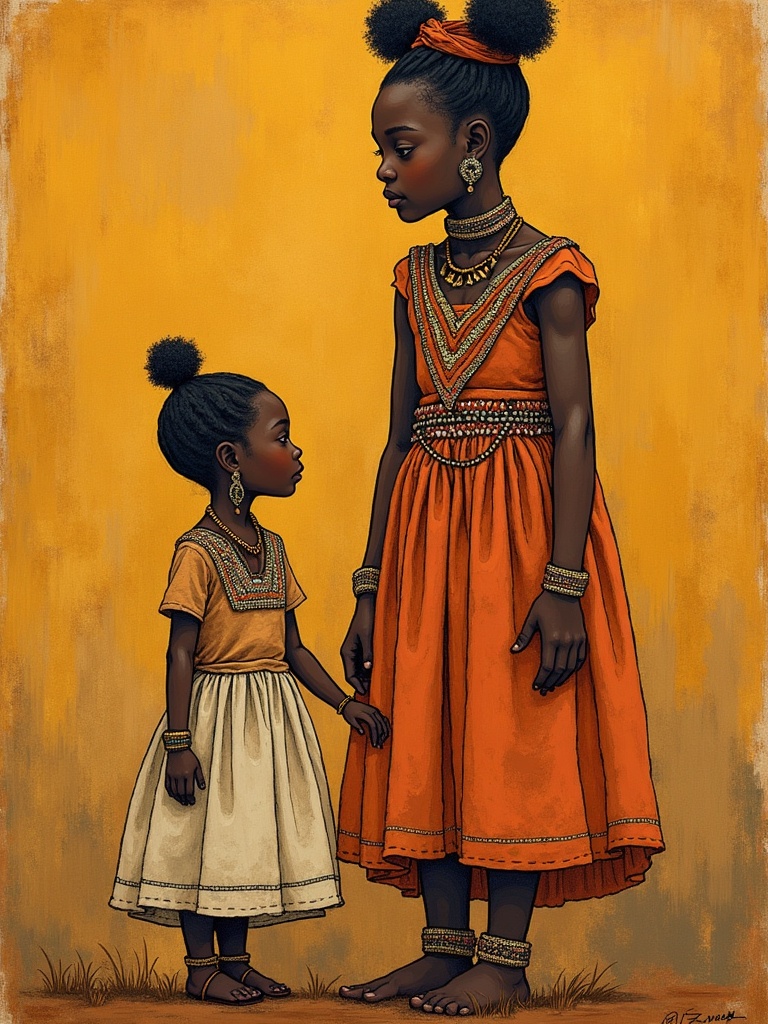
Young Labotsibeni, picked for her sharp mind.
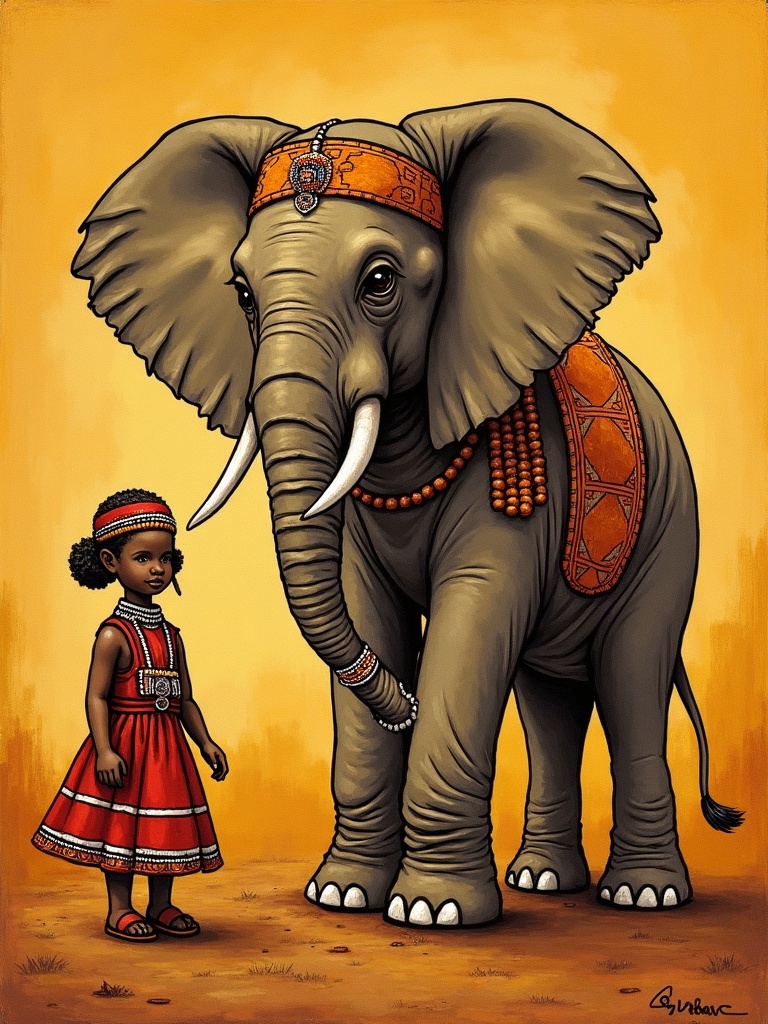
Answer all three to unlock this stage.
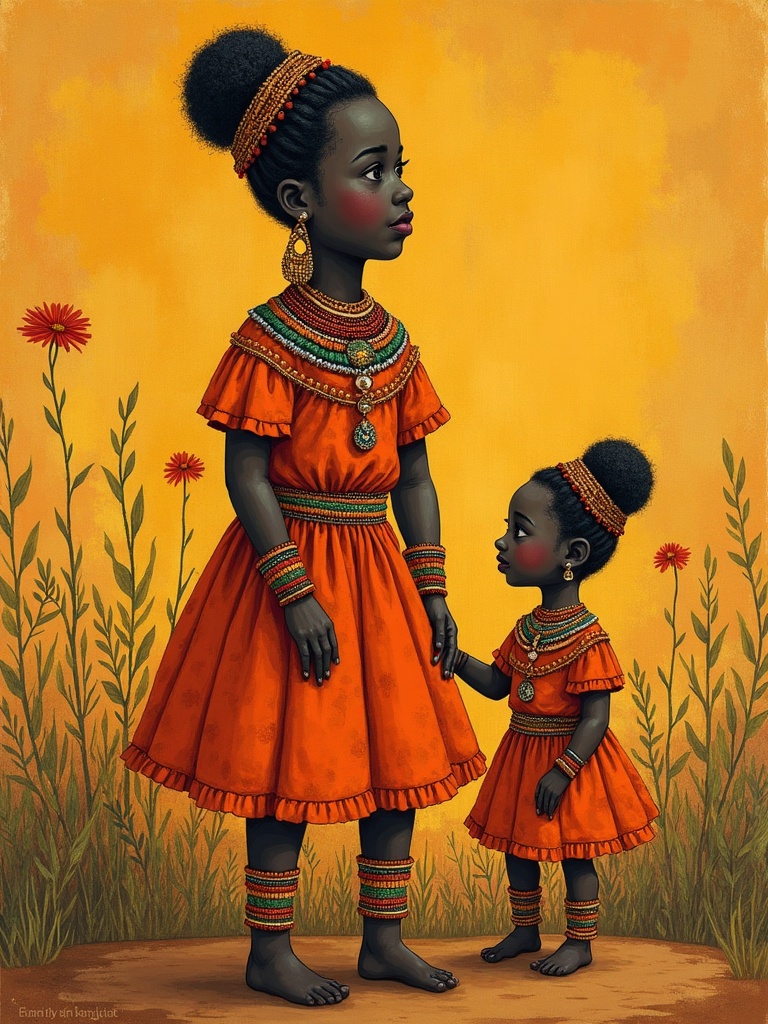
Unlock the previous stage first.
Make & Learn
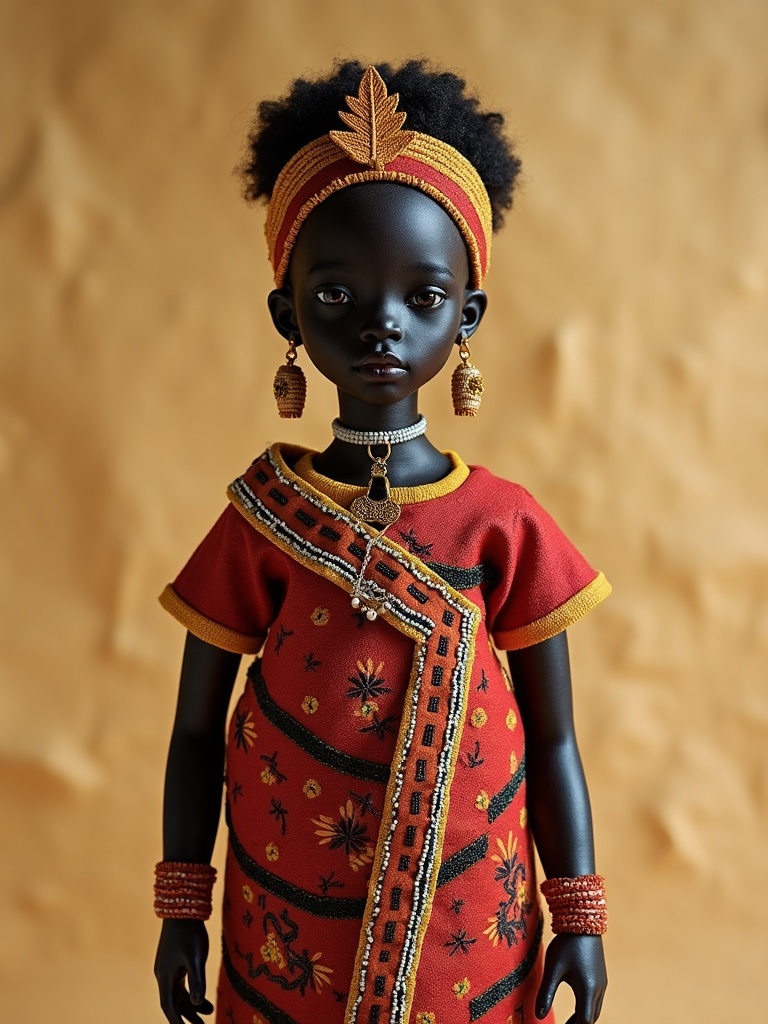
Garment: beaded Swazi cloth in red/black/ochre with emahiya wraps and a beaded crown (child-safe). Signature attribute: a school-book and a land deed. Education card: the Swazi dual monarchy, the Lifa Fund (buying back the land — with her own words), and her belief in education as power. Sizes as standard. Proceeds → eSwatini education & heritage.
How it's made
Every doll is sewn by hand from natural materials — built to last a lifetime and to be repaired, not replaced. Here is the shopping list and the work steps. Sizes: Classic 32 cm (heirloom) · Kidogo 18–20 cm (toddlers, no small parts) · Shule 28 cm (school edition).
Shopping list
- Natural cotton or linen for the body (skin tone), ~0.5 m
- Wool or cotton stuffing — no plastic
- Cotton thread and embroidery floss in matching colours
- Garment fabric in this doll's colours (see the fabrics above)
- Yarn for the hairstyle
- Beads, cowrie shells and trims as shown
- Sharps and embroidery needles, pins, fabric scissors, fabric marker
Work instructions
- Trace and cut the body pattern at your chosen size (Classic 32 cm / Kidogo 18–20 cm / Shule 28 cm).
- Sew the body pieces right sides together, leave an opening, turn and stuff firmly with natural fibre, then close by hand.
- Embroider the face gently and with dignity — no plastic parts for the toddler line.
- Make the hair from yarn following the chosen hairstyle and attach it securely.
- Cut and sew the garment from this doll's fabric, then dress the doll.
- Add the beadwork, shells, trims and any attribute by hand.
- Check every seam and reinforce it — the doll should be lifelong and repairable, with no loose small parts for small children.
Origin & Ethics
How we know this
Very well documented (Dictionary of African Biography, Library of Congress); celebrate her wisdom, the Lifa Fund and her schools while noting she worked within colonial limits and made pragmatic compromises; homage to a historic queen, not a likeness, and only with the royal house’s consent.
Committee: the eSwatini royal house & cultural authorities (binding voice), Swazi historians, education bodies. Living monarchy → real veto.