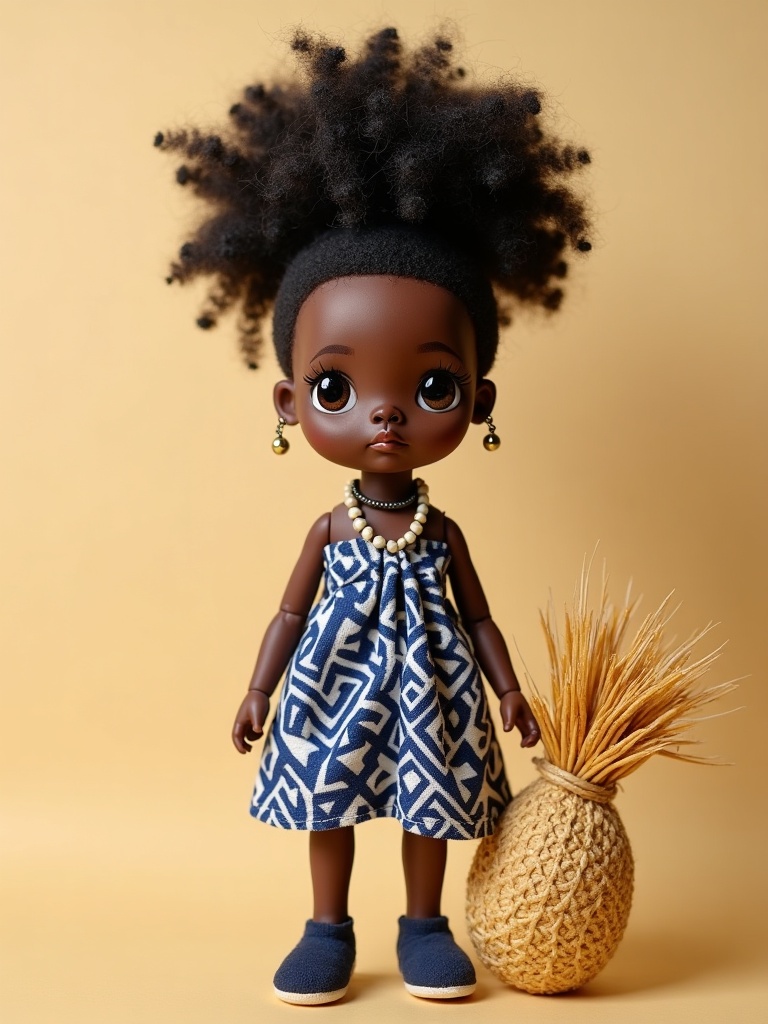
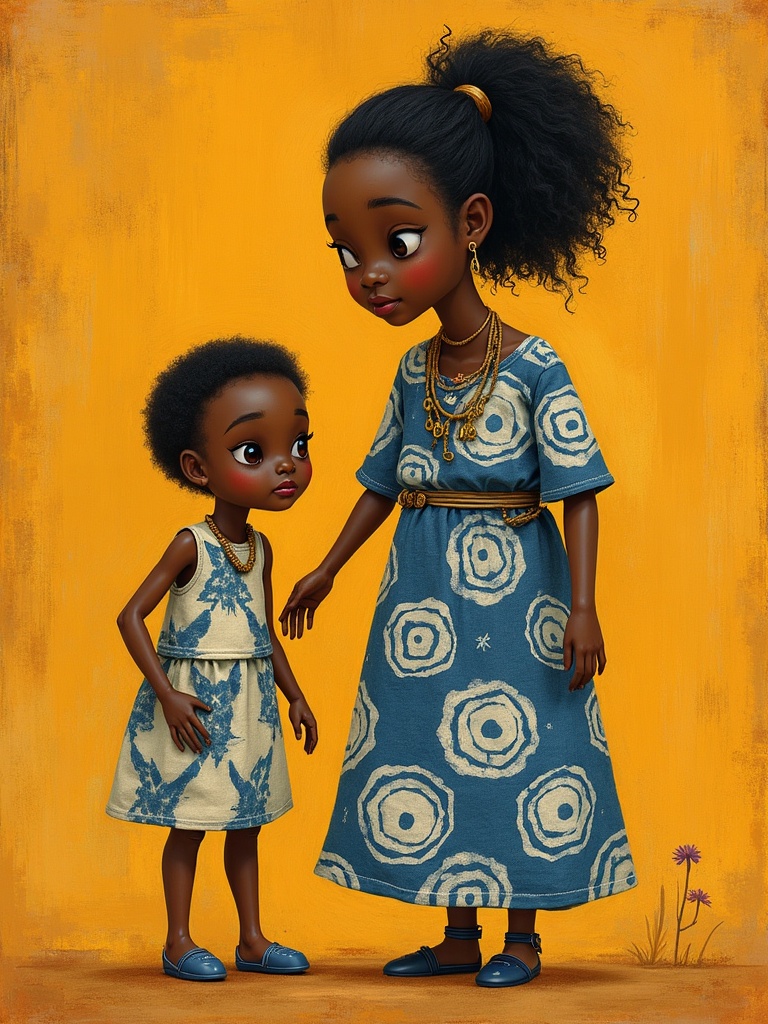
AI design preview — not a photo of the finished handmade doll
Faith & Nonviolent Defiance
Aline Sitoé Diatta
In the rice paddies of Lower Casamance, a young Jola woman told her people to keep their grain, their gods, and their dignity — and a wartime colonial empire decided she was dangerous enough to deport.
- People
- Joola (Diola)
- Country
- Senegal
- Region
- West Africa
- Era
- ≈1920–1944
- Theme
- Faith & Nonviolent Defiance
Make your own
Design your Aline Sitoé Diatta
Pick a garment, a hairstyle and a scene, enter the PIN and generate a fresh image of Aline Sitoé Diatta with AI.
Each image is generated live with fal.ai.
Generated images
AI design preview — not a photo of the finished handmade doll
No images generated yet — be the first.
Tradition & Origin
In the rice paddies of Lower Casamance, a young Jola woman told her people to keep their grain, their gods, and their dignity — and a wartime colonial empire decided she was dangerous enough to deport.
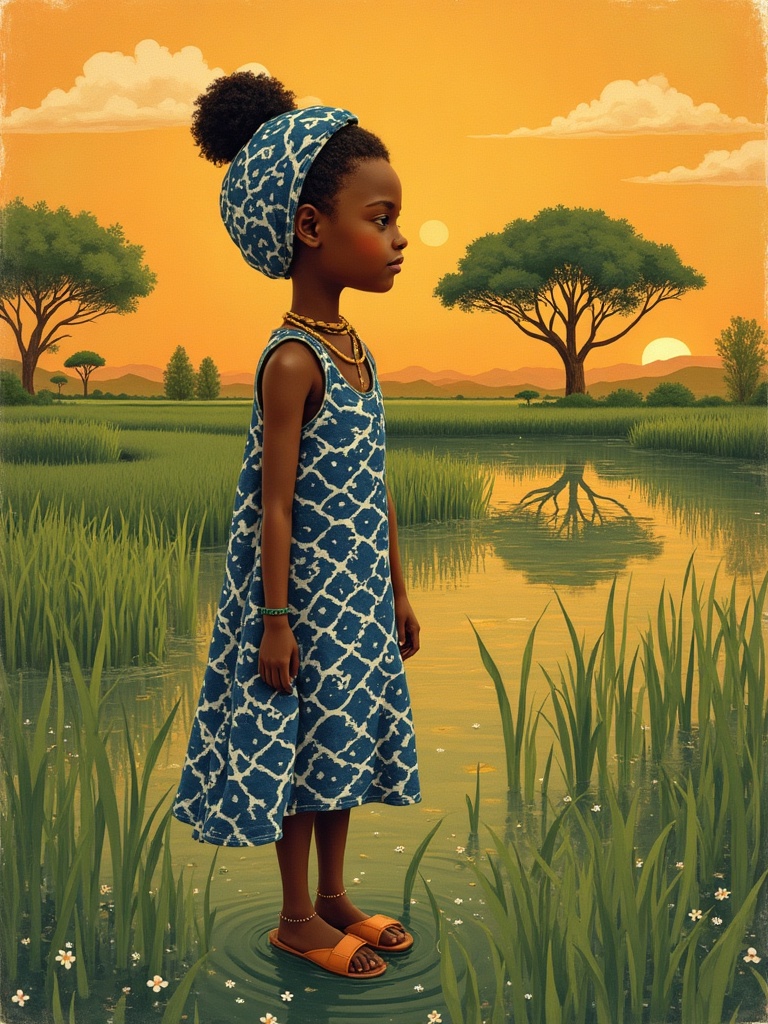
Arrested 8 May 1943, she died in colonial internment around 22 May 1944 — about a year of a ten-year sentence, in her early twenties.
DetailsFRAline Sitoé Diatta was born around 1920 in Kabrousse (Cabrousse), a Jola (Diola) village in the far south of Senegal, near the present-day border with Guinea-Bissau. Orphaned young, she left for Ziguinchor and then Dakar in the mid-1930s, working as a domestic servant and, by some accounts, as a dockworker — an ordinary migrant life in colonial French West Africa. Around 1941–1942 she said she received messages from Emitai, the supreme Jola deity, calling her home. Back in Kabrousse she led the Kasila rain ritual and began to preach a return to Jola tradition.
Her timing collided with World War II. To feed the war effort, French authorities requisitioned rice and pushed farmers to plant groundnuts (peanuts) as a cash crop instead of the rice that fed their families. Aline Sitoé called for refusal: stop handing over the harvest, stop paying the head tax, resist conscription, and keep cultivating local rice. Her message of self-reliance crossed ethnic lines and spread across the region, and she became known as the prophetess and “Queen of Kabrousse”. Documented history records her as a spiritual leader of a tax- and crop-resistance movement; the title of “queen” and the many miracles attributed to her belong as much to living memory and legend as to the colonial archive.
The colonial response was swift. She was arrested on 8 May 1943, tried under the Code de l'indigénat (the French “native code”) for inciting the population to disobey colonial authority, and sentenced to ten years of internment and exile. She was deported far from home — through French Sudan to Timbuktu (in present-day Mali), where she died on or around 22 May 1944, only about a year after her arrest and barely in her twenties. Sources differ on the exact cause — scurvy and the broader hardship of detention are most commonly cited. Her birth year (c.1920) and even her death date are recorded with the uncertainty colonial detention left behind; her death was not widely acknowledged in Senegal until the 1980s.
Today Aline Sitoé Diatta is one of West Africa's most recognized symbols of resistance and self-reliance. A 10,000-seat stadium in Ziguinchor bears her name, as does the passenger ferry MV Aline Sitoe Diatta, which has linked Dakar and Ziguinchor since 2008, and a student residence at Cheikh Anta Diop University in Dakar. She is remembered not for an army she never raised, but for a refusal — the insistence that a people can feed and govern themselves.
Timeline
- ≈1920born in Kabrousse (Casamance), of the Joola
- 1930sworks in Ziguinchor, then Dakar
- ≈1941a spiritual call to return and lead
- 1942–43leads non-violent resistance — no taxes, no conscription, keep the rice and the culture
- 8 May 1943arrested; surrenders to protect her village; deported to Timbuktu
- 1944dies in prison, aged ~24
- since 1980sa national heroine of Senegal
Did you know?
- She urged the Jola to keep growing their own rice and to refuse the colonial push toward groundnut (peanut) monoculture, the head tax, and conscription during World War II.DetailsEN
- After working as a domestic servant in Dakar, she returned to Kabrousse around 1941–1942 saying she had received messages from Emitai, the supreme Jola deity, and led the Kasila rain ritual.DetailsFR
- Deported from Casamance through French Sudan to Timbuktu, she died in colonial internment around 22 May 1944, and her death was not widely acknowledged in Senegal until decades later.DetailsEN
She raised no army — only the conviction that a people can feed themselves, and that dignity is not requisitioned.
Values & Capabilities
Capabilities
◆◆◆◆◆ shows how central a gift is — five diamonds mark a signature strength, fewer mark a supporting one.
She led resistance without weapons: refuse the unjust tax, refuse forced conscription, refuse to abandon your own crops.
She told her people to keep growing their own rice instead of the peanut monoculture the French demanded — protecting food, land and tradition at once.
She resisted the call at first, then devoted her whole life to it, rooted in Joola spiritual belief.
When her arrest loomed, she surrendered to spare her village from reprisals.
She died at 24 in a faraway prison, yet a nation named ferries, schools and a coin for her.
Development
1 of 3 stages unlocked
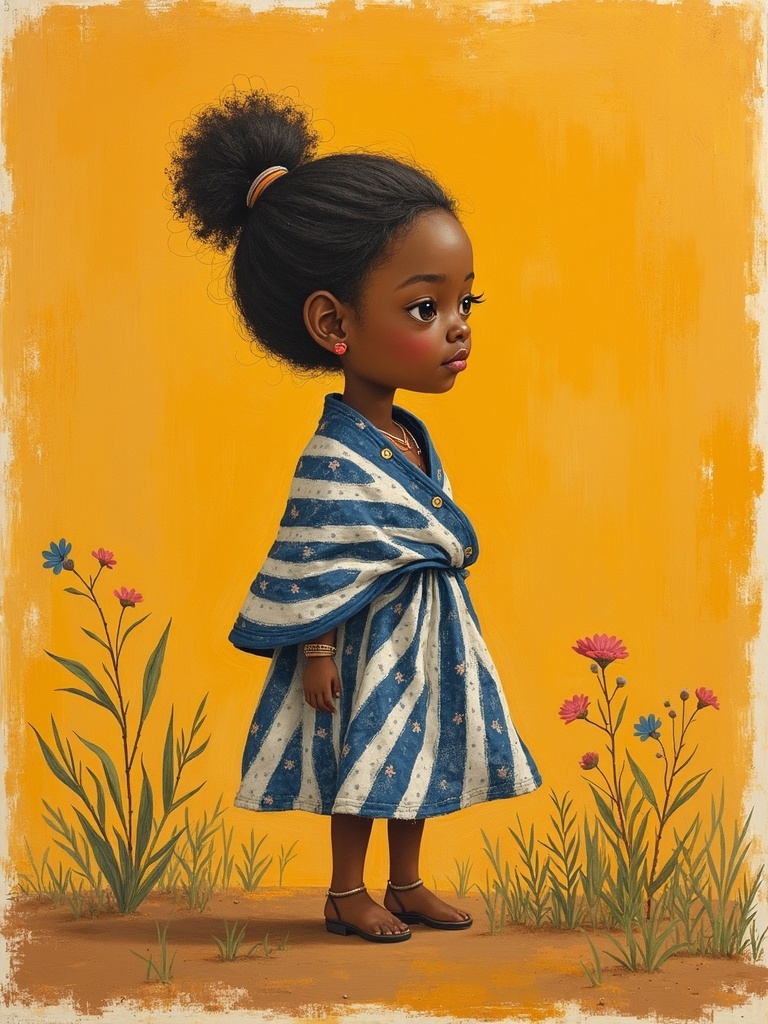
The young Aline working in Dakar, before the call.
Answer all three to unlock this stage.
Unlock the previous stage first.
Crafting the doll
Garment: a simple indigo-and-white Joola wrap and beadwork. Signature attribute: a sheaf of rice (felt) and a headwrap. Education card: Joola Casamance, the Vichy-era rice seizures and forced peanut monoculture, her non-violent resistance and food-sovereignty stand — and that her memory is honoured (and contested) today. Sizes as standard. Proceeds → Casamance women’s rice-farming cooperatives.
How this doll is made
Aline Sitoé Diatta's look is grounded in everyday Diola (Jola) material culture of Lower Casamance: a simply draped handwoven cotton pagne wrap, indigo and striped regional cloth, and modest beaded adornment, with rice — the heart of Diola life and of her resistance — present as honest making-accessories rather than ornament. This is a homage to a priestess-queen of self-reliance, dressed as a working woman of the rice paddies, not a costume.
- Garments 2
- Accessories 3
- Materials 1
- Techniques 3
Garments
- Handwoven cotton pagne (wrap skirt)The everyday Diola woman's dress is a long wrapped pagne paired with a loose blouse, made from locally produced cloth; for Aline Sitoé a plain handspun cotton wrap, ideally in indigo or natural tones, reads as authentic working dress rather than festive attire.DetailsEN
- Manjak strip-woven wrapper / shoulder clothA second, finer cloth can be a Manjak (Manjaco) narrow-strip wrapper — sewn from joined hand-woven cotton strips with supplementary-weft patterning — the prestige textile of the Casamance/Guinea-Bissau region, used as a wrapper or to carry a baby on the back.DetailsEN
Accessories
- Glass waist beadsStrands of small glass beads worn around the waist/hips — a widespread Senegalese and West African women's adornment signifying womanhood, femininity and well-being; worn under the wrap and only partly visible, in keeping with modest everyday dress.DetailsEN
- Rice winnowing basket (fanner)A flat coiled basket used to winnow rice: after pounding in a mortar, the grain is tossed upward so the wind carries off the chaff. As Aline Sitoé's story centers on rice, a winnowing fanner held in hand is her signature making-accessory.DetailsEN
- Kajendo (kajandu) rice paddy spadeThe kajandu/kajendo is the long-handled Diola fulcrum shovel — a 1.6–3.5 m wooden shaft with a broad iron-edged wooden blade — used to till the mangrove rice paddies, build dikes and cut furrows; a miniature evokes the rice-farming self-reliance she defended.DetailsEN
Materials
- Handspun cotton, indigo and raffiaCore authentic materials: handspun cotton thread for cloth, natural indigo (Indigofera) dye for the blue tones of Casamance cloth, and raffia/palm fibre used in basketry and cordage — plus small glass trade beads for adornment.DetailsEN
Techniques
- Narrow-strip (Manjak) weavingCloth is woven on a narrow loom as long strips a few inches wide, then cut and sewn edge-to-edge into a full wrapper; Manjak weavers add dense supplementary-weft motifs, producing the thick patterned cloth prized across Casamance.DetailsEN
- Indigo vat dyeingIndigo leaves (Indigofera / Lonchocarpus) are crushed into balls and fermented in a vat with wood-ash lye; cloth is dipped repeatedly and exposed to air between dips so it oxidizes from green to deep blue, the number of dips setting the depth of color.DetailsEN
- Coiled basketry (rice fanners)Flat winnowing fanners and storage baskets are made by coiling bundles of grass or palm/raffia fibre and stitching the coils together in a spiral — the same coiled method that carried across the Atlantic with rice-growing peoples.DetailsEN
How it's made
Every doll is sewn by hand from natural materials — built to last a lifetime and to be repaired, not replaced. Here is the shopping list and the work steps. Sizes: Classic 32 cm (heirloom) · Kidogo 18–20 cm (toddlers, no small parts) · Shule 28 cm (school edition).
Shopping list
- Natural cotton or linen for the body (skin tone), ~0.5 m
- Wool or cotton stuffing — no plastic
- Cotton thread and embroidery floss in matching colours
- Garment fabric in this doll's colours (see the fabrics above)
- Yarn for the hairstyle
- Beads, cowrie shells and trims as shown
- Sharps and embroidery needles, pins, fabric scissors, fabric marker
Work instructions
- Trace and cut the body pattern at your chosen size (Classic 32 cm / Kidogo 18–20 cm / Shule 28 cm).
- Sew the body pieces right sides together, leave an opening, turn and stuff firmly with natural fibre, then close by hand.
- Embroider the face gently and with dignity — no plastic parts for the toddler line.
- Make the hair from yarn following the chosen hairstyle and attach it securely.
- Cut and sew the garment from this doll's fabric, then dress the doll.
- Add the beadwork, shells, trims and any attribute by hand.
- Check every seam and reinforce it — the doll should be lifelong and repairable, with no loose small parts for small children.
Origin & Ethics
How we know this
Her life is documented but partly through French colonial records and later commemoration, so the grade is ★★★★☆; her memory is genuinely contested (national-unity symbol vs. Casamance symbol) — present this openly; depict her dignity, never her imprisonment or death.
Committee: the Joola community of Casamance (first voice), Senegalese heritage bodies, historians; treat her spiritual role respectfully as Joola belief.
Sources
- University of Bristol — Aline Sitoé Diatta
- French Historical Studies (Duke)
- Modern Ghana — Senegal’s anti-colonial heroine
- The Standard — Aline Sitoé Diatta
- Aline Sitoé Diatta biography (Diola priestess-queen of Kabrousse, rice-vs-peanut resistance, death in detention) — Au Sénégal
- Aline Sitoe Diatta (dates c.1920–1944, Jola/Kabrousse, Emitai visions, Kasila ritual, refusal of cash crops, death of scurvy in Timbuktu) — Wikipedia (EN)
- Aline Sitoé Diatta — Wikipédia (FR)
- Jola/Diola of Casamance: rice as staple, women's long wrap skirt and blouse, palm use, Emitai religion — Encyclopedia.com
- African rice (Oryza glaberrima): mangrove wet-rice cultivation and ritual significance among the Diola, by Olga Linares — PNAS
- Manjak strip-woven wrapper from Senegal: cotton, joined strips, supplementary-weft patterning, baby-carry/ceremonial use — Adire African Textiles
- Indigo in West Africa: Indigofera dye balls, fermentation vat, repeated dipping and oxidation — Adire African Textiles
- An Introduction to the Indigo Dye Styles of Western Africa (plant sources, vat/ash-lye, dipping, resist methods) — Heddels
- Kajandu / kajendo Diola fulcrum rice-paddy shovel: wood shaft, iron-edged blade, dimensions and use — Wikipedia
- Waist beads in Senegal and West Africa: glass beads, symbolism of womanhood and rites of passage — Wikipedia
- Coiled winnowing fanner / sweetgrass basketry technique and rice-winnowing use — Britannica
- The Music of the Diola-Fogny of the Casamance, Senegal (Diola/Jola cultural context) — Smithsonian Folkways