Faith & Nonviolent Defiance
Aline Sitoé Diatta
Aline Sitoé Diatta was born around 1920 in the village of Kabrousse , in the lush Casamance region of southern Senegal , among the Joola (Diola) people. As a young woman she left to work — as a dockhand in Ziguinchor, then a domestic in…
- People
- Joola (Diola)
- Country
- Senegal
- Region
- West Africa
- Era
- ≈1920–1944
- Theme
- Faith & Nonviolent Defiance
Make your own
Design your Aline Sitoé Diatta
Pick a garment, a hairstyle and a scene, enter the PIN and generate a fresh image of Aline Sitoé Diatta with AI.
Each image is generated live with fal.ai.
Generated images
No images generated yet — be the first.
Tradition & Origin
Aline Sitoé Diatta was born around 1920 in the village of Kabrousse, in the lush Casamance region of southern Senegal, among the Joola (Diola) people. As a young woman she left to work — as a dockhand in Ziguinchor, then a domestic in Dakar.
★ Refuse — peacefully
Around 1941, during the Second World War, she felt a spiritual call to return home and help her people under harsh Vichy French rule. The French were seizing the rice harvest, forcing men into the army, and pushing farmers to abandon their own rice for a peanut cash-crop monoculture. Aline led non-violent resistance: stop paying the unjust taxes, refuse conscription, keep growing your own rice, and hold on to Joola language, faith and identity. She was honoured as a priestess-queen — "the Queen of Kabrousse."
Honesty: the French arrested her on 8 May 1943; to spare her village from reprisals she surrendered herself. She was deported to Timbuktu and died in prison there in 1944, only about 24. Today she is a national heroine of Senegal — yet her memory is claimed by different causes (the state as a symbol of unity, the Casamance movement as one of autonomy) — a reminder to ask who tells the story. We honour her courage and faith; her imprisonment and death are named with dignity, never depicted.
She had no army, only a word: no. She gave herself up so her village would be spared. They could exile her body — not her name.
Values & Capabilities
Capabilities
◆◆◆◆◆ shows how central a gift is — five diamonds mark a signature strength, fewer mark a supporting one.
She led resistance without weapons: refuse the unjust tax, refuse forced conscription, refuse to abandon your own crops.
She told her people to keep growing their own rice instead of the peanut monoculture the French demanded — protecting food, land and tradition at once.
She resisted the call at first, then devoted her whole life to it, rooted in Joola spiritual belief.
When her arrest loomed, she surrendered to spare her village from reprisals.
She died at 24 in a faraway prison, yet a nation named ferries, schools and a coin for her.
Development
1 of 3 stages unlocked
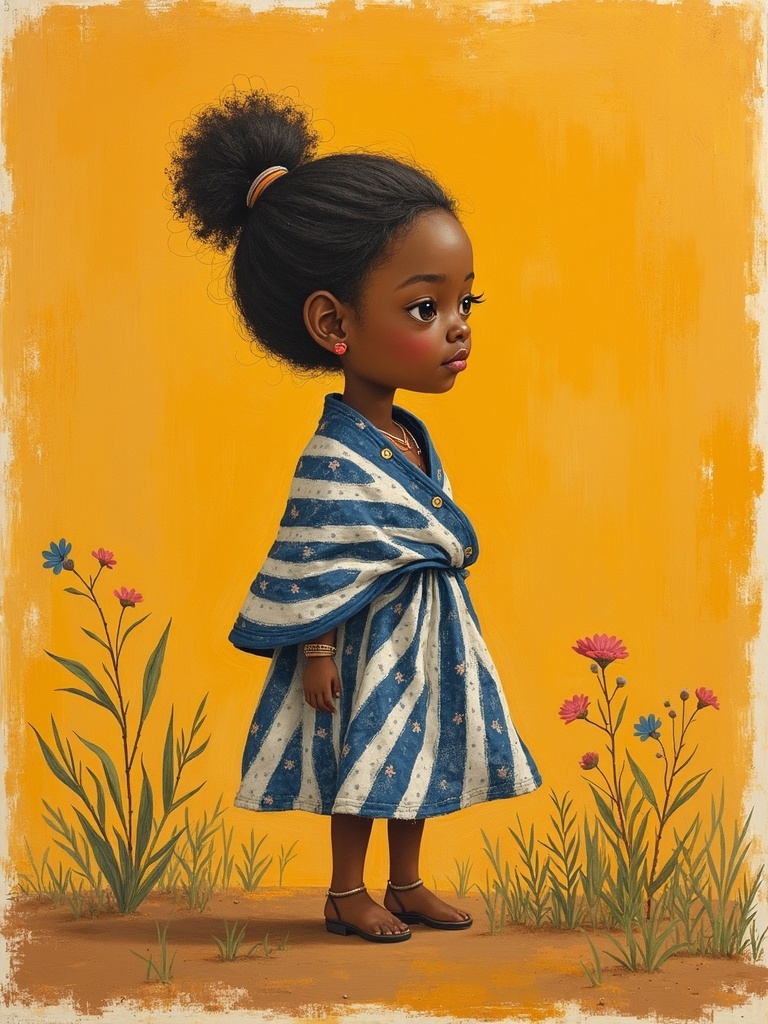
The young Aline working in Dakar, before the call.
Answer all three to unlock this stage.
Unlock the previous stage first.
Make & Learn
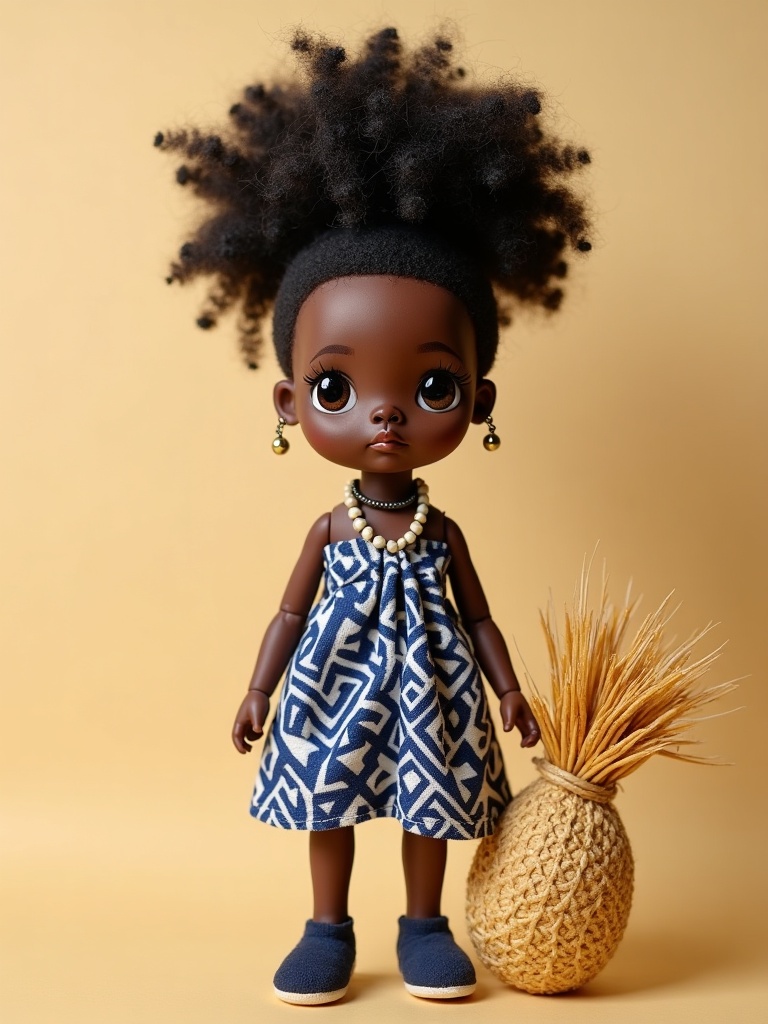
Garment: a simple indigo-and-white Joola wrap and beadwork. Signature attribute: a sheaf of rice (felt) and a headwrap. Education card: Joola Casamance, the Vichy-era rice seizures and forced peanut monoculture, her non-violent resistance and food-sovereignty stand — and that her memory is honoured (and contested) today. Sizes as standard. Proceeds → Casamance women’s rice-farming cooperatives.
How it's made
Every doll is sewn by hand from natural materials — built to last a lifetime and to be repaired, not replaced. Here is the shopping list and the work steps. Sizes: Classic 32 cm (heirloom) · Kidogo 18–20 cm (toddlers, no small parts) · Shule 28 cm (school edition).
Shopping list
- Natural cotton or linen for the body (skin tone), ~0.5 m
- Wool or cotton stuffing — no plastic
- Cotton thread and embroidery floss in matching colours
- Garment fabric in this doll's colours (see the fabrics above)
- Yarn for the hairstyle
- Beads, cowrie shells and trims as shown
- Sharps and embroidery needles, pins, fabric scissors, fabric marker
Work instructions
- Trace and cut the body pattern at your chosen size (Classic 32 cm / Kidogo 18–20 cm / Shule 28 cm).
- Sew the body pieces right sides together, leave an opening, turn and stuff firmly with natural fibre, then close by hand.
- Embroider the face gently and with dignity — no plastic parts for the toddler line.
- Make the hair from yarn following the chosen hairstyle and attach it securely.
- Cut and sew the garment from this doll's fabric, then dress the doll.
- Add the beadwork, shells, trims and any attribute by hand.
- Check every seam and reinforce it — the doll should be lifelong and repairable, with no loose small parts for small children.
Origin & Ethics
How we know this
Her life is documented but partly through French colonial records and later commemoration, so the grade is ★★★★☆; her memory is genuinely contested (national-unity symbol vs. Casamance symbol) — present this openly; depict her dignity, never her imprisonment or death.
Committee: the Joola community of Casamance (first voice), Senegalese heritage bodies, historians; treat her spiritual role respectfully as Joola belief.