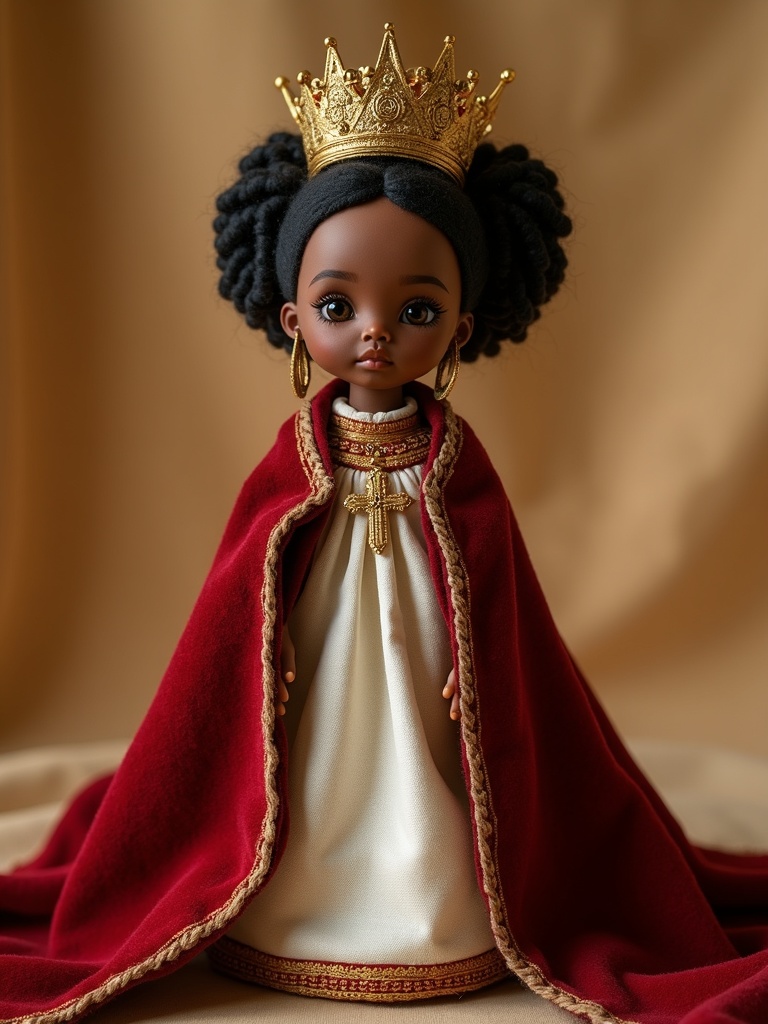
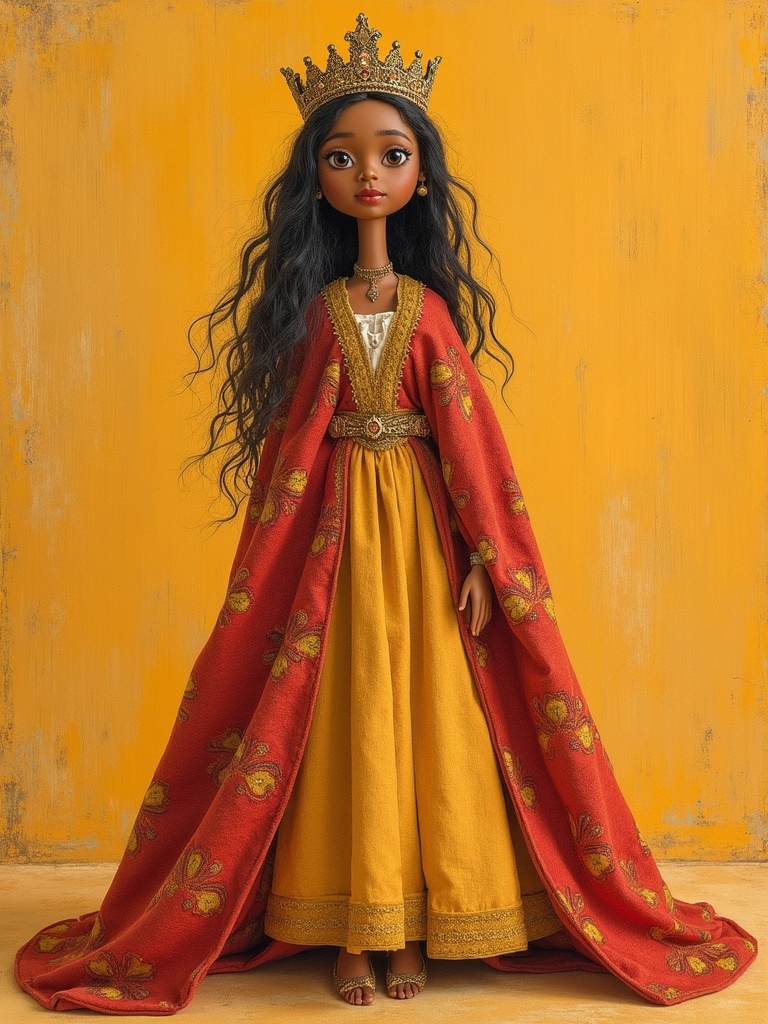
AI design preview — not a photo of the finished handmade doll
A Crowned Queen
Zewditu
Before any African republic ever elected a woman, an ancient kingdom that no empire had conquered placed its highest crown on the head of Menelik's daughter — and called her Queen of Kings.
- People
- Amhara (Ethiopian Empire)
- Country
- Ethiopia
- Region
- Horn of Africa
- Era
- 1876–1930
- Theme
- A Crowned Queen
Make your own
Design your Zewditu
Pick a garment, a hairstyle and a scene, enter the PIN and generate a fresh image of Zewditu with AI.
Each image is generated live with fal.ai.
Generated images
AI design preview — not a photo of the finished handmade doll
No images generated yet — be the first.
Tradition & Origin
Before any African republic ever elected a woman, an ancient kingdom that no empire had conquered placed its highest crown on the head of Menelik's daughter — and called her Queen of Kings.
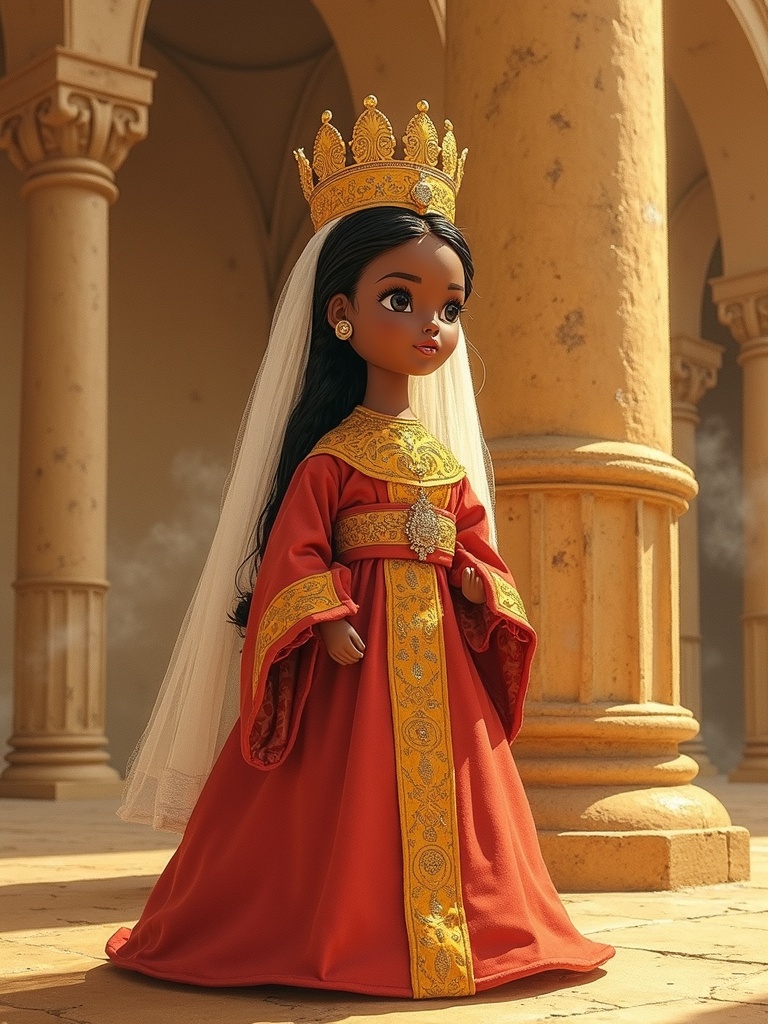
She was born Askala Maryam in 1876 in Werrehimenu, in the highlands of Wollo, the daughter of Emperor Menelik II — the ruler who, twenty years later, would shatter an invading Italian army at the Battle of Adwa and keep Ethiopia free. Her mother, a Wollo noblewoman, separated from Menelik early, and the girl was raised inside the deep ceremony and faith of the imperial court. Married first at about ten, widowed, and married three more times, she found her steadiest companionship late, with Ras Gugsa Welle — a marriage that would one day cost her everything.
When Menelik died and his young grandson Lij Iyasu lost the trust of the Ethiopian Orthodox Church and the great nobles, the empire reached not for another warlord but for Menelik's own daughter. On 27 September 1916 the Council of State and the Church deposed Iyasu and proclaimed Zewditu empress; the rebellion that followed was crushed days later at the Battle of Segale. On 11 February 1917 she was crowned in St George's Cathedral in Addis Ababa — the capital her father had founded — taking the title Negiste Negest, "Queen of Kings," a deliberate feminine remaking of the ancient "King of Kings."
Real power, by design, rested with her regent and heir, her cousin Ras Tafari Makonnen — the future Emperor Haile Selassie I. Their fourteen years together were a slow contest between two visions of Ethiopia. He led the country into the League of Nations and toward the abolition of slavery; she, devout and conservative, feared that too much change would hollow out the faith and customs that held her people together, and she resisted. After a failed conservative revolt in 1928 she was pressed to crown him Negus, a king beneath the empress. Then, in 1930, her own husband Gugsa Welle rose against Tafari and was killed at the Battle of Anchem on 31 March. Two days later the empress was dead. With her ended the direct male-line of the Solomonic dynasty — a royal story Ethiopians trace back, across more than a thousand years, to Solomon and the Queen of Sheba.
Timeline
- 1876Born Askala Maryam in Wollo, daughter of the future Emperor Menelik II.
- 1916Lij Iyasu is deposed; the Council of State and the Church raise Zewditu to the throne.
- 1917Crowned in St George's Cathedral, Addis Ababa, as Negiste Negest — Queen of Kings.
- 1928After a failed conservative uprising, she is obliged to grant Ras Tafari the title of Negus.
- 1930Her husband Ras Gugsa Welle is killed at the Battle of Anchem; two days later, on 2 April, she dies.
Did you know?
- Her title 'Negiste Negest' (Queen of Kings) was a deliberate feminine reworking of the ancient imperial title Nəgusä Nägäst, 'King of Kings.'DetailsEN
- Ethiopian imperial crowns were treated as so sacred that they were often held above the sovereign or placed on a throne cushion rather than worn the whole ceremony.DetailsEN
- The man who served as her regent and heir, Ras Tafari Makonnen, succeeded her as Emperor Haile Selassie I — the figure later revered in the Rastafari movement.DetailsEN
She wore the heaviest crown of an unconquered kingdom — and carried it as a trust, not a prize.
Values & Capabilities
Capabilities
◆◆◆◆◆ shows how central a gift is — five diamonds mark a signature strength, fewer mark a supporting one.
On 11 February 1917 she was crowned in Addis Ababa as the first and only empress regnant of Ethiopia, bearing the title Negiste Negest, Queen of Kings.
Deeply devout, she spent long hours in prayer and fasting and saw her reign as a duty held in trust before God and the Ethiopian Orthodox Tewahedo Church.
As Menelik's daughter she was the last monarch in direct agnatic descent from the Solomonic dynasty, a royal lineage Ethiopians trace back to King Solomon and the Queen of Sheba.
She reigned fourteen years through coups, rebellions and a rising regent, holding the empire's centre even as power shifted around her.
Where her regent Ras Tafari pushed swift reform, she weighed each change slowly — wary that modernity might cost Ethiopia its soul.
Development
1 of 5 stages unlocked
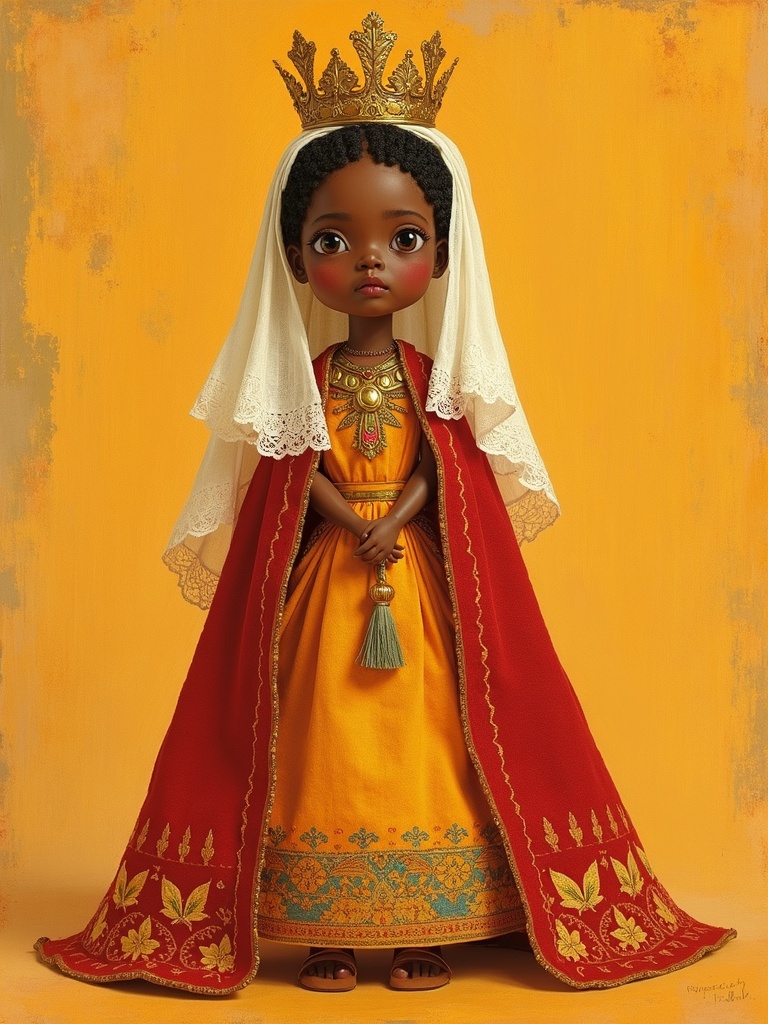
Born Askala Maryam in 1876, she grew up at her father Menelik's court, raised within the faith and ceremony of the Ethiopian highlands.
Answer all three to unlock this stage.
Unlock the previous stage first.
Unlock the previous stage first.
Unlock the previous stage first.
Crafting the doll
Her doll is built from materials true to the Ethiopian highlands: a white handwoven shemma cotton habesha kemis with woven tilet/tibeb borders in crimson and gold, a translucent netela shawl, and a deep-crimson silk-velvet coronation robe with an embroidered kaba cape. Her signature attribute is the gold-filigree Negiste Negest crown, paired with a brass Orthodox hand cross of fine latticework. Each doll carries an education card telling her story honestly — empress regnant, devout keeper of tradition, last of the Solomonic line. Sizes: Classic 32 / Kidogo 18–20 / Shule 28. A share of proceeds supports girls' education and Ethiopian heritage craft.
How this doll is made
Zewditu's look is grounded in the imperial and Orthodox material culture of the Ethiopian highlands — handwoven cotton, gold filigree, and the sacred cross — all documented by museums and reference works.
- Garments 3
- Accessories 3
- Materials 2
- Techniques 2
Garments
- Habesha kemisLong handwoven cotton dress of the Amhara highlands, with tilet/tibeb embroidery on hem, sleeves and neckline; made from handspun 'shemma' cotton woven on narrow looms.DetailsEN
- Netela shawlSingle-layer translucent white handwoven cotton shawl with a woven tibeb border, worn draped over the kemis, especially for worship; signifies modesty and purity.DetailsEN
- Imperial coronation robeDeep crimson silk and gold-embroidered court dress in the Solomonic imperial tradition, fusing Aksumite, Amhara and later European court aesthetics.DetailsEN
Accessories
- Negiste Negest crownGold imperial crown of the Solomonic dynasty, worked in fine filigree; royal crowns were treated as sacred and often held above or beside the sovereign rather than worn continuously.DetailsEN
- Orthodox hand cross (masqal)Small brass hand cross of pierced latticework, kissed by the faithful for a blessing; the lattice symbolises everlasting life.DetailsEN
- Processional crossTall pierced-brass openwork cross on a staff, carried in Ethiopian Orthodox processions; trifoliate forms became common in northern Ethiopia from the 12th century.DetailsEN
Materials
Techniques
- Tilet weavingColoured borders woven directly into the cloth on the loom (typically red or green), distinct from tilf hand-embroidery added afterward.DetailsEN
- Cross latticeworkEthiopian crosses are built from intricate intertwined lattice, the 'weaving' of prayer and creation, cast or pierced in brass and silver.DetailsEN
How it's made
Every doll is sewn by hand from natural materials — built to last a lifetime and to be repaired, not replaced. Here is the shopping list and the work steps. Sizes: Classic 32 cm (heirloom) · Kidogo 18–20 cm (toddlers, no small parts) · Shule 28 cm (school edition).
Shopping list
- Natural cotton or linen for the body (skin tone), ~0.5 m
- Wool or cotton stuffing — no plastic
- Cotton thread and embroidery floss in matching colours
- Garment fabric in this doll's colours (see the fabrics above)
- Yarn for the hairstyle
- Beads, cowrie shells and trims as shown
- Sharps and embroidery needles, pins, fabric scissors, fabric marker
Work instructions
- Trace and cut the body pattern at your chosen size (Classic 32 cm / Kidogo 18–20 cm / Shule 28 cm).
- Sew the body pieces right sides together, leave an opening, turn and stuff firmly with natural fibre, then close by hand.
- Embroider the face gently and with dignity — no plastic parts for the toddler line.
- Make the hair from yarn following the chosen hairstyle and attach it securely.
- Cut and sew the garment from this doll's fabric, then dress the doll.
- Add the beadwork, shells, trims and any attribute by hand.
- Check every seam and reinforce it — the doll should be lifelong and repairable, with no loose small parts for small children.
Origin & Ethics
How we know this
Zewditu is a well-documented historical figure, so dates, titles and the broad shape of her reign are reliable. Her inner thoughts are less certain — she left few words of her own, and much survives through her regent's court and foreign observers. The cause of her death and the deposition of Iyasu are genuinely debated, and the ancient Solomonic descent is part legend. This is honest history, not hagiography.
This figure is offered as a respectful, documented homage to a historical sovereign who died in 1930 — not a living royal — drawing on standard published history (Wikipedia, BlackPast, Britannica, Encyclopaedia Africana) and on Ethiopian Orthodox and Amhara material culture documented by the Metropolitan Museum of Art and others. Sacred regalia (crowns, processional and hand crosses) are shown with reverence as heritage, never as ornament for its own sake; the record names the contested parts of her story plainly.
Sources
- Zewditu — Wikipedia
- Empress Zewditu (1876–1930) — BlackPast.org
- Zauditu — Encyclopædia Britannica
- Zawditu — Encyclopaedia Africana
- Sahle-Work Zewde (first female president since Zewditu) — Wikipedia
- Habesha kemis — Wikipedia
- Netela — Wikipedia
- Ethiopian Imperial Jewels: The Regalia of the Solomonic Dynasty — Skyjems
- Ethiopian cross — Wikipedia
- Hand Cross (mäsqäl), Amhara or Tigrinya peoples — The Metropolitan Museum of Art