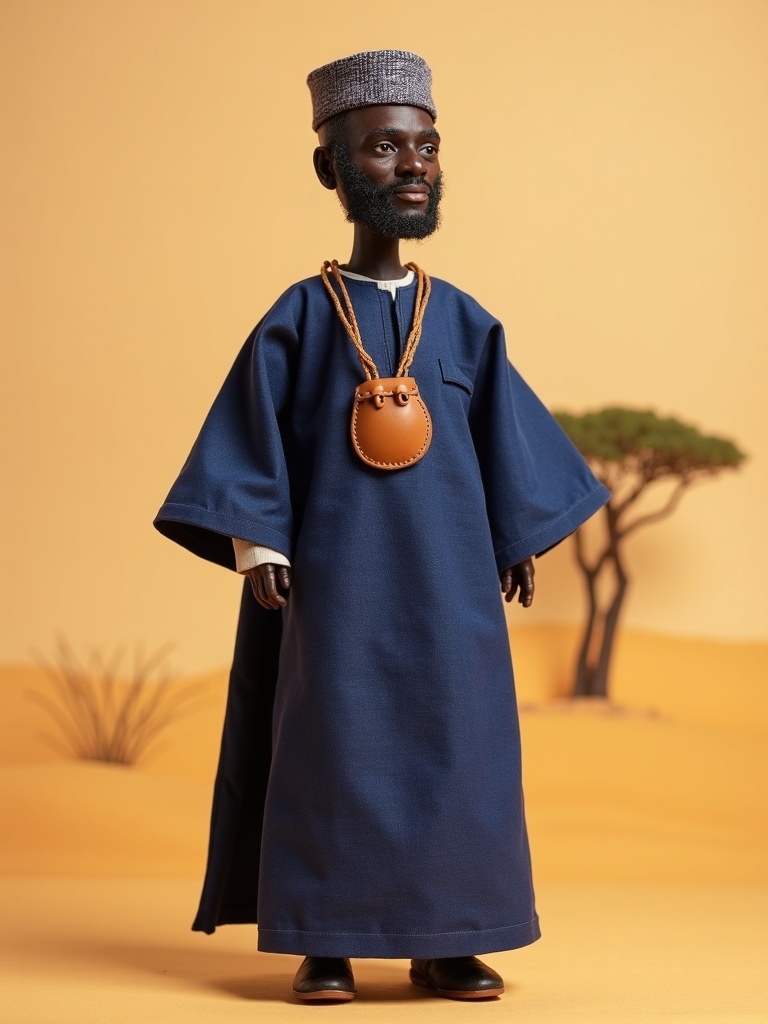
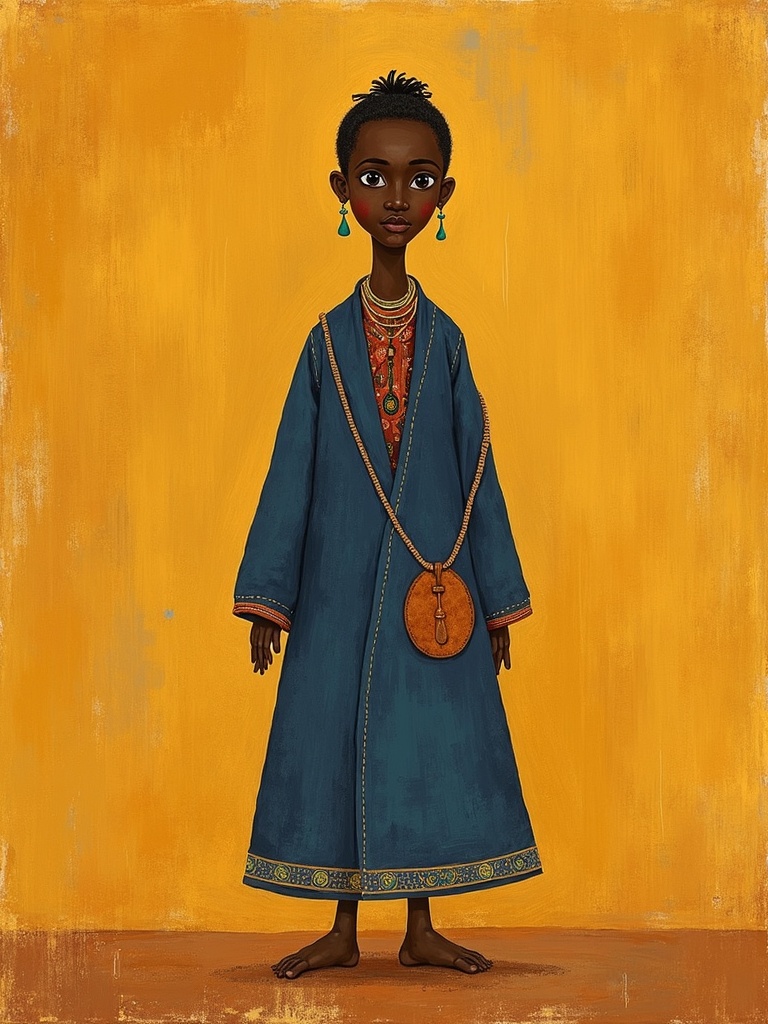
AI design preview — not a photo of the finished handmade doll
The Resistance of the Wassoulou Empire
Samori Touré
A kola-nut trader's son who taught himself war, built an empire across four modern countries, and held the French army at bay for nearly seventeen years — Europeans called him the "Black Napoleon."
- People
- Mandinka (Malinké)
- Country
- Guinea
- Region
- West Africa
- Era
- ≈1828–1900
- Theme
- The Resistance of the Wassoulou Empire
Make your own
Design your Samori Touré
Pick a garment, a hairstyle and a scene, enter the PIN and generate a fresh image of Samori Touré with AI.
Each image is generated live with fal.ai.
Generated images
AI design preview — not a photo of the finished handmade doll
No images generated yet — be the first.
Tradition & Origin
A kola-nut trader's son who taught himself war, built an empire across four modern countries, and held the French army at bay for nearly seventeen years — Europeans called him the "Black Napoleon."
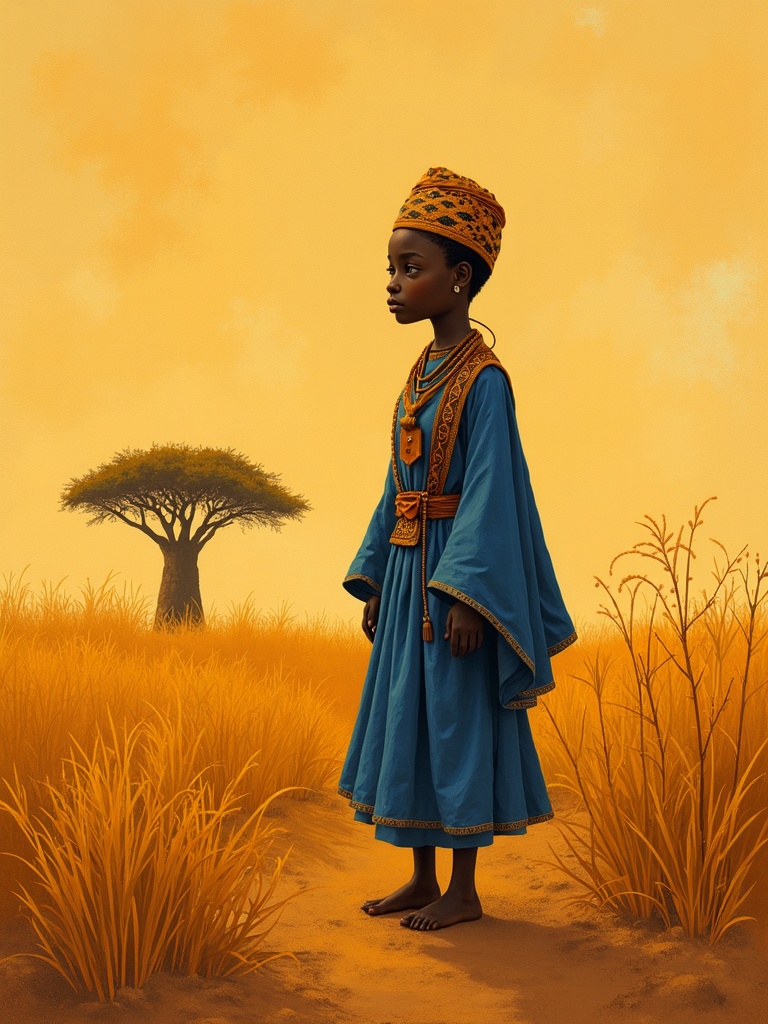
Samori Touré was born around 1828 at Manyambaladugu, in the savanna country of what is today Guinea, the son of Kemo Lanfia, a Dyula weaver and merchant. As a young man he traded kola nuts along the long-distance routes of the upper Niger — until he was caught up in the wars of the region and made to serve as a warrior. In those years he learned two things that would define him: how to handle firearms, and the disciplines of Islam. By 1878 he had risen through battle and alliance to proclaim himself faama — founder-king — of the Wassoulou Empire, a Mandinka state that at its height stretched across present-day Guinea, Mali, Sierra Leone and Côte d'Ivoire.
His empire was not loose tribute but an organised machine. He divided it into ten provinces, each able to furnish thousands of fighters, and built a professional army of sofa infantry and squadrons of cavalry. Most remarkable were his arms workshops: hundreds of caste blacksmiths, the numu, who could take a captured French rifle apart, copy it, and manufacture the spare parts themselves — a feat almost unknown in 19th-century Africa. In 1884 he proclaimed Islam the state religion and took the title almami, the religious leader.
When French columns pushed east in the 1880s, Samori's first battles were catastrophes — massed charges shattered by modern rifles at Samaya in 1882. So he reinvented his entire way of fighting: fast, mobile cavalry, hit-and-run guerrilla warfare, and a ruthless scorched-earth strategy, burning crops and wells in front of the advancing French to starve them of supplies. For year after year he traded space for time, even relocating the whole heart of his empire eastward when the old lands were lost. But honesty demands the hard half of the story too: his wars, his fifteen-month siege of Sikasso, his slave-raiding and forced relocations brought famine and suffering, and some communities in southern Mali remember him as a conqueror, not a liberator.
Weakened at last by famine and desertion, Samori was seized at Guélémou on 29 September 1898 and exiled across the continent to the Ogooué River in Gabon, where he died of pneumonia on 2 June 1900. Yet his defeat was not the end of his name. In the decades that followed, African thinkers reclaimed him as a symbol of resistance, and his own great-grandson, Ahmed Sékou Touré, became the first president of an independent Guinea — carrying the family name from the savanna wars into the age of freedom.
Timeline
- ≈1828Born at Manyambaladugu, in present-day Guinea, son of a Dyula trader.
- 1878Proclaims himself faama (founder-king) of the Wassoulou Empire.
- 1882Sacks Kiniéran; open war with France begins. After defeat at Samaya he turns to guerrilla tactics.
- 1887–88Fields 30,000–35,000 infantry and ~3,000 cavalry; the long, failed siege of Sikasso marks his high water and his decline.
- 1898Captured at Guélémou on 29 September and condemned to exile.
- 1900Dies of pneumonia on 2 June in exile on the Ogooué River, Gabon.
Did you know?
- His blacksmiths did not just buy European guns — they reverse-engineered captured French rifles and manufactured their own spare parts and replacements.DetailsEN
- After his frontal charges were destroyed by French firepower in 1882, he switched overnight to guerrilla tactics and scorched earth — earning the nickname the "Black Napoleon."DetailsEN
- Captured in 1898, he was exiled to a notorious island prison on the Ogooué River in Gabon, where he died in 1900 — thousands of miles from his savanna homeland.DetailsEN
- His memory is genuinely divided: an anti-colonial hero across much of West Africa, yet remembered as a harsh conqueror by some of the communities his wars subdued.DetailsEN
He could not save the empire — but the courage to keep building, and keep fighting, outlived the man.
Values & Capabilities
Capabilities
◆◆◆◆◆ shows how central a gift is — five diamonds mark a signature strength, fewer mark a supporting one.
From a kola-nut trader's son, he forged a state across what is today Guinea, Mali, Sierra Leone and Côte d'Ivoire.
After his first frontal charges were cut down by French rifles, he reinvented his whole way of fighting overnight.
His blacksmiths did not just buy guns — they took French rifles apart, copied them, and built their own.
Against one of the world's great armies, he held out for almost a generation.
Taken in 1898 and exiled far from home, he carried his name into history rather than into shame.
Development
1 of 4 stages unlocked
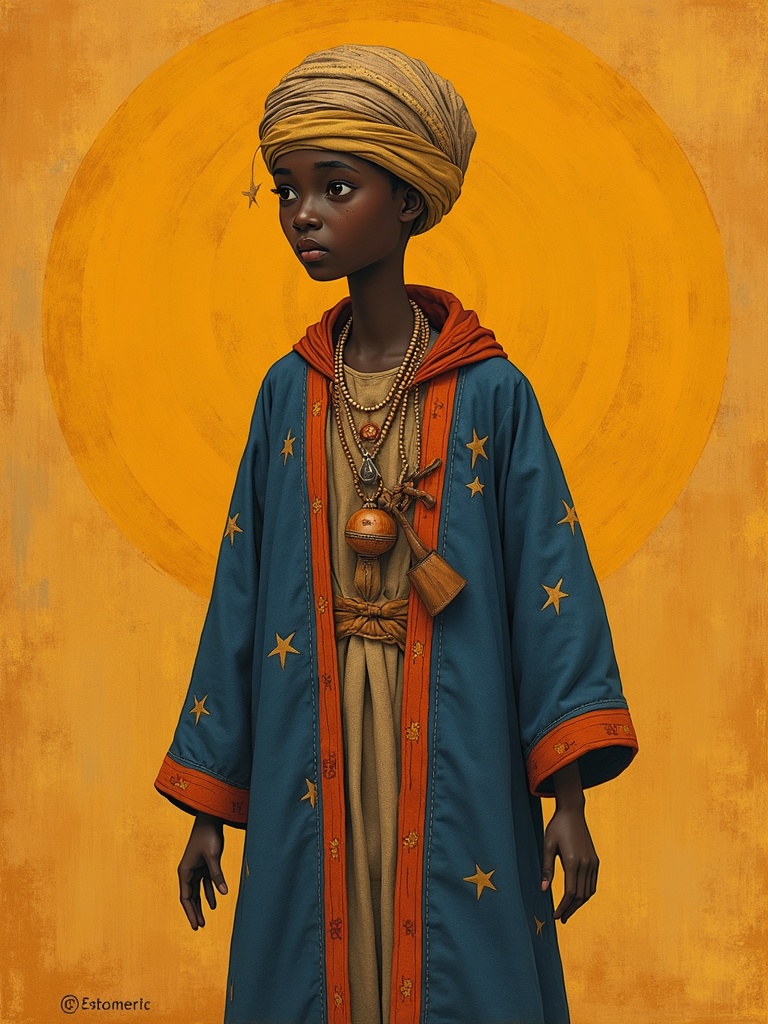
A merchant's child on the kola-nut roads, he learned the savanna, its peoples and its markets before he ever led a man.
Answer all three to unlock this stage.
Unlock the previous stage first.
Unlock the previous stage first.
Crafting the doll
The doll is built from real Manding materials: strip-woven cotton dyed with local indigo, the prestige blue of the Mande world; a small bazin-damask boubou for the scholar-ruler; tooled leather for the gris-gris amulet and scabbard; and hand-stitched geometric embroidery at the neck. The signature attribute is the leather talisman pouch that a marabout would fill with Qur'anic verses. An education card inside tells his honest story — builder, strategist, and the hard cost of his wars. Sizes Classic 32 / Kidogo 18–20 / Shule 28. A share of proceeds supports children's education and heritage programmes in West Africa.
How this doll is made
Samori's look is grounded in the material culture of the Mandinka (Malinké) world of the upper Niger — strip-woven indigo cotton, leather talismans, and the iron of caste blacksmiths who armed his resistance.
- Garments 2
- Accessories 3
- Materials 2
- Techniques 3
Garments
- Grand boubouA wide-sleeved, ankle-length robe of cotton or rich bazin damask, the prestige dress of Mandinka men, worn over shirt and trousers.DetailsEN
- Strip-cloth robe (kusaibi)Made from many narrow hand-woven cotton strips sewn into one cloth more than five feet across, dyed with indigo and sometimes sewn with amulet pockets.DetailsEN
Accessories
- Gris-gris amuletA small leather pouch holding Qur'anic verses written by a marabout, worn at the neck as protection — central to Mande Muslim material culture.DetailsEN
- Mandinka short swordA short West African blade in a tooled leather scabbard, a warrior's sidearm forged at the height of the Mali Empire's metallurgy.DetailsEN
- Woven prayer cap (kufi)A small embroidered Muslim cap worn by scholars and rulers; Samori took the religious title almami in 1884.DetailsEN
Materials
- Indigo dyeA local plant yielding a rich blue regarded as beautiful and prestigious; among the Manding, indigo cloth signified wealth and standing.DetailsEN
- Hand-spun cottonLocally grown, hand-spun and hand-woven on narrow looms into strips — the base fabric of nearly all Mandinka prestige cloth.DetailsEN
Techniques
- Numu blacksmithingCaste blacksmiths (numu) forged tools and weapons; in Samori's workshops they repaired and even built European rifles and spare parts from scratch.DetailsEN
- Strip-weavingMen weave long narrow bands of cotton on the horizontal loom; the bands are cut and sewn edge-to-edge to build a full garment.DetailsEN
- Leather amulet-sewingGaranke leatherworkers stitch tooled pouches and scabbards to cover gris-gris charms and hold blades — a specialist craft caste of Mande society.DetailsEN
How it's made
Every doll is sewn by hand from natural materials — built to last a lifetime and to be repaired, not replaced. Here is the shopping list and the work steps. Sizes: Classic 32 cm (heirloom) · Kidogo 18–20 cm (toddlers, no small parts) · Shule 28 cm (school edition).
Shopping list
- Natural cotton or linen for the body (skin tone), ~0.5 m
- Wool or cotton stuffing — no plastic
- Cotton thread and embroidery floss in matching colours
- Garment fabric in this doll's colours (see the fabrics above)
- Yarn for the hairstyle
- Beads, cowrie shells and trims as shown
- Sharps and embroidery needles, pins, fabric scissors, fabric marker
Work instructions
- Trace and cut the body pattern at your chosen size (Classic 32 cm / Kidogo 18–20 cm / Shule 28 cm).
- Sew the body pieces right sides together, leave an opening, turn and stuff firmly with natural fibre, then close by hand.
- Embroider the face gently and with dignity — no plastic parts for the toddler line.
- Make the hair from yarn following the chosen hairstyle and attach it securely.
- Cut and sew the garment from this doll's fabric, then dress the doll.
- Add the beadwork, shells, trims and any attribute by hand.
- Check every seam and reinforce it — the doll should be lifelong and repairable, with no loose small parts for small children.
Origin & Ethics
How we know this
The core of Samori's life — the Wassoulou Empire, the sofa army, the rifle workshops, the seventeen-year resistance, the 1898 capture and 1900 death in Gabon — is well documented in colonial archives and modern scholarship. Exact dates of birth and some early episodes vary between sources (c. 1828–1830). His memory is genuinely contested: hero of anti-colonial resistance to many, conqueror and slave-raider to some communities he subdued. This record keeps both.
This figure is offered as a respectful educational homage developed with reference to academic and museum sources (Wikipedia, BlackPast, Britannica, Smarthistory/Khan Academy, the UNESCO General History of Africa). As Samori Touré is a historical figure with living descendants and a contested memory, the record names both his resistance and the suffering his wars caused, and invites correction from Mandinka cultural bodies and historians in Guinea, Mali, Côte d'Ivoire and Sierra Leone.
Sources
- Samori Ture — full biography, Wikipedia
- Mandingo Wars (Franco–Wassoulou conflict), Wikipedia
- Samori Touré (1830–1900), BlackPast.org
- Samory — Mandingo Empire, jihad, Encyclopaedia Britannica
- Samory Touré, EBSCO Research Starters (History)
- Mandinka people — population, castes, Islam, Wikipedia
- Man's robe (boubou or kusaibi), unrecorded Mandinka artists, Khan Academy / Smarthistory
- Gris-gris (talisman), Wikipedia
- Mandinka short sword and the numu blacksmiths, Seven Swords
- Boubou (clothing), Wikipedia