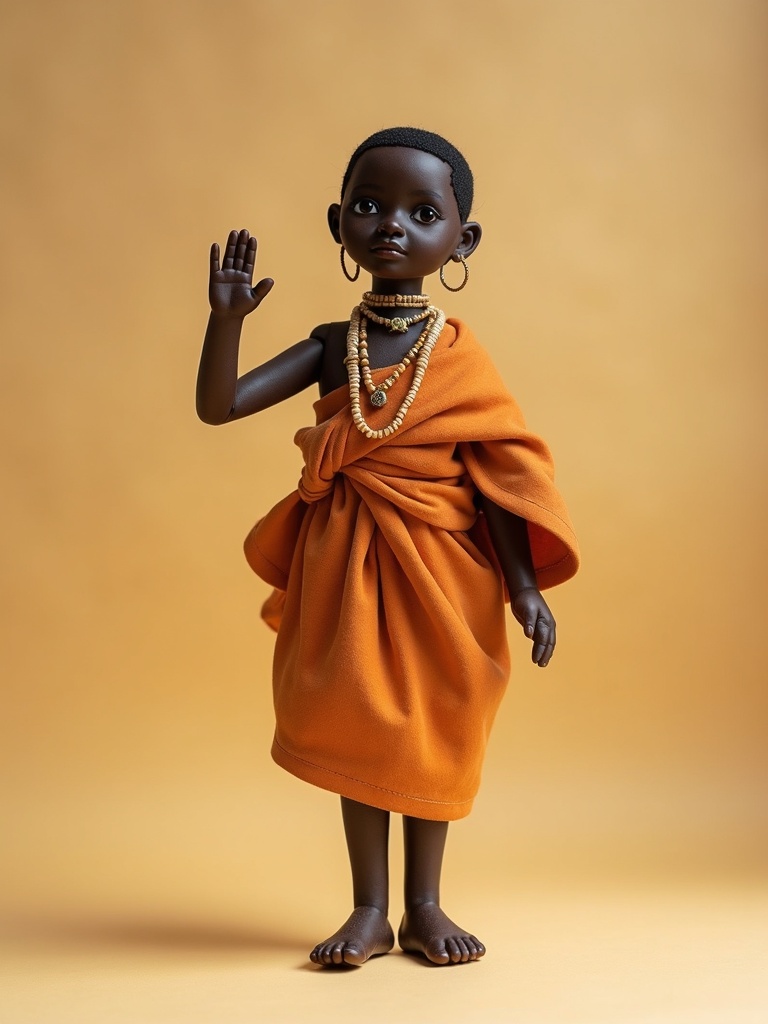
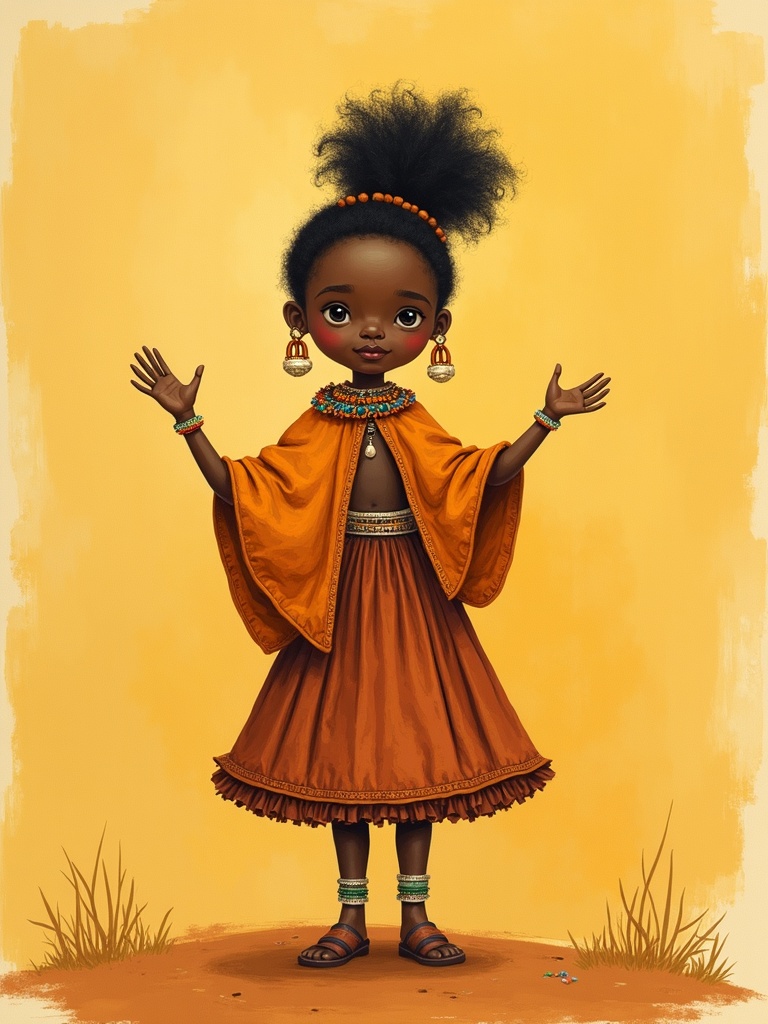
AI design preview — not a photo of the finished handmade doll
The Spark of 1922
Mary Muthoni Nyanjiru
When a Nairobi crowd of thousands lost its nerve in March 1922, one Kikuyu woman ran to the very front and turned hesitation back into courage — and is remembered ever since in the song Kanyegenuri.
- People
- Kikuyu
- Country
- Kenya
- Region
- East Africa
- Era
- ≈1895–1922
- Theme
- The Spark of 1922
⚖ A respectful concept
Mary Muthoni Nyanjiru was a real, documented person who was killed during the 16 March 1922 protest in Nairobi. This doll is a respectful homage, not an exact likeness, and uses only documented words and accounts; it honours her courage and never depicts violence, suffering, or her death. Her story is treated with the dignity owed to a named martyr, in the spirit of the song Kanyegenuri that her own community raised for her.
Make your own
Design your Mary Muthoni Nyanjiru
Pick a garment, a hairstyle and a scene, enter the PIN and generate a fresh image of Mary Muthoni Nyanjiru with AI.
⚖ AI homage concept — not a likeness of the real person.
Each image is generated live with fal.ai.
Generated images
AI design preview — not a photo of the finished handmade doll
No images generated yet — be the first.
Tradition & Origin
When a Nairobi crowd of thousands lost its nerve in March 1922, one Kikuyu woman ran to the very front and turned hesitation back into courage — and is remembered ever since in the song Kanyegenuri.
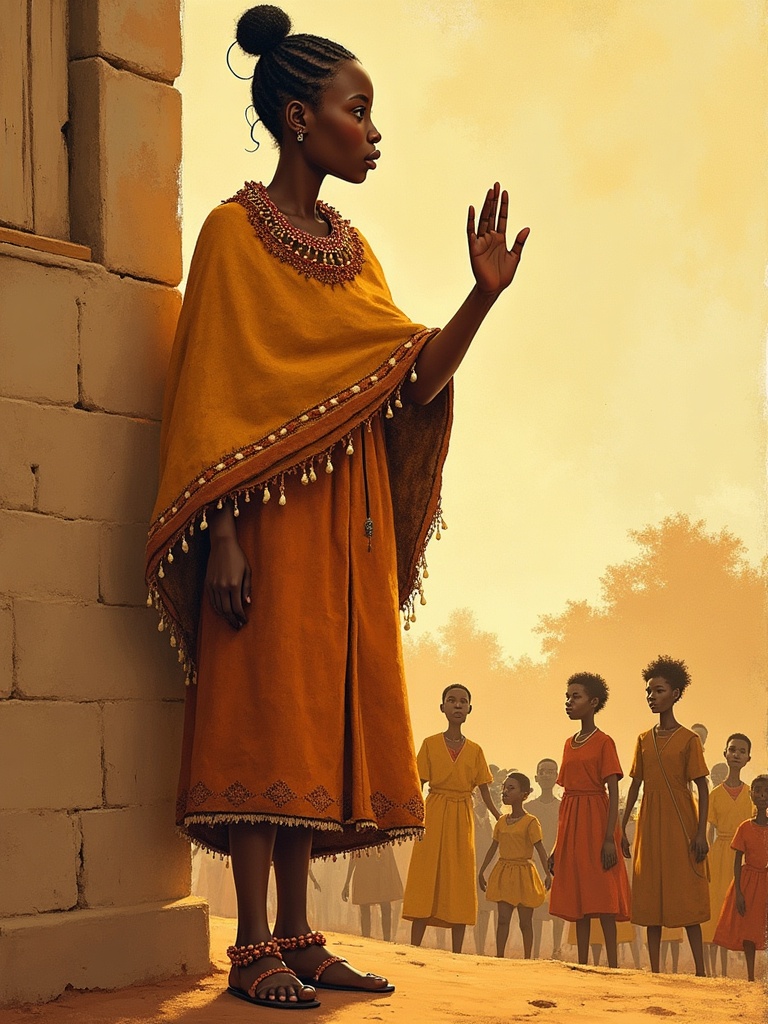
Mary Muthoni Nyanjiru was born in Weithaga, Murang'a, in the green highland ridges of central Kenya, in a Kikuyu world of leather skirts, ochred goatskin cloaks and beadwork that spoke of age, status and belonging. Her exact birth date was never recorded — a silence that itself tells the story of how little the colonial state cared to write down the lives of African women. By the early 1920s she was living in Nairobi, a fast-growing colonial town where the kipande pass, hut taxes and forced-labour ordinances pressed hardest on African lives.
In 1921 a young government clerk, Harry Thuku, founded the East African Association — the first multi-ethnic political movement in the region — to campaign against exactly these injustices. Known across Kikuyuland as the 'chief of women' for speaking out against forced labour and abuse, Thuku drew a growing following. On 14 March 1922 the authorities arrested him, and thousands of supporters streamed to the Nairobi police station to demand his release. The first day's demonstration was peaceful, ending in public prayer; that evening more than 200 women took part in oathing, a solemn act traditionally reserved for men.
On the morning of 16 March 1922, a delegation returned with the government's word that Thuku would merely be detained, and the men began to accept it and disperse. It was then that Nyanjiru leapt up, ran to the front, and invoked guturamira ng'ania — a rare and grave Kikuyu challenge used only when the authority of men is no longer recognised — crying out, 'You take my dress and give me your trousers. You men are cowards. What are you waiting for? Our leader is in there.' The women ululated, the crowd surged forward, and police and armed settlers on the nearby hotel veranda opened fire. Nyanjiru was among the first killed. Honest history names this plainly: she died that day. But she is honoured for the courage of her step forward, not the cruelty of the shooting.
Her memory refused to be silenced. The song Kanyegenuri, raised by her own people, carried her name for decades and was sung as an anthem of the Mau Mau resistance in the 1950s — until the colonial government banned such songs of heroic women as a political threat. She remains the only woman named individually in most accounts of that day, standing for the many anonymous women who marched and fell beside her.
Timeline
- 1919–1920The kipande pass system is enforced on African men, tightening control over labour and movement.
- 1921Harry Thuku founds the East African Association in Nairobi against the kipande, hut taxes and forced labour.
- 14 Mar 1922Thuku is arrested; thousands of supporters begin gathering at the Nairobi police station.
- 15 Mar 1922A peaceful demonstration and prayer; that evening over 200 women take part in oathing.
- 16 Mar 1922As the crowd hesitates, Nyanjiru steps forward and rallies it; police and settlers open fire and she is killed.
- 1950sThe song Kanyegenuri, remembering her courage, is sung in the Mau Mau resistance and banned by the colonial state.
Did you know?
- The colonial state never recorded her birth date — she enters history only at the moment of her courage.DetailsEN
- The hated kipande was a small metal pass worn around the neck, holding an African man's fingerprints, work record and an employer's comments — leave a job without permission and you could be arrested.DetailsEN
- Her name lived on in the song Kanyegenuri, sung in the later Mau Mau resistance and then banned because anthems of heroic women were seen as a political threat.DetailsEN
- She is the only woman named individually in most accounts of 16 March 1922 — standing for the many women who marched and died unnamed.DetailsEN
Her courage outlived the silence meant to erase it — carried, to this day, in a song.
Values & Capabilities
Capabilities
◆◆◆◆◆ shows how central a gift is — five diamonds mark a signature strength, fewer mark a supporting one.
When the crowd wavered, she stepped to the very front and would not retreat.
Her words turned a hesitant crowd back into a united stand for their leader.
She carried the dignity of Kikuyu women's tradition into a modern political fight.
She stood with hundreds of women who refused to be left out of the struggle.
Her name became a song that fed a freedom movement decades after her death.
Development
1 of 5 stages unlocked
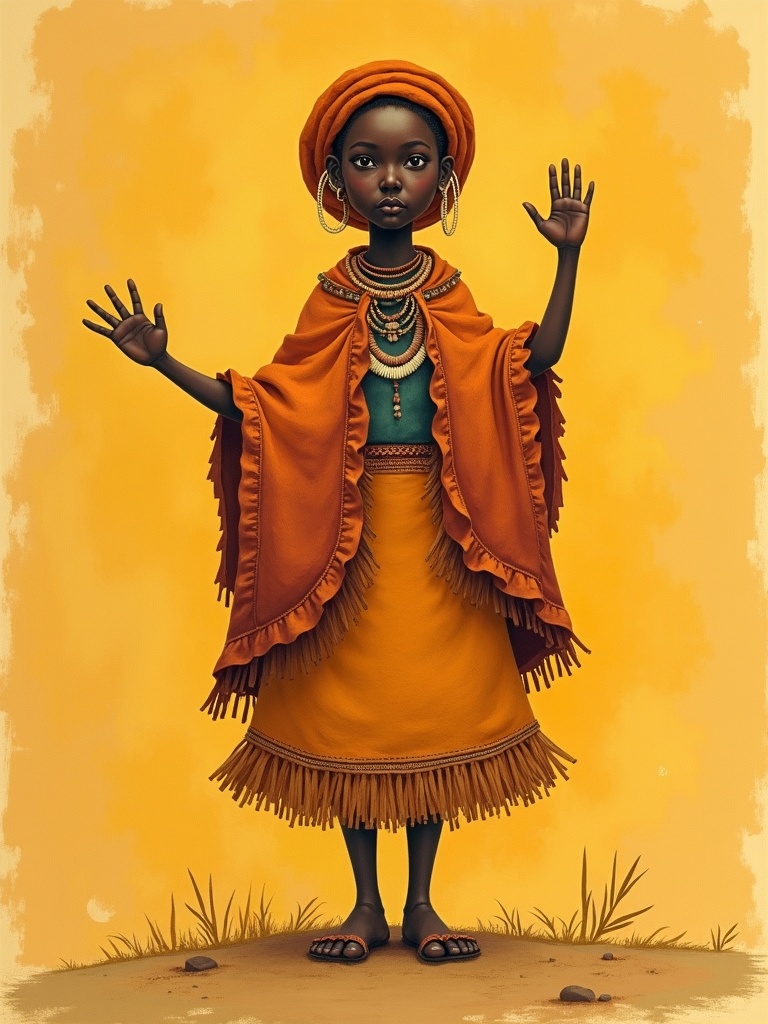
She was born and raised among the green ridges of the Kikuyu highlands, in the leather-and-bead traditions of her people.
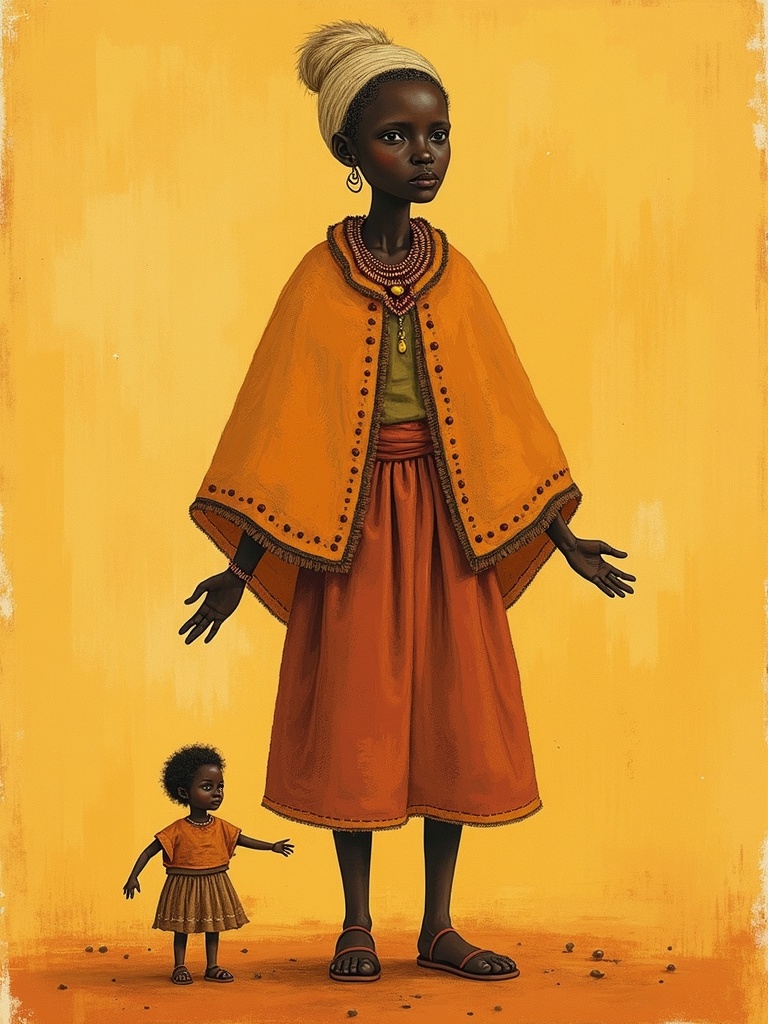
Answer all three to unlock this stage.
Unlock the previous stage first.
Unlock the previous stage first.
Unlock the previous stage first.
Crafting the doll
Her look is grounded in real Kikuyu women's material culture: a wrap skirt (muthuru) of softened sheepskin tapered for movement, a goatskin cloak (nyathiba) treated with ochre and castor oil and knotted at the right shoulder, a beaded apron (muniuru), and layered bead necklaces, brass earrings and ear ornaments (hang'i) trimmed with cowrie shells. Her signature attribute is a calm, raised open hand — the gesture of one who calls a gathering to its purpose. The doll comes with an education card retelling the documented account of 16 March 1922 and the song Kanyegenuri, framed for ages 8–12 with dignity and without violence. Sizes Classic 32 / Kidogo 18–20 / Shule 28. A share of proceeds supports Kenyan heritage education and the telling of women's histories.
How this doll is made
The doll's dress is grounded in documented Kikuyu women's material culture of the early 20th century — softened hides, ochre-treated goatskin, and the layered beadwork that marked age, status and belonging.
- Garments 3
- Accessories 3
- Materials 2
- Techniques 2
Garments
- Muthuru (leather skirt)A wrap-around woman's skirt of two softened sheepskins, tapered behind the legs for free movement during work.DetailsEN
- Nyathiba (goatskin cloak)An upper-body cloak of three to four goat skins, hair scraped off and treated with ochre and castor oil until soft, knotted at the right shoulder.DetailsEN
- Muniuru (beaded apron)A fully beaded tracery apron worn by initiated girls during and after initiation until the first child is conceived.DetailsEN
Accessories
- Bead necklacesMulti-coloured bead necklaces, bracelets and anklets worn since pre-colonial times to communicate age, status and marital standing.DetailsEN
- Ear ornaments (hang'i)Traditional Agikuyu ear ornaments and brass earrings, worn to mark identity and standing.DetailsEN
- Cowrie-shell trimCowrie shells sewn onto aprons and ornaments, carrying meanings of fertility and life across Kenyan communities.DetailsEN
Materials
Techniques
How it's made
Every doll is sewn by hand from natural materials — built to last a lifetime and to be repaired, not replaced. Here is the shopping list and the work steps. Sizes: Classic 32 cm (heirloom) · Kidogo 18–20 cm (toddlers, no small parts) · Shule 28 cm (school edition).
Shopping list
- Natural cotton or linen for the body (skin tone), ~0.5 m
- Wool or cotton stuffing — no plastic
- Cotton thread and embroidery floss in matching colours
- Garment fabric in this doll's colours (see the fabrics above)
- Yarn for the hairstyle
- Beads, cowrie shells and trims as shown
- Sharps and embroidery needles, pins, fabric scissors, fabric marker
Work instructions
- Trace and cut the body pattern at your chosen size (Classic 32 cm / Kidogo 18–20 cm / Shule 28 cm).
- Sew the body pieces right sides together, leave an opening, turn and stuff firmly with natural fibre, then close by hand.
- Embroider the face gently and with dignity — no plastic parts for the toddler line.
- Make the hair from yarn following the chosen hairstyle and attach it securely.
- Cut and sew the garment from this doll's fabric, then dress the doll.
- Add the beadwork, shells, trims and any attribute by hand.
- Check every seam and reinforce it — the doll should be lifelong and repairable, with no loose small parts for small children.
Origin & Ethics
How we know this
The core of this record is well documented across Kenyan and historical sources: the 1922 arrest of Harry Thuku, the East African Association's campaign against the kipande and taxes, Nyanjiru's act and death on 16 March 1922, and the song Kanyegenuri. Her exact birth date is unknown and casualty figures are genuinely contested (21 officially, up to the hundreds in other accounts). Her reported words survive through documented oral and colonial-era accounts; we present them as such, not as a verbatim recording.
This homage is offered in consultation with Kenyan heritage educators and the spirit of the National Museums of Kenya's documentation of Kikuyu culture, and with respect for the Kikuyu (Agikuyu) community to whom Nyanjiru's memory belongs. As she is a named historical martyr rather than a living person, the figure follows strict dignity rules: documented account only, no depiction of violence or death, and presentation as a respectful draft for community feedback rather than a finished commercial likeness.
Sources
- Mary Muthoni Nyanjiru — Wikipedia
- The Firebrand: Mary Muthoni Nyanjiru — Paukwa
- Harry Thuku — Wikipedia
- Muthoni Nyanjiru's Forgotten Bravery — Kenyans.co.ke
- Take my dress and give me your trousers — Face2Face Africa
- Kenya's Apartheid Pass: The Kipande System — The Pan African
- Kikuyu traditional dress — Gikuyu Centre for Cultural Studies (Mukuyu)
- A Journey Into the History and Symbolism of Kenyan Ornaments — National Museums of Kenya / Google Arts & Culture
- The Kikuyu Community of Kenya — National Museums of Kenya / Google Arts & Culture