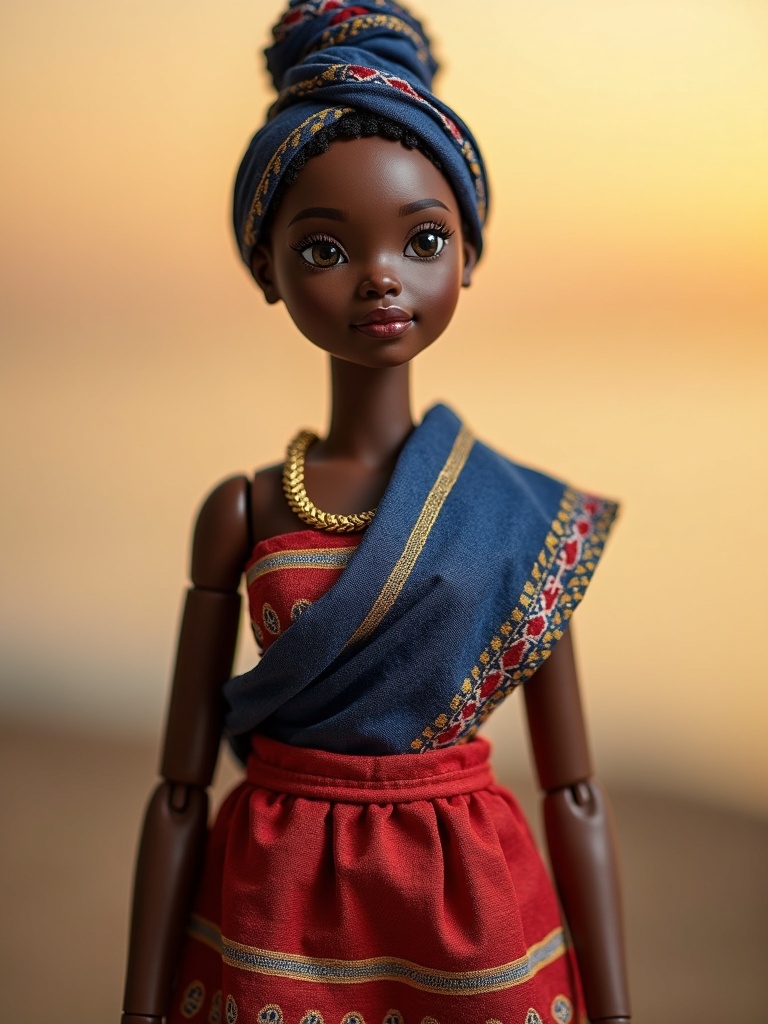
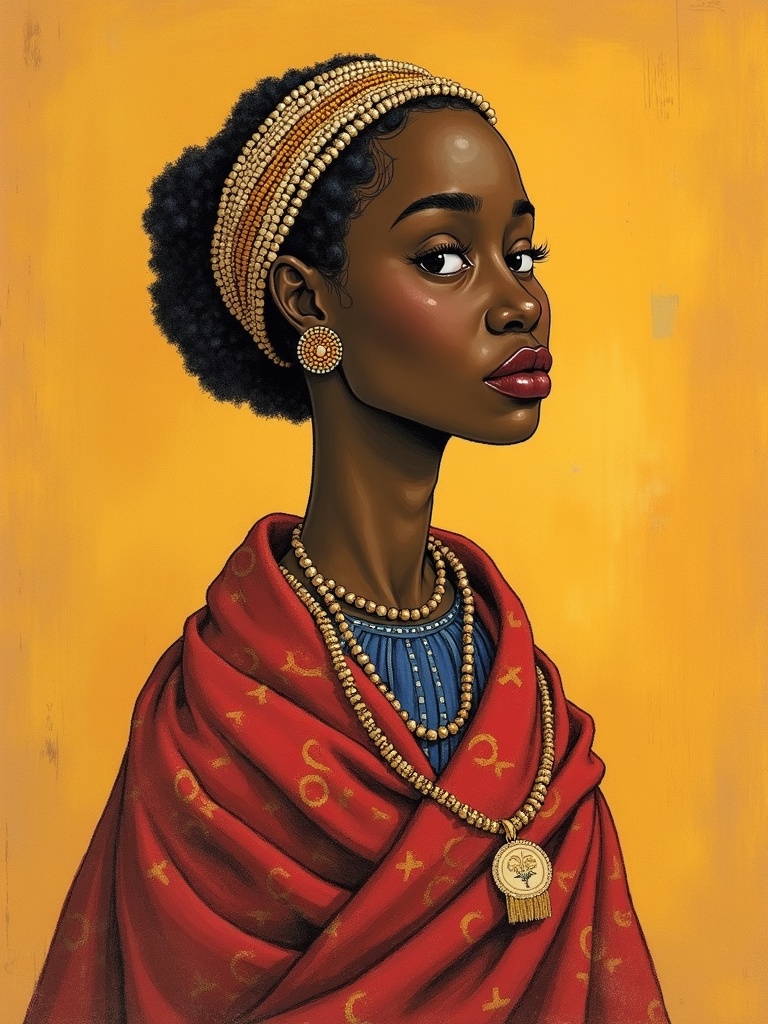
AI design preview — not a photo of the finished handmade doll
The First Woman in the House
Grace Onyango
When Grace Onyango took her seat in Kenya's National Assembly in 1969, she was the only woman in a chamber of men — and she had no intention of feeling out of place.
- People
- Luo
- Country
- Kenya
- Region
- East Africa
- Era
- 1924–2023
- Theme
- The First Woman in the House
⚖ A respectful concept
Grace Monica Akech Onyango (1924–2023) was a real, recently deceased Kenyan stateswoman; this doll is a respectful homage, never an exact likeness, and carries no claim of endorsement by her family. Only quotes and facts documented in published, sourced records are used here — nothing is invented. Her dignity is honoured: she is shown as a teacher, mayor and parliamentarian, never in suffering. The figure is offered as a respectful draft made in good faith for children's education, with the consent of her family and Kenya's national institutions implied and welcomed.
Make your own
Design your Grace Onyango
Pick a garment, a hairstyle and a scene, enter the PIN and generate a fresh image of Grace Onyango with AI.
⚖ AI homage concept — not a likeness of the real person.
Each image is generated live with fal.ai.
Generated images
AI design preview — not a photo of the finished handmade doll
No images generated yet — be the first.
Tradition & Origin
When Grace Onyango took her seat in Kenya's National Assembly in 1969, she was the only woman in a chamber of men — and she had no intention of feeling out of place.
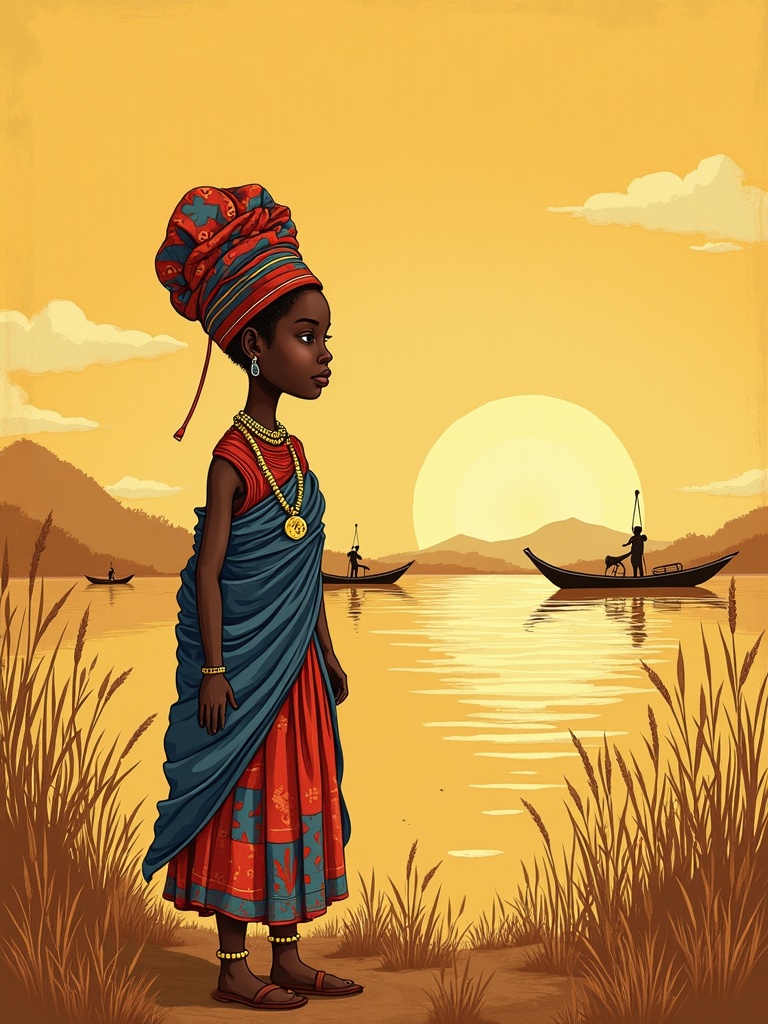
Grace Monica Akech Onyango was born on 26 June 1924 in Sakwa, in the lakeside region of Nyanza, the second of nine children. People called her Nya'Bungu — 'Daughter of the Bush.' She studied at Ng'iya Girls School and trained as a teacher at Vihiga Teachers Training College, graduating in 1955. Before any election, she was a schoolteacher and a trainer of teachers, shaping girls in a part of Kenya where few women were expected to lead anything at all.
In 1965 she became the first woman mayor in independent Kenya, leading the city of Kisumu on the shores of Lake Victoria. Two other women had entered the race but withdrew under what they described as hostile abuse from male rivals, leaving Grace the only woman against six men — and she won. She held the office for four terms, the most the city allowed. As mayor she Africanised Kisumu's colonial street names and made a quietly radical rule: if a male council worker died, his widow or a kinswoman could take his job, so the family would not go hungry.
In 1969 she went further still, winning the Kisumu Town seat to become the first elected woman Member of Parliament in post-independence Kenya. Her opponents were all men, with far more money; her supporters answered with the chant that they would take a rival's money but vote for 'Mama.' She served three successive parliaments until 1983 and became the first woman to sit in the Deputy Speaker's chair. Beyond the chamber she led the Luo Union and the Child Welfare Society and helped found the National Fund for the Disabled of Kenya in 1980. When she died in Kisumu on 8 March 2023, aged 98, Kenya mourned the woman who had opened the door for every elected woman who followed.
Timeline
- 1924Born in Sakwa, Nyanza Province, second of nine children.
- 1955Graduates from Vihiga Teachers Training College; teaches and trains teachers.
- 1965Becomes Mayor of Kisumu — first woman mayor in independent Kenya.
- 1969Elected MP for Kisumu Town — first elected woman MP in Kenya.
- 1979Becomes Deputy Speaker of the National Assembly (to 1984).
- 2023Dies in Kisumu, aged 98, mourned as a national pioneer.
Did you know?
- As mayor she ruled that the widow or a kinswoman of a council worker who died could take his job, so his family would not lose their living.DetailsEN
- Asked if she would feel afraid as Parliament's only woman, she answered: 'I have always worked fearlessly with men.'DetailsEN
- Her city, Kisumu, sits on Lake Victoria's Winam Gulf — its Luo name comes from 'Adhi Kisuma,' 'I'm going to trade.'DetailsEN
- Her campaigners' slogan promised they would take a rival's money but cast their vote for 'Mama.'DetailsEN
She did not break the door down — she simply walked through, fearless, and held it open.
Values & Capabilities
Capabilities
◆◆◆◆◆ shows how central a gift is — five diamonds mark a signature strength, fewer mark a supporting one.
She walked into Kenya's National Assembly in 1969 as its first elected woman and refused to feel small among 158 men.
In 1965 she became the first woman mayor in independent Kenya, leading the lakeside city of Kisumu.
As mayor she ruled that when a male council worker died, his wife or kinswoman could take his job and keep the family fed.
Before politics she was a trained teacher and college trainer, shaping a generation of girls in Nyanza.
She championed women, children and disabled Kenyans, helping found a national fund so none would be invisible.
Development
1 of 5 stages unlocked
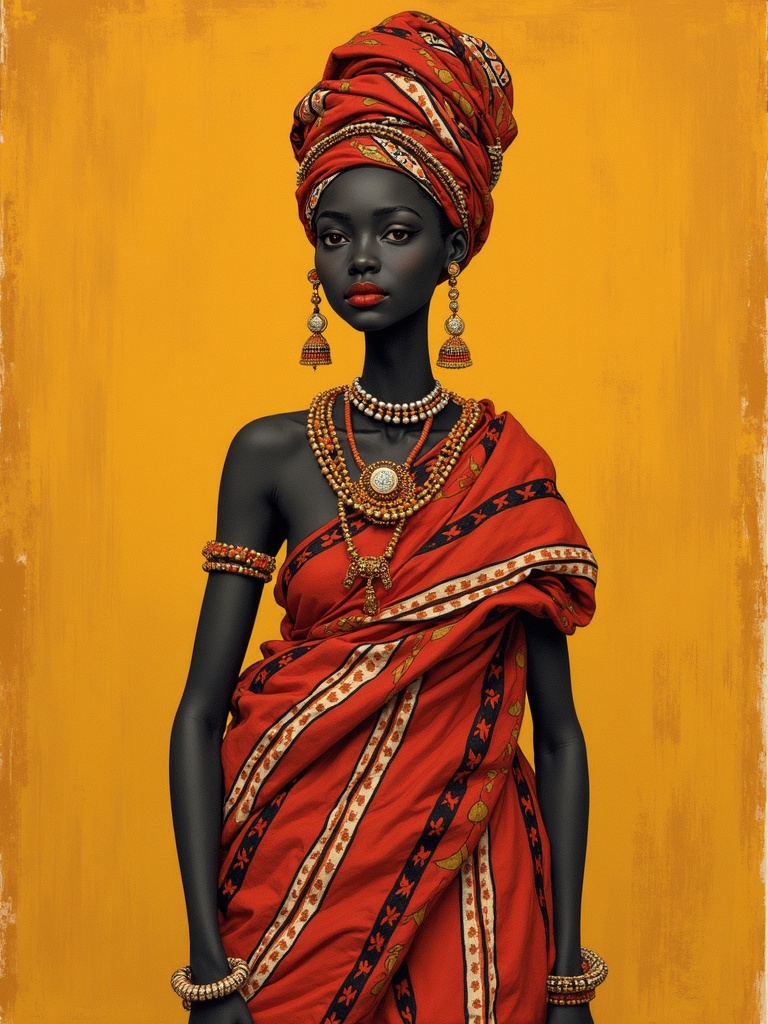
Born in 1924 in Sakwa, Nyanza, the second of nine children, she studied at Ng'iya Girls School.
Answer all three to unlock this stage.
Unlock the previous stage first.
Unlock the previous stage first.
Unlock the previous stage first.
Crafting the doll
The doll is built from honest cottons: a printed leso (kanga) in indigo and red with a guinea-fowl speckle border and a Swahili proverb strip, sewn over a calico body, with a beaded Luo ligisa headpiece of tiny white, red and blue beads on raffia-and-cotton, trimmed with real or simulated cowrie shells. A small gold-toned mayoral chain of office and a folded leso are her signature attributes. Each doll ships with an education card telling her documented story for ages 8–12. Sizes: Classic 32 / Kidogo 18–20 / Shule 28. A share of proceeds supports girls' education and women's civic leadership in Kenya.
How this doll is made
Her look is grounded in the real material culture of Luo women of Nyanza and the wider East African leso tradition — printed cotton, fine beadwork and cowrie shells.
- Garments 2
- Accessories 3
- Materials 2
- Techniques 3
Garments
- Leso (kanga)Rectangular pure-cotton cloth, ~1.5 m × 1 m, with a wide border (pindo), a central motif (mji) and a Swahili proverb strip (ujumbe); worn wrapped by Luo and coastal women.DetailsEN
- Matching headwrapA second piece of the leso pair (doti) tied as a headscarf, a common everyday Kenyan women's style.DetailsEN
Accessories
- Ligisa headpieceBeaded Luo women's head cover with an open top, decorated with cowrie shells.DetailsEN
- Cowrie-shell trimCowrie shells used as decorative embellishment on Luo beaded headwear.DetailsEN
- Chain of officeGold-toned mayoral chain, a civic emblem of her office as Mayor of Kisumu (from 1965).DetailsEN
Materials
Techniques
- Hand bead-stitchingHundreds of tiny 1 mm beads in white, red and blue are hand-sewn into triangular patterns onto the prepared pad.DetailsEN
- Proverb printing (ujumbe)Swahili sayings are printed into a strip on the leso, a tradition begun by Mombasa traders around 1900 so the cloth could 'speak.'DetailsEN
- Leso wrapping (doti)Lesos are bought and worn as a matched pair (doti) — one wrapped at the waist or body, one for the head or shoulders.DetailsEN
How it's made
Every doll is sewn by hand from natural materials — built to last a lifetime and to be repaired, not replaced. Here is the shopping list and the work steps. Sizes: Classic 32 cm (heirloom) · Kidogo 18–20 cm (toddlers, no small parts) · Shule 28 cm (school edition).
Shopping list
- Natural cotton or linen for the body (skin tone), ~0.5 m
- Wool or cotton stuffing — no plastic
- Cotton thread and embroidery floss in matching colours
- Garment fabric in this doll's colours (see the fabrics above)
- Yarn for the hairstyle
- Beads, cowrie shells and trims as shown
- Sharps and embroidery needles, pins, fabric scissors, fabric marker
Work instructions
- Trace and cut the body pattern at your chosen size (Classic 32 cm / Kidogo 18–20 cm / Shule 28 cm).
- Sew the body pieces right sides together, leave an opening, turn and stuff firmly with natural fibre, then close by hand.
- Embroider the face gently and with dignity — no plastic parts for the toddler line.
- Make the hair from yarn following the chosen hairstyle and attach it securely.
- Cut and sew the garment from this doll's fabric, then dress the doll.
- Add the beadwork, shells, trims and any attribute by hand.
- Check every seam and reinforce it — the doll should be lifelong and repairable, with no loose small parts for small children.
Origin & Ethics
How we know this
Her firsts, dates and roles are well documented by the Kenyan Parliament and major Kenyan newspapers: born 26 June 1924 in Sakwa, first woman mayor of Kisumu (1965), first elected woman MP (1969), Deputy Speaker (1979–84), died 8 March 2023. One reference work (encyclopedia.com) gives an earlier, less-supported birth year (1934) and a different birthplace; we follow the Kenyan parliamentary and Wikipedia record. The '158 male MPs' debate detail comes from a paywalled headline and is treated as reported, not independently verified, so only her confirmed quote is used.
This figure honours a real, named Kenyan public servant and was drafted with reference only to published, sourced records — the Kenyan Parliament's official tribute, national newspapers and reference works. It is offered as a respectful homage, not a likeness, and would proceed only with the welcome and consent of Grace Onyango's family and the relevant Kenyan cultural and national institutions; the Luo community's guidance on attire and beadwork is sought so the leso and ligisa are shown with respect, not as costume.
Sources
- National Assembly tribute to Hon. Grace Onyango — Parliament of Kenya
- Grace Onyango — Wikipedia
- The Mayor (Kenya Female Firsts) — Paukwa
- Lessons to pick from trailblazer Grace Onyango — Daily Nation
- Mama Grace Onyango, Kisumu's First Woman Mayor and MP, Dies — allAfrica
- Onyango, Grace (1934–) — Encyclopedia.com
- Kenyan Traditional Attire (Luo ligisa, beadwork) — Paukwa
- The Visual Language of the Leso — Paukwa
- Kanga (garment) — Wikipedia
- Kisumu — Wikipedia