Music as a Bridge
Angélique Kidjo
Born in Ouidah on the old slave coast and raised in a theatre troupe, Angélique Kidjo fled Benin's Marxist dictatorship for Paris at 23 — and turned five languages and a borderless voice into a bridge between Africa and the world.
- People
- Fon / Yoruba
- Country
- Benin
- Region
- West Africa
- Era
- 1960–present
- Theme
- Music as a Bridge
⚖ A respectful concept
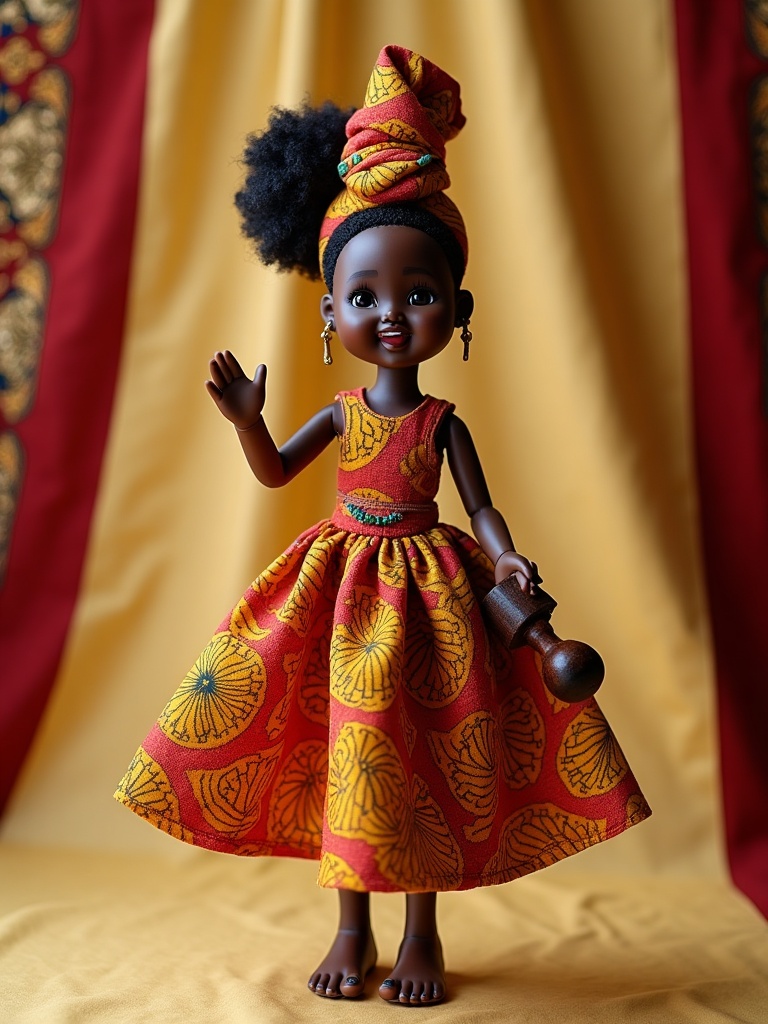
Angélique Kidjo is a living artist; this doll is a respectful homage, not an exact likeness, and is never meant to be sold as her endorsed image. Only her documented, publicly attributed quotes are used here, each with a source. The figure honours her stage style and humanitarian work in dignity, and assumes the consent and good will of the artist, her family and her foundation; what is shown is a respectful educational draft, not a finished or licensed product.
Make your own
Design your Angélique Kidjo
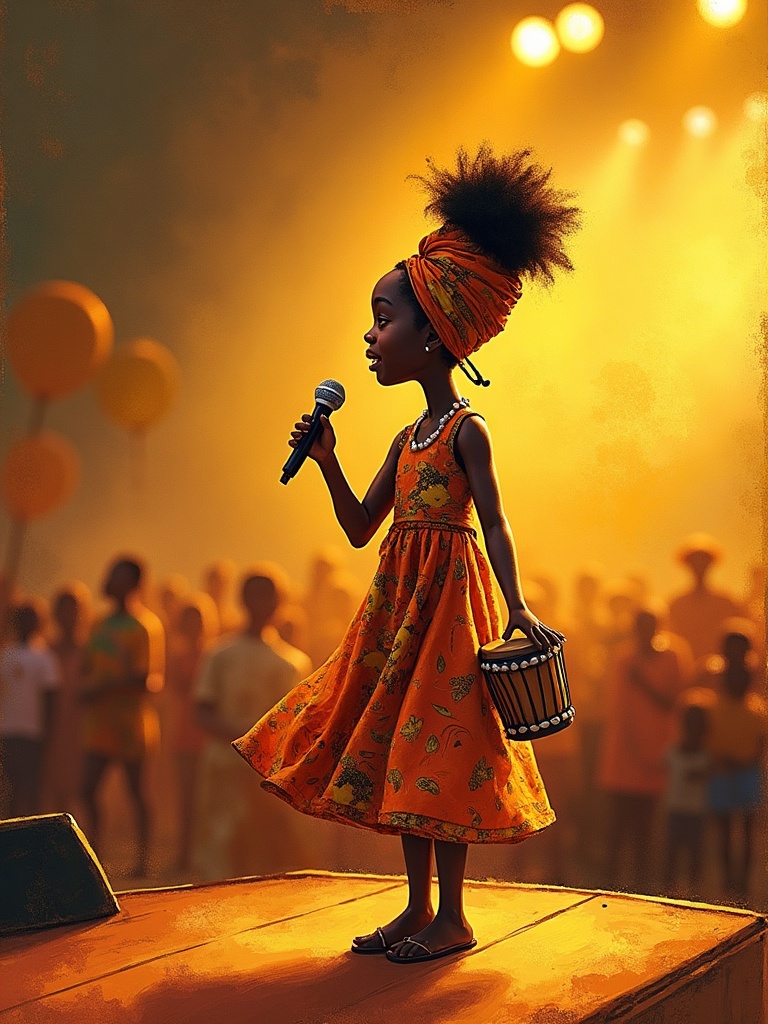
Pick a garment, a hairstyle and a scene, enter the PIN and generate a fresh image of Angélique Kidjo with AI.
⚖ AI homage concept — not a likeness of the real person.
Each image is generated live with fal.ai.
Generated images
No images generated yet — be the first.
Tradition & Origin
Born in Ouidah on the old slave coast and raised in a theatre troupe, Angélique Kidjo fled Benin's Marxist dictatorship for Paris at 23 — and turned five languages and a borderless voice into a bridge between Africa and the world.
- Fon 1
- Yoruba 1
- Gen 1
- French 1
- English 1
Kidjo sings across Fon, Yoruba, Gen, French and English.
DetailsENCumulative Grammy wins, 2008–2022.
DetailsENAngélique Kidjo was born around 1960 in Ouidah, the Beninese port city forever marked by the trans-Atlantic slave trade. Her father was Fon from Ouidah and her mother Yoruba — a doubled heritage she carries into her singing, which moves fluidly between five tongues: Fon, French, Yoruba, Gen (Mina) and English. She grew up inside her mother's theatre company, performing from the age of six, and by her teens was singing in her brothers' band, absorbing everything from Beninese tradition to soul, rumba, makossa and jazz.
In the early 1980s Benin was ruled by a Marxist–Leninist regime that demanded artists record propaganda anthems. Refusing to become a mouthpiece, Kidjo left for Paris in 1983, intending to study law and become a human rights lawyer. Music won. From Paris she built an international career that would eventually make her, in Time's words, "Africa's premier diva" — a label that travels with her to this day.
Her work is explicitly an act of bridge-building: she has reimagined Talking Heads' Remain in Light, paid tribute to Cuban legend Celia Cruz, and collaborated across generations and continents with Bono, Alicia Keys, Yo-Yo Ma and Burna Boy. The recognition is staggering — five Grammy Awards and a Guinness World Record for the most Best Global Music Album wins — yet she ties her fame to a mission rooted back home.
In 2002 she became a UNICEF Goodwill Ambassador, and in 2006 she co-founded the Batonga Foundation to educate the hardest-to-reach adolescent girls in Africa. The name is her own invention — a defiant nonsense word she flung back at classmates who insisted girls did not belong in school. Today that childhood retort is the banner under which she fights so other girls never hear those words at all.
Timeline
- c. 1960Born in Ouidah, Benin, to a Fon father and Yoruba mother.
- 1983Leaves Benin for Paris, where her international career begins to take shape.
- 2002Becomes a UNICEF Goodwill Ambassador.
- 2006Founds the Batonga Foundation for the education of adolescent girls.
- 2008Wins her first Grammy Award for the album Djin Djin.
- 2022Wins her fifth Grammy (Mother Nature), setting a Guinness World Record for most Global Music Album wins.
Did you know?
- "Batonga" is a word Angélique invented as a child — a defiant comeback she threw at classmates and critics who told her girls did not belong in school.DetailsEN
- She was born in Ouidah, a Beninese coastal town that was once a major port of the trans-Atlantic slave trade — the same heritage she has traced and honoured through her music.DetailsEN
- Time magazine crowned her "Africa's premier diva," and in 2021 named her one of the 100 most influential people in the world.DetailsEN
- Her voice is borderless by design — she has reworked Talking Heads' album Remain in Light and collaborated with everyone from Bono and Alicia Keys to Yo-Yo Ma and Burna Boy.DetailsEN
One invented word, flung back at the world — and now a bridge that carries other girls across.
Values & Capabilities
Capabilities
◆◆◆◆◆ shows how central a gift is — five diamonds mark a signature strength, fewer mark a supporting one.
She sings in Fon, Yoruba, Gen, French and English, weaving languages together so a song can travel anywhere.
She blends West African traditions with jazz, funk and global pop so different musics meet as friends.
Five Grammy Awards make her one of Africa's most honoured musicians on the world stage.
Through her Batonga Foundation she opens school doors for African girls who were told they did not belong there.
As a UNICEF Goodwill Ambassador she travels the world to speak up for children's rights.
Development
1 of 4 stages unlocked
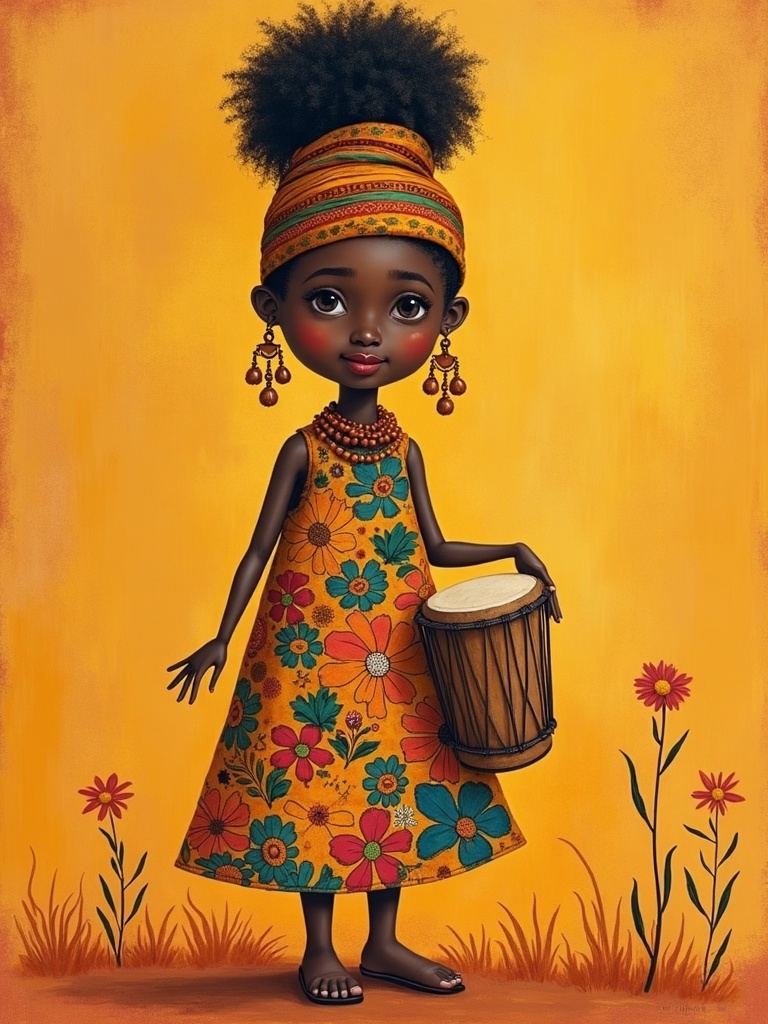
Born in Benin, she sang and danced with her mother's theatre troupe from the age of six, learning that music was a family language.
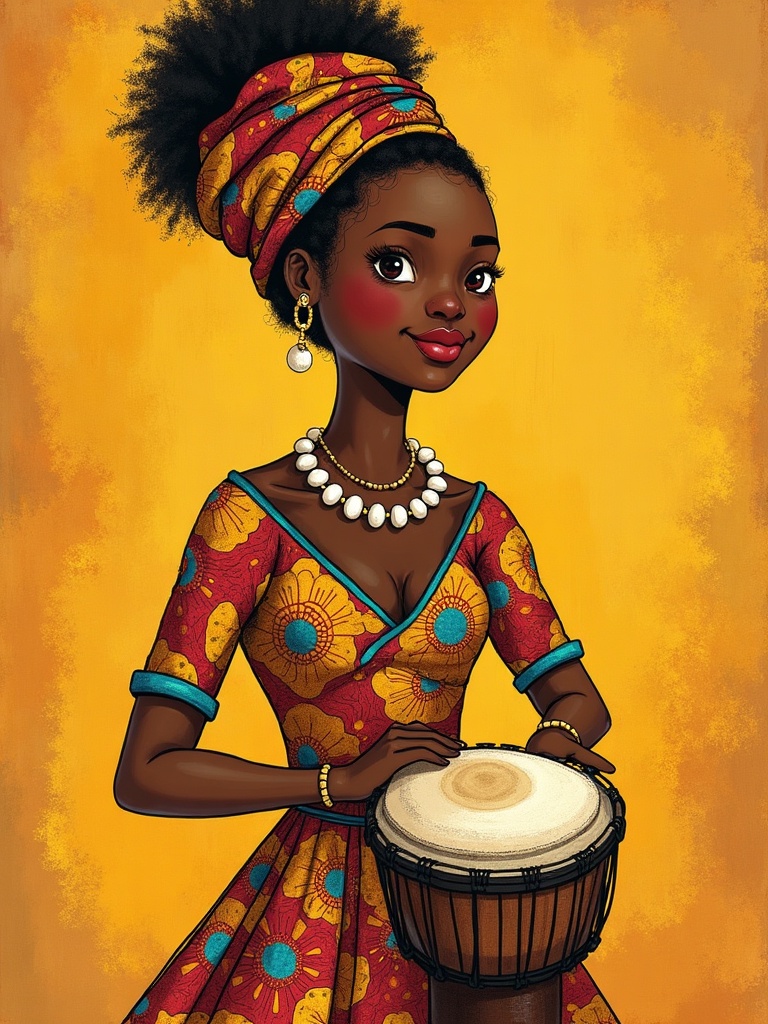
Answer all three to unlock this stage.
Unlock the previous stage first.
Unlock the previous stage first.
Crafting the doll
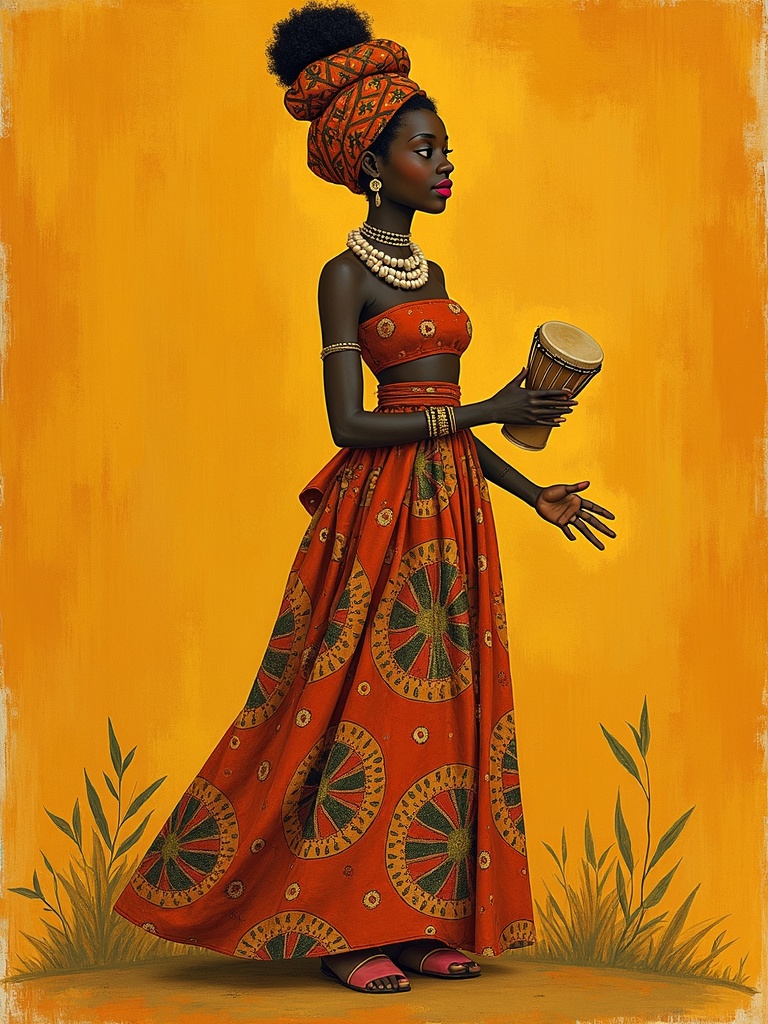
The doll is dressed in the real materials of West African celebration: vibrant Ankara wax-print cotton (a 100% cotton cloth patterned by a wax-resist process so the design reads on both sides) and handwoven aso-oke, the prestige narrow-strip cloth of the Yoruba, tied into a towering gele headwrap. She carries beadwork and cowrie-shell ornaments and a small carved-wood djembe drum with a goat-skin head. The education card explains her five languages, her Grammys and the Batonga Foundation. Sizes: Classic 32 / Kidogo 18–20 / Shule 28. A share of proceeds supports girls' education and African music programmes.
How this doll is made
A respectful homage to Angélique Kidjo's bold, joyful stage style — vibrant West African wax-print and handwoven aso-oke outfits, towering gele headwraps, beadwork and cowrie ornaments, and a small djembe drum — grounded in the material culture of her Fon and Yoruba heritage in Benin and the wider Yoruba world.
- Garments 2
- Accessories 3
- Materials 2
- Techniques 3
Garments
- Ankara wax-print boubouA flowing gown of vibrant Ankara (African wax print) — 100% cotton patterned by a wax-resist process so the bold red, yellow and green design reads on both sides of the cloth, the signature joyful look of West African celebration.DetailsEN
- Aso-oke wrapper & blouse (iro and buba)A prestige ensemble of aso-oke, the Yoruba narrow-strip handwoven cloth shot with metallic threads, worn as a wrapper (iro) and blouse (buba) for ceremony and festivity.DetailsEN
Accessories
- Gele head-tieA tall, sculpted headwrap folded from stiff aso-oke or wax-print cloth; the gele is the Yoruba head-tie worn high and fanned for special occasions, crowning the wearer.DetailsEN
- Cowrie-shell ornamentsNecklaces and ornaments strung with white cowrie shells — a West African symbol of good fortune, prosperity and spiritual power, long used as adornment and currency.DetailsEN
- Glass-bead jewelleryColourful strung glass-bead necklaces and earrings in the West African tradition, paired with the cowries to frame the neck and ears.DetailsEN
Materials
- Wax-print (Ankara) cotton100% cotton cloth dyed by a wax-resist (batik-derived) process, producing vivid double-sided patterns; the everyday and festive fabric of West Africa.DetailsEN
- Djembe wood & goat-skin headA goblet drum carved from a single piece of hardwood with a goat-skin drumhead held by rope tuning — the West African djembe, whose name in Bambara evokes 'everyone gather together in peace.'DetailsEN
Techniques
- Aso-oke narrow-strip weavingLong narrow bands (about four inches wide) are woven on a strip loom, then cut and sewn edge to edge into a full cloth — the centuries-old Yoruba method behind aso-oke, traced to 15th-century Yorubaland.DetailsEN
- Gele head-tyingFolding, pleating and tucking a length of stiff cloth around the head into a sculpted, fanned headwrap — a learned art form in Yoruba and wider West African dress.DetailsEN
- Wax-resist (batik) printingPatterns are made by applying wax to cotton so it resists the dye, then dyeing and removing the wax — the wax-resist process behind Ankara's vivid double-sided prints.DetailsEN
How it's made
Every doll is sewn by hand from natural materials — built to last a lifetime and to be repaired, not replaced. Here is the shopping list and the work steps. Sizes: Classic 32 cm (heirloom) · Kidogo 18–20 cm (toddlers, no small parts) · Shule 28 cm (school edition).
Shopping list
- Natural cotton or linen for the body (skin tone), ~0.5 m
- Wool or cotton stuffing — no plastic
- Cotton thread and embroidery floss in matching colours
- Garment fabric in this doll's colours (see the fabrics above)
- Yarn for the hairstyle
- Beads, cowrie shells and trims as shown
- Sharps and embroidery needles, pins, fabric scissors, fabric marker
Work instructions
- Trace and cut the body pattern at your chosen size (Classic 32 cm / Kidogo 18–20 cm / Shule 28 cm).
- Sew the body pieces right sides together, leave an opening, turn and stuff firmly with natural fibre, then close by hand.
- Embroider the face gently and with dignity — no plastic parts for the toddler line.
- Make the hair from yarn following the chosen hairstyle and attach it securely.
- Cut and sew the garment from this doll's fabric, then dress the doll.
- Add the beadwork, shells, trims and any attribute by hand.
- Check every seam and reinforce it — the doll should be lifelong and repairable, with no loose small parts for small children.
Origin & Ethics
How we know this
Every biographical claim here is documented through reputable public sources (UNICEF, the Recording Academy, Britannica, Wikipedia and her official biography) and the quotes are publicly attributed. This is a homage to a living person, not an authorised or licensed product; her likeness is honoured, not copied, and only verifiable facts and quotes are used.
Because Angélique Kidjo is a living artist, this figure is offered as a respectful educational homage rather than a licensed likeness, made in the spirit of consent of the artist, her family and her foundation. Cultural details were drawn from public museum and cultural sources on Yoruba aso-oke, West African wax print, gele head-tying and the djembe; any production would seek the blessing of the artist's representatives and relevant Beninese and Yoruba cultural voices before release.
Sources
- UNICEF — Angélique Kidjo, Goodwill Ambassador since 2002 (children's rights, girls' education, climate)
- GRAMMY.com / Recording Academy — Angélique Kidjo, GRAMMY Hall of Fame Inspirations (Grammy-winning Beninese artist)
- Encyclopaedia Britannica — Angelique Kidjo biography (born Ouidah, Benin; Fon/Yoruba; Grammys; Batonga)
- Wikipedia — Angélique Kidjo (born Ouidah; sings in Fon, Yoruba, Gen, French, English; five Grammys; UNICEF since 2002; Batonga Foundation)
- Kidjo.com — official biography (career, style, five-time Grammy winner, Batonga Foundation)
- Global Citizen — Angélique Kidjo helping girls become leaders (Batonga Foundation, girls' education)
- Newsweek — Who is Angelique Kidjo, Benin's Grammy Award-Winning Queen?
- Saint Louis Art Museum — Aso Oke: Prestige Cloth from Nigeria (Yoruba handwoven narrow-strip cloth)
- Victoria & Albert Museum — Fabric of the African Diaspora (African wax print / Ankara history)
- Wikipedia — Djembe (rope-tuned, goat-skin goblet drum of West Africa; Bambara 'gather together in peace')
- Michael C. Carlos Museum, Emory — Cash Cowries (cowrie shells in West African culture and adornment)