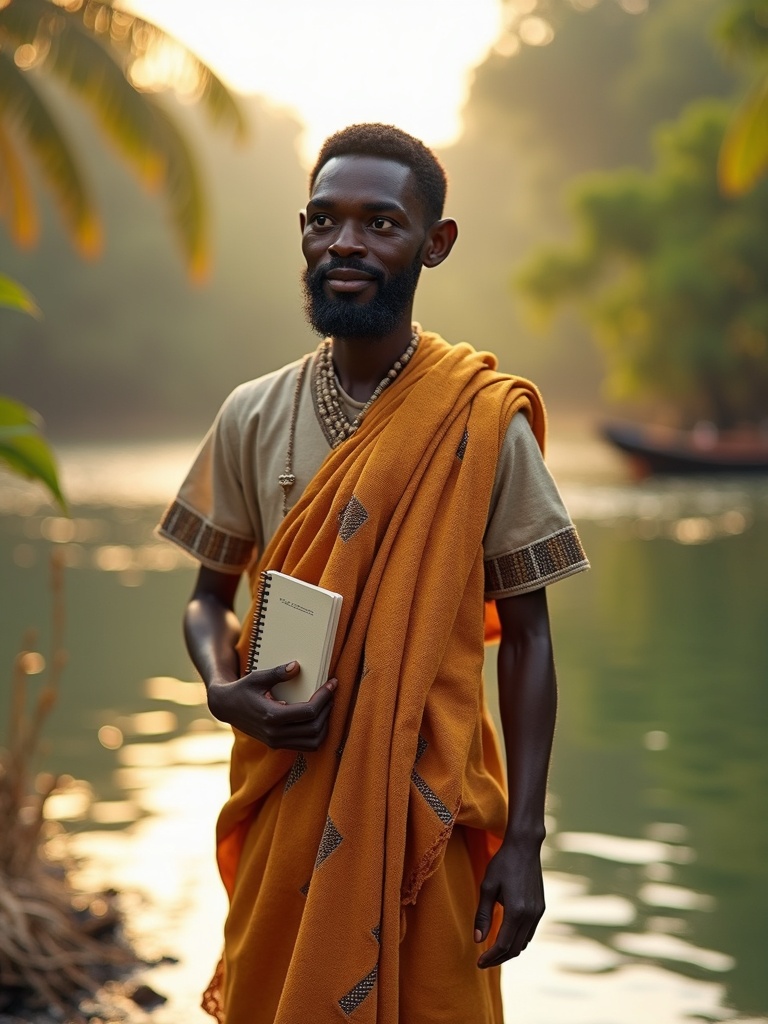
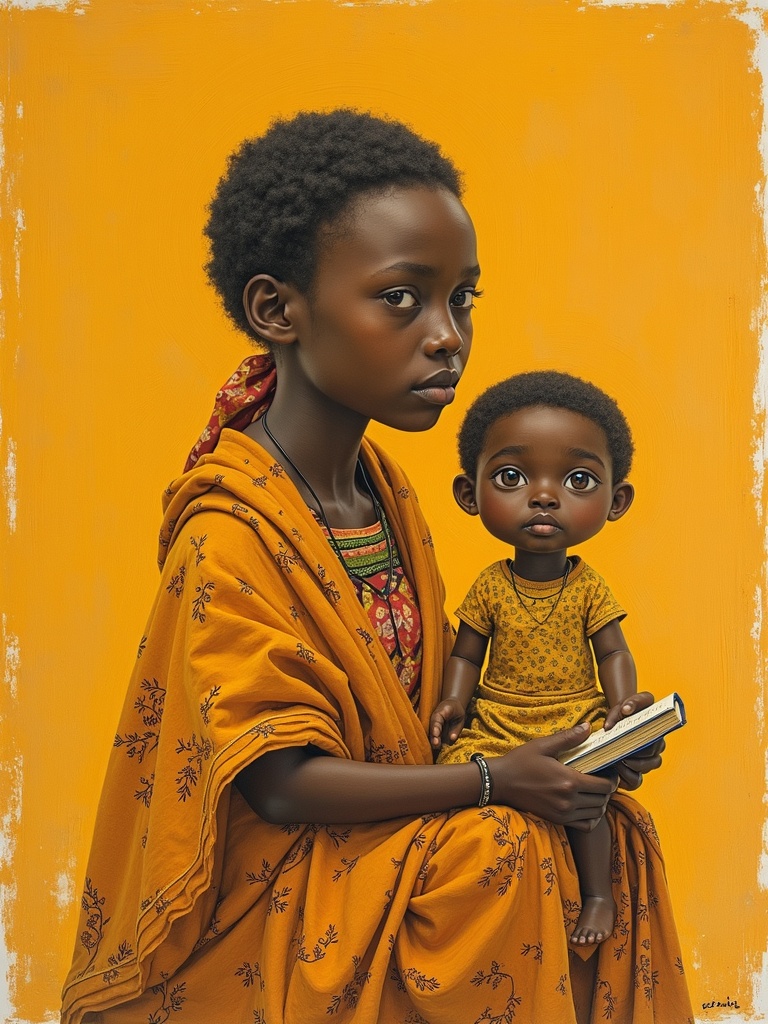
AI design preview — not a photo of the finished handmade doll
Environmental Justice for the Ogoni
Ken Saro-Wiwa
Ken Saro-Wiwa was a storyteller who became the voice of his land — a beloved Nigerian writer who gave his pen to the Ogoni people and their fight for clean rivers, fair treatment, and dignity.
- People
- Ogoni
- Country
- Nigeria
- Region
- West Africa
- Era
- 1941–1995
- Theme
- Environmental Justice for the Ogoni
⚖ A respectful concept
Ken Saro-Wiwa is a recently deceased real person, executed by Nigeria's military government in 1995. This doll is a respectful homage, never an exact likeness, and any words placed in his mouth here are his own documented public quotes with sources. He is honoured with dignity — as a writer, a father, and a peaceful defender of his people and their land — and we never depict his death or any violence. A finished figure honouring him would be made only with the consent of his family and of MOSOP, the movement he founded; this record is a respectful draft, not a finished product.
Make your own
Design your Ken Saro-Wiwa
Pick a garment, a hairstyle and a scene, enter the PIN and generate a fresh image of Ken Saro-Wiwa with AI.
⚖ AI homage concept — not a likeness of the real person.
Each image is generated live with fal.ai.
Generated images
AI design preview — not a photo of the finished handmade doll
No images generated yet — be the first.
Tradition & Origin
Ken Saro-Wiwa was a storyteller who became the voice of his land — a beloved Nigerian writer who gave his pen to the Ogoni people and their fight for clean rivers, fair treatment, and dignity.
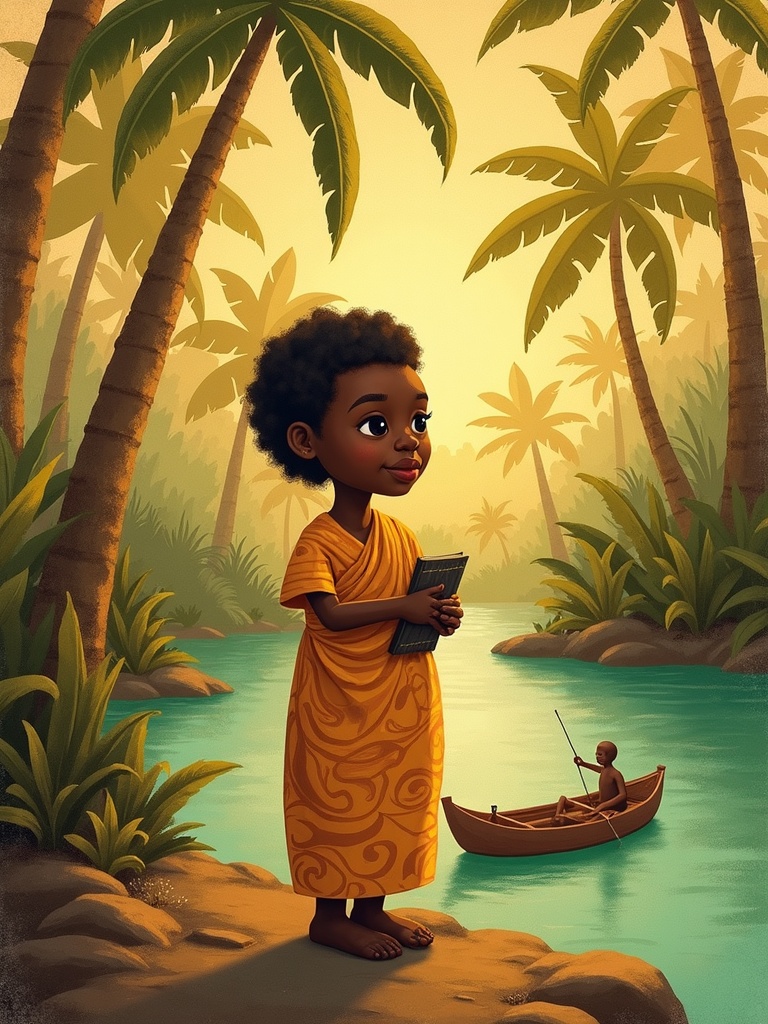
On 4 January 1993, about 300,000 Ogoni marched peacefully — each figure ≈ 30,000 people.
DetailsENKenule Beeson Saro-Wiwa was born on 10 October 1941 in Bori, in the heart of Ogoniland — a small, green homeland of creeks, mangroves and palm farms in the Niger Delta of southern Nigeria. He was a brilliant student, and he grew into one of the country's most loved writers. He wrote the famous war novel Sozaboy in a playful, invented English he called ‘Rotten English’, and he created the funny television series Basi and Company, watched by tens of millions of Nigerians.
But beneath the farms of Ogoniland lay vast fields of oil. For decades, drilling brought spills and pollution to the water and soil the Ogoni depended on, while the people themselves stayed poor. In 1990, Saro-Wiwa helped found the Movement for the Survival of the Ogoni People (MOSOP) and helped write the Ogoni Bill of Rights, which asked for a fair share of the oil wealth, a clean and healthy environment, and a real say over Ogoni affairs.
Saro-Wiwa insisted the struggle be peaceful. On Ogoni Day, 4 January 1993, around 300,000 Ogoni — roughly half of all the Ogoni people — marched calmly together, carrying no weapons, only their voices and their hopes. The world began to listen, and Saro-Wiwa was honoured with the Right Livelihood Award (1994) and the Goldman Environmental Prize (1995).
In 1995, in a trial that observers around the world condemned as deeply unjust, Nigeria's military rulers sentenced Saro-Wiwa and eight other activists, remembered together as the Ogoni Nine. His life ended that year, but his words and his cause did not. Years later, a major United Nations study confirmed the very pollution he had warned of, and the long work of cleaning and healing Ogoniland goes on in his name.
Timeline
- 1941Born Kenule Beeson Saro-Wiwa on 10 October in Bori, in Ogoniland, Niger Delta.
- 1985Publishes the novel Sozaboy and launches the hit TV series Basi and Company.
- 1990Co-founds MOSOP and helps write the Ogoni Bill of Rights.
- 1993On Ogoni Day, 4 January, around 300,000 Ogoni march peacefully for their rights.
- 1994Honoured with the Right Livelihood Award for his nonviolent campaign.
- 1995Awarded the Goldman Environmental Prize; remembered as one of the Ogoni Nine.
Did you know?
- Before he was an activist, Saro-Wiwa was a comedy star: his TV series 'Basi and Company' was one of the most-watched shows in Nigeria, reaching tens of millions of viewers.DetailsEN
- He wrote his famous novel 'Sozaboy' in a language all his own — a mix of pidgin, broken and standard English he called 'Rotten English'.DetailsEN
- Saro-Wiwa believed a writer could never just tell stories: in his words, a writer 'must be actively involved in shaping society's present and its future'.DetailsEN
- Sixteen years after his death, a UN study found wells in one Ogoni community polluted with benzene at over 900 times the safe limit — proof of the very harm he had warned about.DetailsEN
He showed that loving a place can mean speaking for it — quietly, bravely, and never giving up.
Values & Capabilities
Capabilities
◆◆◆◆◆ shows how central a gift is — five diamonds mark a signature strength, fewer mark a supporting one.
A storyteller who turned his pen into a tool for his community, writing books and a TV show loved across Nigeria.
He spoke up for the rivers, farms and fish of Ogoniland when oil pollution was poisoning them.
He led one of Africa's largest peaceful protests — hundreds of thousands of people, and not a single weapon.
He argued that a people whose land gives oil to the world should not be left poor and polluted.
Even when it became dangerous, he refused to stay silent and kept faith that the cause was right.
Development
1 of 5 stages unlocked
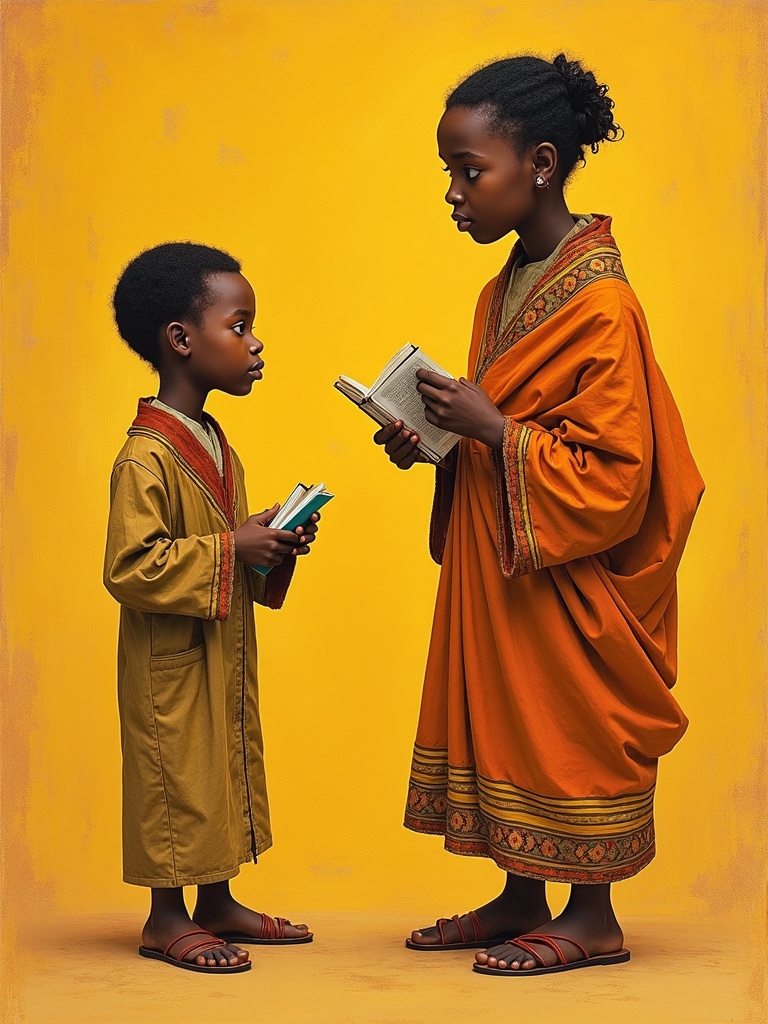
Born in 1941 in Bori, in Ogoniland, he grew up among the creeks, palms and farms of the Niger Delta.
Answer all three to unlock this stage.
Unlock the previous stage first.
Unlock the previous stage first.
Unlock the previous stage first.
Crafting the doll
The doll's main look is built from real southern-Nigerian dress: a wrapper of hand-woven Akwete cloth — a cotton textile woven by women on tall vertical looms in the Niger Delta, patterned with over a hundred traditional motifs — worn with a neat shirt, the everyday formal style of an Ogoni man. Formal looks add an embroidered robe and cap in green and gold, the colours of land and harvest. The signature attribute is a small notebook and a simple (unlit) pipe — the quiet tools of a writer — together with a single green leaf for the living land. The education card explains that this is a respectful homage to a real person, a writer and peaceful activist, never an exact likeness. Sizes Classic 32 / Kidogo 18–20 / Shule 28. A share of proceeds supports environmental and education projects in the Niger Delta.
How this doll is made
A respectful homage to Ken Saro-Wiwa, the Ogoni writer and environmental activist of Nigeria's Niger Delta: his everyday and formal looks honour southern-Nigerian dress — the hand-woven Akwete wrapper, embroidered robes, beads and caps — while his signature attribute is the writer's notebook, a quiet symbol of words as power.
- Garments 3
- Accessories 3
- Materials 2
- Techniques 2
Garments
- Akwete wrapperA wrapper of Akwete cloth, a hand-woven cotton textile from the Niger Delta worn around the waist; patterned with bold geometric motifs, it is the everyday and festival dress of southern Nigerian men and women.DetailsEN
- Embroidered festival robe & capA long embroidered Nigerian robe with a matching cap in green and gold — the dignified dress of an honoured elder for ceremonies and important days.DetailsEN
- Open-collar day shirtA simple modern shirt of the 1980s, the working dress of an author and broadcaster — Saro-Wiwa was a writer and the creator of the TV series Basi and Company.DetailsEN
Accessories
- Writer's notebookA small notebook held in the hand — the signature tool of a storyteller and journalist, and the simplest sign that this doll is, above all, a writer.DetailsEN
- Beads of statusStrings of beads, an essential part of Niger-Delta men's and women's dress, signifying status and a place in the community.DetailsEN
- Green leaf of the landA single green leaf carried in the hand — a gentle emblem of the living farms, mangroves and creeks of Ogoniland that he fought to protect.DetailsEN
Materials
- Cotton (Akwete thread)Cotton (historically with sisal and raffia) is the thread of Akwete cloth — spun and woven into the wrapper that forms the doll's main outfit.DetailsEN
- Carved woodWood is the heart of Ogoni art: carvers make masks, figures and ornate headdresses, a craft used here only as a small carved emblem on the doll's stand.DetailsEN
Techniques
- Vertical-loom weavingAkwete cloth is woven by women on a tall upright (vertical) loom, building motifs row by row over up to three days — a slow, skilled handcraft of the Niger Delta.DetailsEN
- Robe embroideryThe festival robe and cap are decorated with hand or machine embroidery around the neckline and chest, a stitched-thread craft common to formal Nigerian dress.DetailsEN
How it's made
Every doll is sewn by hand from natural materials — built to last a lifetime and to be repaired, not replaced. Here is the shopping list and the work steps. Sizes: Classic 32 cm (heirloom) · Kidogo 18–20 cm (toddlers, no small parts) · Shule 28 cm (school edition).
Shopping list
- Natural cotton or linen for the body (skin tone), ~0.5 m
- Wool or cotton stuffing — no plastic
- Cotton thread and embroidery floss in matching colours
- Garment fabric in this doll's colours (see the fabrics above)
- Yarn for the hairstyle
- Beads, cowrie shells and trims as shown
- Sharps and embroidery needles, pins, fabric scissors, fabric marker
Work instructions
- Trace and cut the body pattern at your chosen size (Classic 32 cm / Kidogo 18–20 cm / Shule 28 cm).
- Sew the body pieces right sides together, leave an opening, turn and stuff firmly with natural fibre, then close by hand.
- Embroider the face gently and with dignity — no plastic parts for the toddler line.
- Make the hair from yarn following the chosen hairstyle and attach it securely.
- Cut and sew the garment from this doll's fabric, then dress the doll.
- Add the beadwork, shells, trims and any attribute by hand.
- Check every seam and reinforce it — the doll should be lifelong and repairable, with no loose small parts for small children.
Origin & Ethics
How we know this
This record is well documented: Saro-Wiwa's birth (10 October 1941, Bori), his literary work (Sozaboy, Basi and Company), the founding of MOSOP (1990) and the Ogoni Bill of Rights, the peaceful Ogoni Day march of 4 January 1993, the 1994 Right Livelihood Award, the 1995 Goldman Environmental Prize, and his death in 1995 with the Ogoni Nine are all verified by reputable institutional sources. All quoted words come from his documented public statements. For children we deliberately do not describe his execution or any violence; this is an editorial choice, not a gap in the record.
Because Ken Saro-Wiwa is a recently deceased real person, any finished figure honouring him would be produced only with the consent of his family and of MOSOP, the movement he co-founded and led. Cultural elements — especially the hand-woven Akwete cloth and Ogoni motifs — would be represented with guidance from Niger-Delta cultural advisors so the textiles and symbols are shown with respect and accuracy. This record is a respectful draft for review, not a finished product.
Sources
- Wikipedia, Ken Saro-Wiwa
- Encyclopaedia Britannica, Ken Saro-Wiwa
- Goldman Environmental Prize, Ken Saro-Wiwa (1995 recipient)
- Right Livelihood, Ken Saro-Wiwa / MOSOP (1994 Laureate)
- Wikipedia, Ogoni Nine
- Corporate Accountability Lab, Nothing About Us Without Us: The Ogoni Demand Environmental Justice
- African Literature Association, 1994 Fonlon-Nichols Award: Ken Saro-Wiwa
- Open Country Mag, Remembering the Speech Ken Saro-Wiwa Wasn't Allowed to Read
- Wikipedia, Ogoni people
- Wikipedia, Akwete cloth
- UN Environment Programme, Environmental Assessment of Ogoniland (2011)