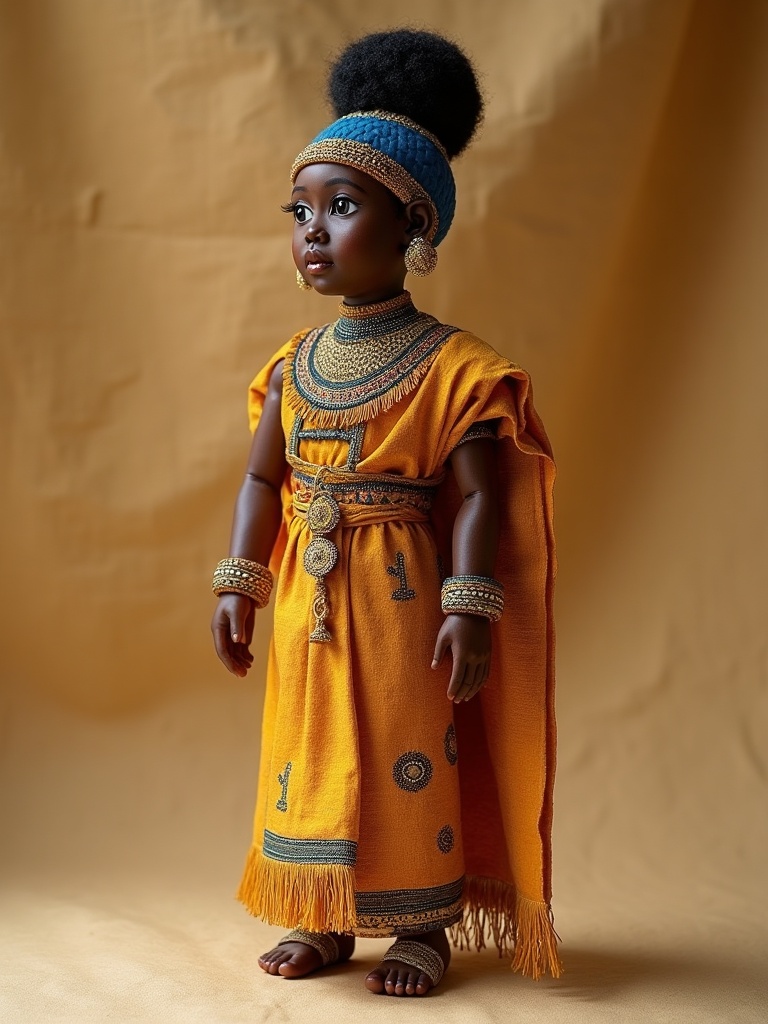
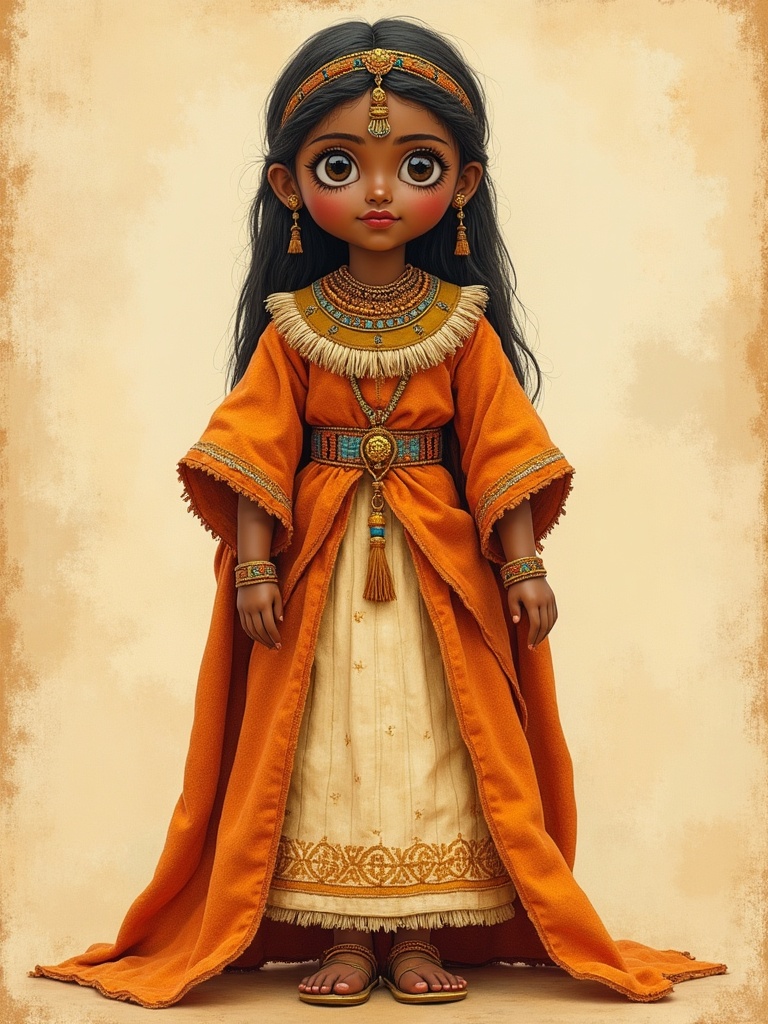
AI design preview — not a photo of the finished handmade doll
Indomabilidad
Amanirenas
Amanirenas — the one-eyed warrior queen of Kush — is the African ruler who fought Augustus's Rome to a standstill and buried the emperor's bronze head beneath a temple floor so her people would trample him forever.
- People
- Kusch
- Country
- Sudan/Nubia
- Region
- North Africa
- Era
- ≈40–10 BCE
- Theme
- Indomabilidad
Make your own
Design your Amanirenas
Pick a garment, a hairstyle and a scene, enter the PIN and generate a fresh image of Amanirenas with AI.
Each image is generated live with fal.ai.
Generated images
AI design preview — not a photo of the finished handmade doll
No images generated yet — be the first.
Tradition & Origin
Amanirenas — the one-eyed warrior queen of Kush — is the African ruler who fought Augustus's Rome to a standstill and buried the emperor's bronze head beneath a temple floor so her people would trample him forever.
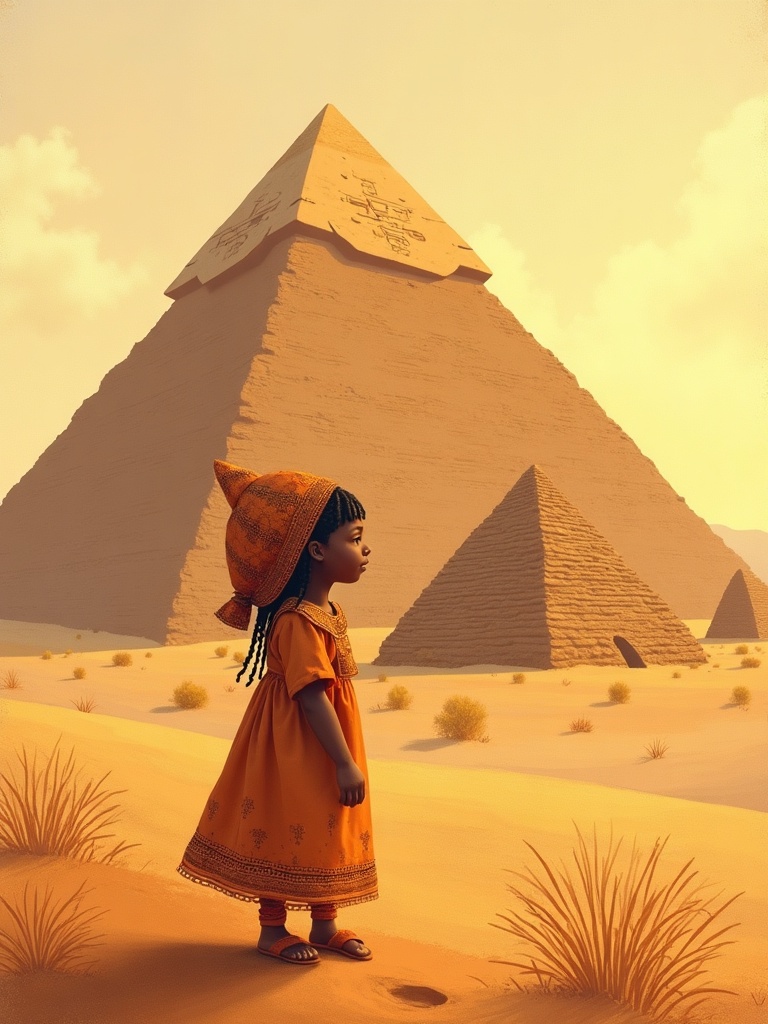
Su guerra contra Augusto duró unos cinco años y no terminó en conquista sino en un tratado tan favorable que la paz se mantuvo durante unos tres siglos.
DetailsENAmanirenas reinó sobre el Reino de Kush desde su capital en Meroë, en lo que hoy es Sudán, aproximadamente del 40 al 10 BCE. Sus inscripciones la nombran con dos títulos a la vez — qore (gobernante) y kandake (el título real meroítico que los griegos transcribieron como «Candace») — lo que la distingue como una soberana por derecho propio y no como la consorte de un rey.
Después de que Roma anexara Egipto tras la Batalla de Actium, estalló un conflicto en la frontera sur en lo que los historiadores llaman la Guerra Meroítica (c. 27–22 BCE). Mientras el prefecto romano hacía campaña en Arabia, las fuerzas kushitas al mando de Amanirenas atacaron hacia el norte y saquearon Syene (Aswan), Elephantine y Philae, tomando cautivos y derribando estatuas de Augusto. Roma contraatacó al mando del prefecto Gaius Petronius, hizo retroceder a los kushitas y saqueó Napata — pero Amanirenas se negó a someterse y siguió luchando.
El antiguo geógrafo Strabo — una fuente del lado romano — la describió como «una mujer de aspecto masculino, y ciega de un ojo», origen de su perdurable fama como la reina tuerta; la herida la relata Strabo y no está documentada de forma independiente. La guerra no terminó en conquista sino en negociación: un tratado de paz concluido alrededor del 21/20 BCE (vinculado por las fuentes a conversaciones alcanzadas a través de la isla de Samos, donde Augusto pasó luego el invierno) en términos notablemente favorables para Kush — sin que se impusieran tributos ni impuestos y con una frontera fijada a favor de Kush. La paz se mantuvo durante unos tres siglos.
Su acto de desafío más célebre es arqueológico. Una cabeza de bronce de Augusto de tamaño mayor que el natural, arrancada de una estatua saqueada, fue llevada a casa y enterrada bajo los escalones del umbral de un templo en Meroë — para que cada fiel pisara el rostro del emperador romano. Redescubierta en 1910, la Cabeza de Meroë (con sus ojos de vidrio y calcita inquietantemente conservados) se encuentra hoy en el British Museum, un monumento deliberado a la indomabilidad.
Timeline
- ~40 v. Chr.Amanirenas wird Kandake (herrschende Königin) von Kusch, Hauptstadt Meroë.
- 30 v. Chr.Rom erobert Ägypten und drängt nach Süden; Steuerforderungen an Kusch.
- 27/25 v. Chr.Kuschiten erobern Syene, Philae, Elephantine; der Augustus-Kopf wird abgetrennt und nach Meroë gebracht.
- 25–22 v. Chr.Mehrjähriger Krieg; in einer Schlacht verliert Amanirenas ein Auge; ihr Sohn Akinidad fällt vermutlich.
- ~21/20 v. Chr.Friedensverhandlungen: Rom zieht ab und erlässt alle Tribute — ein Sieg für Kusch.
- ~10 v. Chr.Amanirenas stirbt nach Jahren des Friedens; bestattet bei Jebel Barkal.
Did you know?
- Mientras el prefecto de Roma estaba ausente en Arabia, las fuerzas de Amanirenas saquearon el Egipto romano y capturaron Syene, Elephantine y Philae, derribando estatuas de Augusto.DetailsEN
- El geógrafo romano Strabo la describió como «una mujer de aspecto masculino, y ciega de un ojo» — el origen de su fama de reina tuerta.DetailsEN
- Enterró la cabeza de bronce arrancada de una estatua de Augusto bajo los escalones de un templo en Meroë para que los visitantes pisaran para siempre el rostro del emperador romano.DetailsEN
- La Cabeza de Meroë, saqueada del Egipto romano y redescubierta en 1910 con sus ojos de vidrio y calcita intactos, es hoy el objeto 1911,0901.1 del British Museum.DetailsEN
She lost an eye, but never the war of will — and made an emperor's likeness a doormat for eternity.
Values & Capabilities
Capabilities
◆◆◆◆◆ shows how central a gift is — five diamonds mark a signature strength, fewer mark a supporting one.
Su mayor hazaña: ponerle un límite al imperio más poderoso del mundo, y mantenerlo. En el juego: quien tenga a Amanirenas puede «detener» una vez a un oponente abrumador, por muy fuerte que sea.
Perdió un ojo en batalla, y siguió luchando con aún más valentía. Enseña a los niños: una herida, un defecto, una pérdida no te hace más débil; puede hacerte más fuerte.
Atacó justo cuando las tropas de Rome se habían retirado: la elección inteligente del momento vence a la fuerza bruta. Enseña: observa, espera, actúa en el momento justo.
No solo luchó: negoció la victoria en la mesa. Convirtió un punto muerto militar en un éxito político. Enseña: la fuerza y la sabiduría van juntas.
Ihr Reich Meroë war ein Zentrum der Eisenverhüttung — die Quelle seiner Stärke. Sie steht für Erfindergeist und Handwerk, das bis heute in sudanesische Metallkunst nachwirkt.
Development
1 of 3 stages unlocked
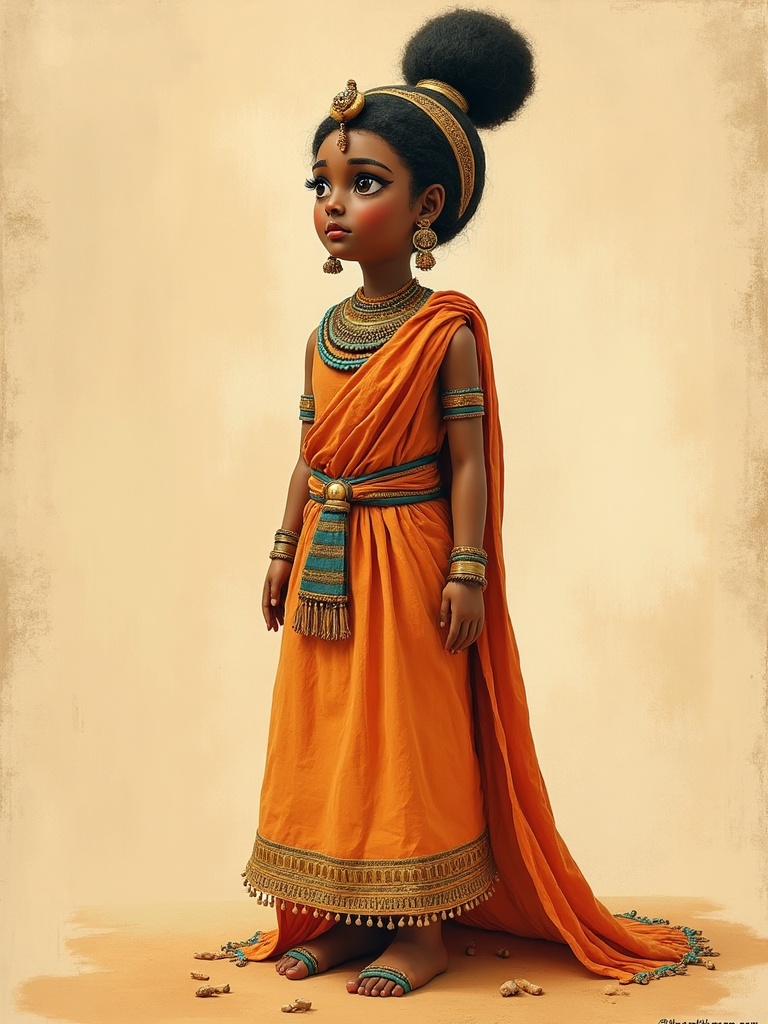
Amanirenas como joven princesa en la corte: aprendiendo el hierro, el arco y el ceremonial cortesano, curiosa y fuerte. Sencilla vestimenta nubia. Don: Hija del Hierro.[6]
Answer all three to unlock this stage.
Unlock the previous stage first.
Crafting the doll
Telas y notas de confección
Fibras naturales auténticas, elaboración honesta, reparabilidad de por vida — y en Amanirenas un lenguaje de materiales propio, kushita: collar de cuentas y eco del hierro.
La lista de materiales
El atuendo: paño envolvente nubio y collar de cuentas
Amanirenas lleva un atuendo envuelto de 100 % algodón/lino en rojo desierto, oro arena y verde Nilo, además del característico ancho collar de cuentas (kushita, no egipcio) y una faja con flecos. Joyas de cuentas de vidrio/madera y tono latón (evocación del oro y el marfil), cosidas de forma segura para los niños. Importante para el briefing de las costureras: formas kushitas, no faraónico-egipcias.
Atributos distintivos: venda en el ojo, arco, león
Sus señas de identidad: una digna Venda de tela para el ojo (cosida de forma fija, desmontable solo en la variante de coleccionista), un pequeño Arco con flechas de madera/fieltro (sin punta, seguro para niños) y, opcionalmente, unLeón de fieltro (Apedemak). Sin piezas pequeñas que puedan tragarse en la línea escolar/infantil; sin puntas de flecha afiladas.
Firma y tarjeta educativa
Bordado en el dobladillo: «Amanirenas» y el nombre de la costurera. Se adjunta una Tarjeta biográfica con fechas de su vida, la historia de la cabeza de Meroë y — algo especialmente bonito — una pequeña línea en escritura meroítica con explicación (la escritura antigua propia de África). Opcionalmente, un hilo con QR que lleva a la página de su historia.
Niveles de elaboración y esfuerzo
Túnica de envolver, collar de cuentas, venda para el ojo, arco, tarjeta biográfica con una línea en escritura meroítica. La figura de coleccionista y modelo de referencia.
Túnica simplificada, collar de cuentas estampado, venda para el ojo. Una opción de entrada económica.
Lavable, costuras reforzadas, atributos resistentes. Con tarjeta para la clase de historia (Kush y Meroë).
How this doll is made
Amanirenas was a Kandake (ruling warrior queen) of the Kingdom of Kush, who reigned from Meroe around 40-10 BCE and fought Rome to a standstill. Her look should be grounded in distinctly Meroitic royal material culture: draped fringed cotton robes, heavy faience and glass beadwork, broad collars, and goldsmith's work in granulation and enamel, paired with Kushite regalia tied to the gods Amun and the lion-headed war god Apedemak.
- Garments 3
- Accessories 5
- Materials 1
- Techniques 3
Garments
- Draped fringed shawl-robeA large shawl wrapped around the body below the armpits or around the hips, with a second shawl over it that could be fringed or woven with stripes; cotton was the dominant fabric in Meroitic burials. This wrapped, draped silhouette (not a fitted Egyptian sheath) is the core of the kandake's dress.DetailsEN
- Royal coat, sash and tasselled cordOver the robe, Meroitic royal women wore a fitted coat or cloak with a sash and a tasselled cord, the fastening knot often shaped as a couchant (resting) animal - a symbol of royalty. A small tab-like element, the 'little tail,' hangs below the hem to the ground.DetailsEN
- Tasselled scarf and broad collar over fitted dressReliefs of Kushite queens such as Amanishakheto show fitted clothing worn with a scarf finished with a tassel, a broad collar across the chest, and a rounded wig; queens are shown fuller-figured than the slim goddess figures beside them.DetailsEN
Accessories
- Meroitic broad bead collarA wide collar built from many small faience and glass beads strung in dense rows, worn across the chest. In Meroitic assemblages faience makes up roughly half the beads and glass about a quarter, with carnelian a favoured semiprecious stone.DetailsEN
- Gold signet and shield ringsMeroitic queens wore quantities of heavy gold rings: the treasure of Kandake Amanishakheto from her Meroe pyramid included bracelets, nine shield-rings and sixty-seven signet rings. One shield-ring is sheet gold decorated with gold wire, attached granules and fused glass.DetailsEN
- Gold armlets with figures of the godsBroad gold armlets worn on the upper arm carried religious imagery; a gold armlet from Amanishakheto's treasure is decorated with mummiform gods, marking the wearer's link to the divine and to royal power.DetailsEN
- Ram's-head amulet of AmunA gold pendant amulet in the form of a ram's head, an emblem of the god Amun who was especially revered in Nubia; such finely detailed amulets were worn at the throat as protective royal jewellery. Apedemak, the lion-headed Meroitic war god, was the other key royal deity and a suitable motif for a warrior queen.DetailsEN
- Kushite crown with uraei and vulture headA close-fitting Kushite skullcap crown carrying a diadem with rearing cobras (uraei) and a vulture head at the front; Meroitic queens also wore superstructures of cow's horns and a sun disc. The lion-headed uraeus marks specifically Kushite (not Egyptian) royal identity.DetailsEN
Materials
- Cotton, gold, faience and glassThe palette of materials: locally grown cotton for the robes (the most common Meroitic fabric); gold for crowns, rings, armlets and amulets; quartz-based faience and coloured glass for beads; and carnelian for accents. Faience and glass beads were Nubian-made products by the late Meroitic period.DetailsEN
Techniques
- Meroitic cotton weaving with fringes and openworkCloth was woven from spun cotton; signature Meroitic techniques include open-work decorative borders (lattice-like patterns at the hems), pile weave, and bright dyeing, with tapestry and embroidery used for patterned bands. Long fringes finished the edges of robes and shrouds.DetailsEN
- Goldsmithing: granulation, filigree and enamelMeroe goldsmiths fashioned jewellery with filigree (fine wirework), granulation (decoration with tiny fused gold spheres), and enamelling, in which powdered glass was applied to metal and melted to make colourful patterns; fused-glass inlay also set into sheet-gold rings.DetailsEN
- Faience and glass bead makingBeads were made from faience (a glazed quartz-based ceramic) and from coloured glass, then strung in long multi-strand arrangements to form broad collars and necklaces; carnelian and Red Sea shells were added as accents. This bead production continued in Nubia after it had ceased in Egypt.DetailsEN
How it's made
Every doll is sewn by hand from natural materials — built to last a lifetime and to be repaired, not replaced. Here is the shopping list and the work steps. Sizes: Classic 32 cm (heirloom) · Kidogo 18–20 cm (toddlers, no small parts) · Shule 28 cm (school edition).
Shopping list
- Natural cotton or linen for the body (skin tone), ~0.5 m
- Wool or cotton stuffing — no plastic
- Cotton thread and embroidery floss in matching colours
- Garment fabric in this doll's colours (see the fabrics above)
- Yarn for the hairstyle
- Beads, cowrie shells and trims as shown
- Sharps and embroidery needles, pins, fabric scissors, fabric marker
Work instructions
- Trace and cut the body pattern at your chosen size (Classic 32 cm / Kidogo 18–20 cm / Shule 28 cm).
- Sew the body pieces right sides together, leave an opening, turn and stuff firmly with natural fibre, then close by hand.
- Embroider the face gently and with dignity — no plastic parts for the toddler line.
- Make the hair from yarn following the chosen hairstyle and attach it securely.
- Cut and sew the garment from this doll's fabric, then dress the doll.
- Add the beadwork, shells, trims and any attribute by hand.
- Check every seam and reinforce it — the doll should be lifelong and repairable, with no loose small parts for small children.
Diez Sugerencias de nombres
El nombre verdadero se conserva. Estos diez nombres — cushita/nubio así como modernos sudaneses — son adecuados para figuras acompañantes, otras Kandakes o la serie en torno a Amanirenas. A confirmar con fuentes sudanés-nubias antes de su uso.
Honestidad sobre la lengua: el meroítico sigue hasta hoy solo parcialmente descifrado — La pronunciación y el significado de muchos nombres son inciertos. Las grafías siguen la investigación habitual; las instancias nubio-sudanesas tienen la última palabra.
Origin & Ethics
How we know this
Sobre la honestidad: Amanirenas está históricamente atestiguada (a través de autores grecorromanos como Strabo y Cassius Dio, la cabeza de Meroë e inscripciones), pero el registro de fuentes es más escaso que el de figuras más recientes: muchos detalles están reconstruidos, y la escritura meroítica sigue estando solo parcialmente descifrada hasta el día de hoy (de ahí ★★★★☆ en lugar de ★★★★★). Las cifras concretas y el curso exacto de los acontecimientos varían de una fuente a otra. La cita de las «flechas de oro» es una tradición popular parafraseada, no una cita textual verificada. Kush también fue una sociedad esclavista de su época, y esto no se disimula. Las «capacidades» y las «etapas de la vida» traducen lo documentado a un formato de cromos coleccionables. Dado que Meroë es Patrimonio de la Humanidad de la UNESCO y el legado pertenece a las comunidades nubio-sudanesas actuales, la aprobación final recae en las autoridades culturales y de investigación sudanesas.
Aprobación de los Ancianos y fuentes para observar
En el caso de una figura de la Antigüedad remota, la aprobación cambia de forma: no existen instituciones de descendientes directos como una casa real, pero sí hay guardianes del legado — comunidades sudanesas y nubias, arqueólogos y museos. Y una particularidad: mucho es incierto (el meroítico apenas está descifrado), lo que exige humildad.
El comité de aprobación
El protocolo de cinco fases
Kontakt über offizielle Kanäle (sudanesisches Antikenwesen, Sudan National Museum, UNESCO-Welterbe Meroë, Meroitistik-Institute). Vorstellung von Vision, 42 %-Regel, Vetorecht.
Dieses Kompendium als Entwurf übergeben — besonders die kuschitische (nicht ägyptische) Darstellung, die Augenbinde und die meroitische Schriftzeile zur Prüfung.
Kulturstellen für die Figur, Nubier für Würde/Selbstbild, Meroitistik für Schrift & Fakten, Handwerk für Material.
Schriftliche Freigabe pro Element. Wo die Forschung unsicher ist (Meroitisch), wird das offen gekennzeichnet statt erfunden.
Nubisches Handwerk & Gemeinschaftskassen werden beteiligt; ein Teil des Erlöses unterstützt den Schutz der Welterbestätte Meroë & die nubische Kulturarbeit.
Heikelste Felder: die kuschitische statt ägyptische Darstellung (kein Pharaonen-Klischee), die würdevolle Augenbinde (Mut, nicht Schrecken), die ehrliche Kennzeichnung von Unsicherem (Meroitisch unentziffert) und der sensible Umgang damit, dass auch Kusch eine Sklavenhalter-Gesellschaft seiner Zeit war.
Quellen zum Beobachten
Sources
- Amanirenas, Kandake von Kusch (Herrschaft ~40–10 v. Chr.), Hauptstadt Meroë; Kusch als reiche Niltal-Zivilisation. ancient-origins.net: The One-Eyed African Queen; en.wikipedia.org: Amanirenas.
- Krieg gegen Rom 25–22 v. Chr.; ~30.000 Kämpfer; Eroberung von Syene/Philae/Elephantine während des römischen Arabien-Feldzugs; Rom gewährte am Ende günstige Bedingungen. history.com: The Nubian Queen Who Fought Back; feelnubia.org.uk.
- Voller Titel „qore li kdwe li" (eigenständig herrschende Königin); Meroë-Kopf 1910 von Garstang gefunden, Augen erhalten, heute Brit. Museum; Tempel der Victoria. originalpeople.org: Queen Amanirenas; en.wikipedia.org.
- Tod ihres Mannes Teriteqas früh im Krieg; Amanirenas & Sohn Akinidad führen weiter; Augustus-Kopf unter dem Eingang vergraben. blackpast.org: Kandake Amanirenas.
- Goldene Pfeile als Ultimatum an Augustus; Friedensverhandlungen (Augustus auf Samos), Rom zieht ab & erlässt Tribute; 11 Jahre Frieden, Bestattung in Jebel Barkal; Pyramidenkapelle mit Bogen/Pfeilen/Speer. harkaroundthegreats.wordpress.com; feelnubia.org.uk.
- Meroë als Zentrum von Handel & Eisenverhüttung; Gold, Eisen, Elfenbein; Eisenwissen wirkt in moderne sudanesische Metallkunst nach. ebsco.com: Meroitic Empire; schoolhistory.co.uk: Kingdom of Kush.
- Kandake-Tradition mächtiger, eigenständig herrschender Königinnen; matrilineare Züge; löwenköpfiger Gott Apedemak; meroitische Schrift (ab ~300 v. Chr., teils unentziffert). history.com; ebsco.com; worldhistory.org: Meroë.
- (Kontext: Meroë als UNESCO-Welterbe; steile nubische Pyramiden, eigener Baustil.) sciencenewstoday.org: Ancient Nubia; artsexperiments.withgoogle.com: Pyramids of Meroë.
- „Die einäugige Candace": Augenverlust in der Schlacht, von Petronius/Strabo überliefert; Verhandlungen ab 24 v. Chr. in Dakka. ancient-origins.net: Prince Akinidad and the One-Eyed Kandake.
- Wikipedia, Amanirenas - title qore/kandake, war with Rome 25-22 BCE, the buried Meroe Head of Augustus, Hamadab stela
- Wikipedia, Amanishakheto - gold treasure (shield rings, signet rings, amulets, granulation, fused glass), royal costume on reliefs
- Wikipedia, Kandake - wrapped shawl/cloak dress, fringed second shawl, sash, tasselled cord, 'little tail' tab
- Wikipedia, Monumental depictions of Amanitore - Kushite skullcap crown, uraei, vulture head, cow horns and sun disc, bare-breasted depiction
- Wikipedia, Apedemak - Meroitic lion-headed war god, link to Amun, royal investiture at Naqa
- Getty, Nubia: Jewels of Ancient Sudan (Explore) - materials (gold, cornelian, faience, glass), filigree, granulation, enamelling, amulets
- Getty, Nubia: Jewels of Ancient Sudan (main) - exhibition overview, gold-with-enamel objects, periods ~270 BC-AD 50
- World History Encyclopedia, Armlet with Mummiform Gods from Meroe - gold armlet from Amanishakheto's treasure, body adornment
- University of Copenhagen, Centre for Textile Research - TexMeroe project: cotton, open-work borders, pile weave, dyeing, spinning and weaving
- Yvanez et al., Meroitic Beadwork: an overview based on finds from Sai in ancient Nubia (scholarly PDF) - faience and glass bead proportions, broad collars
- Springer, Unravelling the Threads of the Nubian Openworks - unique Meroitic openwork cotton textile tradition c. 350 BCE-350 CE
- Academia.edu, Cotton in ancient Sudan and Nubia (Yvanez and Wozniak) - cotton as dominant Meroitic fabric, archaeological sources