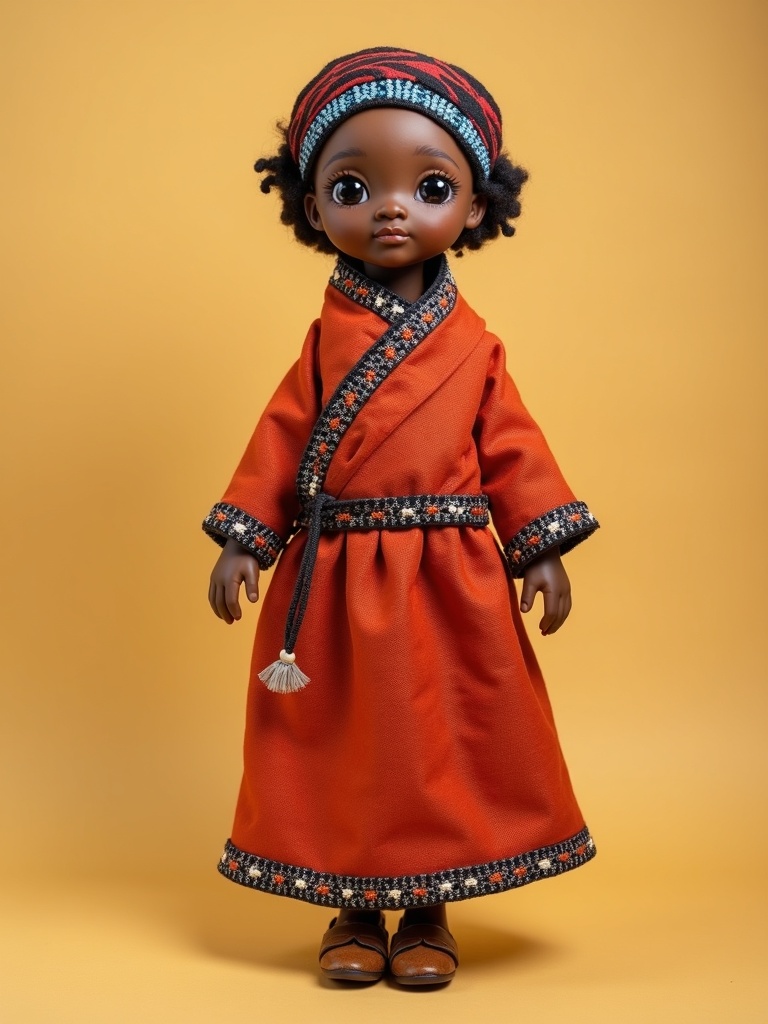
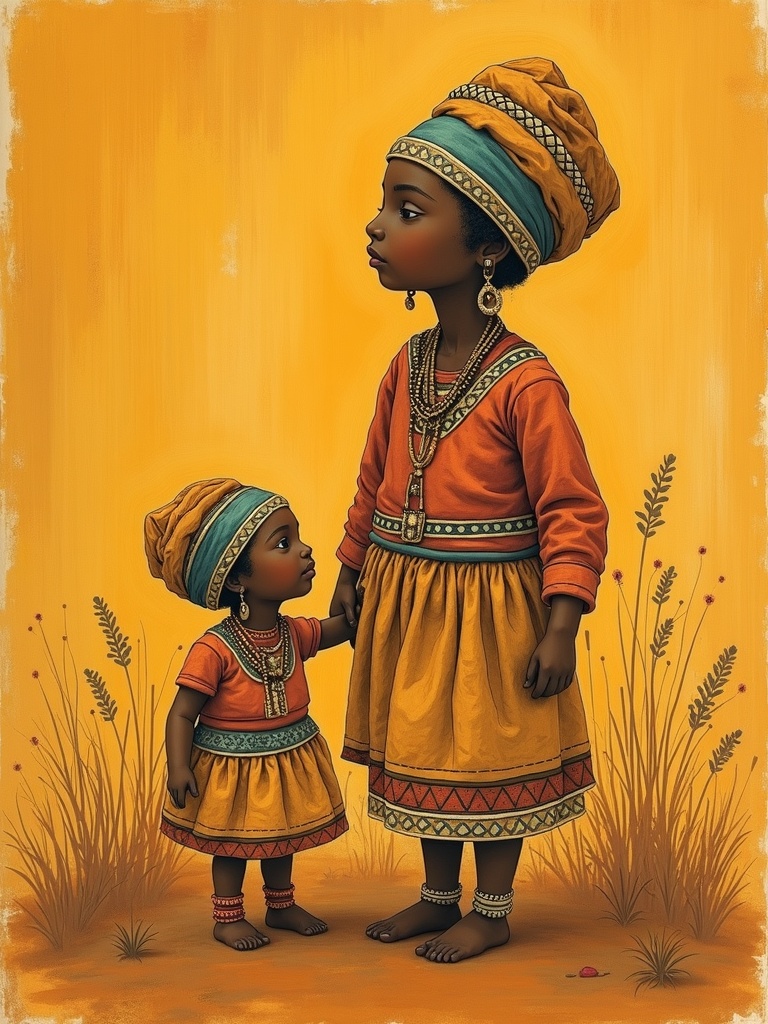
AI design preview — not a photo of the finished handmade doll
Mother of the Nation
Albertina Sisulu
She trained her hands to deliver babies — then spent the rest of her life delivering a nation. Born Nontsikelelo Thethiwe in a Transkei village in 1918, Albertina Sisulu became the nurse and freedom leader South Africans simply called Ma Sisulu, a mother of the nation.
- People
- Xhosa
- Country
- South Africa
- Region
- Southern Africa
- Era
- 1918–2011
- Theme
- Mother of the Nation
⚖ A respectful concept
Albertina Sisulu was a real South African leader (1918–2011), affectionately known as Ma Sisulu; this doll is a respectful homage, not an exact likeness, and uses only documented quotes with their sources. Her dignity is honoured throughout — including the honest naming of her detentions and seventeen years of banning — and nothing here depicts violence or suffering. The respectful consent of her family and of the Albertina and Walter Sisulu legacy is implied, alongside the South African national institutions that commemorate her. This is a draft tribute for an educational children's project, not a finished or endorsed product.
Make your own
Design your Albertina Sisulu
Pick a garment, a hairstyle and a scene, enter the PIN and generate a fresh image of Albertina Sisulu with AI.
⚖ AI homage concept — not a likeness of the real person.
Each image is generated live with fal.ai.
Generated images
AI design preview — not a photo of the finished handmade doll
No images generated yet — be the first.
Tradition & Origin
She trained her hands to deliver babies — then spent the rest of her life delivering a nation. Born Nontsikelelo Thethiwe in a Transkei village in 1918, Albertina Sisulu became the nurse and freedom leader South Africans simply called Ma Sisulu, a mother of the nation.
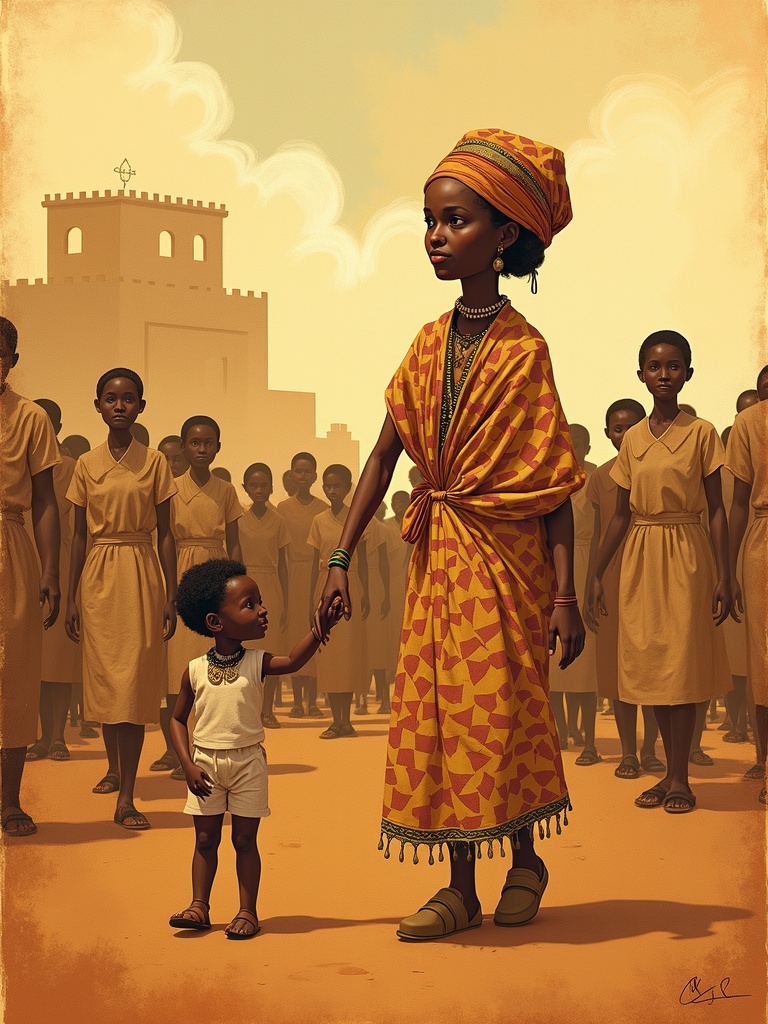
About 20,000 women marched on the Union Buildings against the pass laws — each figure ≈ 2,000 marchers.
DetailsENAlbertina Nontsikelelo Sisulu was born on 21 October 1918 in Camama, in the Tsomo region of the Transkei, into a Xhosa (Mfengu) family. As the eldest girl she helped raise her younger siblings after her father died, before moving to Johannesburg in 1940 to train as a nurse at the city's General Hospital. She qualified as a nurse in 1944 and later as a midwife — a profession of care she would never fully leave, working for over forty years and, late in life, at Dr Abu Baker Asvat's surgery in Soweto.
Her politics began with a marriage. In 1941 she met the young activist Walter Sisulu at the hospital, and they married on 15 July 1944 with Nelson Mandela as best man. She joined the ANC Women's League, helped found the non-racial Federation of South African Women in 1954, and on 9 August 1956 was among roughly 20,000 women who marched on the Union Buildings in Pretoria to refuse the pass laws — a day now marked as South Africa's Women's Day.
The apartheid state answered with detention and silence. On 19 June 1963 she became the first woman held under the 90-Day Detention Law, and from 1964 she lived under banning orders for seventeen years, all while raising five children and an extended household after Walter was sentenced to life in the Rivonia Trial. She never bent. In 1983, while she was again in detention, the United Democratic Front elected her one of its three national co-presidents — leading hundreds of anti-apartheid groups from a cell she could not leave.
When freedom came, she was there for it: a member of South Africa's first democratically elected Parliament in 1994, the woman who formally nominated Nelson Mandela as President. She retired from Parliament in 1999 and died at home on 2 June 2011, aged 92. A grateful country buried her as Ma Sisulu — proof that healing a family and freeing a nation can be one and the same work.
Timeline
- 1918Born Nontsikelelo Thethiwe on 21 October in Camama, Transkei, South Africa.
- 1944Qualifies as a nurse and marries Walter Sisulu, with Nelson Mandela as best man.
- 1956Joins roughly 20,000 women marching on the Union Buildings against the pass laws.
- 1963Becomes the first woman detained under the 90-Day Detention Law.
- 1983Elected, while in detention, a co-president of the United Democratic Front.
- 2011Dies on 2 June, mourned by a nation that called her Ma Sisulu, mother of the nation.
Did you know?
- Nelson Mandela was the best man at Albertina and Walter Sisulu's wedding on 15 July 1944.DetailsEN
- In 1994 Albertina Sisulu was the person who formally nominated Nelson Mandela as South Africa's first post-apartheid President.DetailsEN
- She told the UDF's first anniversary that in all her seventeen banned years she had wished to one day reach 'a gathering that gives me hope that this South Africa, one day, will be a just South Africa for everybody.'DetailsEN
A healer's patience, a mother's courage — the quiet strength that carried a nation to freedom.
Values & Capabilities
Capabilities
◆◆◆◆◆ shows how central a gift is — five diamonds mark a signature strength, fewer mark a supporting one.
She marched with about 20,000 women on the Union Buildings in 1956 to refuse the hated pass laws.
A trained nurse and midwife, she delivered babies and cared for the sick in Soweto for decades.
Held in detention in 1983, she was still chosen — in her absence — as a co-president of the United Democratic Front.
Banned and detained again and again from 1964, she carried on her work without surrender.
While her husband spent 26 years in prison, she raised their children and an extended household alone.
Development
1 of 6 stages unlocked
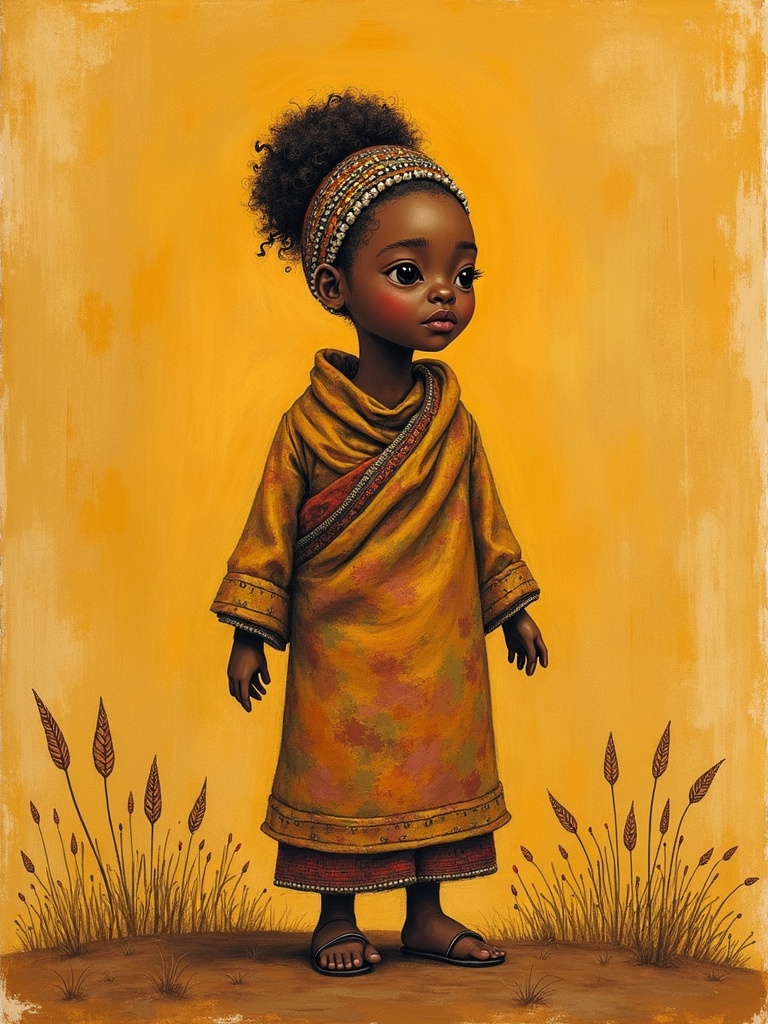
Born Nontsikelelo Thethiwe in the Transkei in 1918, the eldest girl helping to raise her younger siblings.
Answer all three to unlock this stage.
Unlock the previous stage first.
Unlock the previous stage first.
Unlock the previous stage first.
Unlock the previous stage first.
Crafting the doll
The doll is built around real Xhosa material culture: the umbhaco (also called isikhakha), a wrap skirt of cotton dyed reddish-brown with red ochre, edged with rows of black appliqué strips and bands of fine white and dark-blue beads; a small blanket tied at the waist; and the beaded head-wrap (iqhiya) that a married woman wears as a sign of respect. Her signature attribute is the nurse's bag of her healing years, paired with a small scroll for the Freedom Charter. An education card carries her honest story — the 20,000-woman march, the seventeen banned years, and her UDF leadership named plainly. Sizes: Classic 32 / Kidogo 18–20 / Shule 28. A share of proceeds supports girls' civic education and community-health projects in South Africa.
How this doll is made
Her look is built from real Xhosa women's dress — the ochre-dyed umbhaco wrap, beaded head-wrap and waist blanket — and the white nurse's uniform of her healing years.
- Garments 2
- Accessories 3
- Materials 2
- Techniques 3
Garments
Accessories
- Beadwork bandsRows of fine white and dark-blue beads with narrow black appliqué strips bordering the skirt; colours carry meaning (white = purity, blue = peace).DetailsEN
- Waist blanketA small blanket tied around the waist, part of the married Xhosa woman's everyday and ceremonial dress.DetailsEN
- Nurse's bagA small mid-century medical bag standing for her decades as a nurse and midwife in Soweto.DetailsEN
Materials
Techniques
- Ochre dyeingWhite cotton is rubbed or soaked with red ochre to yield the warm reddish-brown that names the Xhosa as 'the red blanket people'.DetailsEN
- BeadworkTiny glass beads are threaded and sewn into bands and panels whose colours and patterns communicate age, status and message.DetailsEN
- Black appliqué bandsStrips of black braid or cloth are appliquéd in rows along the hem and body of the umbhaco as its signature decoration.DetailsEN
How it's made
Every doll is sewn by hand from natural materials — built to last a lifetime and to be repaired, not replaced. Here is the shopping list and the work steps. Sizes: Classic 32 cm (heirloom) · Kidogo 18–20 cm (toddlers, no small parts) · Shule 28 cm (school edition).
Shopping list
- Natural cotton or linen for the body (skin tone), ~0.5 m
- Wool or cotton stuffing — no plastic
- Cotton thread and embroidery floss in matching colours
- Garment fabric in this doll's colours (see the fabrics above)
- Yarn for the hairstyle
- Beads, cowrie shells and trims as shown
- Sharps and embroidery needles, pins, fabric scissors, fabric marker
Work instructions
- Trace and cut the body pattern at your chosen size (Classic 32 cm / Kidogo 18–20 cm / Shule 28 cm).
- Sew the body pieces right sides together, leave an opening, turn and stuff firmly with natural fibre, then close by hand.
- Embroider the face gently and with dignity — no plastic parts for the toddler line.
- Make the hair from yarn following the chosen hairstyle and attach it securely.
- Cut and sew the garment from this doll's fabric, then dress the doll.
- Add the beadwork, shells, trims and any attribute by hand.
- Check every seam and reinforce it — the doll should be lifelong and repairable, with no loose small parts for small children.
Origin & Ethics
How we know this
The core of this record — her nursing and midwifery, the 1944 marriage with Mandela as best man, the 1956 Women's March of roughly 20,000, her 1963 detention as the first woman held under the 90-Day law, the seventeen years of banning to 1989, her 1983 election as a UDF co-president while detained, the 1984 conviction and 1985 dropped treason charges, and her seat in the first democratic Parliament — is well documented across multiple independent sources. Quotes are taken from reported speeches and attributed with care. This is a respectful homage, not an exact likeness, using documented quotes only.
This figure is offered as a homage drawn entirely from public historical record — Wikipedia, South African History Online, the South African government's official biography, BlackPast and scholarly accounts of the anti-apartheid struggle. As Albertina Sisulu is a recently deceased real leader, the doll honours the implied consent of her family and of the South African national institutions that commemorate her. Only documented quotes are used, the likeness is deliberately non-exact, and her detentions are named with dignity rather than sensation.
Sources
- Albertina Sisulu — Wikipedia
- Albertina Nontsikelelo Sisulu — South African History Online
- Extract of the speech delivered by Albertina Sisulu on the first anniversary of the UDF — South African History Online
- Albertina Sisulu Biography — South African Government (GCIS)
- Albertina Sisulu (1918-2011) — BlackPast.org
- 7 Quotes in Honour of Albertina Sisulu's 100th Birthday — Global Citizen
- Albertina Nontsikelelo Sisulu — Wikiquote
- Umbhaco wrap skirt — Xhosa or Mfengu peoples — The Metropolitan Museum of Art
- Xhosa people — Wikipedia
- Xhosa Traditional Attire: A Guide to South Africa's Cultural Fashion Heritage — CAPS 123