Strategy & Defiance
Taytu Betul
Taytu Betul (≈1851–1918) was Empress of Ethiopia, wife of Emperor Menelik II (married 1883), and a rarity for her time: a woman educated in Amharic and Ge’ez , fluent and sharp. The emperor consulted her before every great decision.
- People
- Amhara (Ethiopian Empire)
- Country
- Ethiopia
- Region
- Horn of Africa
- Era
- ≈1851–1918
- Theme
- Strategy & Defiance
Make your own
Design your Taytu Betul
Pick a garment, a hairstyle and a scene, enter the PIN and generate a fresh image of Taytu Betul with AI.
Each image is generated live with fal.ai.
Generated images
No images generated yet — be the first.
Tradition & Origin
Taytu Betul (≈1851–1918) was Empress of Ethiopia, wife of Emperor Menelik II (married 1883), and a rarity for her time: a woman educated in Amharic and Ge’ez, fluent and sharp. The emperor consulted her before every great decision.
★ She tore up the treaty
When Italy presented the Treaty of Wuchale, Taytu spotted that the Italian version made Ethiopia a colony while the Amharic version did not — and she urged the hesitant court to refuse and resist. When Italy invaded, she joined the campaign. At the decisive Battle of Adwa (1 March 1896) she led a contingent of 5,000 infantry and 600 cavalry (with women among them), commanded artillery, and devised the strategy at the siege of Mekelle — cutting off the fort’s water supply. Adwa was a crushing Ethiopian victory over Italy — the greatest defeat of a European colonial army in Africa — and it kept Ethiopia independent, a beacon for the whole continent. Taytu also founded and named Addis Ababa (“New Flower”).
Honesty: she lived in the world of imperial court politics and was famously distrustful of European intentions — in the context of a continent being colonised. We celebrate her strategy, defiance and statecraft.
They handed her an empire’s treaty. She read every line — and said no. At Adwa, Africa kept its freedom.
Values & Capabilities
Capabilities
◆◆◆◆◆ shows how central a gift is — five diamonds mark a signature strength, fewer mark a supporting one.
She caught the trap hidden in the fine print and refused it.
She shaped the battle and commanded artillery in Africa’s great victory.
She won a siege by cutting the enemy’s water supply.
She founded and named Ethiopia’s capital, “New Flower”.
Literate when few women were, she ruled with her mind.
Development
1 of 3 stages unlocked
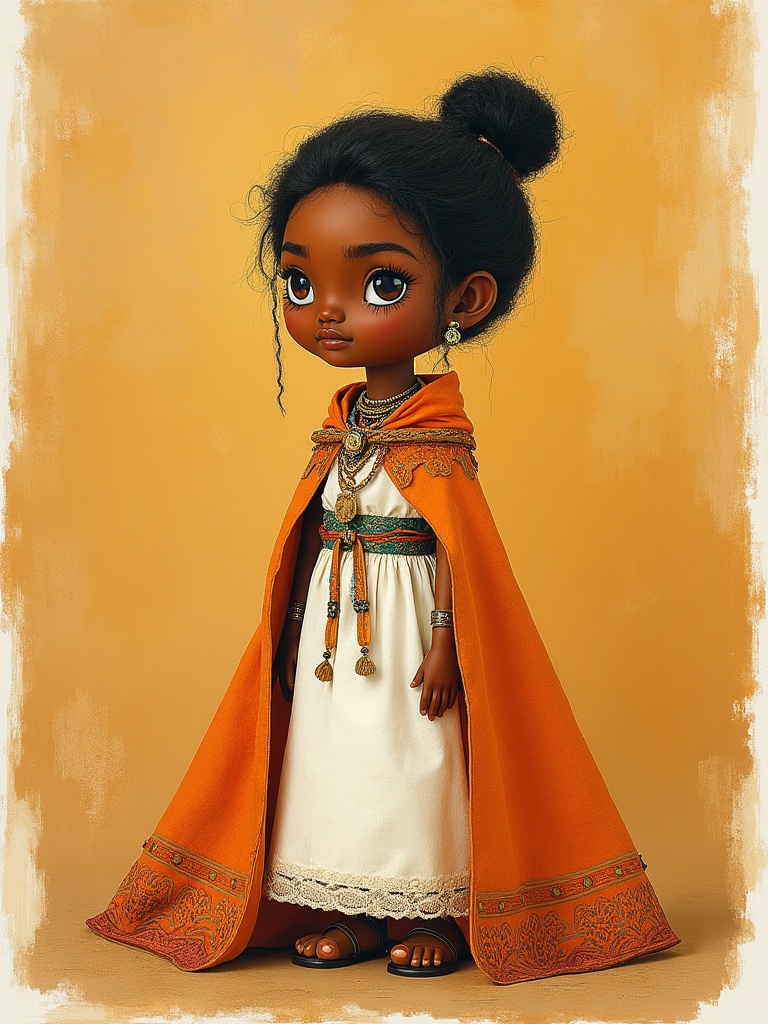
Young Taytu learning to read Amharic and Ge’ez.
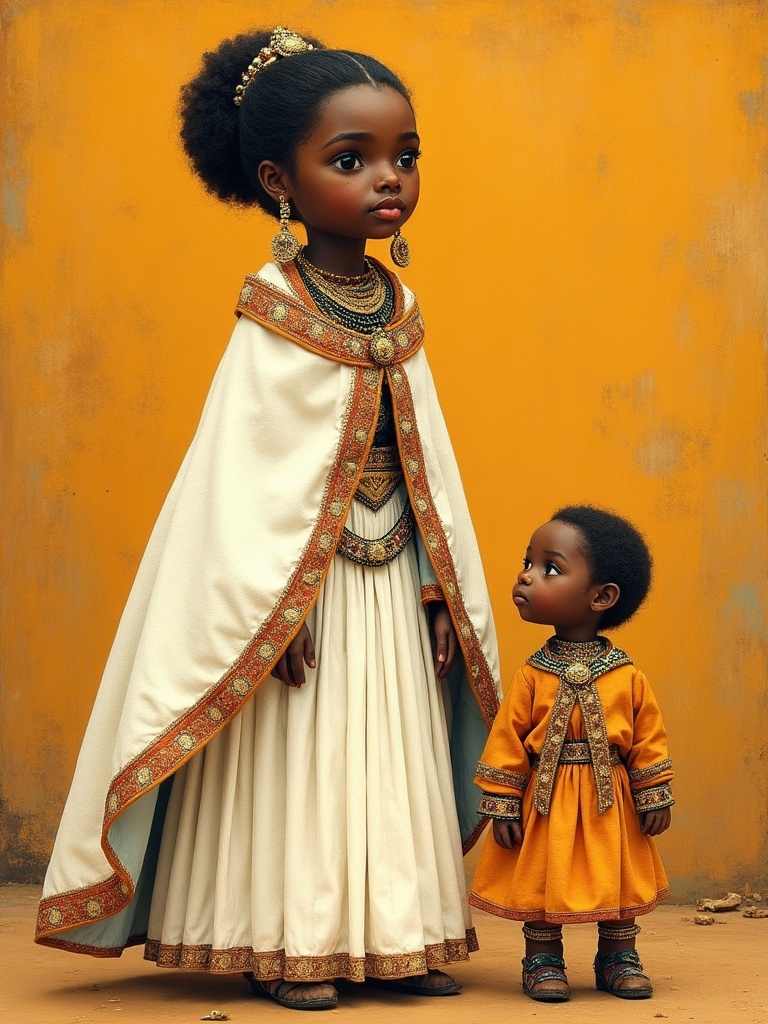
Answer all three to unlock this stage.
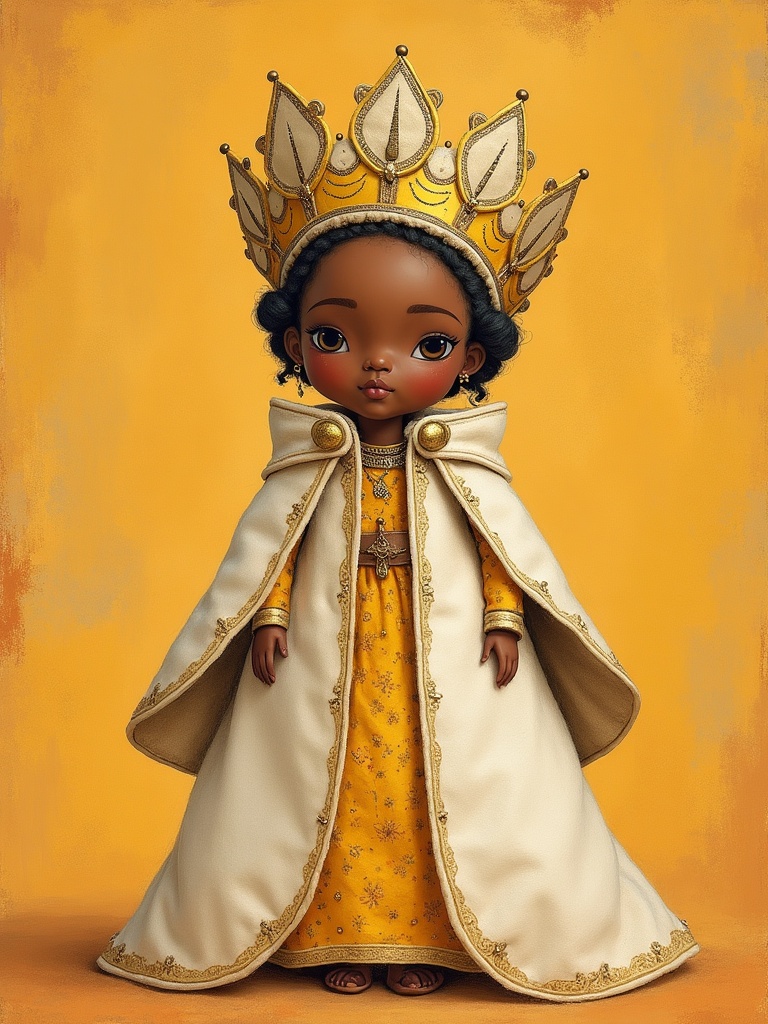
Unlock the previous stage first.
Make & Learn
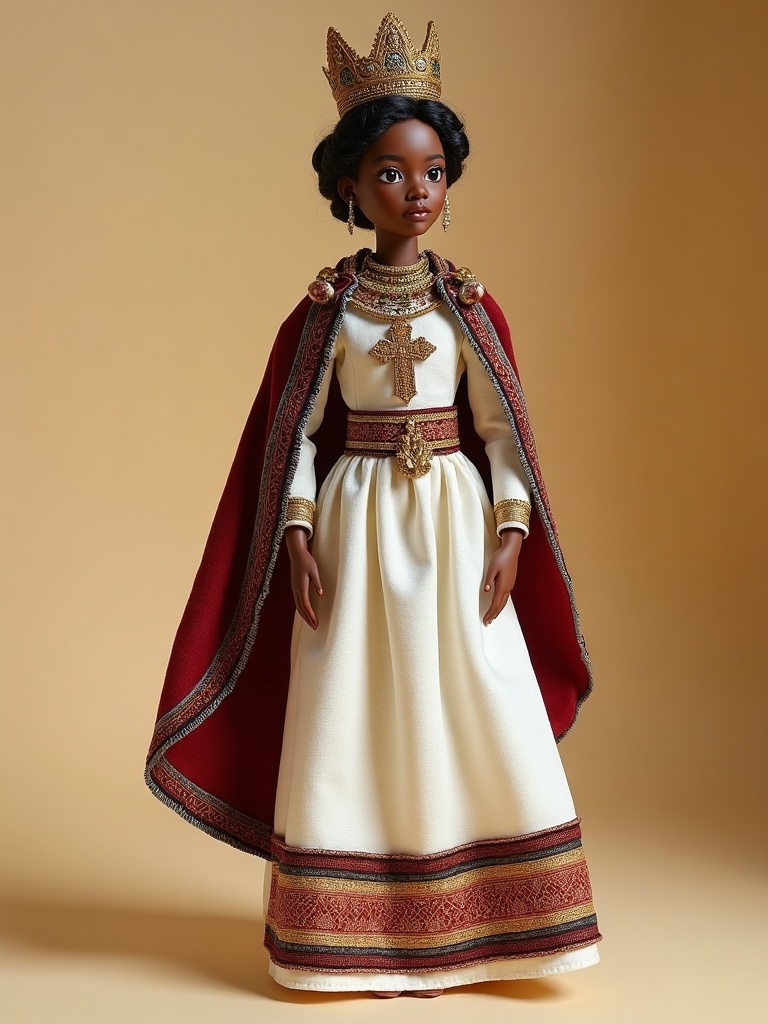
Garment: a white shamma/netela (cotton with woven coloured borders), an embroidered cape, a gold-tone crown, an Ethiopian cross (child-safe). Signature attribute: a small red royal parasol and the “torn treaty.” Education card: explains Adwa (the great anti-colonial victory that kept Ethiopia free), the Treaty of Wuchale, and the founding of Addis Ababa — and that she was a learned woman who said no to colonisation. Sizes as standard. Proceeds → Ethiopian heritage & girls’ education.
How it's made
Every doll is sewn by hand from natural materials — built to last a lifetime and to be repaired, not replaced. Here is the shopping list and the work steps. Sizes: Classic 32 cm (heirloom) · Kidogo 18–20 cm (toddlers, no small parts) · Shule 28 cm (school edition).
Shopping list
- Natural cotton or linen for the body (skin tone), ~0.5 m
- Wool or cotton stuffing — no plastic
- Cotton thread and embroidery floss in matching colours
- Garment fabric in this doll's colours (see the fabrics above)
- Yarn for the hairstyle
- Beads, cowrie shells and trims as shown
- Sharps and embroidery needles, pins, fabric scissors, fabric marker
Work instructions
- Trace and cut the body pattern at your chosen size (Classic 32 cm / Kidogo 18–20 cm / Shule 28 cm).
- Sew the body pieces right sides together, leave an opening, turn and stuff firmly with natural fibre, then close by hand.
- Embroider the face gently and with dignity — no plastic parts for the toddler line.
- Make the hair from yarn following the chosen hairstyle and attach it securely.
- Cut and sew the garment from this doll's fabric, then dress the doll.
- Add the beadwork, shells, trims and any attribute by hand.
- Check every seam and reinforce it — the doll should be lifelong and repairable, with no loose small parts for small children.
Origin & Ethics
How we know this
Very well documented (★★★★★); imperial-court context and her distrust of Europeans named honestly within the colonial setting; omit sensitive personal asides not suitable for children; focus on Adwa, the treaty, Addis Ababa and her learning.
Committee: Ethiopian cultural & Orthodox heritage bodies, historians (e.g. Prouty’s biography), Addis Ababa custodians. 5-step protocol.