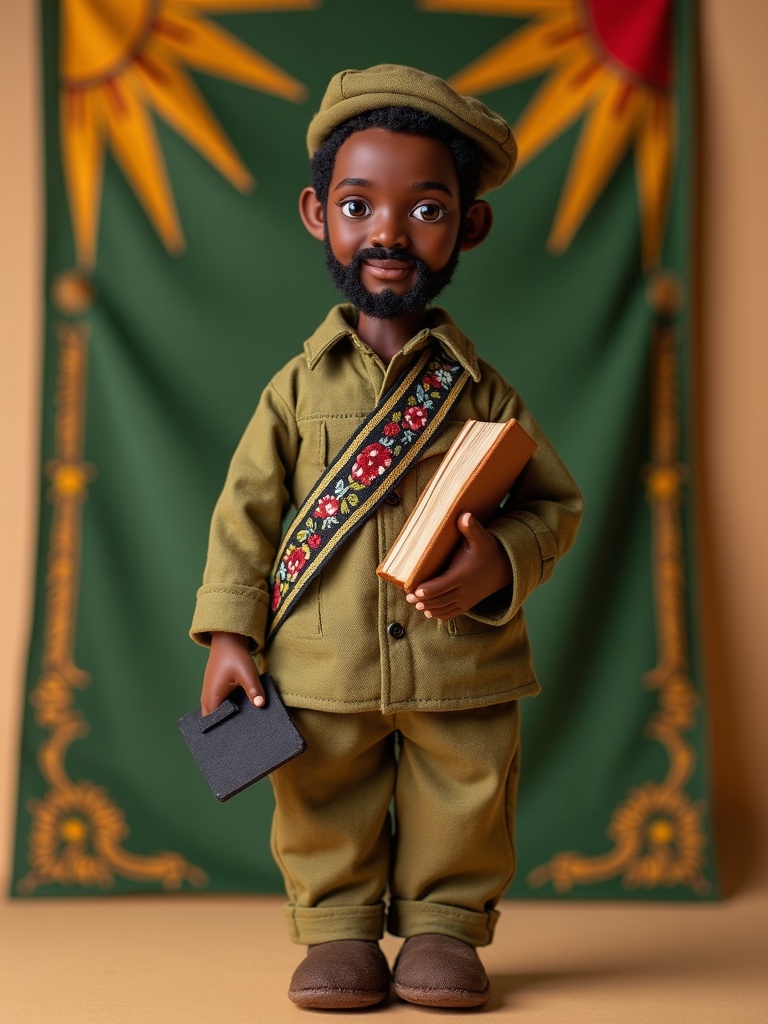
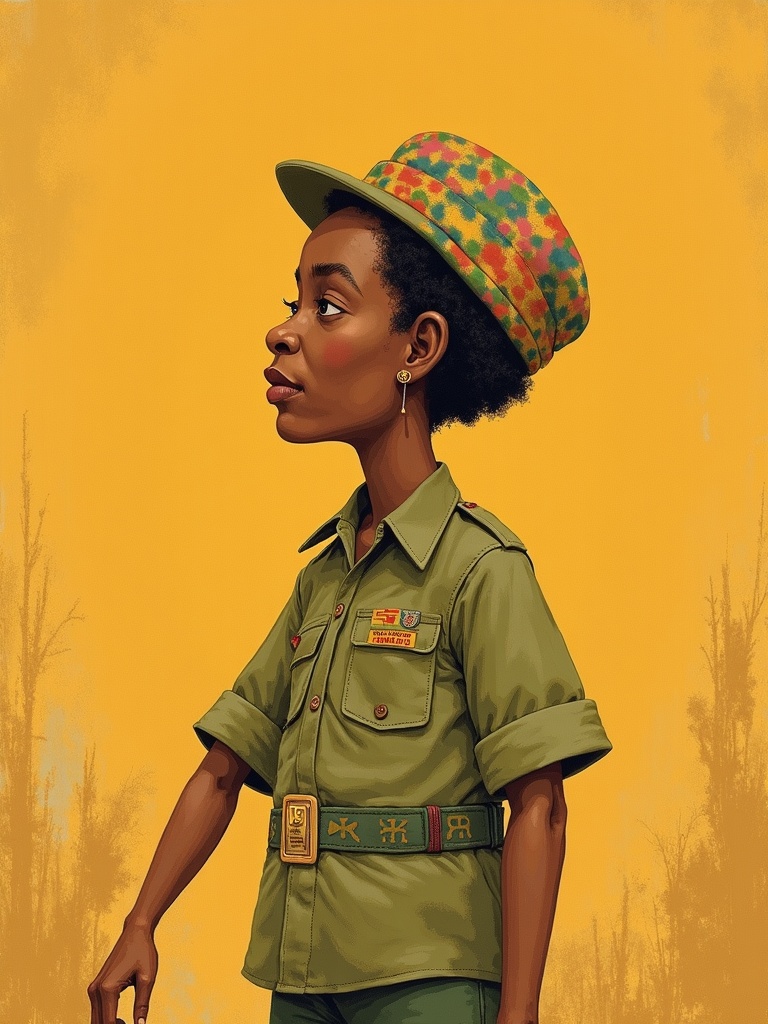
AI design preview — not a photo of the finished handmade doll
Independence of Mozambique
Samora Machel
He trained to heal bodies and ended up helping to free a country — a village nurse who, on a June morning in 1975, told the world that Mozambique was independent at last.
- People
- Mozambican (Shangaan)
- Country
- Mozambique
- Region
- Southern Africa
- Era
- 1933–1986
- Theme
- Independence of Mozambique
⚖ A respectful concept
Samora Machel is a documented recent figure who died in 1986; this doll is a respectful homage, not an exact likeness, and the quotes used are real and attributed to their sources. He is shown with dignity as a nurse, teacher and leader — never in violence, suffering or his death. The record honours his memory and the national institutions that carry it (the Government of Mozambique, the Samora Machel Documentation Centre and his family, including Graça Machel); it is a respectful draft offered for the review and consent of those institutions and his family, not a finished or official product.
Make your own
Design your Samora Machel
Pick a garment, a hairstyle and a scene, enter the PIN and generate a fresh image of Samora Machel with AI.
⚖ AI homage concept — not a likeness of the real person.
Each image is generated live with fal.ai.
Generated images
AI design preview — not a photo of the finished handmade doll
No images generated yet — be the first.
Tradition & Origin
He trained to heal bodies and ended up helping to free a country — a village nurse who, on a June morning in 1975, told the world that Mozambique was independent at last.
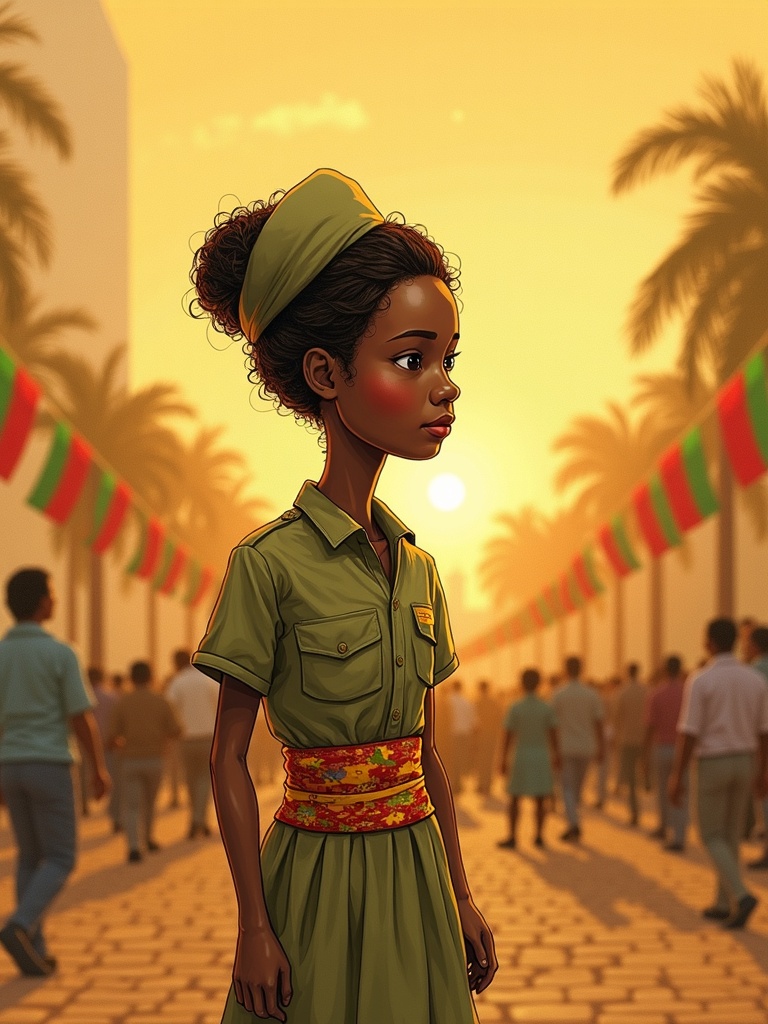
Samora Moisés Machel was born on 29 September 1933 in the village of Chilembene, in Gaza Province, southern Mozambique. His family were Shangaan farmers, and like their neighbours they were forced to grow cotton for the Portuguese colonial state and were pushed off good land to make room for settlers. That early experience of injustice never left him. He went to mission schools, refused the seminary, and instead trained as a hospital nurse in the colonial capital, Lourenço Marques — today's Maputo — from 1954. In the wards he saw, in his own words, that 'the rich man's dog gets more vaccination and medical care than the workers', and the unfairness of colonial medicine pushed him toward politics.
In 1963 Machel slipped across the border to join FRELIMO, the Mozambique Liberation Front, and was sent for military training in Algeria. He proved a gifted organiser as well as a fighter, ran the movement's training camp in Tanzania, and after the war of liberation began in 1964 rose to command its guerrilla army. When FRELIMO's founder Eduardo Mondlane was assassinated in 1969, Machel was chosen to lead the movement in 1970. Five years later, on 25 June 1975, he proclaimed 'the total and complete independence of Mozambique' and became the new nation's first president, ending nearly five centuries of Portuguese rule.
As president, Machel poured his nurse's instincts into the new state. His government built roughly 1,200 rural health posts, trained over 8,000 health workers, vaccinated most of the population against smallpox, polio and measles, and launched a sweeping literacy campaign to teach reading to villages the empire had ignored. He also made Mozambique a haven for freedom fighters from Zimbabwe, South Africa and Namibia, declaring that his country's freedom was bound up with theirs — and his cry 'A luta continua', the struggle continues, became a rallying call across the continent. His years in power were also hard ones, marked by drought, a brutal civil war with Renamo, and difficult compromises like the 1984 Nkomati Accord with apartheid South Africa.
On 19 October 1986, returning from a summit in Zambia, Machel's Soviet-crewed Tupolev Tu-134 crashed into a hillside at Mbuzini, just inside South Africa, killing him and 33 others. A South African commission blamed pilot error; Mozambique, the Soviet Union and many African leaders suspected the aircraft had been lured off course by a false navigation beacon, and the cause is still debated today. He is remembered in the star-shaped crypt at Heroes' Square in Maputo, and in the words his people still chant: the struggle continues, victory is certain.
Timeline
- 1933Born on 29 September in Chilembene, Gaza Province, into a Shangaan farming family.
- 1954Begins training and work as a hospital nurse in Lourenço Marques (Maputo).
- 1963Joins FRELIMO and trains as a guerrilla in Algeria.
- 1970Becomes leader of FRELIMO after the assassination of Eduardo Mondlane.
- 1975Declares Mozambique independent on 25 June and becomes its first president.
- 1986Dies on 19 October when his plane crashes at Mbuzini, South Africa; the cause remains debated.
Did you know?
- Before he was a president, Samora Machel was a hospital nurse — and it was the unfair healthcare he saw in the colonial wards that first pushed him toward fighting for freedom.DetailsEN
- His slogan 'A luta continua, a vitória é certa' — the struggle continues, victory is certain — spread far beyond Mozambique and is still used by movements across Africa today.DetailsEN
- When his plane crashed at Mbuzini in 1986, nine people survived; a South African inquiry blamed the pilots, but Mozambique and others believed a false beacon had lured the plane off course — a mystery still argued over.DetailsEN
- Mozambicans honour their heroes on printed cloths called capulanas, and to this day commemorative capulanas carry the portraits of figures from the FRELIMO era like his wife Josina Machel.DetailsEN
A nurse learns to heal one person at a time; a leader must learn to heal a whole people — and Mozambique still says his words: the struggle continues.
Values & Capabilities
Capabilities
◆◆◆◆◆ shows how central a gift is — five diamonds mark a signature strength, fewer mark a supporting one.
He began by healing the sick and ended by helping to heal a whole country.
On a June morning in 1975 he declared his country free after five centuries of colonial rule.
He set out to bring reading and healthcare to villages the empire had ignored.
His rallying cry 'the struggle continues' became a heartbeat for free Africa.
He sheltered freedom fighters from across the border and linked his country's freedom to theirs.
Development
1 of 7 stages unlocked
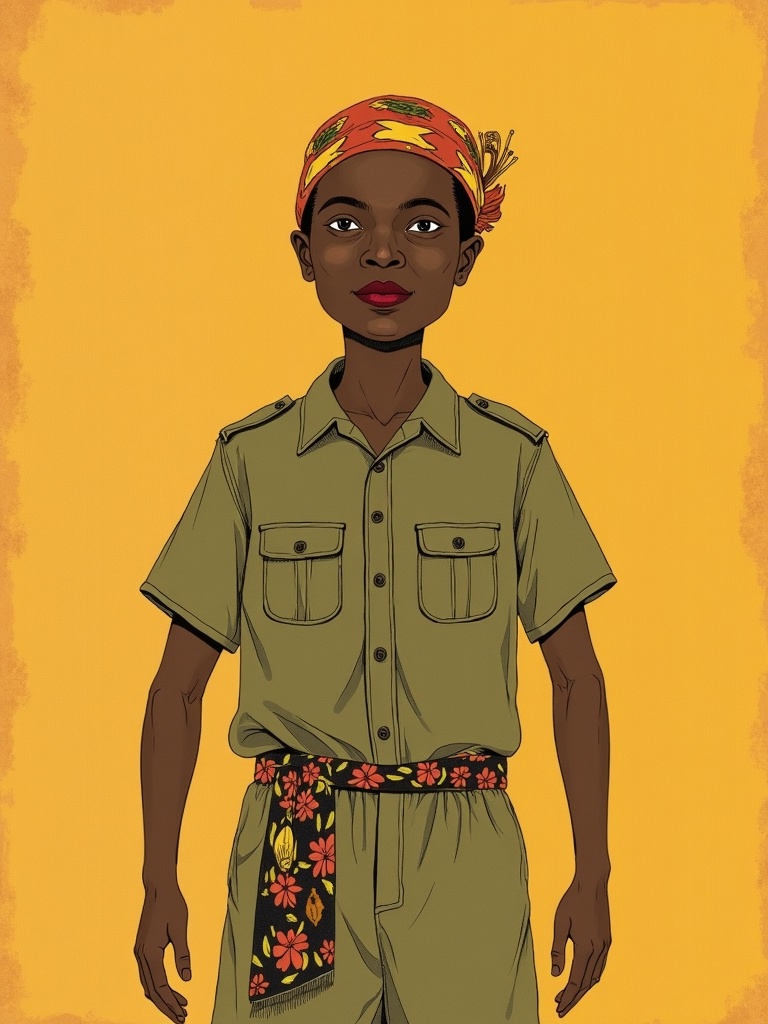
Born in 1933 into a Shangaan farming family whose land and labour were taken by colonial rule.
Answer all three to unlock this stage.
Unlock the previous stage first.
Unlock the previous stage first.
Unlock the previous stage first.
Unlock the previous stage first.
Unlock the previous stage first.
Crafting the doll
The doll is built from honest, natural materials in Mozambique's national colours: green, black, gold and red cotton, echoing the printed capulana — the two-by-one-metre cloth Mozambicans wear as wrap, dress and baby-carrier, and print to celebrate movements and heroes. A plain olive-green field shirt and soft cap recall the simple dress of the FRELIMO leader, and the signature attribute is a tiny stitched primer book and chalk slate for the literacy campaign, with a small nurse's bag at his side. A small education card tucked behind the doll tells his honest story. Sizes Classic 32 / Kidogo 18–20 / Shule 28. A share of proceeds supports literacy and rural-health projects in Mozambique.
How this doll is made
Machel's look grows from the material culture of southern Mozambique — the plain field dress of a FRELIMO fighter, the white tunic of a nurse, and above all the printed capulana that Mozambicans wear and use to honour their heroes.
- Garments 3
- Accessories 3
- Materials 2
- Techniques 2
Garments
- Capulana clothMozambique's iconic printed cotton, about 2 m by 1 m, worn as wrap-skirt, dress or baby-carrier and printed in bright suns, leopards and geometric motifs; commemorative prints honour FRELIMO and Josina Machel.DetailsEN
- FRELIMO field shirt & capPlain olive-green field shirt, trousers and soft peaked cap, the simple dress of a liberation fighter-turned-leader.DetailsEN
- Nurse's white tunicA simple white hospital tunic recalling his years as a nurse in Lourenço Marques.DetailsEN
Accessories
- Soft field capA soft olive-green peaked cap, the quiet emblem of the FRELIMO fighter and leader.DetailsEN
- Primer book & chalk slateA small stitched reading primer and slate, signs of the mass literacy campaign that taught villages to read.DetailsEN
- Nurse's small bagA small cloth medical satchel, a reminder of the healer who became a leader.DetailsEN
Materials
Techniques
- Capulana printingBright patterns and portraits printed onto cotton in repeating panels; commemorative cloths are designed to mark heroes and movements.DetailsEN
- Wrapping & tying the clothThe capulana is folded and knotted at the waist or shoulder — no buttons or zips — to become skirt, sash or carrier.DetailsEN
How it's made
Every doll is sewn by hand from natural materials — built to last a lifetime and to be repaired, not replaced. Here is the shopping list and the work steps. Sizes: Classic 32 cm (heirloom) · Kidogo 18–20 cm (toddlers, no small parts) · Shule 28 cm (school edition).
Shopping list
- Natural cotton or linen for the body (skin tone), ~0.5 m
- Wool or cotton stuffing — no plastic
- Cotton thread and embroidery floss in matching colours
- Garment fabric in this doll's colours (see the fabrics above)
- Yarn for the hairstyle
- Beads, cowrie shells and trims as shown
- Sharps and embroidery needles, pins, fabric scissors, fabric marker
Work instructions
- Trace and cut the body pattern at your chosen size (Classic 32 cm / Kidogo 18–20 cm / Shule 28 cm).
- Sew the body pieces right sides together, leave an opening, turn and stuff firmly with natural fibre, then close by hand.
- Embroider the face gently and with dignity — no plastic parts for the toddler line.
- Make the hair from yarn following the chosen hairstyle and attach it securely.
- Cut and sew the garment from this doll's fabric, then dress the doll.
- Add the beadwork, shells, trims and any attribute by hand.
- Check every seam and reinforce it — the doll should be lifelong and repairable, with no loose small parts for small children.
Origin & Ethics
How we know this
This record is well documented: Machel is among the most studied figures of African liberation, and the dates — birth in 1933, the nursing years, joining FRELIMO in 1963, leadership in 1970, independence on 25 June 1975, and the 1986 crash — are all sourced below, as are the health figures. The quotes used are real and attributed. Interpretations of his socialist rule differ between sources, and the cause of the plane crash remains officially contested; we name these openly rather than hide them, and nothing here depicts violence or his death.
This homage is offered for the review and consent of the memory-keepers of Machel's legacy — the Government of Mozambique, the Samora Machel Documentation Centre, and his family, including his widow Graça Machel. As a documented recent figure, the doll uses only attributed quotes and respectful homage rather than exact likeness, in the spirit of a draft awaiting the corrections and blessing of these national institutions and his family.
Sources
- Samora Machel — Wikipedia
- Samora Machel — South African History Online
- Samora Machel | Mozambican leader — Britannica
- Cooperantes, Solidarity, and the Fight for Health in Mozambique — Health Alliance International
- A luta continua — Wikipedia
- How Frelimo betrayed Samora Machel's dream of a free Mozambique — The Conversation
- 1986 Mozambican Tupolev Tu-134 crash — Wikipedia
- The death of Samora Machel — South African History Online
- Capulana — Wikipedia