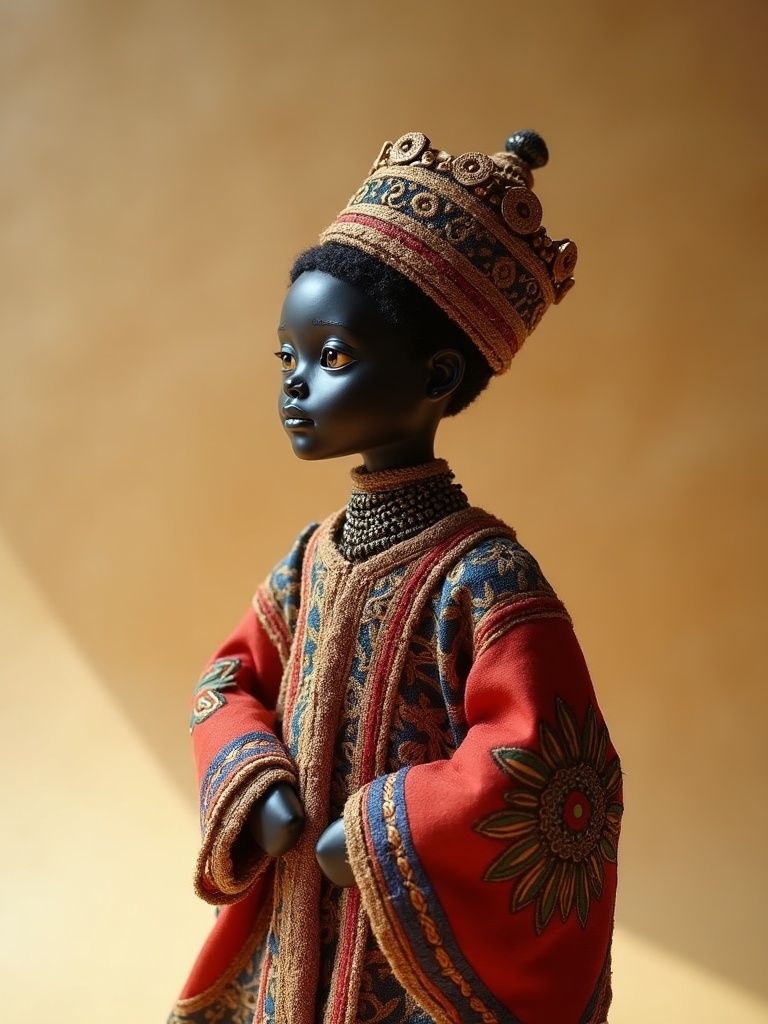
Invention & Writing
Njoya of Bamum
Sultan Ibrahim Njoya (≈1876–1933) was the 17th ruler of the Bamum kingdom (capital Foumban , western Cameroon), a dynasty founded in 1394. Recognising that important history was being lost, Njoya did something extraordinary.
- People
- Bamum (Bamoun)
- Country
- Cameroon
- Region
- Central Africa
- Era
- ≈1876–1933
- Theme
- Invention & Writing
Make your own
Design your Njoya of Bamum
Pick a garment, a hairstyle and a scene, enter the PIN and generate a fresh image of Njoya of Bamum with AI.
Each image is generated live with fal.ai.
Generated images
No images generated yet — be the first.
History & Meaning
Sultan Ibrahim Njoya (≈1876–1933) was the 17th ruler of the Bamum kingdom (capital Foumban, western Cameroon), a dynasty founded in 1394. Recognising that important history was being lost, Njoya did something extraordinary.
✍ Africa wrote its own book
Around 1895–1896 Njoya invented an entire writing system for the Bamum language. It began as Lewa, hundreds of pictograms, and he refined it into the elegant syllabic script “A-ka-u-ku.” With it he wrote ~15 books — including a history of his people and an encyclopedia of traditional medicine — drew a topographic map of his kingdom, and even invented a hand-powered corn mill. He built the great palace of Foumban (today a museum). The French colonial administration destroyed his schools, forbade the teaching of his script, and exiled him to Yaoundé in 1931, where he died in 1933. Today the Bamum Scripts and Archives Project in Foumban is teaching the script to children again.
They said Africa had no writing. A king in Foumban wrote a library. They burned the schools — the letters survived.
Abilities & Development
Abilities
◆◆◆◆◆ shows how central a gift is — five diamonds mark a signature strength, fewer mark a supporting one.
He created a whole script so his people could write their own history.
~15 books, a history, a medical encyclopedia, a map of his realm.
His great palace still stands as a museum.
He even built a corn-grinding mill.
Colonisers banned his script; children learn it again today.
Development through the years
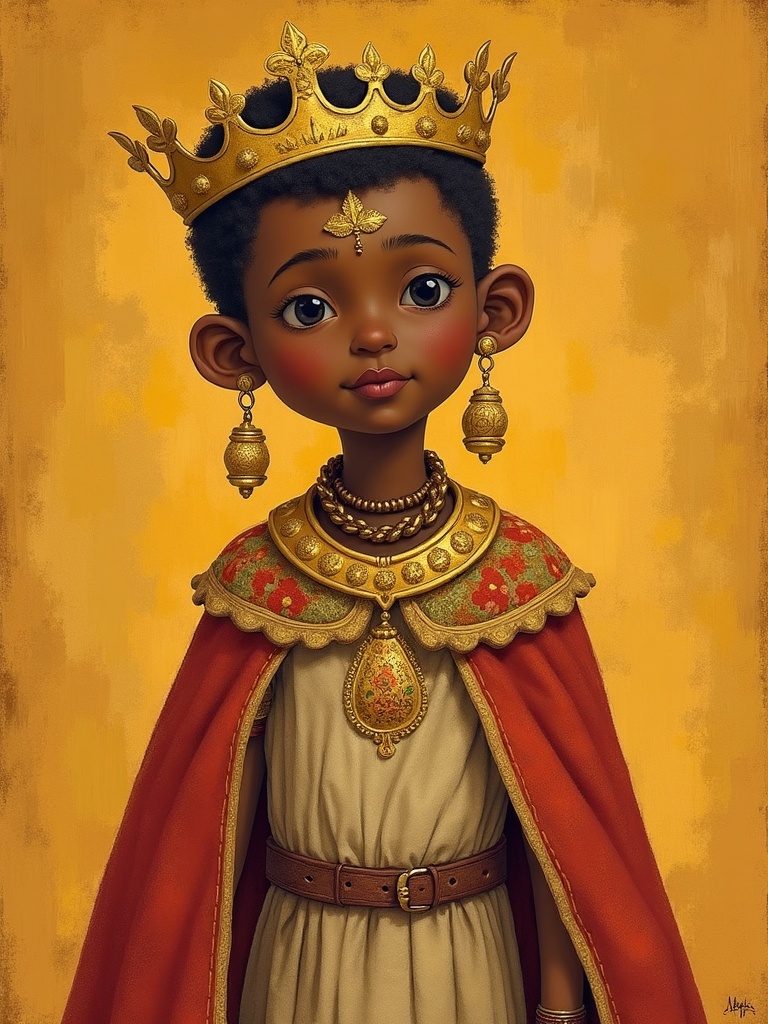
The young Njoya in Foumban, curious, becoming king after a regency.
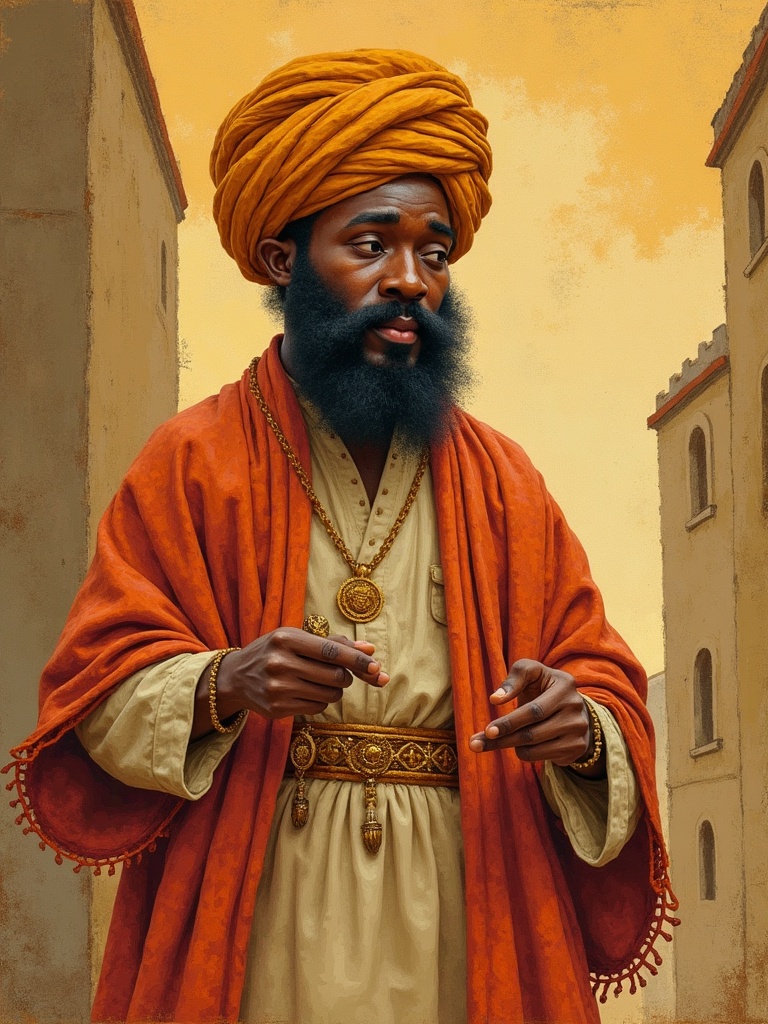
Njoya at work designing his signs (≈1896), surrounded by palace scholars.
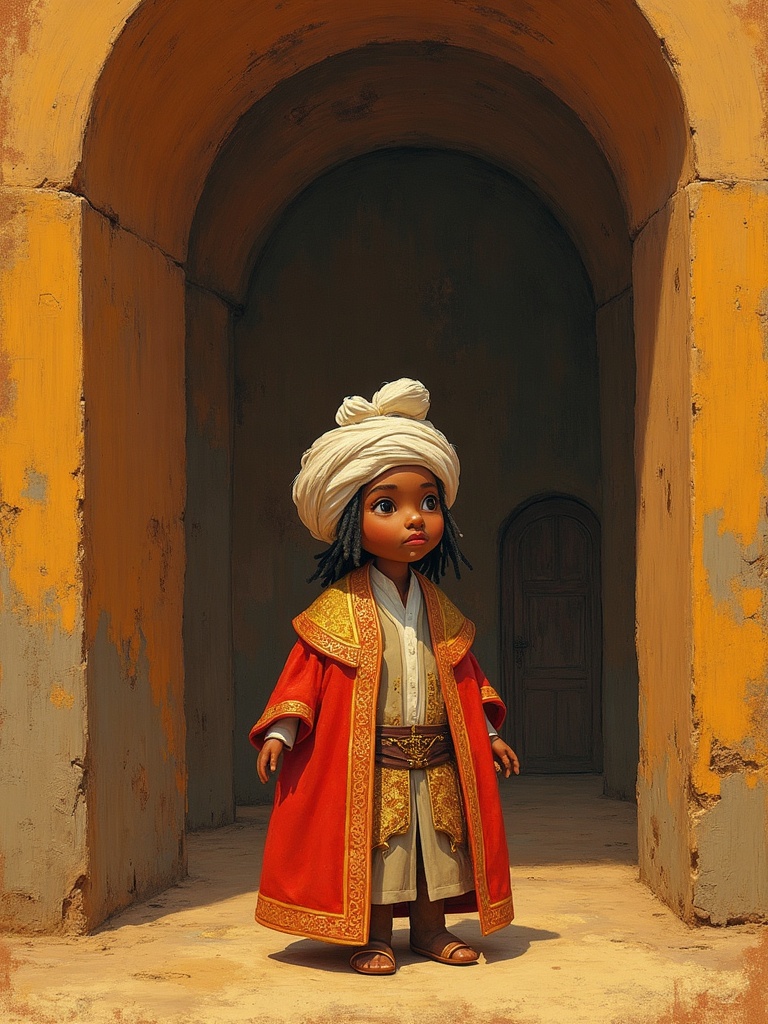
The mature sultan before his palace, books and map in hand.
Make & Learn
Garment: 100% cotton in Bamum indigo & royal red with embroidery, a beaded cap and brass-tone ornaments (child-safe). Signature attribute: a little book covered in A-ka-u-ku script (felt, embroidered signs). Education card: explains that Africa invented its own writing systems, names the French suppression honestly, and points to the revival project. Sizes Classic 32 / Kidogo 18–20 / Shule 28. Proceeds → the Bamum Scripts and Archives Project, Foumban.
How it's made
Every doll is sewn by hand from natural materials — built to last a lifetime and to be repaired, not replaced. Here is the shopping list and the work steps. Sizes: Classic 32 cm (heirloom) · Kidogo 18–20 cm (toddlers, no small parts) · Shule 28 cm (school edition).
Shopping list
- Natural cotton or linen for the body (skin tone), ~0.5 m
- Wool or cotton stuffing — no plastic
- Cotton thread and embroidery floss in matching colours
- Garment fabric in this doll's colours (see the fabrics above)
- Yarn for the hairstyle
- Beads, cowrie shells and trims as shown
- Sharps and embroidery needles, pins, fabric scissors, fabric marker
Work instructions
- Trace and cut the body pattern at your chosen size (Classic 32 cm / Kidogo 18–20 cm / Shule 28 cm).
- Sew the body pieces right sides together, leave an opening, turn and stuff firmly with natural fibre, then close by hand.
- Embroider the face gently and with dignity — no plastic parts for the toddler line.
- Make the hair from yarn following the chosen hairstyle and attach it securely.
- Cut and sew the garment from this doll's fabric, then dress the doll.
- Add the beadwork, shells, trims and any attribute by hand.
- Check every seam and reinforce it — the doll should be lifelong and repairable, with no loose small parts for small children.
Origin & Ethics
How we know this
On honesty: very well documented (the palace museum; Library of Congress research guide). We celebrate the invention (uncontested) while naming colonial suppression honestly and noting he was a king of a hierarchical society making pragmatic colonial-era choices.
Committee: the Bamum palace & current Sultan, the Bamum Scripts and Archives Project, Cameroonian cultural bodies, historians. Living dynasty → binding veto. The A-ka-u-ku script is used decoratively only with Bamum palace approval.