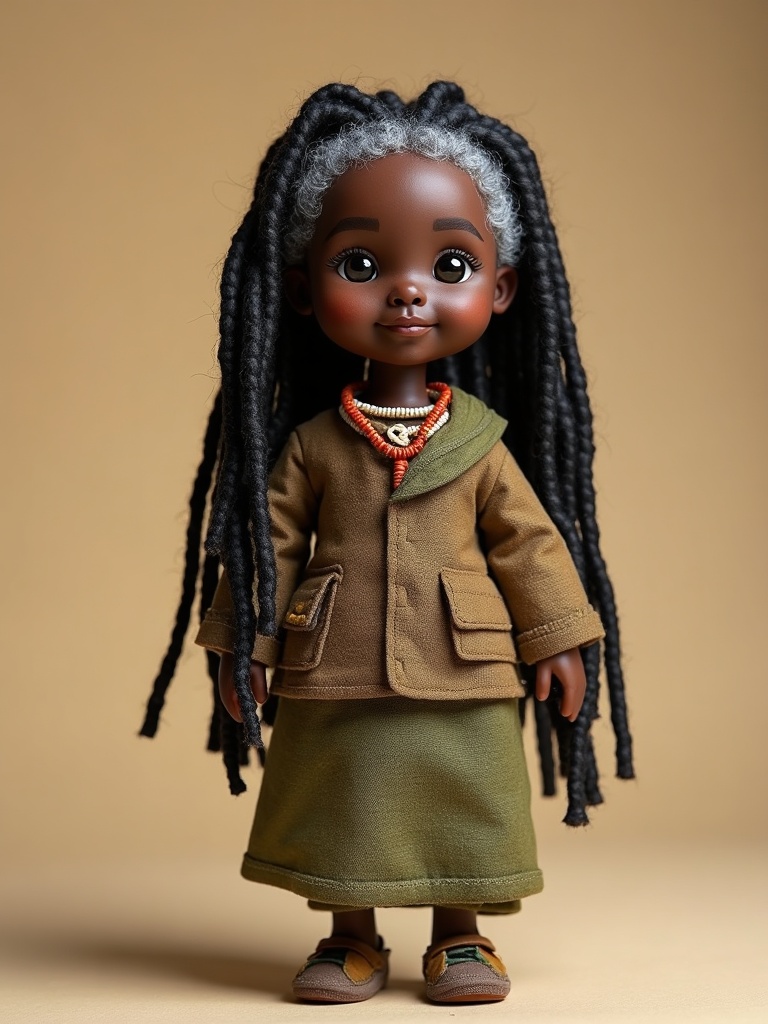
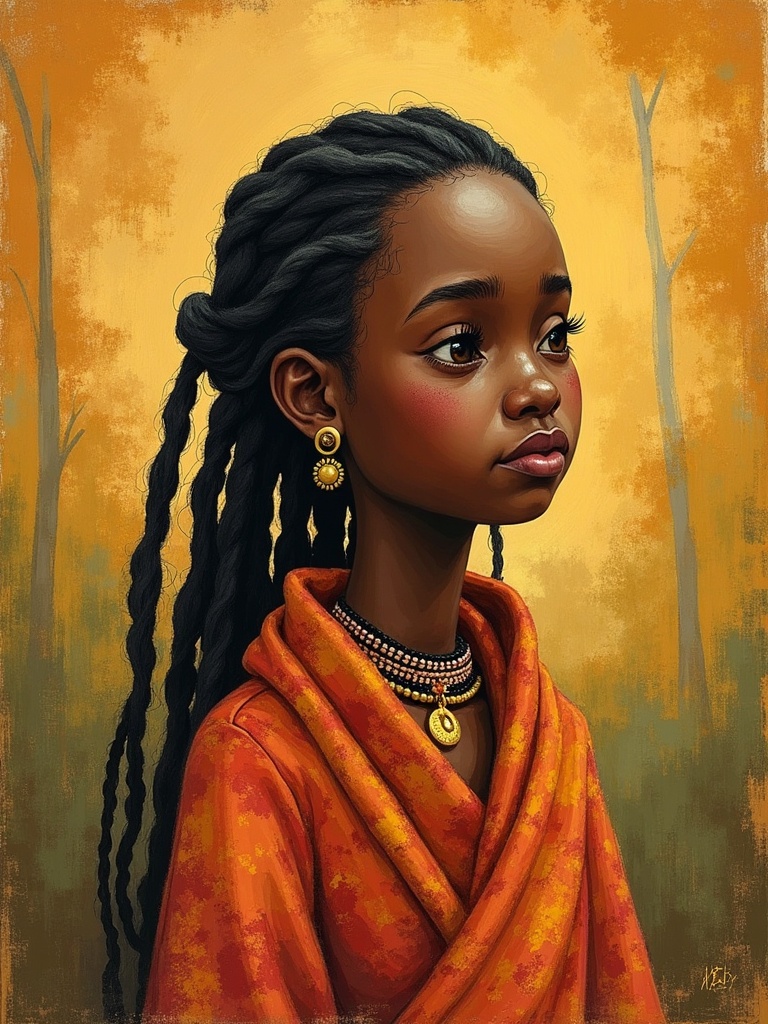
AI design preview — not a photo of the finished handmade doll
The Mau Mau Field Marshal
Muthoni wa Kirima
She was the only woman ever to be called Field Marshal in the Mau Mau struggle — and for seventy years she wore her vow for freedom in her hair, refusing to cut a single lock until land and freedom truly reached her people.
- People
- Kikuyu
- Country
- Kenya
- Region
- East Africa
- Era
- 1930–2023
- Theme
- The Mau Mau Field Marshal
⚖ A respectful concept
Field Marshal Muthoni wa Kirima was a real Kenyan freedom fighter who died on 4 September 2023; this doll is a respectful homage and NOT an exact likeness of her face or body — it honours her courage and her struggle for land and freedom. Only her publicly documented words are quoted here, each tied to a source; nothing is invented or put in her mouth, and her dignity is honoured without depicting violence or her suffering. Any portrait must say 'respectful homage, no exact likeness', and this figure is a respectful draft, not a finished product. Consent of her family and of Kenya's national heritage institutions would be sought before any public sale.
Make your own
Design your Muthoni wa Kirima
Pick a garment, a hairstyle and a scene, enter the PIN and generate a fresh image of Muthoni wa Kirima with AI.
⚖ AI homage concept — not a likeness of the real person.
Each image is generated live with fal.ai.
Generated images
AI design preview — not a photo of the finished handmade doll
No images generated yet — be the first.
Tradition & Origin
She was the only woman ever to be called Field Marshal in the Mau Mau struggle — and for seventy years she wore her vow for freedom in her hair, refusing to cut a single lock until land and freedom truly reached her people.
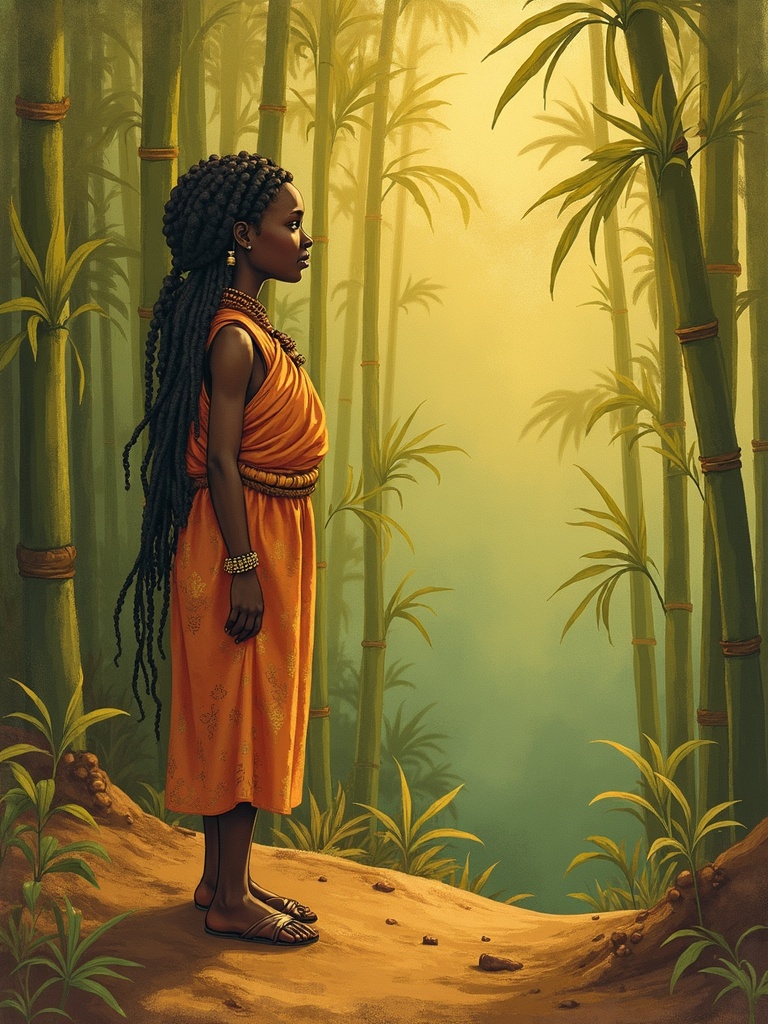
Muthoni wa Kirima was born around 1930 in Nairutia village, in Nyeri County, in the cool green highlands of central Kenya — the heartland of the Kikuyu people. As a child she laboured on a white settler's farm, where she witnessed the cruelty and the land dispossession that lay at the root of the coming war. That memory became her resolve: when the Mau Mau movement rose against British colonial rule, she said simply, 'I said yes because freedom is priceless.'
She took the Mau Mau oath in 1952, at the start of the Kenya 'Emergency'. The movement's name in spirit was ithaka na wĩyathi — land and freedom — for Kikuyu, Embu and Meru Kenyans whose land had been seized by settlers. Muthoni began as a trader, slipping intelligence, food and weapons to the fighters hidden in the forest, and administering oaths. Then she went into the forest herself. For roughly eleven years she lived in the bamboo thickets of the Aberdares and Mount Kenya as a fighter, a medic and a quartermaster, rising through the ranks until she became the only woman ever to hold the rank of Field Marshal — one of just four in the entire movement.
The colonial response was harsh: mass detention, forced 'villagisation' and torture. Muthoni herself was beaten and carried a bullet in her body for the rest of her life. When independence came in 1963, the freedom she had fought for felt incomplete, so she made a vow — she would not cut her matted, locked hair until 'the fruits of independence' reached the people who had sacrificed the most. She kept that promise for about seventy years. Having lost a child in the forest and borne none after, she said her country itself was her only child. Kenya honoured her late in life — a distinguished-service medal in 1998 and a Head of State Commendation in 2014 — and she died on 4 September 2023, aged about 92.
Timeline
- ≈1930Born in Nairutia village, Nyeri County, in the Kikuyu highlands of central Kenya.
- 1952Takes the Mau Mau oath as the land-and-freedom struggle against British colonial rule begins.
- 1953–1963Lives and fights in the Aberdare and Mount Kenya forests, rising to the rank of Field Marshal — the only woman to do so.
- 1963Kenya gains independence; she vows to keep her locked hair until its fruits reach those who sacrificed most.
- 2022Her ~70-year dreadlocks are shaved on 2 April; the locks are wrapped in the Kenyan flag for a museum.
- 2023Dies on 4 September, aged about 92, honoured as a mother of the nation.
Did you know?
- She rose to Field Marshal partly because she could find food when no one else could — feeding her troops in the starving forest was as decisive as any battle.DetailsEN
- Of her dreadlocks she said: 'I will not cut my dreds because the fruits of independence have not been enjoyed by the people who sacrificed the most.'DetailsEN
- Having lost a child in the forest and borne none after, she said her country itself — Kĩrĩnyaga, Kenya — was her only child.DetailsEN
- When her locks were finally cut in 2022, they were wrapped in the Kenyan flag and set aside for a museum, so that her seventy-year vow could be remembered as history.DetailsEN
Land and freedom were her whole life's wager — and her uncut hair asked, for seventy years, whether her country had truly paid the people who won it.
Values & Capabilities
Capabilities
◆◆◆◆◆ shows how central a gift is — five diamonds mark a signature strength, fewer mark a supporting one.
She rose to the highest Mau Mau rank — the only woman ever to be called Field Marshal.
For more than a decade she lived and fought in the cold forests of the Aberdares and Mount Kenya.
She kept her dreadlocks for seventy years as a living promise — uncut until true freedom came.
She used her cover as a trader to carry secrets, food and weapons to the fighters in the forest.
Having lost a child in the forest, she said her country itself was the child she gave everything for.
Development
1 of 5 stages unlocked
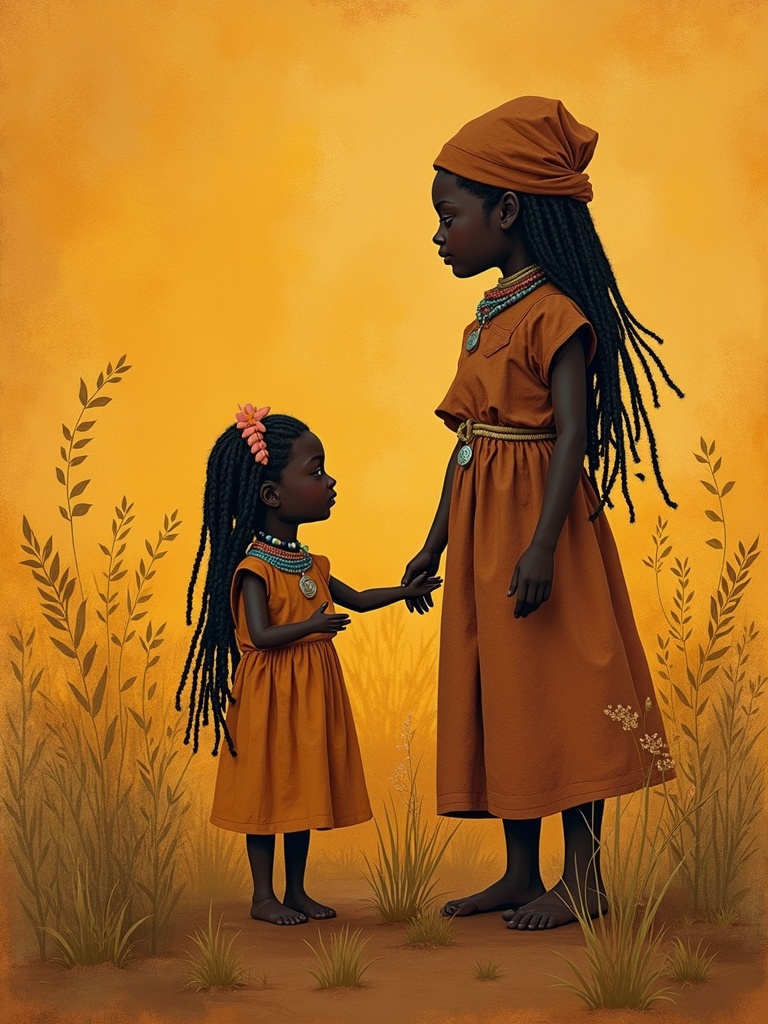
Born around 1930 in Nyeri, she works as a child on a white settler's farm and sees the injustice of stolen land.
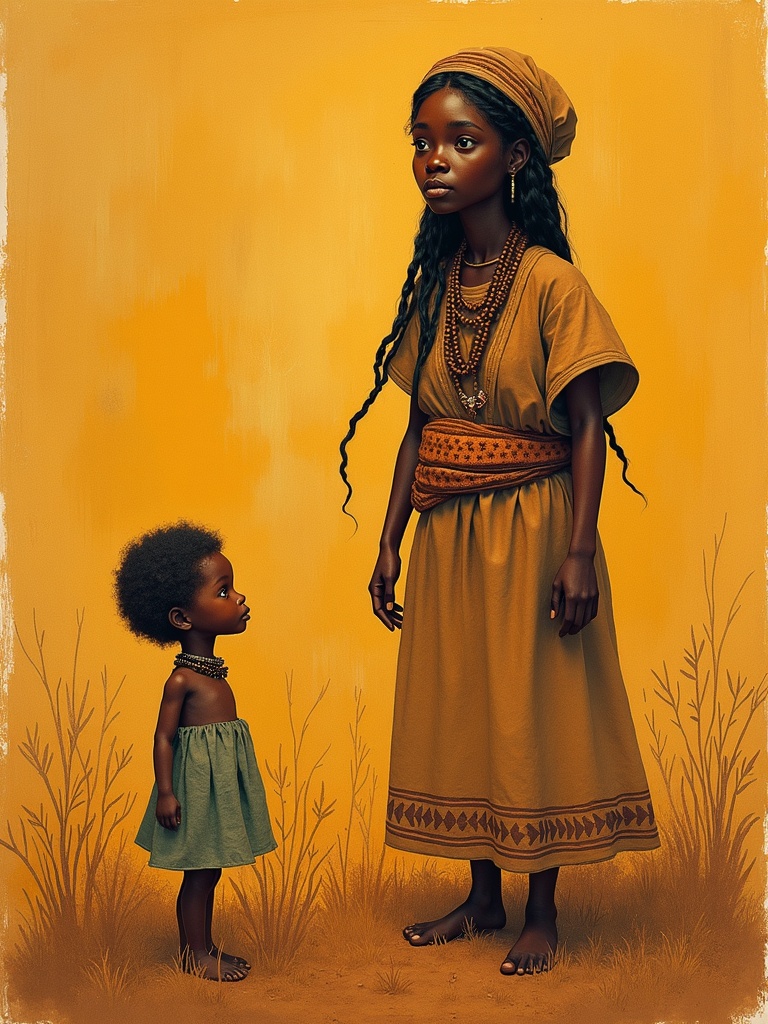
Answer all three to unlock this stage.
Unlock the previous stage first.
Unlock the previous stage first.
Unlock the previous stage first.
Crafting the doll
The doll is sewn from sturdy, honest cloth: an earth-brown and green wrap and simple jacket for her forest-fighter look, suited to the cold Aberdare highlands, alongside a traditional Kikuyu shuka — a large square cloak of deep red and dark indigo cotton tied over the left shoulder to the ankle. Her signature attribute is a long rope of grey-and-black locked hair, worn with multi-coloured glass beads and cowrie-shell ornaments in the Kikuyu style, and an optional commemoration medal and a small Kenyan-flag keepsake bundle. The education card explains the Mau Mau land-and-freedom struggle, her seventy-year vow, and the meaning of Kikuyu beadwork — never depicting violence. Sizes Classic 32 / Kidogo 18–20 / Shule 28. A share of proceeds would support Mau Mau veterans' welfare and Kenyan heritage education.
How this doll is made
This homage grounds the doll in two honest layers of her life: the sturdy earth-toned wraps of a 1950s Aberdare forest fighter, and the traditional Kikuyu dress of her people — a red-and-indigo shuka, glass-bead and cowrie-shell ornaments — crowned by the long locked hair that carried her seventy-year vow.
- Garments 2
- Accessories 3
- Materials 2
- Techniques 3
Garments
- Kikuyu shuka cloakA large square cloth, traditionally in deep red and dark indigo, tied on the left shoulder and falling to the ankles — the everyday Kikuyu women's garment that covered the whole body.DetailsEN
- Forest-fighter wrap & jacketA plain, sturdy earth-brown and green wrap and simple jacket for the cold highland forests of the Aberdares and Mount Kenya, where fighters lived off the land for years — practical, weathered cloth, never a glamorised uniform.DetailsEN
Accessories
- Beaded necklace (Kikuyu)Multi-coloured glass-bead necklaces, bracelets and anklets in the Kikuyu style, whose colours and patterns traditionally signalled age, status and marriage; beadwork was historically a women's craft across eastern Kenya.DetailsEN
- Cowrie-shell ornamentsCowrie shells strung with beads into necklaces — long prized across Kenya and associated with fertility, blessing and protection; a traditional Kikuyu and coastal adornment.DetailsEN
- White lace head-scarfA white lace scarf in which she wrapped her long locks in her honoured later years — a dignified crown for an elder veteran.DetailsEN
Materials
- Glass beads & cowrie shellsEuropean glass trade beads (from the 19th century) and natural cowrie shells, alongside older materials like seeds and bone — the raw materials of Kenyan beadwork.DetailsEN
- Red & indigo cotton clothThe bold red and dark-indigo cotton of the Kikuyu shuka, dyed in strong earth-and-blood tones that read clearly against the green highlands.DetailsEN
Techniques
- Locking / dreadlock craftHer signature long locks formed naturally in the forest and were then nurtured for life — a rope of matted hair representing a seventy-year vow, recreated for the doll in coiled grey-and-black yarn, never as a weapon.DetailsEN
- Bead-stringing & cowrie workThe women's craft of threading glass beads and cowrie shells into patterned necklaces, bracelets and anklets, each colour and arrangement carrying social meaning.DetailsEN
- Shuka tying & drapingFolding and knotting a large square cloth over the left shoulder so it drapes cleanly to the ankle — the simple, dignified way the Kikuyu shuka is worn.DetailsEN
How it's made
Every doll is sewn by hand from natural materials — built to last a lifetime and to be repaired, not replaced. Here is the shopping list and the work steps. Sizes: Classic 32 cm (heirloom) · Kidogo 18–20 cm (toddlers, no small parts) · Shule 28 cm (school edition).
Shopping list
- Natural cotton or linen for the body (skin tone), ~0.5 m
- Wool or cotton stuffing — no plastic
- Cotton thread and embroidery floss in matching colours
- Garment fabric in this doll's colours (see the fabrics above)
- Yarn for the hairstyle
- Beads, cowrie shells and trims as shown
- Sharps and embroidery needles, pins, fabric scissors, fabric marker
Work instructions
- Trace and cut the body pattern at your chosen size (Classic 32 cm / Kidogo 18–20 cm / Shule 28 cm).
- Sew the body pieces right sides together, leave an opening, turn and stuff firmly with natural fibre, then close by hand.
- Embroider the face gently and with dignity — no plastic parts for the toddler line.
- Make the hair from yarn following the chosen hairstyle and attach it securely.
- Cut and sew the garment from this doll's fabric, then dress the doll.
- Add the beadwork, shells, trims and any attribute by hand.
- Check every seam and reinforce it — the doll should be lifelong and repairable, with no loose small parts for small children.
Origin & Ethics
How we know this
This record is strongly documented (★★★★★): her unique rank of Field Marshal, the ~eleven forest years, the 1952 oath, the seventy-year dreadlocks vow and its 2022 cutting, the ivory licence (1966–1976) and her 2023 death are all in reputable press and heritage sources. Her exact birth year differs between sources (1930 or 1931), and the Mau Mau period itself remains contested in Kenyan memory; all quotes here are documented, not invented. This is an homage doll, not a likeness, and shows her dignity, never her suffering.
As a recently deceased, real Kenyan hero, this figure is offered as a respectful homage and would only proceed with the consent of Field Marshal Muthoni's family and the involvement of Kenya's national heritage institutions, such as the National Museums of Kenya and Mau Mau veterans' associations. Cultural detail of Kikuyu shuka, beadwork and cowrie ornaments would be reviewed with Kikuyu cultural advisers, and only her publicly documented words are used — each tied to a published source.
Sources
- Wikipedia, Muthoni Kirima — biography, field-marshal rank, 1952 oath, forest years, ivory licence, death 4 Sept 2023, honours
- The Africa Report, 'Kenya: Legendary Mau Mau field marshal Muthoni wa Kirima is dead' — only woman field marshal, four field marshals, Aberdare/Mt Kenya, ivory trade, 'Kenya is my only child'
- African Digital Heritage, 'A Tribute to Field Marshal Muthoni wa Kirima' — ~11 forest years, her own words, dreadlocks wrapped in white lace, bullet wound
- AURN, 'Muthoni wa Kirima: My Hair, My History' — the dreadlocks vow and its exact wording, hair as Kenya's history
- Daily Nation, 'Mama Ngina Kenyatta shaves freedom fighter Muthoni's dreadlocks' — 70-year locks shaved 2 April 2022, locks wrapped in the Kenyan flag for a museum
- Museum of British Colonialism, 'Susan's Story, Chapter 3: Field Marshal Muthoni wa Kirima' — forest service, rank and her words
- Ukombozi Review, 'Profile of Field Marshall Mûthoni wa Kîrîma' (2022) — biography and tribute
- Kikuyu Culture, 'Clothing and Language' — Kikuyu shuka cloak (red & indigo), beads and cowrie ornaments
- Behind the Name — Kikuyu names and meanings (Muthoni, Wanjiru, Nyambura, Wambui, Njeri, Wangari, Mumbi, Kamau, Kariuki, Mwangi)
- Google Arts & Culture / National Museums of Kenya, '6 Facts About Kenyan Beadwork' — glass beads, cowrie shells, female beadwork tradition