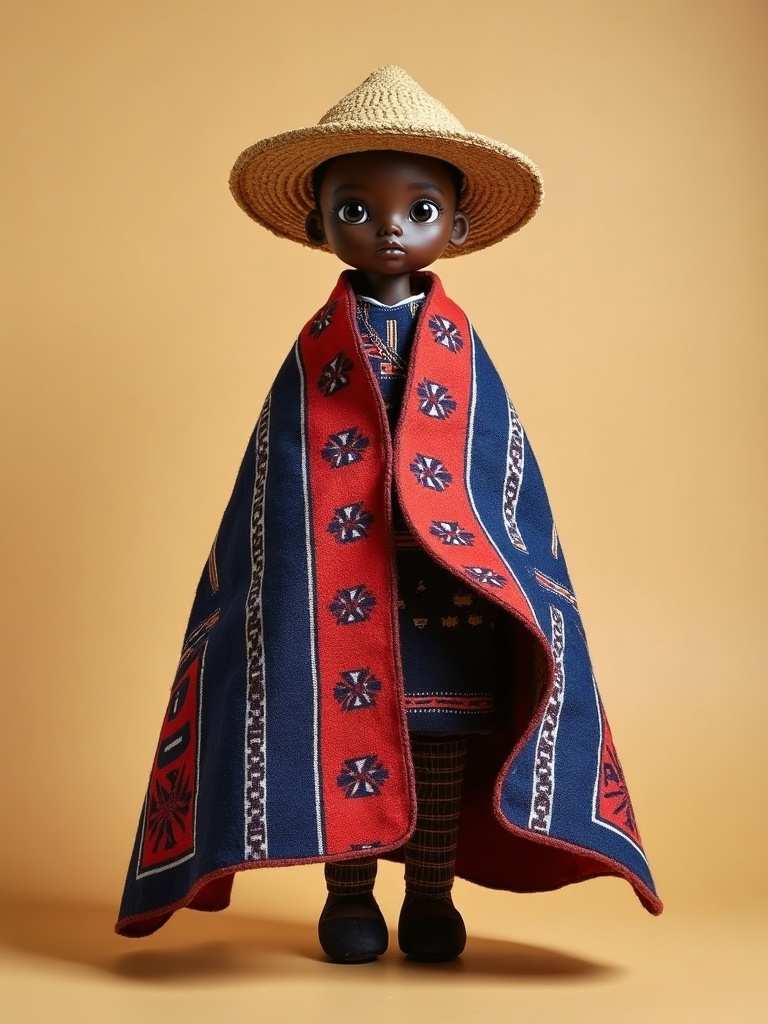
More Ancestors
Moshoeshoe I
Moshoeshoe I (≈1786–1870) was the founder and first king of the Basotho nation (today's Lesotho). In the violent upheaval of the Mfecane/Difaqane (1820s), he led his people to the near-impregnable mountain stronghold of Thaba Bosiu — “the…
- People
- Basotho
- Country
- Lesotho
- Region
- Southern Africa
- Era
- ≈1786–1870
- Theme
- Diplomacy & Shelter
Make your own
Design your Moshoeshoe I
Pick a garment, a hairstyle and a scene, enter the PIN and generate a fresh image of Moshoeshoe I with AI.
Each image is generated live with fal.ai.
Generated images
No images generated yet — be the first.
History & Meaning
Moshoeshoe I (≈1786–1870) was the founder and first king of the Basotho nation (today's Lesotho). In the violent upheaval of the Mfecane/Difaqane (1820s), he led his people to the near-impregnable mountain stronghold of Thaba Bosiu — “the Mountain at Night.” From there he defended his people against the Zulu, the Ndebele and the Boers — but his greatest weapon was diplomacy and mercy.
★ He fed his enemies
Instead of crushing the defeated, Moshoeshoe took in refugees from many peoples and welded them into one nation. He famously lent cattle to former enemies (a practice called mafisa). UNESCO honours his legacy under the words “Botho, Diplomacy and Peace.” Late in life he negotiated British protection (1868) to save his land from the Boers — securing the territory that became Lesotho. He was no pacifist saint (as a youth he led cattle raids), but where others chose conquest, he chose inclusion. (The iconic Basotho blanket was adopted from European traders around 1860 — a proud national symbol today, but not ancient; the mokorotlo straw hat is the older form.)
Others grew strong by conquering. He grew strong by sheltering. Which is the greater king?
Abilities & Development
Abilities
◆◆◆◆◆ shows how central a gift is — five diamonds mark a signature strength, fewer mark a supporting one.
He turned a mountain into a refuge and refugees into a nation.
He out-talked empires and saved his land without being conquered.
He forgave defeated enemies and lent them cattle (mafisa).
From Thaba Bosiu he repelled the strongest armies of the region.
He wove many peoples into one Basotho nation.
Development through the years
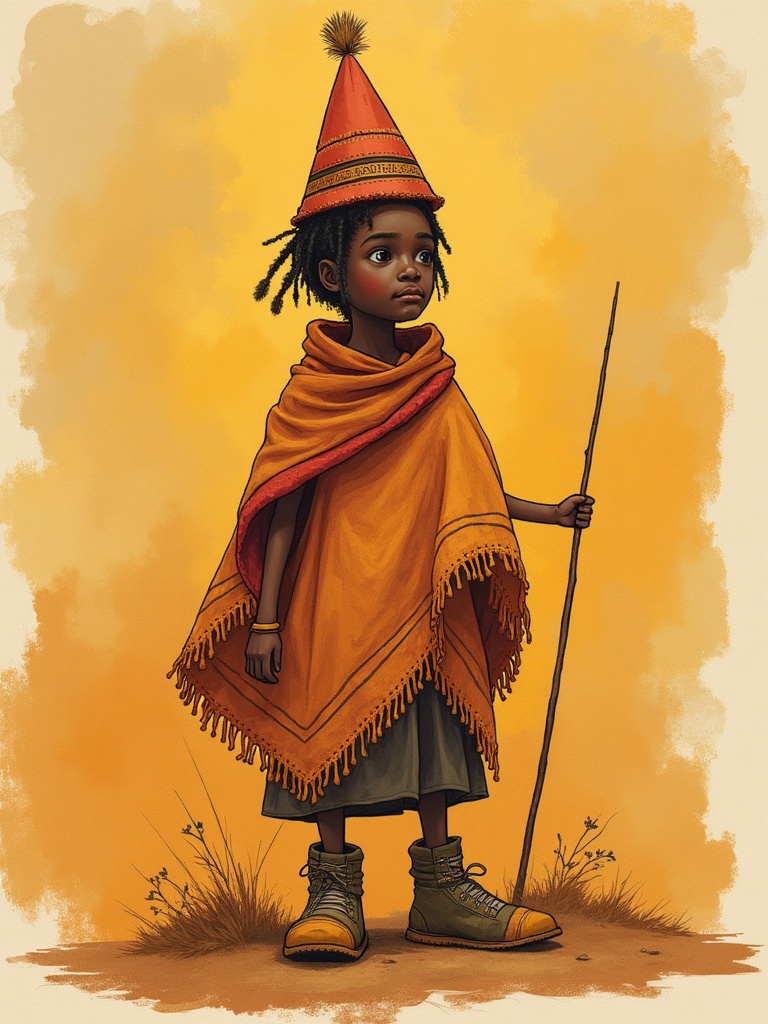
The young Moshoeshoe at Menkhoaneng, earning a name for daring and leadership.
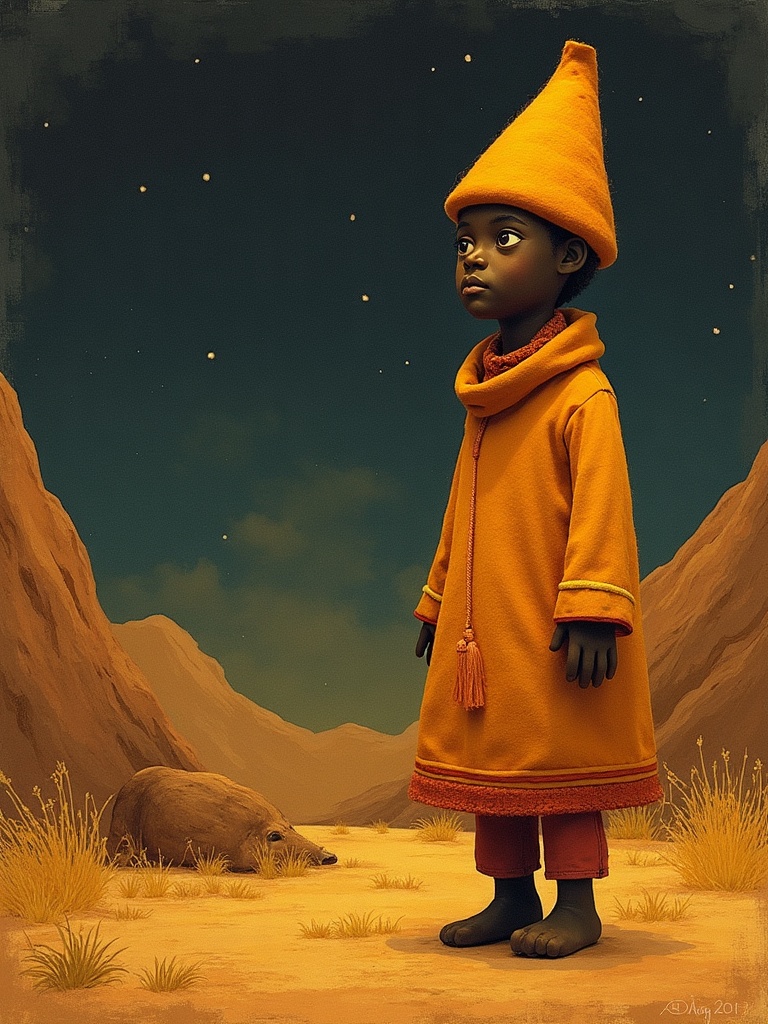
Leading his people up the great plateau of Thaba Bosiu (1820s), welcoming refugees.
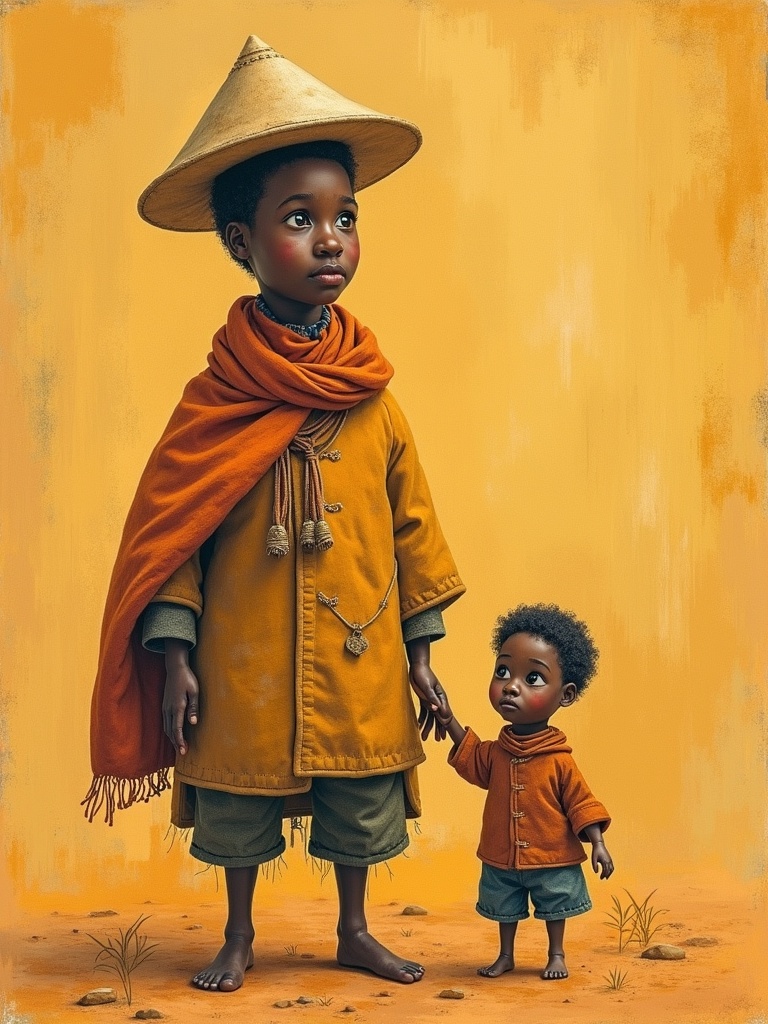
The elder statesman in a Basotho blanket (~1860s), negotiating peace.
Make & Learn
Garment: a miniature Basotho blanket (wool, blue/red with motifs) and a woven straw mokorotlo. Signature attribute: a small Basotho pony or an ox (mafisa). Education card: explains diplomacy over conquest, the Mfecane, and honestly notes the blanket's 19th-century trade origin. Sizes Classic 32 / Kidogo 18–20 / Shule 28. Proceeds → Basotho weaving / heritage in Lesotho.
How it's made
Every doll is sewn by hand from natural materials — built to last a lifetime and to be repaired, not replaced. Here is the shopping list and the work steps. Sizes: Classic 32 cm (heirloom) · Kidogo 18–20 cm (toddlers, no small parts) · Shule 28 cm (school edition).
Shopping list
- Natural cotton or linen for the body (skin tone), ~0.5 m
- Wool or cotton stuffing — no plastic
- Cotton thread and embroidery floss in matching colours
- Garment fabric in this doll's colours (see the fabrics above)
- Yarn for the hairstyle
- Beads, cowrie shells and trims as shown
- Sharps and embroidery needles, pins, fabric scissors, fabric marker
Work instructions
- Trace and cut the body pattern at your chosen size (Classic 32 cm / Kidogo 18–20 cm / Shule 28 cm).
- Sew the body pieces right sides together, leave an opening, turn and stuff firmly with natural fibre, then close by hand.
- Embroider the face gently and with dignity — no plastic parts for the toddler line.
- Make the hair from yarn following the chosen hairstyle and attach it securely.
- Cut and sew the garment from this doll's fabric, then dress the doll.
- Add the beadwork, shells, trims and any attribute by hand.
- Check every seam and reinforce it — the doll should be lifelong and repairable, with no loose small parts for small children.
Origin & Ethics
How we know this
On honesty: very well documented. We celebrate diplomacy and mercy without making him a flawless saint (youthful raids; guns and horses for defence). The Basotho blanket is a 19th-century adoption; the mokorotlo is the older form.
Committee: the Lesotho royal house & government cultural bodies, Basotho elders, historians, UNESCO (Thaba Bosiu). Living monarchy & nation → binding veto.