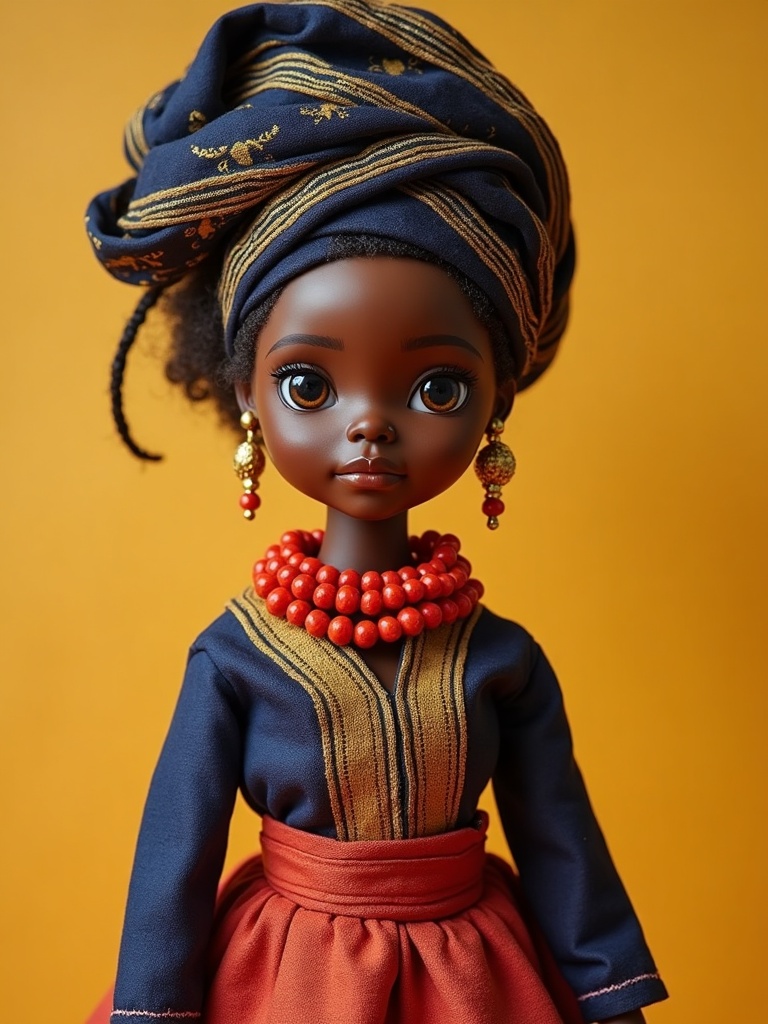
Sacrifice & Courage
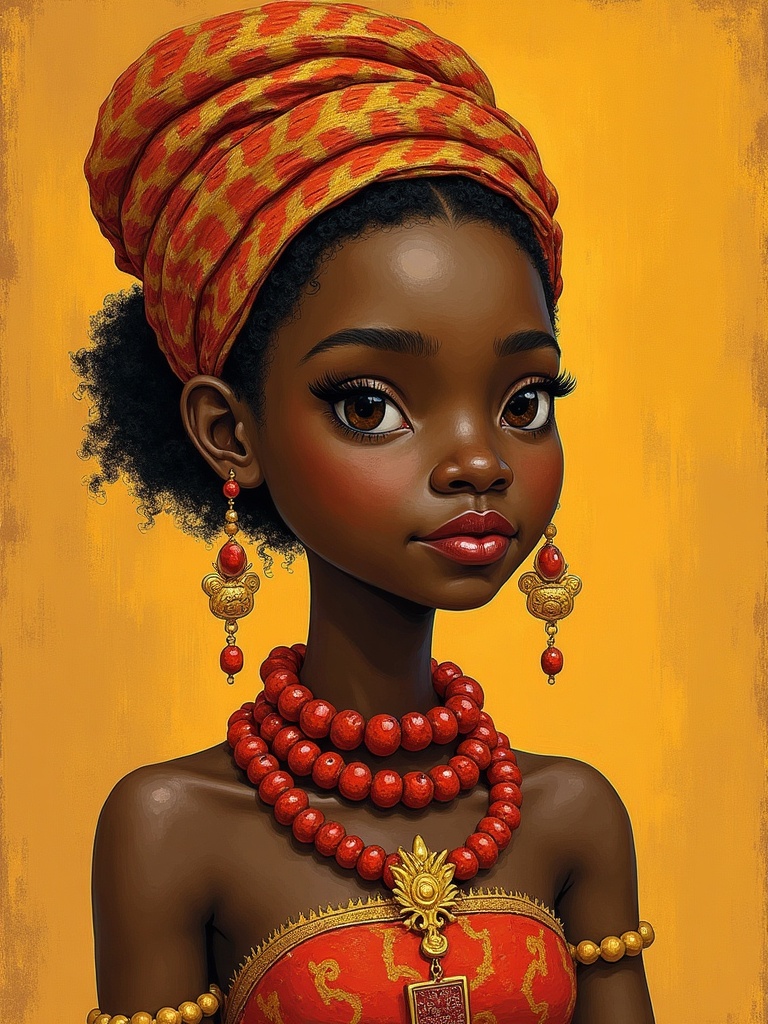
Moremi Ajasoro
In Yoruba oral legend, Moremi Ajasoro is the queen of Ile-Ife who let herself be captured to learn an enemy's secret — and then paid for victory with the one thing dearest to her.
- People
- Yoruba (Ile-Ife)
- Country
- Nigeria
- Region
- West Africa
- Era
- legendary (≈12th century)
- Theme
- Sacrifice & Courage
Make your own
Design your Moremi Ajasoro
Pick a garment, a hairstyle and a scene, enter the PIN and generate a fresh image of Moremi Ajasoro with AI.
Each image is generated live with fal.ai.
Generated images
No images generated yet — be the first.
Tradition & Origin
In Yoruba oral legend, Moremi Ajasoro is the queen of Ile-Ife who let herself be captured to learn an enemy's secret — and then paid for victory with the one thing dearest to her.
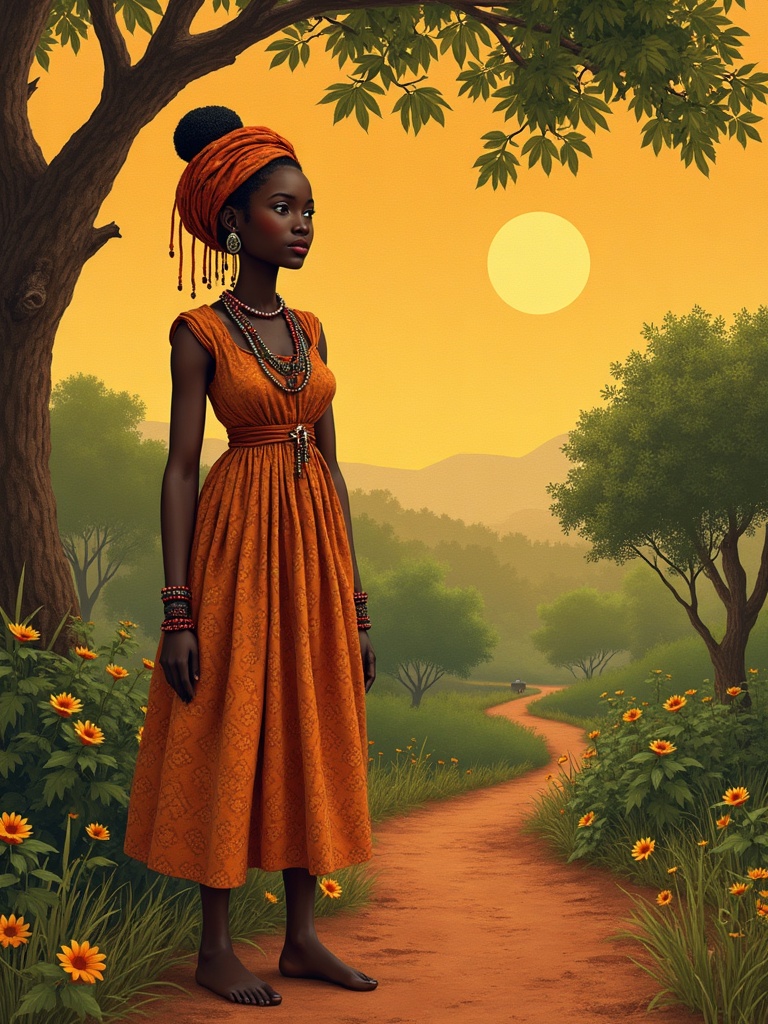
Moremi Ajasoro belongs to Yoruba oral tradition, not documented history: she is remembered as a legendary queen and folk heroine of Ile-Ife (in present-day southwestern Nigeria), set in roughly the 12th century, and is said to have been married to Oranmiyan, son of the founding ancestor Oduduwa. Her story is passed down through legend and festival rather than written record.
By the telling, Ile-Ife was repeatedly raided by the neighbouring Ugbo, whose warriors attacked completely covered in raffia palm fronds so that the people of Ife took them for spirits and fled. To break the terror, Moremi vowed an offering to the spirit of the Esimirin river and deliberately allowed herself to be taken captive by the raiders. Learning that the fearsome attackers were only men beneath grass costumes, she escaped back to Ife and shared the secret.
When the Ugbo next attacked, the people of Ife set fire to the raffia coverings; stripped of their disguise, the raiders were routed. But the river spirit demanded the promised sacrifice: not rams or cattle, but her only son, Oluorogbo. Moremi kept her vow. Grief-stricken Ife pledged to be her eternal children, and her sacrifice is commemorated each year in the Edi festival — a story that frames courage as something measured by what one is willing to lose.
Timeline
- ≈12th c. (traditional)Moremi of Offa is by tradition a queen of early Ile-Ife, wife of Oranmiyan
- in the legendIle-Ife is raided by the Ugbo 'forest people' disguised as spirits in raffia
- in the legendMoremi vows to the Esinminrin river spirit and lets herself be captured to learn the secret
- in the legendshe escapes, reveals the 'spirits' are men in grass, and Ife defeats them with fire
- in the legendthe river spirit claims her only son Oluorogbo; she keeps her vow
- 2017the Ooni of Ile-Ife unveils the towering Queen Moremi statue at Ife
Did you know?
- The Ugbo raiders terrified Ile-Ife by attacking completely covered in raffia palm fronds, so that the people took them for spirits and fled rather than fight.DetailsEN
- Moremi let herself be captured to learn the raiders' secret, then revealed it to Ife — and the annual Edi festival was begun to commemorate the sacrifice she made for the Yoruba people.DetailsEN
- The Moremi Statue of Liberty was commissioned by Ooni Adeyeye Enitan Ogunwusi and built by a team of about 200 Nigerian youths and artisans led by sculptor Victor Badejo.DetailsEN
Courage, the legend insists, is measured not by what you risk — but by what you are willing to lose.
Values & Capabilities
Capabilities
◆◆◆◆◆ shows how central a gift is — five diamonds mark a signature strength, fewer mark a supporting one.
She let the raiders capture her on purpose, so she could learn how to beat them.
She found out the terrifying "spirits" were only men hidden in raffia and grass.
She made a vow to the Esinminrin river spirit and, heartbroken, kept it.
She is honoured every year at the Edi festival as a heroine of all the Yoruba.
She freed her people but paid a price no parent should ever pay.
Development
1 of 4 stages unlocked
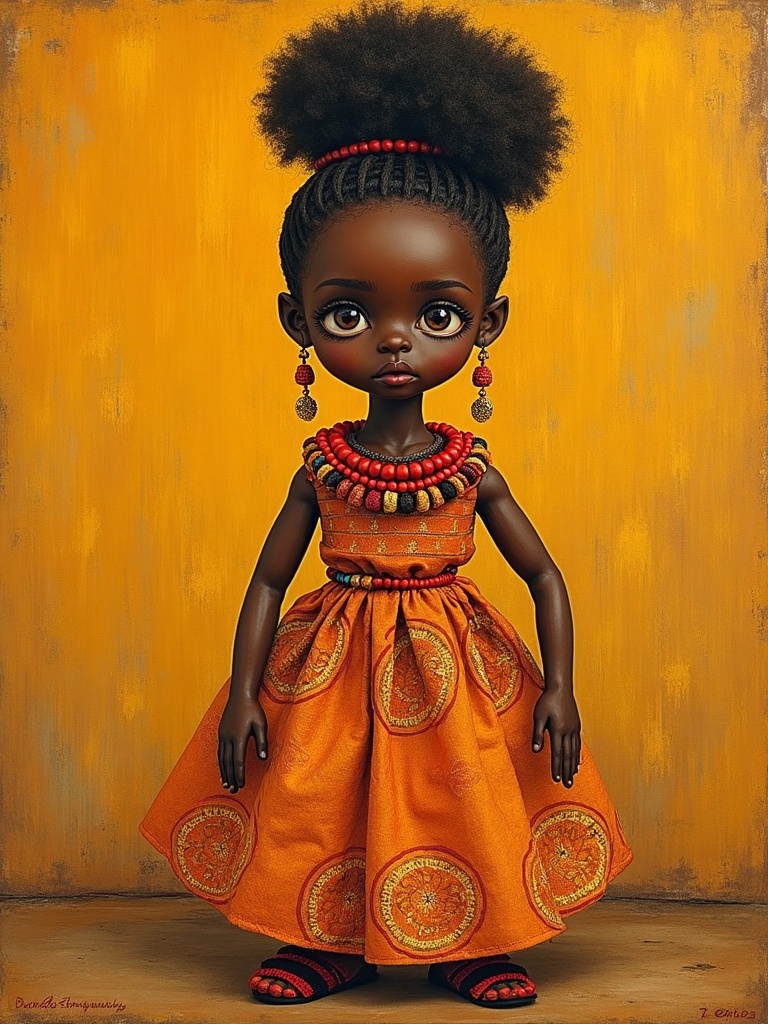
Young Moremi of Offa joins the royal house of Ile-Ife, watching her people suffer under the raiders' grip.
Answer all three to unlock this stage.
Unlock the previous stage first.
Unlock the previous stage first.
Crafting the doll
Garment: 100% cotton/silk-blend handwoven aso-oke in indigo, red and gold strip-weave, with an iro wrapper, buba blouse and a tied gele headwrap; finished with deep-red coral-style beads (child-safe, firmly sewn) and an optional indigo adire wrapper variant. Signature attribute: layered coral bead regalia and a small revealed raffia masquerade. Education card: explains that Moremi is a Yoruba oral-tradition heroine of Ile-Ife, that the 'spirits' were men in grass costumes, and that her story is treasured legend, not dated history. Sizes Classic 32 / Kidogo 18–20 / Shule 28. Proceeds → Yoruba aso-oke weaving and adire dyeing cooperatives.
How this doll is made
Moremi's look is grounded in real Yoruba and classical Ife material culture: handwoven aso-oke cloth shaped into the iro wrapper, buba blouse and tied gele, layered with the deep-red coral beads that, in Ife, marked royalty and divine sanction — the same court world that produced the famous naturalistic Ife bronze and terracotta heads. Every element is made by hand, so the doll honours living Yoruba craft rather than costume invention.
- Garments 2
- Accessories 3
- Materials 2
- Techniques 3
Garments
- Aso-oke iro & bubaA handwoven aso-oke wrapper (iro) and blouse (buba): narrow strips of richly patterned cloth sewn edge-to-edge into a full woman's ensemble for festivals, weddings and royal occasions.DetailsEN
- Gele (tied headwrap)A stiff, sculptural head tie of aso-oke wound and folded into elaborate shapes; part of the four-piece Yoruba women's outfit (buba, iro, gele, iborun) and a marker of dignity and occasion.DetailsEN
Accessories
- Coral bead regaliaLayered strands of deep-red coral beads at neck and wrists with a beaded coronet; in Ife, coral and beadwork signalled royalty, wealth and divine authority and could be worn only by kings, chiefs, priests and diviners.DetailsEN
- Beaded crown (ade)The Yoruba conical beaded crown with a fringed veil and birds/face motifs, said to descend from the first crown of Oduduwa at Ile-Ife — the emblem of sacred kingship the heroine's royal world belongs to.DetailsEN
- Ife terracotta head keepsakeA small naturalistic Ife-style terracotta head pendant echoing the classical Ife sculptural tradition of serene, lifelike portrait heads.DetailsEN
Materials
- Aso-oke cotton & silkThe fibres of aso-oke: native handspun cotton, indigo-dyed yarn, and prized wild silk — sanyan (tan caterpillar silk) and alaari (deep red/magenta) — woven into the prestige cloth of Yorubaland.DetailsEN
- Coral & brassRed coral beads and worked copper-alloy (brass/bronze) — the materials of Ife royal art and adornment, used for crowns, beadwork and the famous cast heads.DetailsEN
Techniques
- Aso-oke strip-weavingMen weave long narrow bands on a horizontal narrow loom using a 'pick-and-pick' alternation of wefts to build named patterns; the finished bands are then sewn together to make a full cloth.DetailsEN
- Ife lost-wax bronze casting & terracottaIfe artists modelled a head in wax over a clay core, encased it, melted out the wax (cire perdue) and poured in molten copper alloy to cast astonishingly lifelike heads; terracotta heads were modelled and fired by hand to the same naturalism.DetailsEN
- Adire indigo resist dyeingYoruba women paint patterns on cloth with cassava-starch paste (or tie/stitch it), then dip it in indigo so the protected areas resist the dye, creating blue-and-white designs; Abeokuta is the heart of the craft.DetailsEN
How it's made
Every doll is sewn by hand from natural materials — built to last a lifetime and to be repaired, not replaced. Here is the shopping list and the work steps. Sizes: Classic 32 cm (heirloom) · Kidogo 18–20 cm (toddlers, no small parts) · Shule 28 cm (school edition).
Shopping list
- Natural cotton or linen for the body (skin tone), ~0.5 m
- Wool or cotton stuffing — no plastic
- Cotton thread and embroidery floss in matching colours
- Garment fabric in this doll's colours (see the fabrics above)
- Yarn for the hairstyle
- Beads, cowrie shells and trims as shown
- Sharps and embroidery needles, pins, fabric scissors, fabric marker
Work instructions
- Trace and cut the body pattern at your chosen size (Classic 32 cm / Kidogo 18–20 cm / Shule 28 cm).
- Sew the body pieces right sides together, leave an opening, turn and stuff firmly with natural fibre, then close by hand.
- Embroider the face gently and with dignity — no plastic parts for the toddler line.
- Make the hair from yarn following the chosen hairstyle and attach it securely.
- Cut and sew the garment from this doll's fabric, then dress the doll.
- Add the beadwork, shells, trims and any attribute by hand.
- Check every seam and reinforce it — the doll should be lifelong and repairable, with no loose small parts for small children.
Origin & Ethics
How we know this
On honesty: legendary (★★☆☆☆). Moremi Ajasoro is a Yoruba oral-tradition heroine of Ile-Ife, not a documented historical individual — her vow, the river spirit, and the sacrifice of Oluorogbo are folklore; the ≈12th-century date is traditional, not proven. The craft (aso-oke, coral beadwork, Ife bronze/terracotta art, adire) is real, documented Yoruba material culture used here in respectful homage.
Made in respectful homage with the guidance of Yoruba cultural authorities and heritage bodies — the spirit of the Ooni of Ife's custodianship of Ile-Ife tradition, Yoruba historians and storytellers, and aso-oke/adire craft cooperatives. Sacred elements (the Edi festival, the Esinminrin river, masquerade) are shown with dignity and never as spectacle; the figure is presented as honoured oral tradition, not a finished claim of fact.
Sources
- Wikipedia — Moremi Ajasoro (Yoruba heroine of Ile-Ife, Ugbo raiders, Esimirin vow, Oluorogbo, Edi festival, statue)
- Vanguard (Bisi Adeleye-Fayemi) — Reflections on the legend of Moremi Ajasoro
- Kentake Page — Moremi Ajasoro: The Yoruba Lady Liberty
- Wikipedia — Aso oke (strip-woven Yoruba cloth: etu, sanyan, alaari; narrow loom)
- Google Arts & Culture (Pan-Atlantic University) — A close-up on Aso-Oke of the Yoruba
- Journal of Pan African Studies — Aso-Oke Production and Use Among the Yoruba of Southwestern Nigeria (PDF)
- Wikipedia — Yoruba clothing (buba, iro, gele, iborun; aso-oke)
- Wikipedia — Adire (textile art): Yoruba indigo resist dye, cassava-starch resist, Abeokuta
- Smarthistory — Head of a ruler, Ife (classical Ife naturalism, copper alloy)
- Wikipedia — Bronze Head from Ife (Wunmonije find, lost-wax, 14th–15th c.)
- The Metropolitan Museum of Art — African Lost-Wax Casting (cire perdue, Ife & Benin)
- Wikipedia — Oba's crown (Yoruba beaded crown / ade, divine kingship, Oduduwa)