Reform, Justice & Diplomacy
Idris Alooma
Idris Alooma (reigned ≈1564–1596) was the greatest Mai (ruler) of the Kanem–Bornu Empire , a thousand-year-old state of the Kanuri people around Lake Chad (today’s Chad, north-east Nigeria and Niger). His capital was Ngazargamu . He came…
- People
- Kanuri (Sayfawa dynasty)
- Country
- Chad
- Region
- Central Africa
- Era
- ≈1564–1596
- Theme
- Reform, Justice & Diplomacy
Make your own
Design your Idris Alooma
Pick a garment, a hairstyle and a scene, enter the PIN and generate a fresh image of Idris Alooma with AI.
Each image is generated live with fal.ai.
Generated images
No images generated yet — be the first.
Tradition & Origin
Idris Alooma (reigned ≈1564–1596) was the greatest Mai (ruler) of the Kanem–Bornu Empire, a thousand-year-old state of the Kanuri people around Lake Chad (today’s Chad, north-east Nigeria and Niger). His capital was Ngazargamu. He came to the throne after the queen Aissa Koli had steadied the realm.
★ Fair judges and far-off friends
Alooma ended the long civil wars, reunited the heartland, then rebuilt his empire from the inside out. He reformed the law — appointing qualified judges (qadis) so disputes were settled by justice rather than power — built brick mosques, and encouraged learning and the pilgrimage to Mecca. Abroad he opened relations with the Ottoman Empire, Tripoli, Egypt and Morocco, won safety for Bornu travellers, and received a 200-person Ottoman embassy across the Sahara. We know this in detail because his chief imam, Ahmad ibn Furtu, wrote chronicles of his reign.
Honesty: his was also an age of war (he modernised his army with firearms and walled camps) and of the trans-Saharan slave trade, in which Bornu took part. We name this plainly while honouring his justice, learning and diplomacy.
He found a kingdom tired of war. He answered with judges, schools and envoys. Strength can be a fair court as much as a sharp sword.
Values & Capabilities
Capabilities
◆◆◆◆◆ shows how central a gift is — five diamonds mark a signature strength, fewer mark a supporting one.
He put the law on a firm footing, appointing trained judges (qadis) to settle disputes fairly across the empire — so an ordinary person could seek justice, not just the powerful.
He exchanged embassies with the Ottoman sultan and the rulers of Tripoli, Egypt and Morocco, securing safe passage for his people abroad; an Ottoman delegation of 200 crossed the Sahara to his court.
He ended the civil wars that had torn Kanem–Bornu apart and reunited it under one strong, stable rule.
He built brick mosques, invited scholars, and encouraged literacy and pilgrimage; his own court produced written chronicles.
He learned from everywhere — adopting firearms and trainers from the Ottomans, walled camps, armoured horsemen, and boat-troops on Lake Chad — to defend his people.
Development
1 of 3 stages unlocked
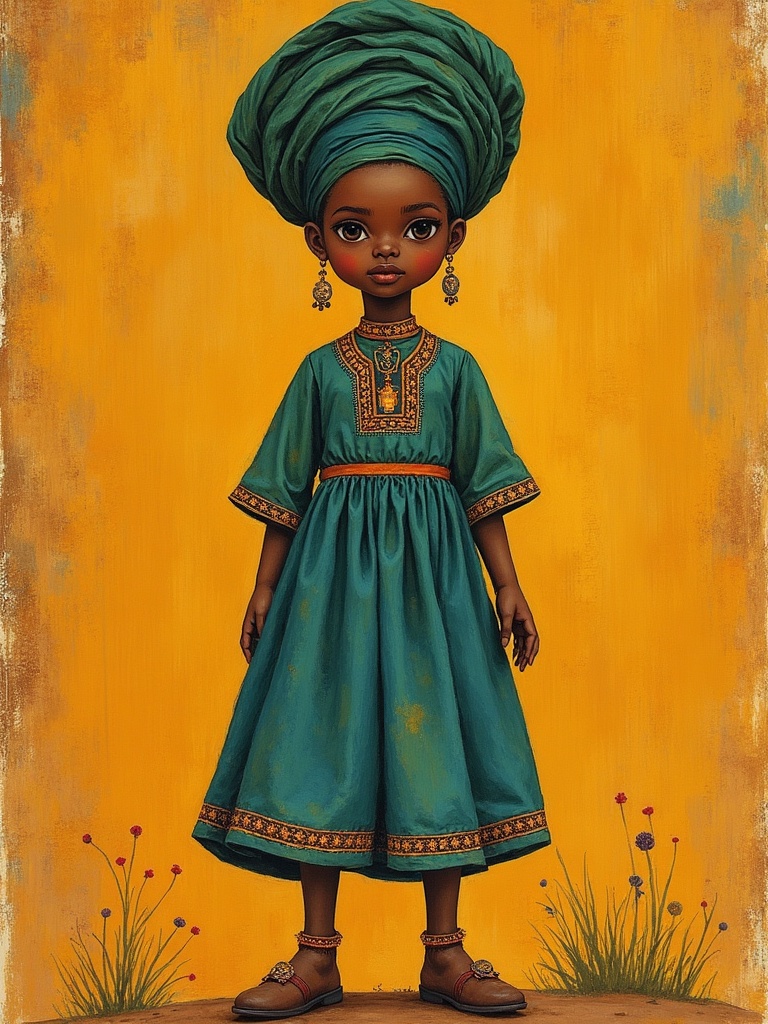
The young ruler taking a kingdom worn by war.
Answer all three to unlock this stage.
Unlock the previous stage first.
Make & Learn
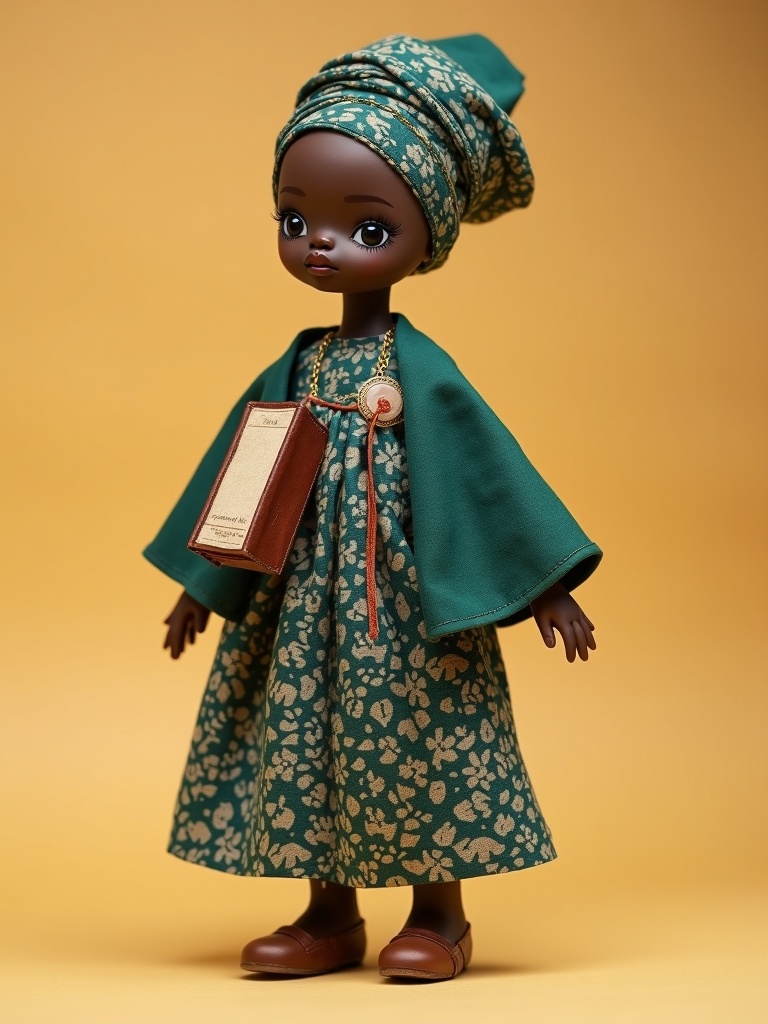
Garment: an indigo-and-green embroidered boubou and a layered turban, leather amulet-pouches (child-safe). Signature attribute: a small law-book and a sealed envoy’s letter. Education card: Kanem–Bornu and Lake Chad, fair courts, the trans-Saharan world that linked Bornu to the Ottomans — and honestly the era’s slave trade. Sizes as standard. Proceeds → Lake Chad / Kanuri heritage.
How it's made
Every doll is sewn by hand from natural materials — built to last a lifetime and to be repaired, not replaced. Here is the shopping list and the work steps. Sizes: Classic 32 cm (heirloom) · Kidogo 18–20 cm (toddlers, no small parts) · Shule 28 cm (school edition).
Shopping list
- Natural cotton or linen for the body (skin tone), ~0.5 m
- Wool or cotton stuffing — no plastic
- Cotton thread and embroidery floss in matching colours
- Garment fabric in this doll's colours (see the fabrics above)
- Yarn for the hairstyle
- Beads, cowrie shells and trims as shown
- Sharps and embroidery needles, pins, fabric scissors, fabric marker
Work instructions
- Trace and cut the body pattern at your chosen size (Classic 32 cm / Kidogo 18–20 cm / Shule 28 cm).
- Sew the body pieces right sides together, leave an opening, turn and stuff firmly with natural fibre, then close by hand.
- Embroider the face gently and with dignity — no plastic parts for the toddler line.
- Make the hair from yarn following the chosen hairstyle and attach it securely.
- Cut and sew the garment from this doll's fabric, then dress the doll.
- Add the beadwork, shells, trims and any attribute by hand.
- Check every seam and reinforce it — the doll should be lifelong and repairable, with no loose small parts for small children.
Origin & Ethics
How we know this
Very well documented via Ibn Furtu’s chronicles (a rare contemporary African record); celebrate justice, diplomacy and learning while naming the warfare and the trans-Saharan slave trade of the era honestly.
Committee: Kanuri & Lake Chad (Chad/Nigeria/Niger) heritage bodies, historians of the Sahel, Islamic-heritage scholars. 5-step protocol.