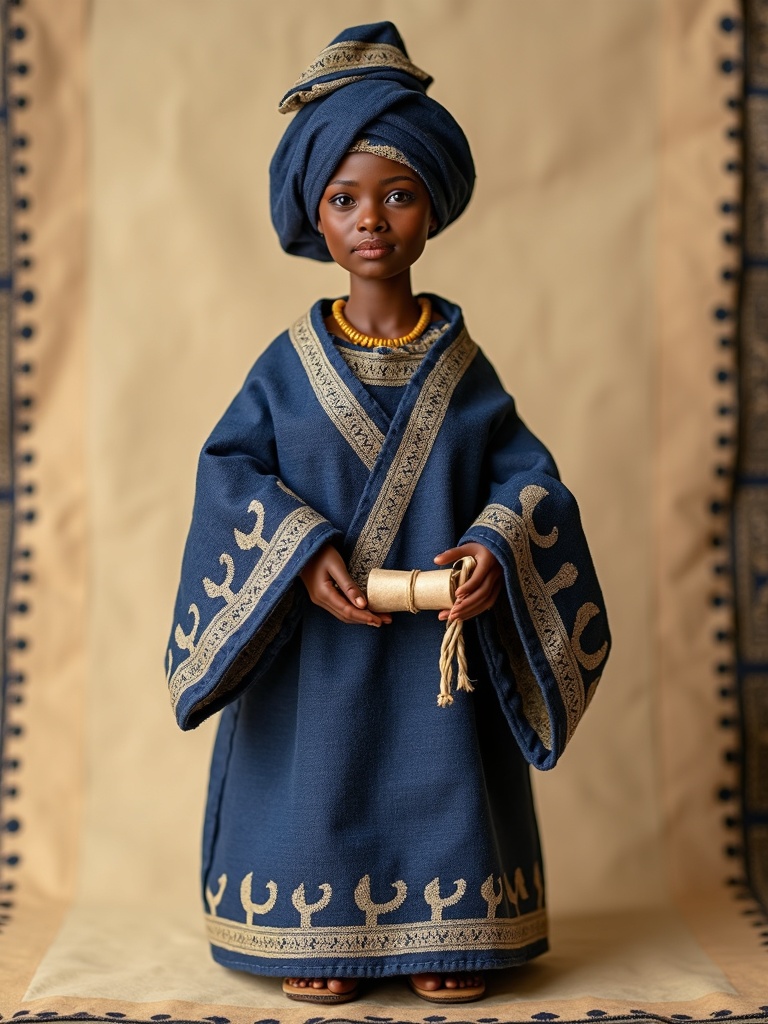
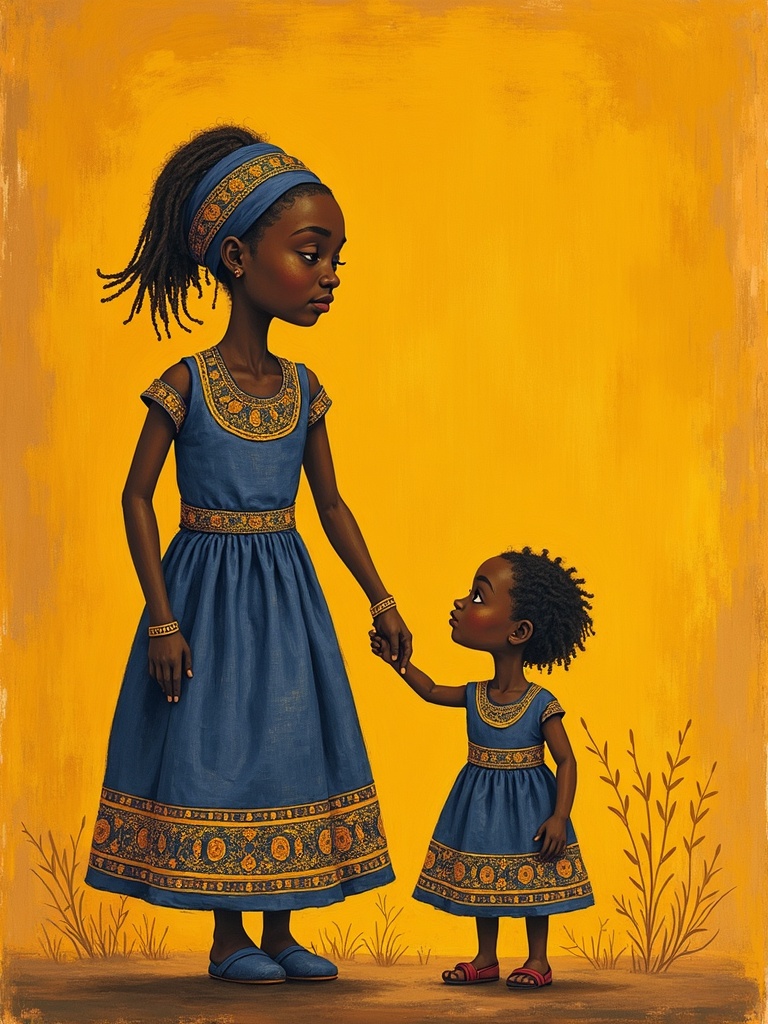
AI design preview — not a photo of the finished handmade doll
Mother of Women's Rights
Funmilayo Ransome-Kuti
In Abeokuta, the Yoruba city famous for its indigo cloth, a teacher named Funmilayo Ransome-Kuti turned a women's sewing-and-reading club into a movement of thousands — and forced a king and an empire to listen.
- People
- Yoruba, Nigeria
- Country
- Nigeria
- Region
- West Africa
- Era
- 1900–1978
- Theme
- Mother of Women's Rights
⚖ A respectful concept
Funmilayo Ransome-Kuti was a real, documented public figure who died in 1978; her descendants and Nigeria's heritage community keep her memory. This doll is a respectful homage, never an exact likeness of her face — only documented words attributed to her in published sources are quoted, and the design is offered as a draft for review, not a finished portrait. Family and Nigerian cultural bodies' consent is implied and welcomed. Her life is honoured with dignity; the violence she suffered in 1977 is named soberly and never depicted.
Make your own
Design your Funmilayo Ransome-Kuti
Pick a garment, a hairstyle and a scene, enter the PIN and generate a fresh image of Funmilayo Ransome-Kuti with AI.
⚖ AI homage concept — not a likeness of the real person.
Each image is generated live with fal.ai.
Generated images
AI design preview — not a photo of the finished handmade doll
No images generated yet — be the first.
Tradition & Origin
In Abeokuta, the Yoruba city famous for its indigo cloth, a teacher named Funmilayo Ransome-Kuti turned a women's sewing-and-reading club into a movement of thousands — and forced a king and an empire to listen.
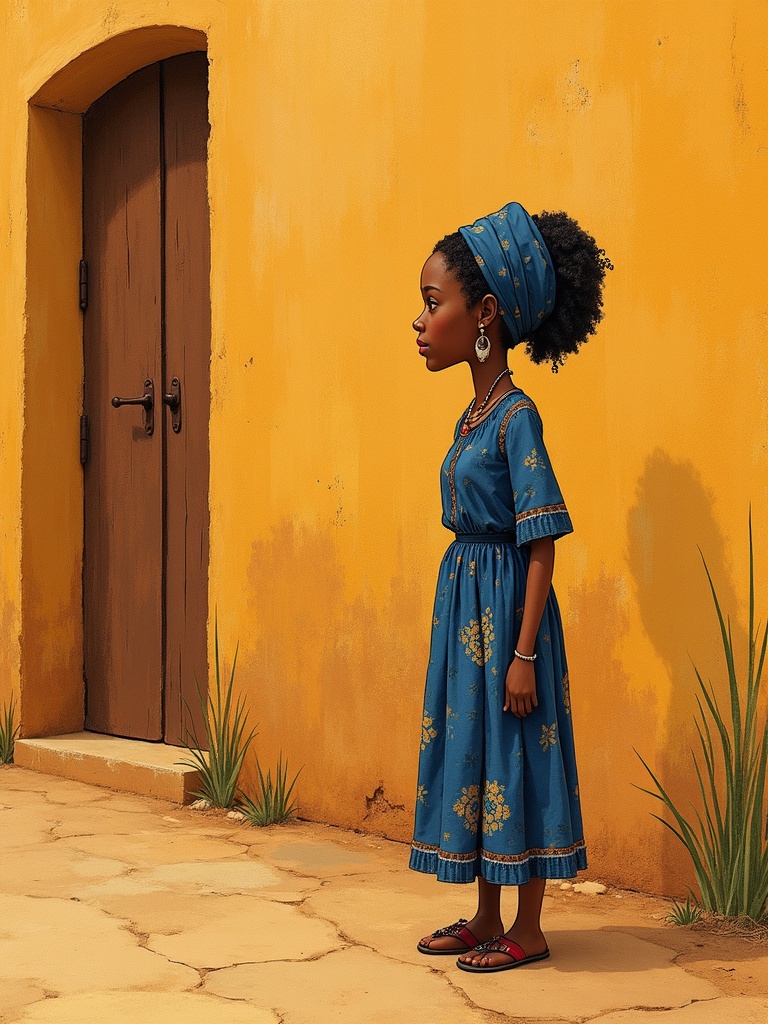
Born on 25 October 1900 in Abeokuta, in the Egba heartland of south-western Nigeria, she was the first female pupil at Abeokuta Grammar School and later studied in England (1919–1923), where she met anti-colonial and socialist ideas. Returning home, she taught, opened early literacy classes for women, and married the Reverend Israel Oludotun Ransome-Kuti. She also adopted the Yoruba name Funmilayo — 'give me joy' — in place of an English one.
In 1946 she founded the Abeokuta Women's Union, which grew to mobilise up to 10,000 women against a flat-rate colonial tax that fell on poor market traders. Her genius was to unite class with class: educated organisers wore traditional Yoruba iro-and-buba dress to meetings so they stood, visibly, alongside the market women. Under the cry 'No taxation without representation,' the union used petitions, press statements, all-night sit-outs and biting Yoruba protest songs sung outside the palace.
In January 1949 the campaign forced the Alake, Oba Ademola II, to abdicate temporarily; the flat tax on women was suspended, and four women — Ransome-Kuti among them — won the first seats women had ever held on the local council. For this she was hailed as the 'Lioness of Lisabi.' She carried the fight nationwide, demanding the women's vote, and earned the Lenin Peace Prize in 1970. Reportedly the first woman to drive a car in Abeokuta, she crossed many lines drawn for women of her day.
Her legacy lived on through a remarkable family — the musician Fela and the doctors-activists Beko and Olikoye Ransome-Kuti. Named honestly: in February 1977 soldiers raided Kalakuta Republic, Fela's compound, and she was thrown from an upper-floor window; she never recovered and died on 13 April 1978. Nigeria remembers her not for how she was harmed, but for the rights she won for millions.
Timeline
- 1900Born 25 October in Abeokuta, Southern Nigeria.
- 1919–1923Studies in England, where she meets anti-colonial and socialist ideas.
- 1946Founds the Abeokuta Women's Union against the flat-rate tax on market women.
- 1949The revolt forces the Alake to abdicate; women win their first council seats.
- 1970Receives the Lenin Peace Prize for her work.
- 1978Dies on 13 April from injuries of the 1977 Kalakuta raid.
Did you know?
- Educated organisers like Ransome-Kuti deliberately wore traditional Yoruba dress to union meetings so they stood, visibly, as one with the market women.DetailsEN
- She is widely recorded as the first woman to drive a car in Abeokuta, after the family shipped a second-hand car from England around 1935.DetailsEN
- Of colonial rule she said, 'We had equality till Britain came' — recalling that Yoruba women once owned property and traded freely before being marginalised.DetailsEN
- Abeokuta, her home city, is recognised as 'the capital of adire-making in Nigeria' — the indigo resist-dyed cloth made for generations by Egba women.DetailsEN
She proved that a market woman's voice, joined to ten thousand others, can move a kingdom.
Values & Capabilities
Capabilities
◆◆◆◆◆ shows how central a gift is — five diamonds mark a signature strength, fewer mark a supporting one.
She turned thousands of unheard market women into one organised, unstoppable political voice.
She faced down both a colonial government and a traditional king — and won.
She united poor market traders and educated women into one movement that no class line could split.
She crossed boundaries set for women — reportedly the first woman in Abeokuta to drive a car.
An educator first, she carried learning, suffrage and a famous musical family forward.
Development
1 of 6 stages unlocked
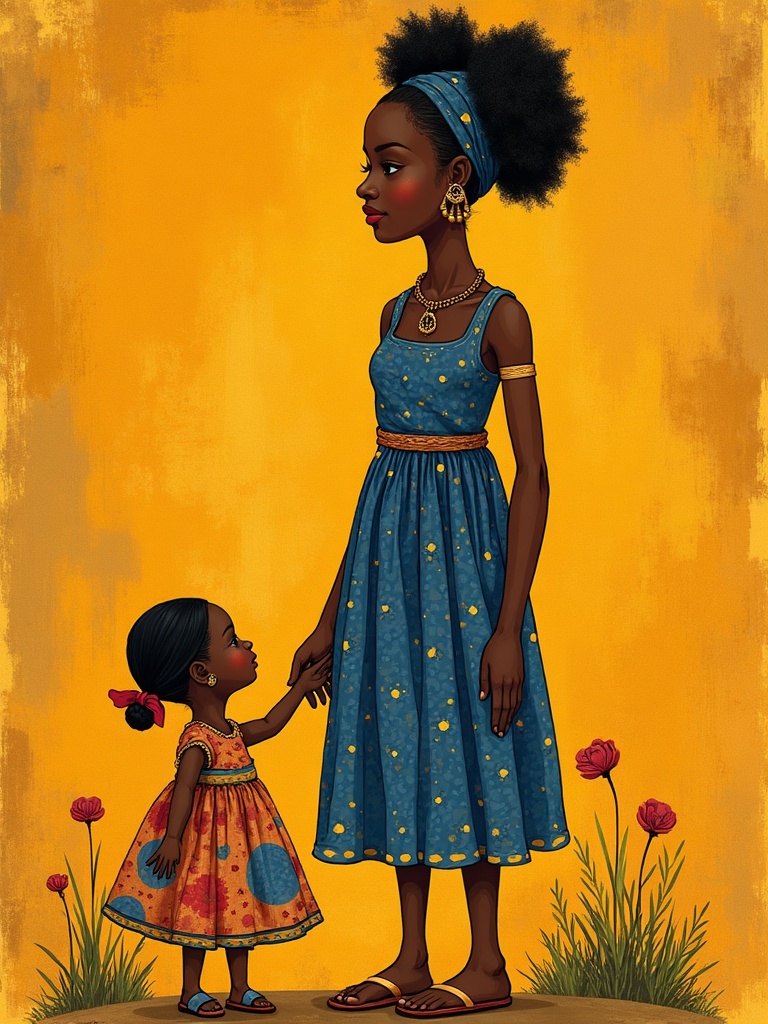
Born in Abeokuta in 1900, she became the first female pupil at Abeokuta Grammar School and later studied in England.
Answer all three to unlock this stage.
Unlock the previous stage first.
Unlock the previous stage first.
Unlock the previous stage first.
Unlock the previous stage first.
Crafting the doll
This doll is grounded in the cloths of Egba Yorubaland: indigo adire, the resist-dyed cotton for which Abeokuta is famous, and handwoven aso-oke for ceremonial iro-and-buba sets, finished with a folded gele head-tie. Her signature attribute is a small raffia-tied petition scroll — a reminder that her power lay in organised words, not weapons. The education card on the back tells how market women's solidarity ended an unjust tax. Sizes: Classic 32 / Kidogo 18–20 / Shule 28. A share of proceeds supports girls' education and women's literacy programmes in Nigeria.
How this doll is made
Her look is built from the cloths of Egba Yorubaland — above all the indigo adire of Abeokuta and handwoven aso-oke — the same dress educated organisers chose to stand alongside market women.
- Garments 2
- Accessories 2
- Materials 2
- Techniques 3
Garments
- Iro and BubaThe Yoruba women's set: a large wrapper (iro) tied at the waist with a loose blouse (buba), the everyday and ceremonial dress of Egba women.DetailsEN
- Aso-Oke Ceremonial SetHandwoven cloth (etu, sanyan, alaari) used for iro-and-buba and gele on important occasions; deep etu indigo with thin white stripes suits an honoured elder.DetailsEN
Accessories
Materials
- Indigo DyeNatural indigo from local leaves gives adire its deep blue; Abeokuta became 'the capital of adire-making in Nigeria'.DetailsEN
- Cotton ClothPlain cotton shirting, dyed and patterned by hand, is the base fabric for adire — its boom in the early 20th century made many Egba women independent traders.DetailsEN
Techniques
- Adire ElekoResist-dyeing by painting cassava-starch paste onto cloth with a feather or carved calabash before indigo dipping, leaving pale patterns.DetailsEN
- Adire OnikoTied resist: raffia is bound tightly around seeds or pebbles so the dye cannot reach them, making white rings on a blue ground.DetailsEN
- Aso-Oke Narrow-Loom WeavingStrips of cloth are hand-woven on a narrow loom and sewn together; the centuries-old technique gives the fabric its prized texture.DetailsEN
How it's made
Every doll is sewn by hand from natural materials — built to last a lifetime and to be repaired, not replaced. Here is the shopping list and the work steps. Sizes: Classic 32 cm (heirloom) · Kidogo 18–20 cm (toddlers, no small parts) · Shule 28 cm (school edition).
Shopping list
- Natural cotton or linen for the body (skin tone), ~0.5 m
- Wool or cotton stuffing — no plastic
- Cotton thread and embroidery floss in matching colours
- Garment fabric in this doll's colours (see the fabrics above)
- Yarn for the hairstyle
- Beads, cowrie shells and trims as shown
- Sharps and embroidery needles, pins, fabric scissors, fabric marker
Work instructions
- Trace and cut the body pattern at your chosen size (Classic 32 cm / Kidogo 18–20 cm / Shule 28 cm).
- Sew the body pieces right sides together, leave an opening, turn and stuff firmly with natural fibre, then close by hand.
- Embroider the face gently and with dignity — no plastic parts for the toddler line.
- Make the hair from yarn following the chosen hairstyle and attach it securely.
- Cut and sew the garment from this doll's fabric, then dress the doll.
- Add the beadwork, shells, trims and any attribute by hand.
- Check every seam and reinforce it — the doll should be lifelong and repairable, with no loose small parts for small children.
Origin & Ethics
How we know this
This record is highly documented: her dates, the Abeokuta Women's Union, the tax revolt, the 1949 abdication of the Alake, her honours and her death from 1977 raid injuries are all attested in encyclopaedic and journalistic sources. The 'first woman to drive a car' claim is real but is most carefully recorded as first in Abeokuta. As a recent real person, she is treated under rights discipline: homage not likeness, documented quotes only, dignity never violence.
This homage is offered for the review of the Ransome-Kuti family and descendants and of Nigerian cultural and heritage bodies (such as Ogun State and Abeokuta heritage institutions and the Nigerian women's-movement organisations that carry her legacy). Only documented, published words are attributed to her, and the figure is presented as a respectful draft rather than a finished or authorised likeness, to be amended on request.
Sources
- Funmilayo Ransome-Kuti — Wikipedia
- Funmilayo Ransome-Kuti, Nigerian Feminist & Leader — Encyclopaedia Britannica
- Funmilayo Ransome-Kuti (1900–1978) — BlackPast.org
- The Lioness of Lisabi who ended unfair taxes — Al Jazeera
- Abeokuta Women's Revolt — Wikipedia
- Funmilayo Ransome-Kuti — African Feminist Forum
- Yoruba clothing (iro, buba, gele, aso-oke) — Wikipedia
- Adire (textile art) — Wikipedia
- Aso oke handwoven cloth — Wikipedia