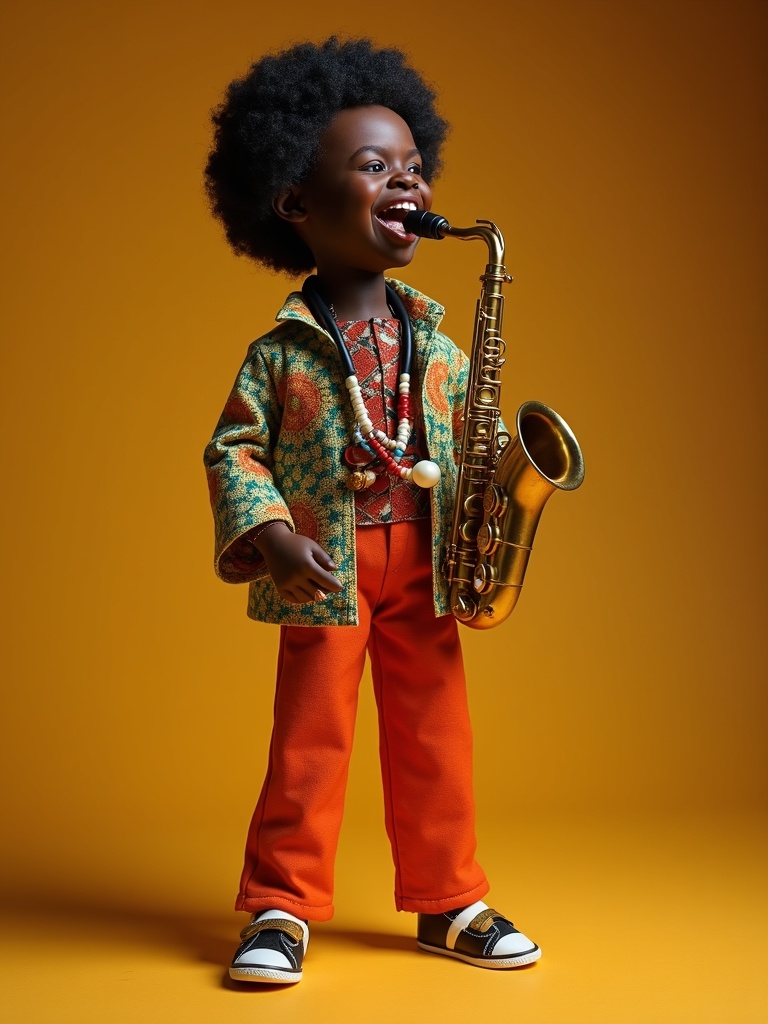
AI design preview — not a photo of the finished handmade doll
Afrobeat & Defiance
Fela Kuti
He took the rhythms of his grandmothers, the funk of a faraway city, and the anger of a whole country — and out of them he built a sound so brave that an army once tried to silence it.
- People
- Yoruba
- Country
- Nigeria
- Region
- West Africa
- Era
- 1938–1997
- Theme
- Afrobeat & Defiance
⚖ A respectful concept
Fela Aníkúlápó Kuti was a real, documented public figure who died in 1997; his children (among them Femi and Yeni Anikulapo-Kuti), his estate and Nigeria's heritage community keep his memory and run the New Afrika Shrine. This doll is a respectful homage and is never an exact likeness of his face — only documented words attributed to him in published sources are quoted here, each with a source. The figure is offered as an educational draft for review, not a finished or licensed portrait, with the consent of his family and estate implied and welcomed. The 1977 Kalakuta raid is named honestly and with dignity, and never depicted as violence.
Make your own
Design your Fela Kuti
Pick a garment, a hairstyle and a scene, enter the PIN and generate a fresh image of Fela Kuti with AI.
⚖ AI homage concept — not a likeness of the real person.
Each image is generated live with fal.ai.
Generated images
AI design preview — not a photo of the finished handmade doll
No images generated yet — be the first.
Tradition & Origin
He took the rhythms of his grandmothers, the funk of a faraway city, and the anger of a whole country — and out of them he built a sound so brave that an army once tried to silence it.

Fela Aníkúlápó Kuti was born on 15 October 1938 in Abeokuta, in the Yoruba Egba heartland of south-western Nigeria, into one of the country's most remarkable families. His mother was Funmilayo Ransome-Kuti, the women's-rights leader who organised thousands of market women; his brothers grew up to be doctors and activists. Sent abroad to study, Fela trained in music in London, but it was a 1969 journey to the United States — and his meeting with Black political movements there — that turned his music toward justice.
Back home, he forged a brand-new genre he called Afrobeat: traditional Yoruba rhythms and West African highlife braided together with American jazz and funk, played by a large band — first Africa '70 (with the great drummer Tony Allen), later Egypt '80 — over long, hypnotic, danceable grooves. He sang mostly in Nigerian Pidgin English so that listeners all across Africa, not only the educated few, could understand exactly what he meant.
And what he meant was usually defiance. He made his Lagos home into the Kalakuta Republic, a commune for musicians that he declared independent of military rule, and he played at his own Afrika Shrine. His 1977 album 'Zombie' mocked soldiers who obey orders without thinking — and the army answered with fury. Hard history, told plainly: in February 1977 soldiers raided and burned Kalakuta, and his mother Funmilayo was thrown from a window; she never recovered and died the following year. Fela mourned her, and kept singing.
They called him 'the Black President'. He founded the Movement of the People and even tried to run for president; he was arrested again and again, yet he never stopped. When he died in Lagos in 1997, an enormous crowd filled the streets. Today his children carry his fire: the New Afrika Shrine in Lagos hosts the yearly Felabration festival, and a whole new generation of African pop — now known worldwide — traces its roots back to the beat he invented.
Timeline
- 1938Born 15 October in Abeokuta, Nigeria, into the Ransome-Kuti family.
- 1969A visit to the United States and Black political movements reshapes his artistic purpose.
- 1970Founds the band Africa '70 and his Afrika Shrine; later declares his home the Kalakuta Republic.
- 1977Releases 'Zombie'; soldiers raid and burn Kalakuta, fatally injuring his mother.
- 1979Founds the Movement of the People and attempts to run for president of Nigeria.
- 1997Dies on 2 August in Lagos; remembered as the father of Afrobeat.
Did you know?
- Fela sang most of his songs in Nigerian Pidgin English on purpose, so that ordinary people across Africa — not only the educated few — could understand his message.DetailsEN
- He was the son of Funmilayo Ransome-Kuti, the famous women's-rights leader — making the Ransome-Kuti family one of the most influential in modern Nigerian history.DetailsEN
- Each year his family holds 'Felabration' at the New Afrika Shrine in Lagos to celebrate his birthday and music — it has become an official Lagos tourist event.DetailsEN
- He called music 'the weapon of the future' — the very title of the 1982 documentary filmed with him in Lagos.DetailsEN
A song cannot stop a soldier — but it can change the children who grow up singing it.
Values & Capabilities
Capabilities
◆◆◆◆◆ shows how central a gift is — five diamonds mark a signature strength, fewer mark a supporting one.
He invented a whole new sound by weaving Yoruba rhythm, highlife, jazz and funk into one unstoppable groove.
He used one fearless song to mock soldiers who obey orders without thinking — and the whole country sang along.
He believed music was not just for dancing but a tool to wake people up and set minds free.
He turned his home into an open commune for musicians and free thinkers — even declaring it 'independent'.
He stood up to dictators again and again, founded his own movement, and even tried to run for president.
Development
1 of 6 stages unlocked
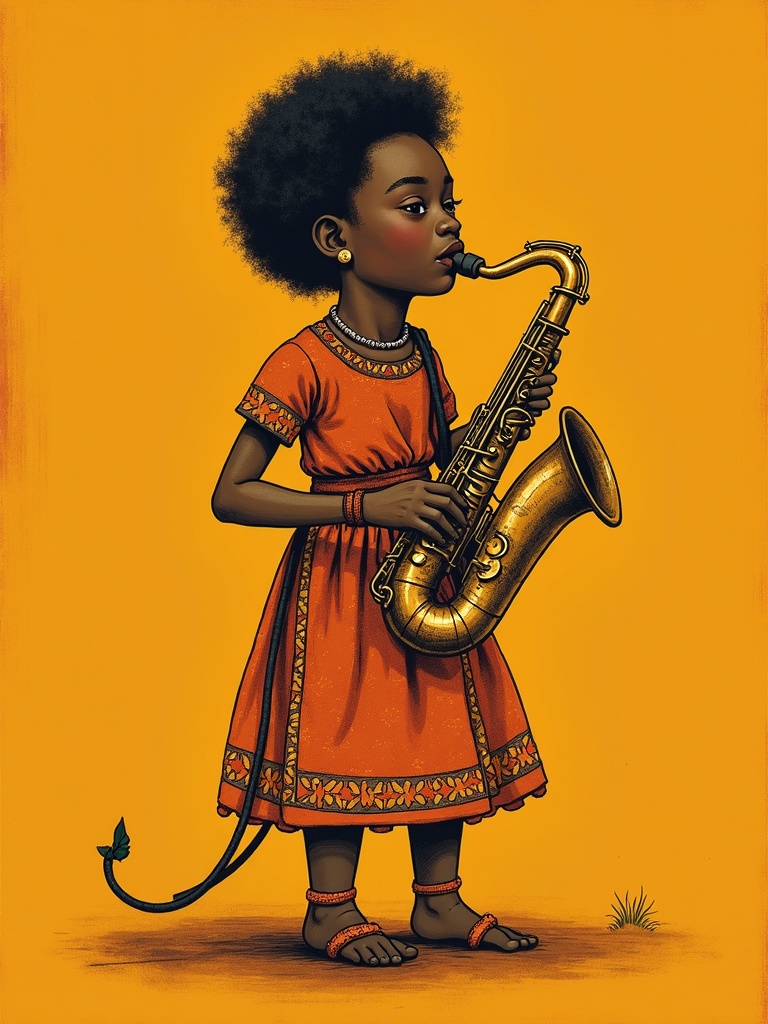
Born in 1938 into the famous Ransome-Kuti family, he grew up surrounded by music, faith and his mother's fight for women's rights.
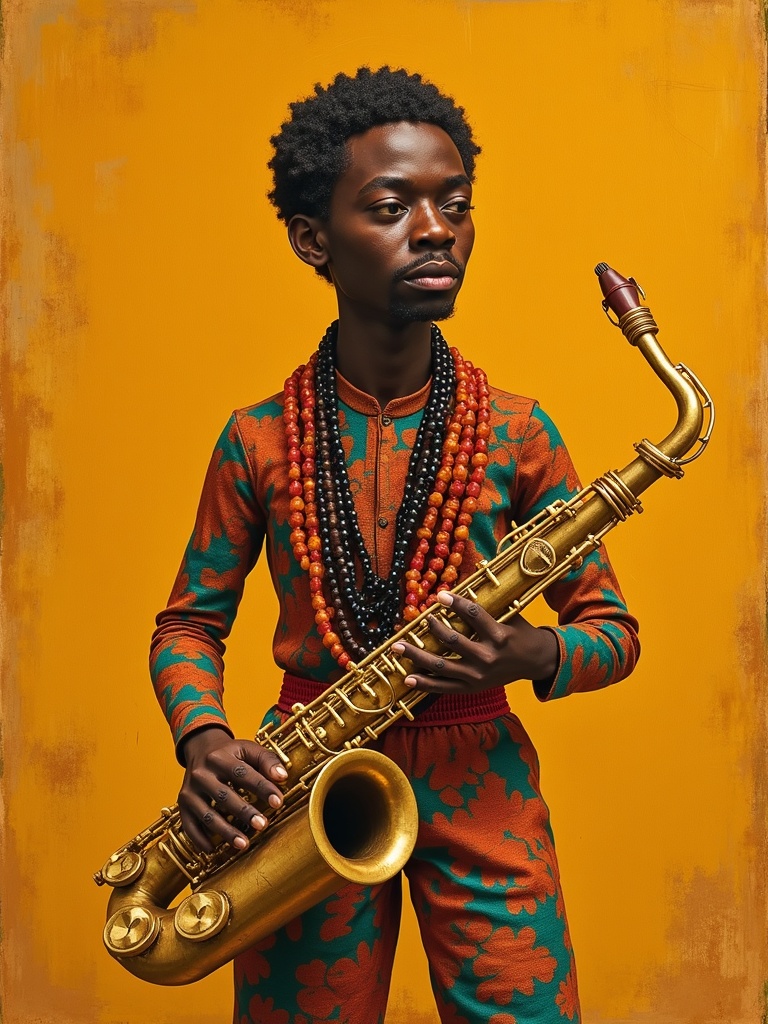
Answer all three to unlock this stage.
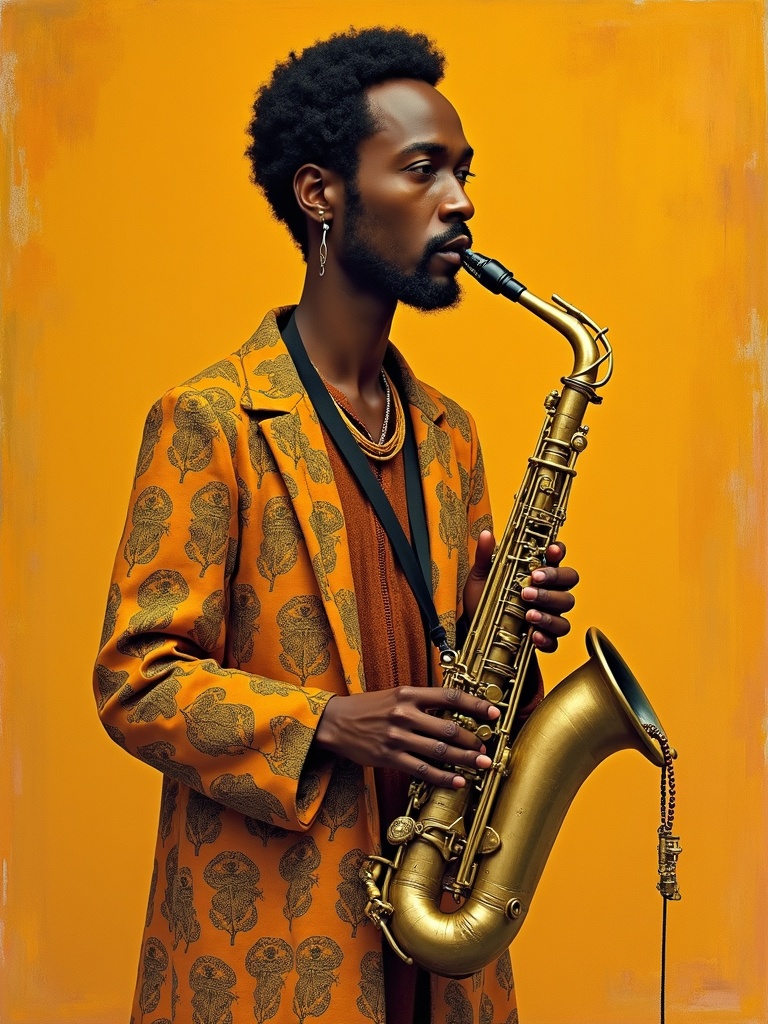
Unlock the previous stage first.
Unlock the previous stage first.
Unlock the previous stage first.
Unlock the previous stage first.
Crafting the doll
This doll is grounded in 1970s Lagos stage style and the Yoruba heritage of his Egba roots: bold West African print cotton shirts and tailored stage trousers, with options in indigo adire and handwoven aso-oke to honour his family's cloth. His signature attribute is a gleaming brass tenor saxophone, with strings of glass-and-bone beads at the neck. The education card on the back tells how he invented Afrobeat and used music to stand up for justice. Sizes: Classic 32 / Kidogo 18–20 / Shule 28. A share of proceeds supports African music education and youth programmes.
How this doll is made
His look is built from two worlds — the bold print-cotton stage style of 1970s Lagos Afrobeat and the Yoruba Egba heritage of his family, with the indigo adire and aso-oke of Abeokuta and the gleaming brass of his saxophone.
- Garments 2
- Accessories 2
- Materials 2
- Techniques 3
Garments
- Print-Cotton Stage Shirt & TrousersA loose open shirt and tailored trousers cut from bold West African print cotton (Ankara), the vivid double-sided wax-resist cloth of West African dress, here in an energetic stage cut.DetailsEN
- Adire Indigo ShirtA shirt of adire, the indigo resist-dyed cotton for which his home city of Abeokuta is famous, honouring his Yoruba Egba roots.DetailsEN
Accessories
- Tenor SaxophoneHis signature brass tenor saxophone — alongside keyboards, trumpet and guitar — the lead voice of his Afrobeat horn lines.DetailsEN
- Strings of BeadsLayered strings of colourful glass and bone beads worn at the neck and wrists, a marker of Yoruba spiritual identity and stage presence.DetailsEN
Materials
Techniques
- Adire Eleko Resist-DyeingCassava-starch paste is painted onto cloth with a feather or carved calabash before indigo dipping, leaving pale patterns where the dye cannot reach.DetailsEN
- Aso-Oke Narrow-Loom WeavingNarrow strips of cloth are hand-woven on a strip loom and sewn edge to edge into a full cloth — the centuries-old Yoruba method behind aso-oke.DetailsEN
- Afrobeat CompositionLayering interlocking Yoruba and highlife rhythms under jazz and funk horns and long call-and-response grooves — the music-making craft Fela invented and led from the keyboard and sax.DetailsEN
How it's made
Every doll is sewn by hand from natural materials — built to last a lifetime and to be repaired, not replaced. Here is the shopping list and the work steps. Sizes: Classic 32 cm (heirloom) · Kidogo 18–20 cm (toddlers, no small parts) · Shule 28 cm (school edition).
Shopping list
- Natural cotton or linen for the body (skin tone), ~0.5 m
- Wool or cotton stuffing — no plastic
- Cotton thread and embroidery floss in matching colours
- Garment fabric in this doll's colours (see the fabrics above)
- Yarn for the hairstyle
- Beads, cowrie shells and trims as shown
- Sharps and embroidery needles, pins, fabric scissors, fabric marker
Work instructions
- Trace and cut the body pattern at your chosen size (Classic 32 cm / Kidogo 18–20 cm / Shule 28 cm).
- Sew the body pieces right sides together, leave an opening, turn and stuff firmly with natural fibre, then close by hand.
- Embroider the face gently and with dignity — no plastic parts for the toddler line.
- Make the hair from yarn following the chosen hairstyle and attach it securely.
- Cut and sew the garment from this doll's fabric, then dress the doll.
- Add the beadwork, shells, trims and any attribute by hand.
- Check every seam and reinforce it — the doll should be lifelong and repairable, with no loose small parts for small children.
Origin & Ethics
How we know this
This record is well documented: his dates, the invention of Afrobeat, his bands, the 'Zombie' album, the 1977 Kalakuta raid, the Movement of the People, his many arrests and his death are attested in encyclopaedic and journalistic sources. As a recent real person he is treated under rights discipline: homage not likeness, documented quotes only, dignity never violence. Disputed or adult-only stories from his life are deliberately set aside for this children's record.
This homage is offered for the review of the Kuti family, descendants and estate (including those who run the New Afrika Shrine and the Felabration festival) and of Nigerian cultural and heritage bodies. Only documented, published words are attributed to him, and the figure is presented as a respectful educational draft rather than a finished or authorised likeness, to be amended on request.
Sources
- Fela Kuti — Wikipedia
- Fela Kuti | Songs, Death, Children, Genre & Afrobeat — Encyclopaedia Britannica
- Fela Aníkúlápó Kuti, Afrobeat Pioneer and Nigeria's Most Defiant Musical Voice — Historical Nigeria
- Fela Kuti: AfroBeat and the Significance of Kalakuta Republic — The Music Origins Project
- New Afrika Shrine — Wikipedia
- Official Fela Kuti site — New Afrika Shrine
- 'Music is the weapon': Fela Kuti's defiant message of hope — Far Out Magazine
- Funmilayo Ransome-Kuti — Encyclopaedia Britannica
- Yoruba clothing (adire, aso-oke, beads) — Wikipedia
- Adire (textile art) — Wikipedia