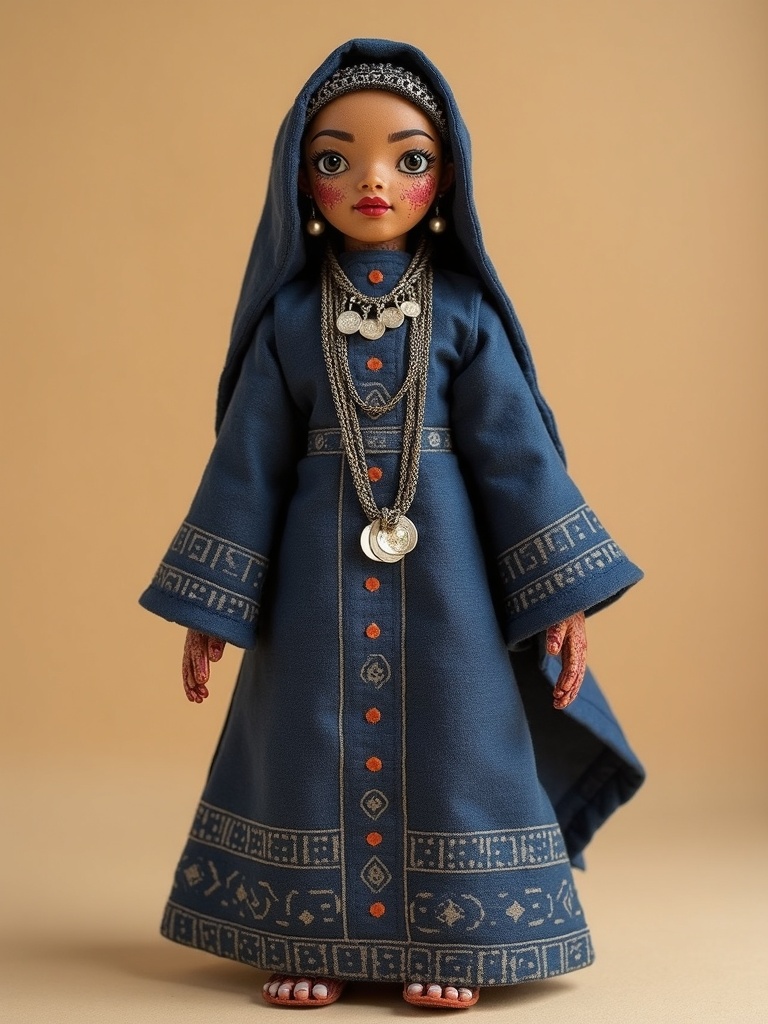
Freedom & Resistance
Dihya (al-Kahina)
Dihya was a 7th-century Amazigh (Berber) warrior-queen of the Aurès massif (today's Algeria–Tunisia frontier), of the Jarawa within the Zenata confederation. After the resistance leader Kusayla fell, leadership passed — extraordinarily for…
- People
- Amazigh (Berber), Jarawa/Zenata
- Country
- Algeria
- Region
- North Africa
- Era
- 7th century (d. ≈703)
- Theme
- Freedom & Resistance
Make your own
Design your Dihya (al-Kahina)
Pick a garment, a hairstyle and a scene, enter the PIN and generate a fresh image of Dihya (al-Kahina) with AI.
Each image is generated live with fal.ai.
Generated images
No images generated yet — be the first.
History & Meaning
Dihya was a 7th-century Amazigh (Berber) warrior-queen of the Aurès massif (today's Algeria–Tunisia frontier), of the Jarawa within the Zenata confederation. After the resistance leader Kusayla fell, leadership passed — extraordinarily for the age — to a woman. From her mountain base she united Berber tribes, and around 698 CE she defeated the Umayyad army at the Battle of Meskiana, halting the conquest of the Maghreb for five years.
They wrote her down as a sorceress. Her people remember a free queen. Always ask who held the pen.
Abilities & Development
Abilities
◆◆◆◆◆ shows how central a gift is — five diamonds mark a signature strength, fewer mark a supporting one.
She united fractious tribes to defend their homeland and way of life.
Her victory at Meskiana stopped an empire for five years.
A symbol of the indigenous, non-Arab North Africa and of Amazigh pride.
Hero to some, “sorceress” to others; a lesson in who writes history.
In an age of kings, a woman led the last great stand.
Development through the years
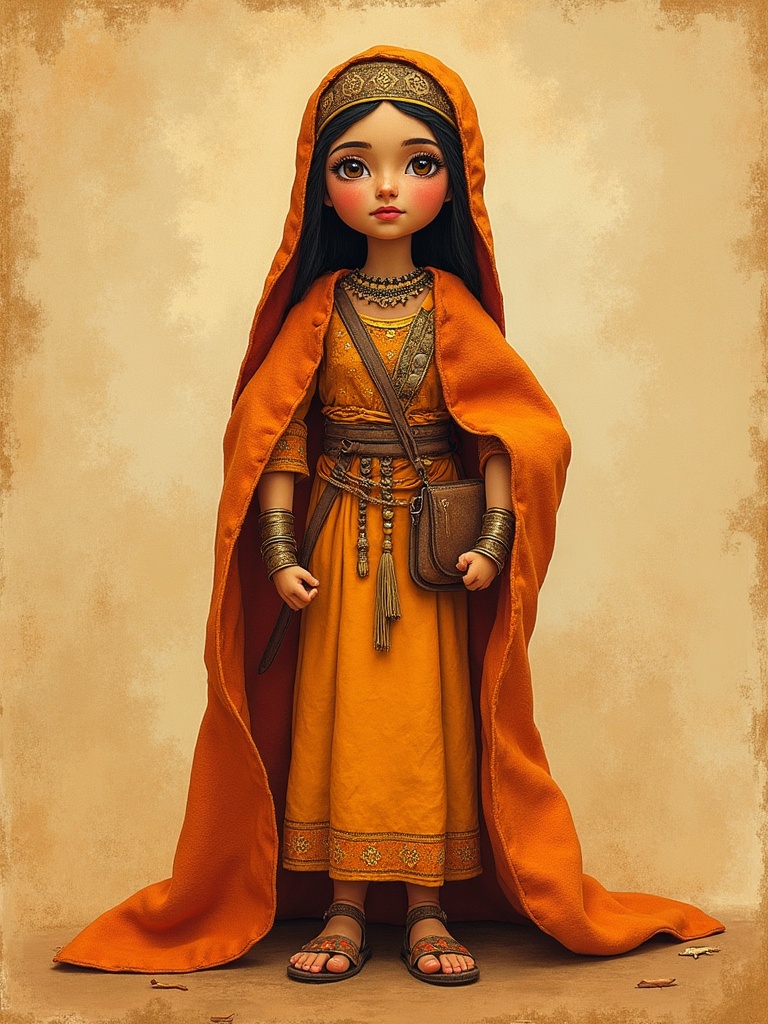
Young Dihya learning the ways of her people, riding the high country.
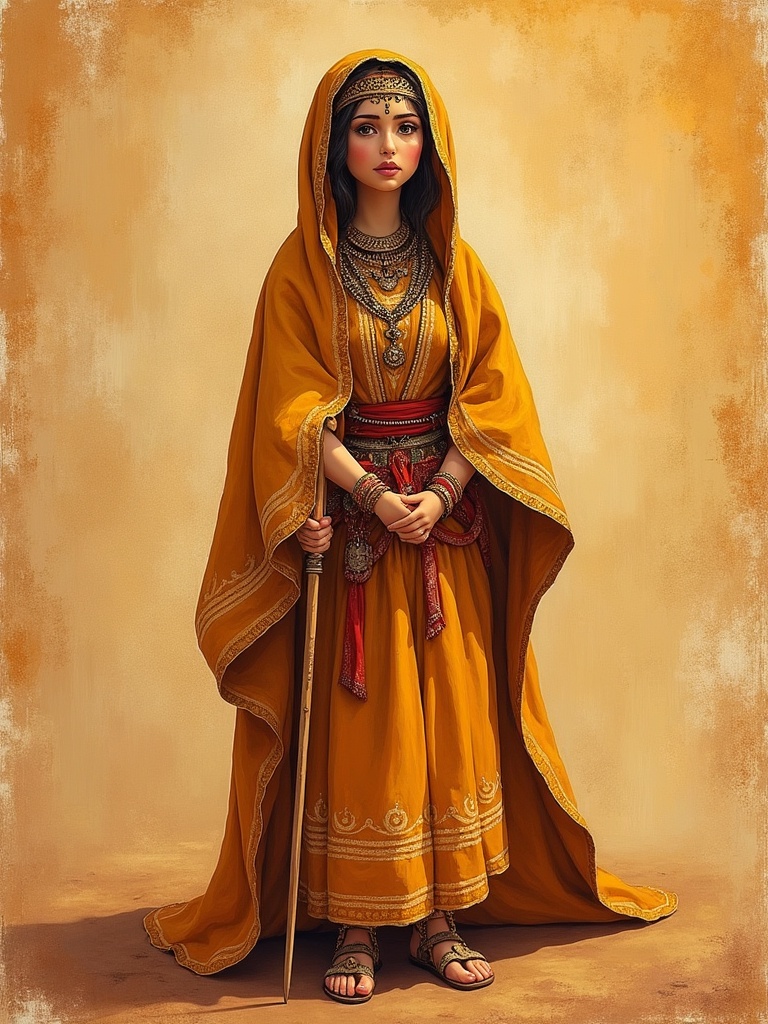
Dihya rallying the tribes (≈698), the moment of victory — shown with dignity, not gore.
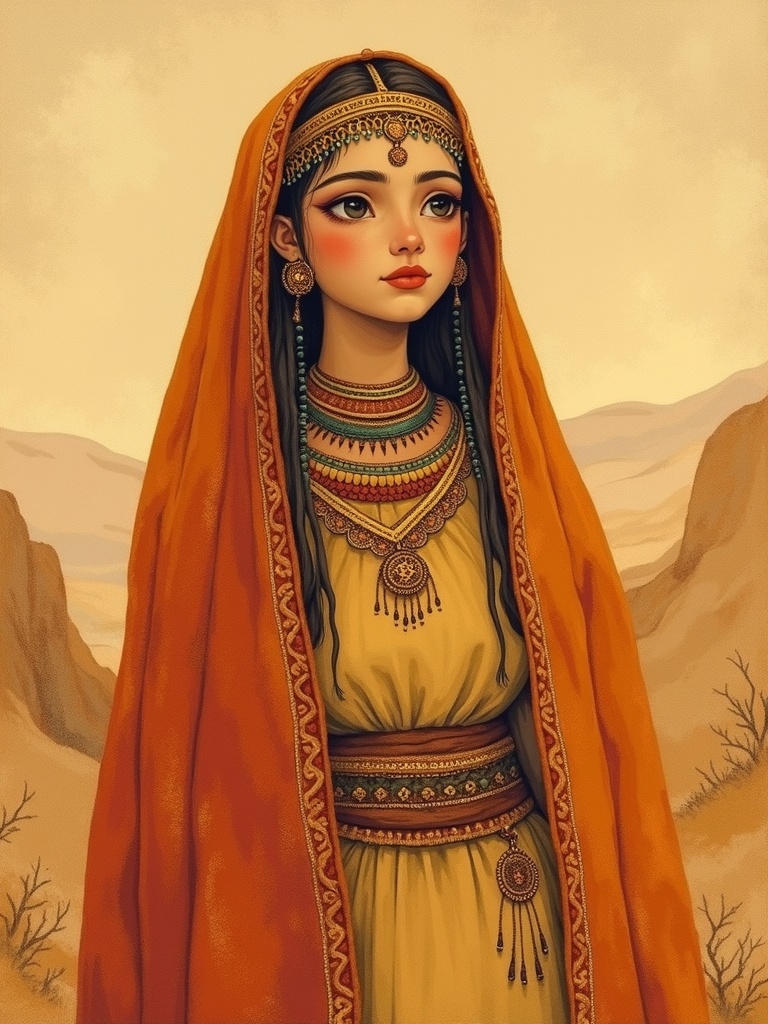
The mature ruler of a free Berber state, before the Aurès peaks.
Make & Learn
Garment: 100% cotton/wool in indigo with woven Amazigh geometric patterns, real silver-tone Berber jewellery (child-safe, firmly sewn). Signature attribute: silver fibulae & a small Barb horse. Education card: explains Amazigh (Berber) heritage, that “al-Kahina” was her enemies' name, and that her story is part history, part legend. Sizes Classic 32 / Kidogo 18–20 / Shule 28. Proceeds → Amazigh craft cooperatives (silver / weaving).
How it's made
Every doll is sewn by hand from natural materials — built to last a lifetime and to be repaired, not replaced. Here is the shopping list and the work steps. Sizes: Classic 32 cm (heirloom) · Kidogo 18–20 cm (toddlers, no small parts) · Shule 28 cm (school edition).
Shopping list
- Natural cotton or linen for the body (skin tone), ~0.5 m
- Wool or cotton stuffing — no plastic
- Cotton thread and embroidery floss in matching colours
- Garment fabric in this doll's colours (see the fabrics above)
- Yarn for the hairstyle
- Beads, cowrie shells and trims as shown
- Sharps and embroidery needles, pins, fabric scissors, fabric marker
Work instructions
- Trace and cut the body pattern at your chosen size (Classic 32 cm / Kidogo 18–20 cm / Shule 28 cm).
- Sew the body pieces right sides together, leave an opening, turn and stuff firmly with natural fibre, then close by hand.
- Embroider the face gently and with dignity — no plastic parts for the toddler line.
- Make the hair from yarn following the chosen hairstyle and attach it securely.
- Cut and sew the garment from this doll's fabric, then dress the doll.
- Add the beadwork, shells, trims and any attribute by hand.
- Check every seam and reinforce it — the doll should be lifelong and repairable, with no loose small parts for small children.
Origin & Ethics
How we know this
On honesty: semi-legendary (★★★★☆). A real resistance leader whose story survives mainly through later, often hostile or romanticised sources; her religion is genuinely unknown/debated and must not be fixed; “al-Kahina” is an exonym; she is a contested symbol claimed by many causes — presented with care, not as settled fact.
Committee: Amazigh cultural associations (Algeria/Morocco/Tunisia/diaspora), historians of the Maghreb, North-African heritage bodies. Tifinagh script used decoratively only with Amazigh cultural approval; her religion must never be presented as settled fact.