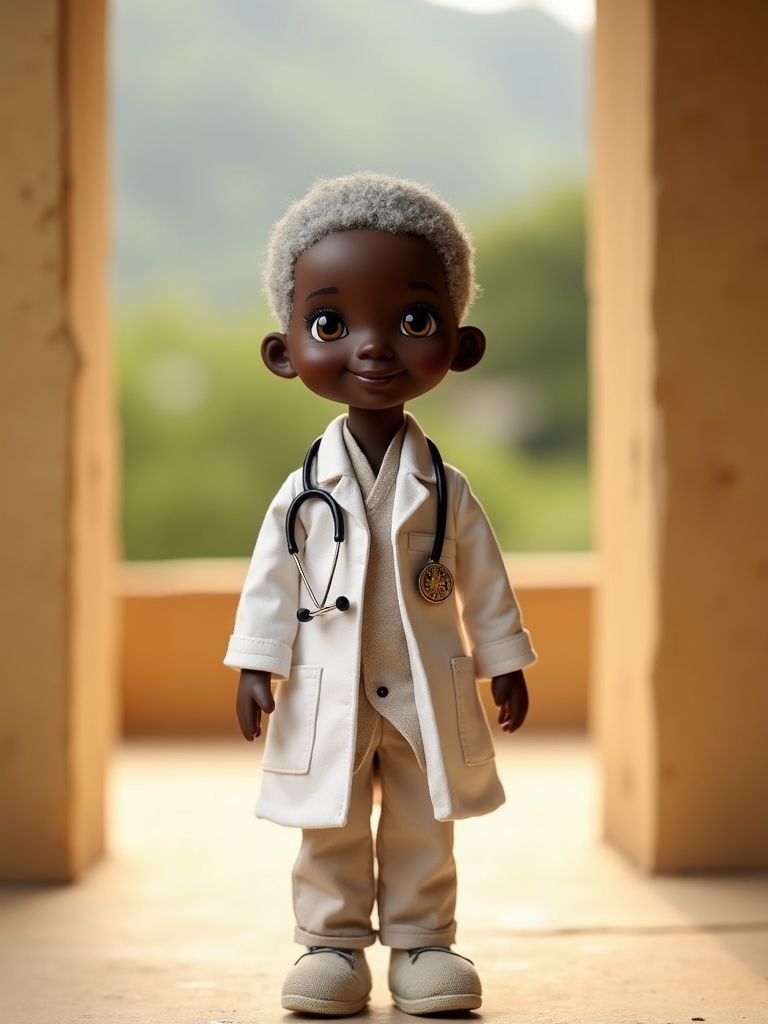
Healing & Dignity
Denis Mukwege
Dr. Denis Mukwege is a Congolese surgeon known as the doctor who heals — and who has spent his life defending the dignity of women and girls in the Democratic Republic of the Congo.
- People
- Congolese
- Country
- Dem. Rep. Congo
- Region
- Central Africa
- Era
- 1955–present
- Theme
- Healing & Dignity
⚖ A respectful concept
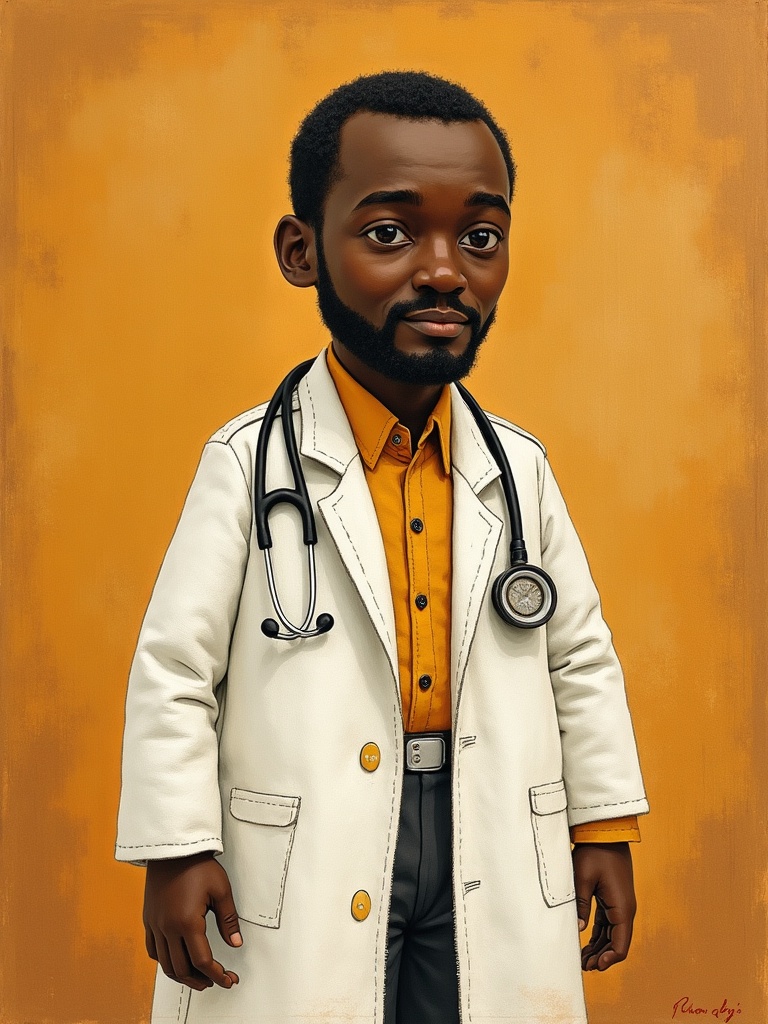
Denis Mukwege is a living Nobel Peace laureate. This doll is a respectful homage, never an exact likeness, and any words placed in his mouth here are documented public quotes with sources. His work is shown with full dignity — as a doctor who heals and stands up for women and girls — and never through any depiction of violence or suffering. A finished figure honouring a living person would be made only with the consent of Dr Mukwege and the Panzi Foundation; this record is a respectful draft, not a finished product.
Make your own
Design your Denis Mukwege
Pick a garment, a hairstyle and a scene, enter the PIN and generate a fresh image of Denis Mukwege with AI.
⚖ AI homage concept — not a likeness of the real person.
Each image is generated live with fal.ai.
Generated images
No images generated yet — be the first.
Tradition & Origin
Dr. Denis Mukwege is a Congolese surgeon known as the doctor who heals — and who has spent his life defending the dignity of women and girls in the Democratic Republic of the Congo.
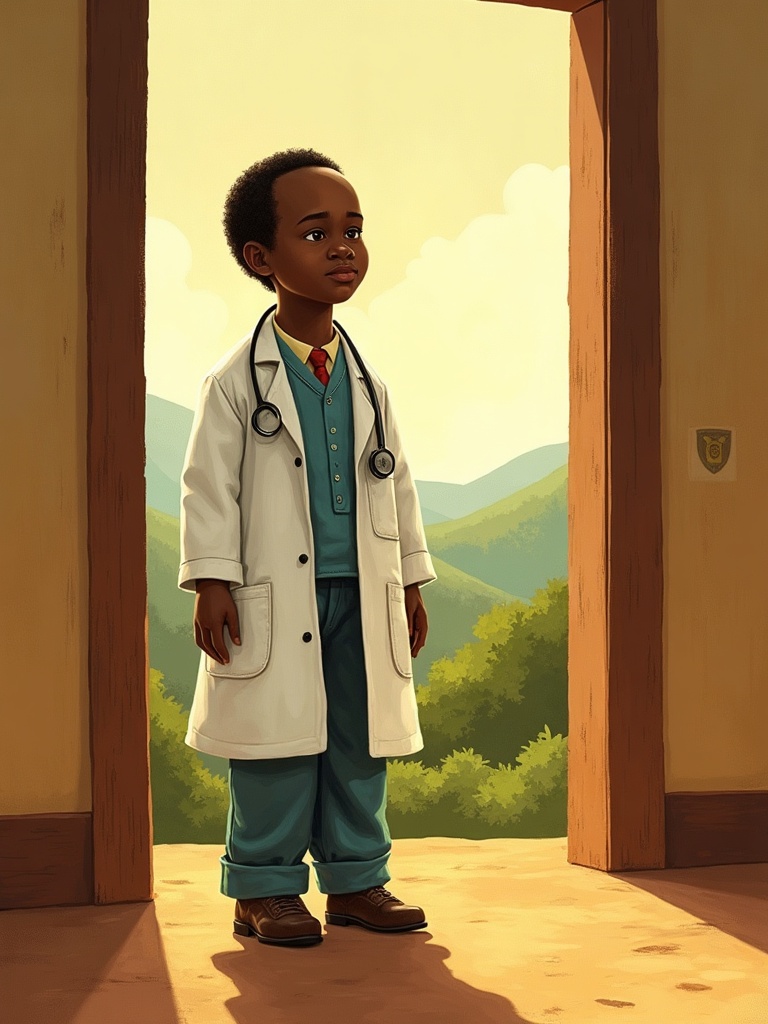
Supported since Panzi Hospital opened in 1999 — each heart ≈ 5,000 people cared for.
DetailsENDenis Mukwege was born on 1 March 1955 in Bukavu, a green, hilly city on the shore of Lake Kivu in the eastern Democratic Republic of the Congo. As a boy he followed his father, a pastor, on visits to sick neighbours, and he grew up wanting to help people feel better. He went on to study medicine and trained as a gynaecological and obstetric surgeon — a doctor who cares for mothers and helps babies be born safely.
In 1999 Mukwege founded Panzi Hospital in Bukavu, in the province of South Kivu. His first goal was simple and urgent: to help mothers survive childbirth in a region where too many women were dying. But eastern Congo was caught in long years of armed conflict, and the hospital became a place of healing for thousands of women and girls who had been hurt by that violence. Mukwege and his team built a gentle, four-part way of helping each person recover — medical care, comfort and counselling for the heart, help with the law, and support to rebuild a life and a livelihood.
For standing up for women and girls, and for speaking out so the world would listen, Mukwege was awarded the Nobel Peace Prize in 2018, sharing it with the Yazidi advocate Nadia Murad. The Norwegian Nobel Committee honoured them for their efforts to end the use of sexual violence as a weapon of war. Mukwege remains a tireless advocate — a quiet, determined voice insisting that every woman and child deserves to be safe, cared for, and treated with dignity.
Timeline
- 1955Born on 1 March in Bukavu, eastern Congo, the third of nine children of a pastor.
- 1989Returns to South Kivu after studying medicine, specialising in caring for women.
- 1999Founds Panzi Hospital in Bukavu and becomes its chief surgeon.
- 2014Awarded the Sakharov Prize for Freedom of Thought by the European Parliament.
- 2018Receives the Nobel Peace Prize, jointly with Nadia Murad.
Did you know?
- Mukwege once said, "You can't operate against violence. You can only abolish it" — reminding the world that healing needs justice and peace, not only medicine.DetailsEN
- Panzi began as a hospital to help mothers give birth safely, because so many women in the region were dying in childbirth.DetailsEN
- Besides being a surgeon, Denis Mukwege earned a PhD and is also a Pentecostal pastor, like his father before him.DetailsEN
- He believes, in his own words, that "we all have the power to change the course of history when the beliefs we are fighting for are right."DetailsEN
To heal is to say, with every gentle act: you matter, and your dignity is worth defending.
Values & Capabilities
Capabilities
◆◆◆◆◆ shows how central a gift is — five diamonds mark a signature strength, fewer mark a supporting one.
A gifted surgeon whose skilled, patient hands have repaired wounds and restored health to tens of thousands of women.
He speaks up so that women and girls are treated with respect, and so that the world does not look away.
He believes healing a person means caring for body, mind, family and future — not just one wound.
A pastor's son who stayed at his hospital through danger because he believed his work was worth the risk.
He tells the world that a land rich in minerals should bring its people peace and prosperity, not pain.
Development
1 of 5 stages unlocked
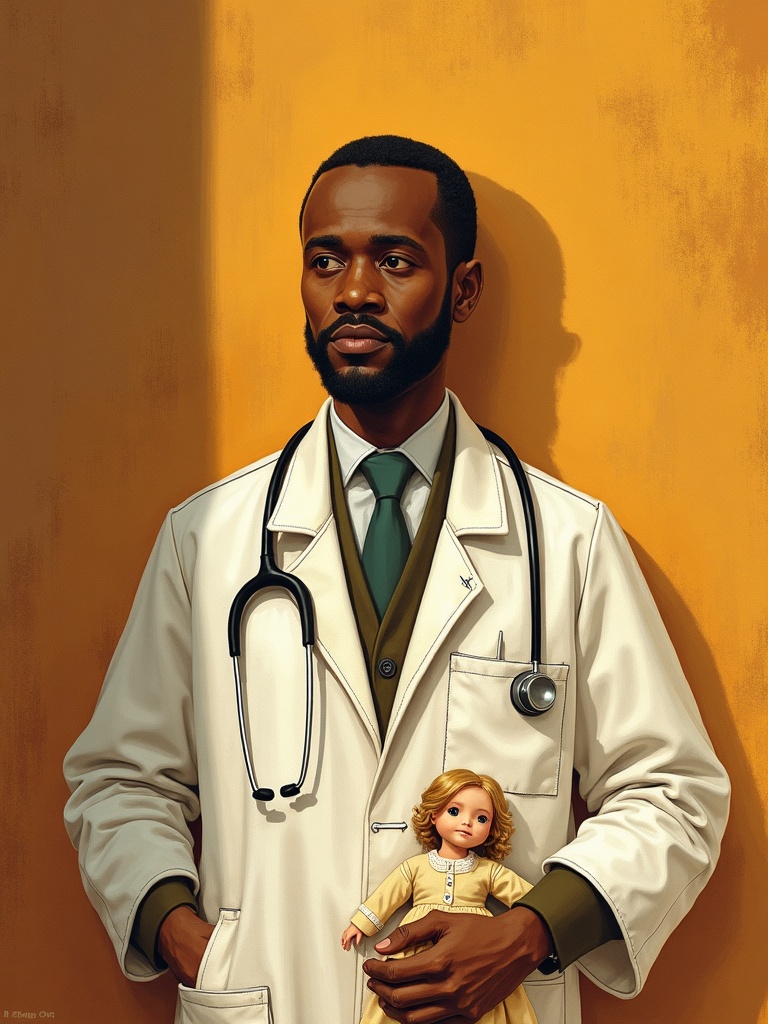
As a boy in Bukavu he followed his father to visit the sick, and dreamed of making people well.
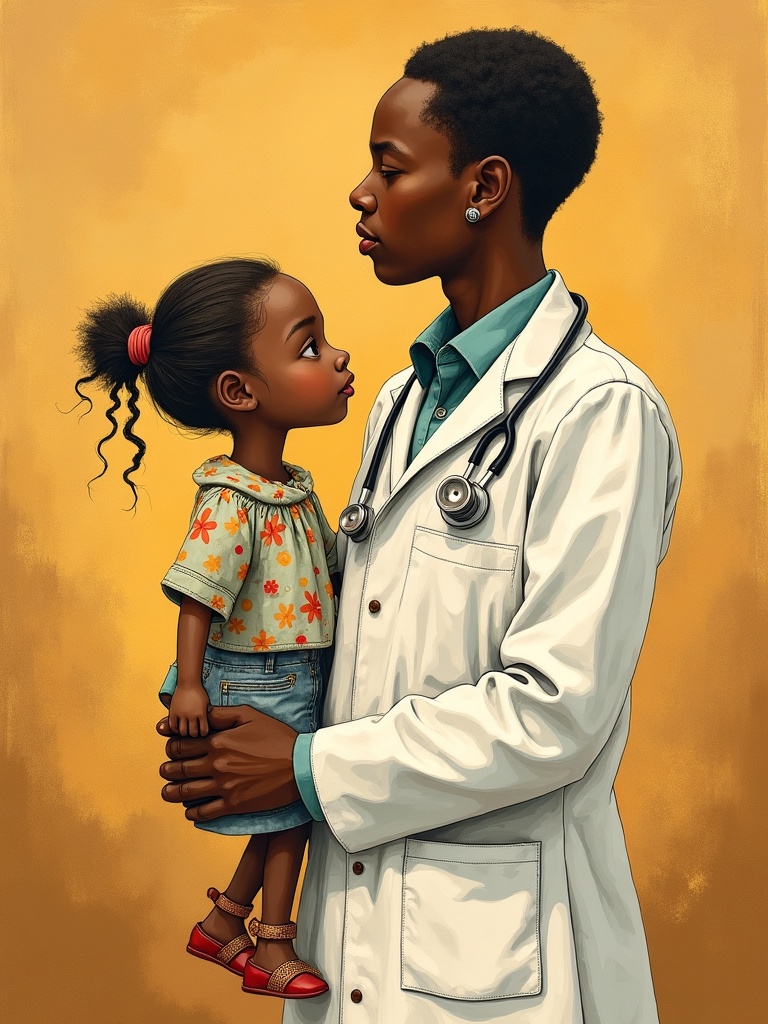
Answer all three to unlock this stage.
Unlock the previous stage first.
Unlock the previous stage first.
Unlock the previous stage first.
Crafting the doll
The doll's everyday look is built from real materials of modern care: a white cotton surgeon's coat and soft cotton scrubs, with a fabric stethoscope as the signature attribute — the regalia of a healer. For portrait and formal looks it honours Congolese heritage textiles: bright wax-print pagne cotton (a two-sided, batik-style printed cloth) and a nod to Kuba raffia cloth, the cut-pile 'velvet' woven and embroidered in the Kasai region. The education card explains that this is a respectful homage to a living Nobel laureate — a doctor who heals and defends dignity — never an exact likeness. Sizes Classic 32 / Kidogo 18–20 / Shule 28. A share of proceeds supports women's health and education projects.
How this doll is made
A respectful homage to Denis Mukwege, the Congolese surgeon and 2018 Nobel Peace laureate: his everyday look is the modern 'regalia of care' — a white surgeon's coat, cotton scrubs and a stethoscope — while his formal and portrait looks honour Central African heritage textiles, the wax-print pagne and the celebrated Kuba raffia cloth of the Democratic Republic of the Congo.
- Garments 3
- Accessories 3
- Materials 2
- Techniques 2
Garments
- White surgeon's coatA clean white cotton coat — the universal dress of a doctor and surgeon. Mukwege is the founder and chief surgeon of Panzi Hospital; the coat is his modern regalia of healing and care.DetailsEN
- Wax-print pagne shirtA formal shirt cut from African wax-print cotton (pagne): a printed cotton cloth in bold, two-sided batik-style patterns, the everyday and festive textile across Central and West Africa.DetailsEN
- Kuba-cloth sash of honourA sash of woven Kuba raffia cloth with bold geometric cut-pile patterns, a prestige textile of the Kuba peoples of the DRC, worn here as a band of honour over formal dress.DetailsEN
Accessories
- StethoscopeThe signature tool of a caring physician, worn around the neck — the simplest sign that this doll is, above all, a doctor.DetailsEN
- Nobel peace medallionA small gold-coloured medal on a ribbon, a respectful (non-exact) nod to the 2018 Nobel Peace Prize he shared with Nadia Murad.DetailsEN
- Single white flowerA small white flower held in the hand — a gentle symbol of dignity, comfort and respect for the people he heals.DetailsEN
Materials
- Cotton (coat and scrubs)Plain woven cotton — breathable, washable and clean — is the fabric of the surgeon's coat and hospital scrubs that form the doll's main outfit.DetailsEN
- Raffia palm fibreFibre stripped from the leaves of the Raphia palm — the natural thread from which Kuba cloth is woven and embroidered in the Kasai region of the DRC.DetailsEN
Techniques
- Kuba cut-pile 'velvet' embroideryOn a finished raffia ground cloth, dyed raffia is stitched under the threads and trimmed close with a small knife, raising a soft, carpet-like pile in geometric blocks of colour — the 'Kasai velvet'. Men weave the cloth; women do the embroidery.DetailsEN
- Wax-resist (batik-style) printingPagne cotton is patterned by a wax-resist method: wax or resin holds back the dye, so the colour prints around the design and the finished cloth reads the same on both sides.DetailsEN
How it's made
Every doll is sewn by hand from natural materials — built to last a lifetime and to be repaired, not replaced. Here is the shopping list and the work steps. Sizes: Classic 32 cm (heirloom) · Kidogo 18–20 cm (toddlers, no small parts) · Shule 28 cm (school edition).
Shopping list
- Natural cotton or linen for the body (skin tone), ~0.5 m
- Wool or cotton stuffing — no plastic
- Cotton thread and embroidery floss in matching colours
- Garment fabric in this doll's colours (see the fabrics above)
- Yarn for the hairstyle
- Beads, cowrie shells and trims as shown
- Sharps and embroidery needles, pins, fabric scissors, fabric marker
Work instructions
- Trace and cut the body pattern at your chosen size (Classic 32 cm / Kidogo 18–20 cm / Shule 28 cm).
- Sew the body pieces right sides together, leave an opening, turn and stuff firmly with natural fibre, then close by hand.
- Embroider the face gently and with dignity — no plastic parts for the toddler line.
- Make the hair from yarn following the chosen hairstyle and attach it securely.
- Cut and sew the garment from this doll's fabric, then dress the doll.
- Add the beadwork, shells, trims and any attribute by hand.
- Check every seam and reinforce it — the doll should be lifelong and repairable, with no loose small parts for small children.
Origin & Ethics
How we know this
This record is well documented: Mukwege's birth (1 March 1955, Bukavu), the founding of Panzi Hospital (1999), the holistic care model, the 2012 assassination attempt, and the 2018 Nobel Peace Prize are all verified by Nobel and reputable institutional sources. All quoted words come from his documented public statements, chiefly his 2018 Nobel Lecture. Patient counts are cited as reported by Panzi and Nobel sources and have grown over time. For children we deliberately omit the graphic nature of the harm his patients suffered; this is an editorial choice, not a gap in the record.
Because Denis Mukwege is a living Nobel Peace laureate, any finished figure honouring him would be produced only with his consent and that of the Panzi Foundation, the institution he founded and leads. Cultural elements — the wax-print pagne and especially Kuba raffia cloth, which belongs to the heritage of the Kuba peoples of the DRC — would be represented with guidance from Congolese cultural advisors so the textiles are shown with respect and accuracy. This record is a respectful draft for review, not a finished product.
Sources
- NobelPrize.org, Denis Mukwege Facts — 2018 Nobel Peace Prize (with Nadia Murad)
- NobelPrize.org, Denis Mukwege — Nobel Lecture (Oslo, 10 Dec 2018)
- Panzi Foundation, Dr Denis Mukwege: Founder of Panzi Foundation and Hospital
- Panzi Foundation, Dr. Denis Mukwege's Nobel Peace Prize Speech (full transcript)
- Business & Human Rights Resource Centre, Denis Mukwege — Nobel Lecture (mineral wealth and conflict)
- Right Livelihood, Denis Mukwege laureate profile
- Encyclopaedia Britannica, Denis Mukwege — Biography, Nobel Prize & Facts
- The Elders, Denis Mukwege profile
- Wikipedia, Kuba textiles (raffia cloth of the DRC; men weave, women embroider cut-pile 'velvet')
- Hyperallergic, How Dutch Wax Fabrics Became a Mainstay of African Fashion (pagne / wax-print cotton)