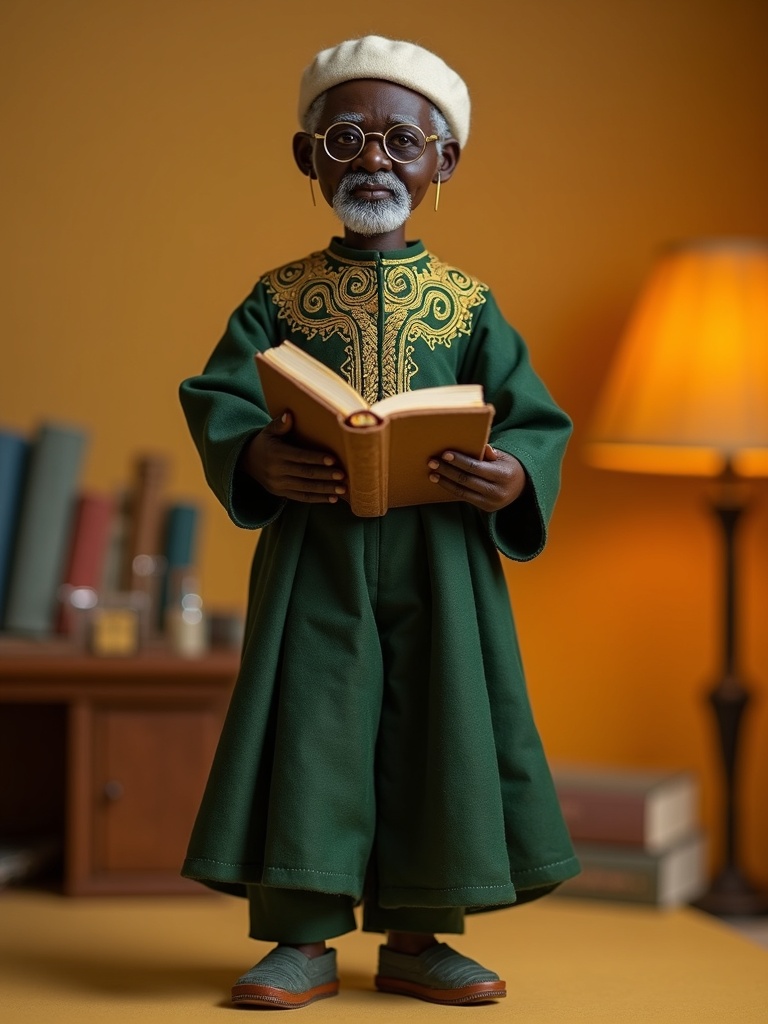
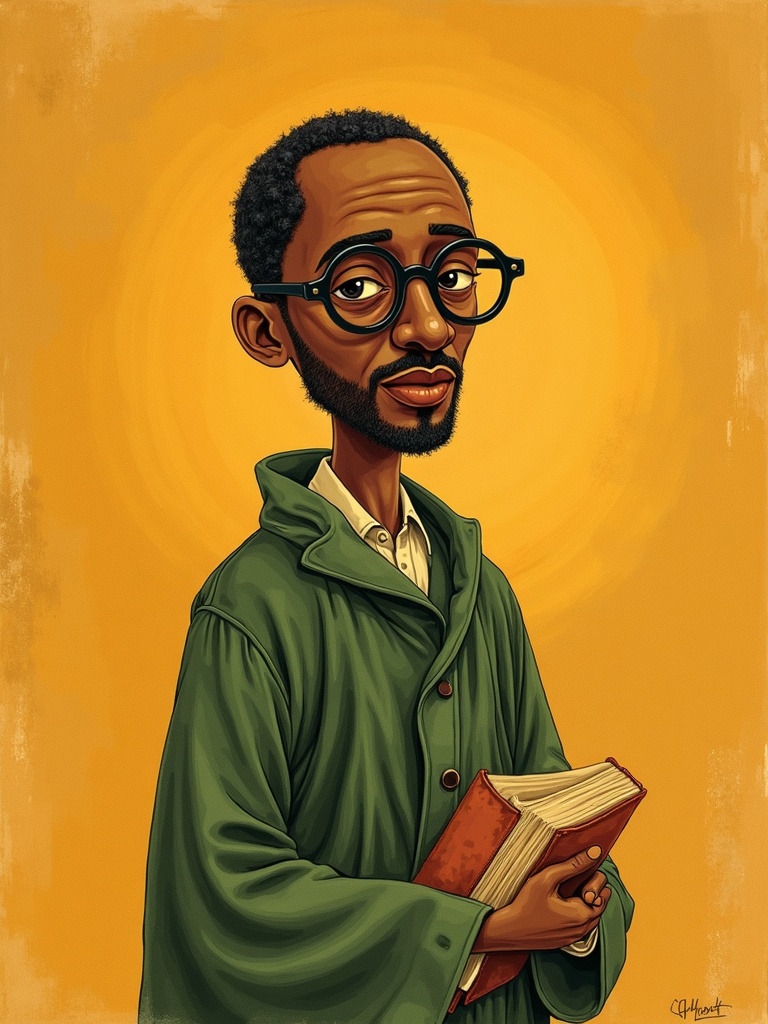
AI design preview — not a photo of the finished handmade doll
Science & African History
Cheikh Anta Diop
A boy from a Senegalese village trained as a physicist in Paris — then turned the tools of science onto a single question: who really built the ancient world?
- People
- Wolof, Senegal
- Country
- Senegal
- Region
- West Africa
- Era
- 1923–1986
- Theme
- Science & African History
⚖ A respectful concept
Cheikh Anta Diop (1923–1986) was a real Senegalese scholar; this doll is a respectful homage, never an exact likeness. Only documented, sourced quotes from his published works are used, and his story is told with dignity. Where his theses remain debated by historians, that is named fairly rather than hidden. Consent of his family, the Université Cheikh Anta Diop, and Senegalese cultural bodies is assumed in spirit; this is a respectful draft for an educational doll, not a finished or authorised portrait.
Make your own
Design your Cheikh Anta Diop
Pick a garment, a hairstyle and a scene, enter the PIN and generate a fresh image of Cheikh Anta Diop with AI.
⚖ AI homage concept — not a likeness of the real person.
Each image is generated live with fal.ai.
Generated images
AI design preview — not a photo of the finished handmade doll
No images generated yet — be the first.
Tradition & Origin
A boy from a Senegalese village trained as a physicist in Paris — then turned the tools of science onto a single question: who really built the ancient world?
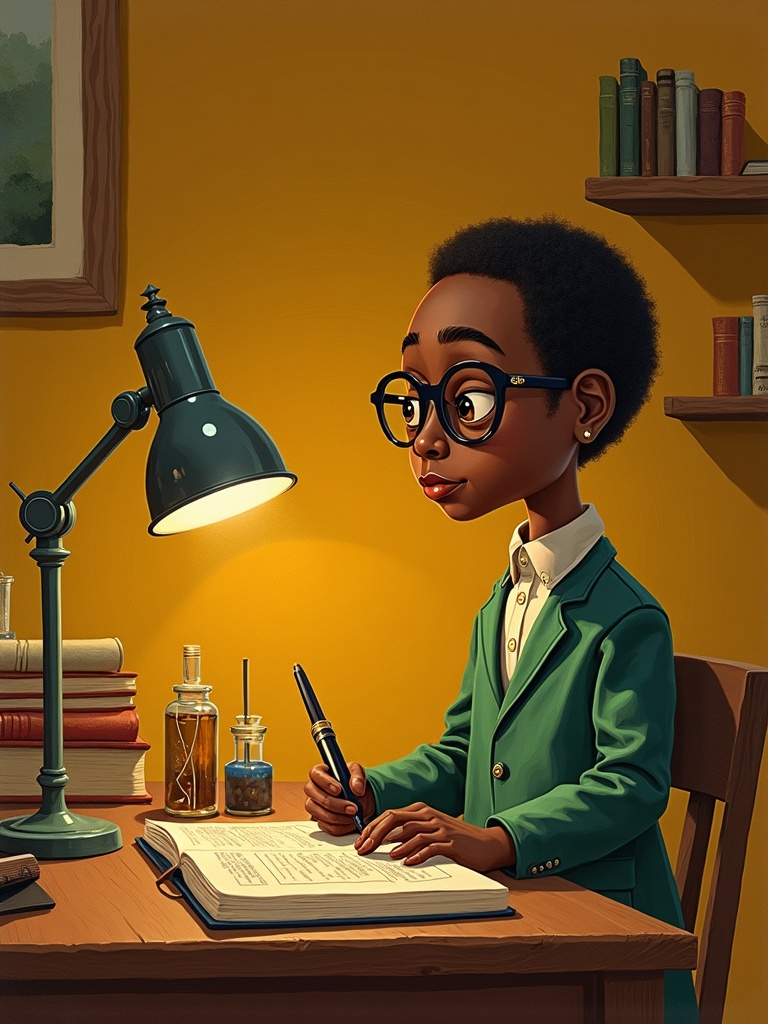
Cheikh Anta Diop was born in 1923 in Thieytou, in the Diourbel region of Senegal, into a Wolof Muslim family. He began at a Quranic school, then in 1946 sailed to Paris to study at the Sorbonne, where he mastered chemistry, physics and nuclear science while reading history, linguistics and Egyptology on the side. It was an unusual education — a scientist who chose to aim his rigour not at atoms alone, but at the deep past of Africa.
His great claim, set out in Nations nègres et culture (1954) and The African Origin of Civilization (1974), was that ancient Egypt — which the Egyptians called Kemet — was a Black African civilization that helped seed the science and culture later credited to Greece and Rome. To test it like a scientist, he founded Africa's first radiocarbon-dating laboratory at IFAN in Dakar and devised a 'melanin dosage' analysis of mummy skin. His method drew sharp criticism, but his demand was revolutionary: that Africans study their own history with their own instruments.
In 1974 the world's Egyptologists gathered with him at a UNESCO symposium in Cairo on the peopling of ancient Egypt. The debate was fierce and reached no consensus — yet Diop, alongside the linguist Théophile Obenga, had forced the question onto the global stage. He went on to write the chapter on Egyptian origins in UNESCO's General History of Africa. A year after his death in 1986, the University of Dakar took his name.
Timeline
- 1923Born in Thieytou, Diourbel region, Senegal.
- 1946Travels to Paris to study at the Sorbonne — physics, chemistry, history and Egyptology.
- 1954Publishes Nations nègres et culture, arguing ancient Egypt was a Black African civilization.
- 1966Establishes Africa's first radiocarbon-dating laboratory at IFAN in Dakar.
- 1974Defends his theses at the UNESCO symposium in Cairo on the peopling of ancient Egypt.
- 1987A year after his death, the University of Dakar is renamed Université Cheikh Anta Diop.
Did you know?
- He wrote that the African historian who avoids the problem of Egypt is 'ignorant, cowardly and neurotic' — a challenge to a whole field.DetailsEN
- Diop held expertise across five fields at once — physics, chemistry, history, linguistics and Egyptology — refusing to be only one kind of scholar.DetailsEN
- Kenyan historian B. A. Ogot said Diop 'wrested Egyptian civilization from the Egyptologists and restored it to the mainstream of African history.'DetailsEN
He believed a people who know their past can never quite be made small.
Values & Capabilities
Capabilities
◆◆◆◆◆ shows how central a gift is — five diamonds mark a signature strength, fewer mark a supporting one.
He built Africa's first radiocarbon-dating laboratory so the continent could measure its own past.
Physicist, chemist, historian, linguist and Egyptologist — he refused to be only one thing.
He argued that ancient Egypt (Kemet) was a Black African civilization at the root of human knowledge.
At a 1974 UNESCO meeting he defended his ideas before the world's Egyptologists.
He wanted Africans to write their own history with their own evidence and pride.
Development
1 of 4 stages unlocked
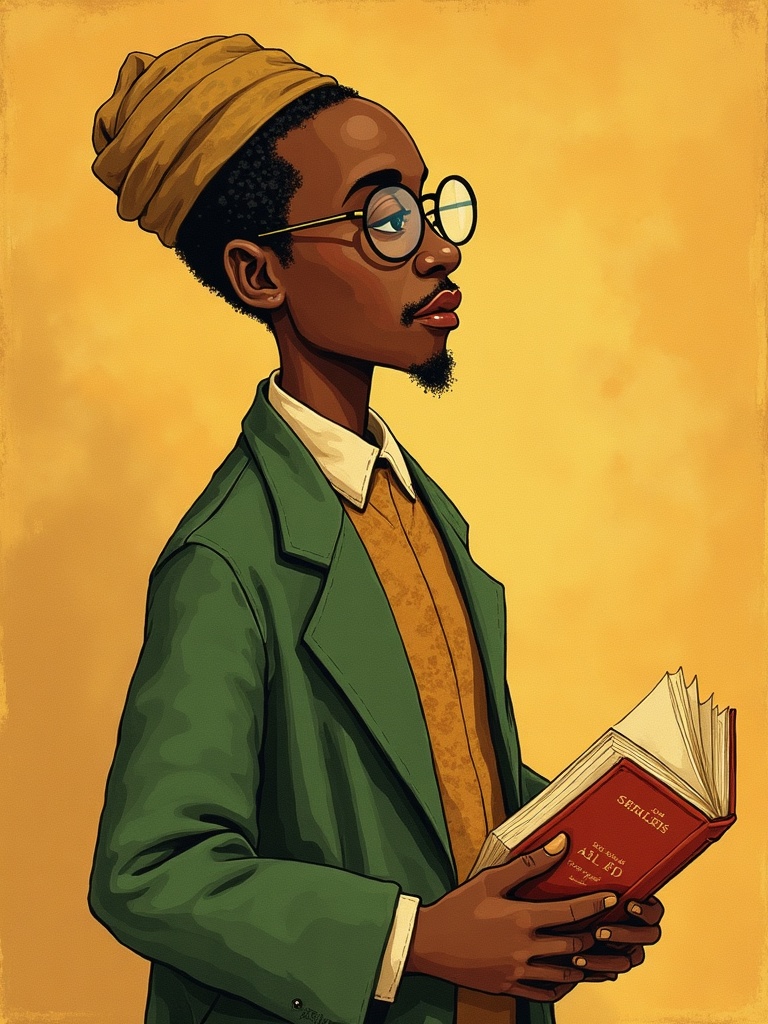
A boy in rural Thieytou begins his learning at a Quranic school before the wider world of books opens to him.
Answer all three to unlock this stage.
Unlock the previous stage first.
Unlock the previous stage first.
Crafting the doll
This doll is built from real Senegalese cloth: a flowing grand boubou cut from glossy bazin riche — a cotton damask hand-dyed and beaten with wooden mallets until it shines — finished with gold thiossane embroidery of swirls, worn over loose tubay trousers with a small white kufi cap. His signature attributes are round spectacles, an open book of African history and a tiny felt C-14 laboratory vial, the props of a scientist of the past. An education card tucks into the back seam with his dates and a line on radiocarbon dating. Sizes Classic 32 / Kidogo 18–20 / Shule 28. A share of proceeds supports African history and science education for children.
How this doll is made
Diop's doll is dressed in the formal cloth of a Senegalese scholar-elder — the glossy bazin grand boubou — paired with the quiet props of a scientist: spectacles, a book, and a small laboratory vial.
- Garments 2
- Accessories 4
- Materials 1
- Techniques 3
Garments
Accessories
- Kufi capA small round embroidered cap worn with the kaftan suit for formal occasions across West Africa.DetailsEN
- Round spectaclesThe reading glasses of a lifelong scholar, a signature prop for this doll's studious, intelligent gaze.DetailsEN
- C-14 laboratory vialA tiny felt vial nodding to the radiocarbon laboratory he founded at IFAN in Dakar to date the African past.DetailsEN
- Book of African historyA stitched cloth book standing for his seminal works on the African origin of civilization.DetailsEN
Materials
- Bazin richeCotton damask, hand-dyed in West Africa, stiff with a vibrant sheen — the most prized fabric for a boubou in Senegal and Mali.DetailsEN
Techniques
- Beating the bazinAfter dyeing and starching, the cloth is beaten over and over with heavy wax-glazed wooden mallets by tappeurs until it shines like a noble bazin.DetailsEN
- Thiossane embroideryOrnate embroidered circles and swirls in matching or contrasting thread adorn the neck opening, chest and pockets of the grand boubou.DetailsEN
- Resist dyeing (tak)Before dyeing, parts of the cloth are tied off so the dye cannot reach them, forming rings and stripes of pattern.DetailsEN
How it's made
Every doll is sewn by hand from natural materials — built to last a lifetime and to be repaired, not replaced. Here is the shopping list and the work steps. Sizes: Classic 32 cm (heirloom) · Kidogo 18–20 cm (toddlers, no small parts) · Shule 28 cm (school edition).
Shopping list
- Natural cotton or linen for the body (skin tone), ~0.5 m
- Wool or cotton stuffing — no plastic
- Cotton thread and embroidery floss in matching colours
- Garment fabric in this doll's colours (see the fabrics above)
- Yarn for the hairstyle
- Beads, cowrie shells and trims as shown
- Sharps and embroidery needles, pins, fabric scissors, fabric marker
Work instructions
- Trace and cut the body pattern at your chosen size (Classic 32 cm / Kidogo 18–20 cm / Shule 28 cm).
- Sew the body pieces right sides together, leave an opening, turn and stuff firmly with natural fibre, then close by hand.
- Embroider the face gently and with dignity — no plastic parts for the toddler line.
- Make the hair from yarn following the chosen hairstyle and attach it securely.
- Cut and sew the garment from this doll's fabric, then dress the doll.
- Add the beadwork, shells, trims and any attribute by hand.
- Check every seam and reinforce it — the doll should be lifelong and repairable, with no loose small parts for small children.
Origin & Ethics
How we know this
The biographical record here — his Sorbonne training, his Dakar radiocarbon laboratory, the 1954 and 1974 books, the 1974 UNESCO Cairo symposium and the 1987 university renaming — is well documented. What is genuinely contested is the science of some of his conclusions (the melanin dosage test, certain linguistic links and racial classifications), and the record above names that openly. Quotes are taken from his published works.
As a respectful homage to a real, recent scholar, this figure is offered with the dignity his family, the Université Cheikh Anta Diop de Dakar, and Senegalese cultural bodies would expect: only documented quotes, no exact likeness, honest framing of contested theses, and African history and science education partners consulted in spirit. Where his claims remain debated, that is shown fairly rather than erased.
Sources
- Cheikh Anta Diop — Wikipedia
- Cheikh Anta Diop (1923-1986) — BlackPast.org
- Cheikh Anta Diop — Encyclopedia.com
- The African Origin of Civilization — Goodreads author page
- Cheikh Anta Diop University — Wikipedia
- Remembering Cheikh Anta Diop: 8 quotes from his seminal works — This is Africa
- Ancient Egyptian race controversy (UNESCO 1974 Cairo symposium) — Wikipedia
- Boubou (clothing) — Wikipedia
- Senegalese kaftan — Wikipedia
- Bazin (fabric) — Wikipedia