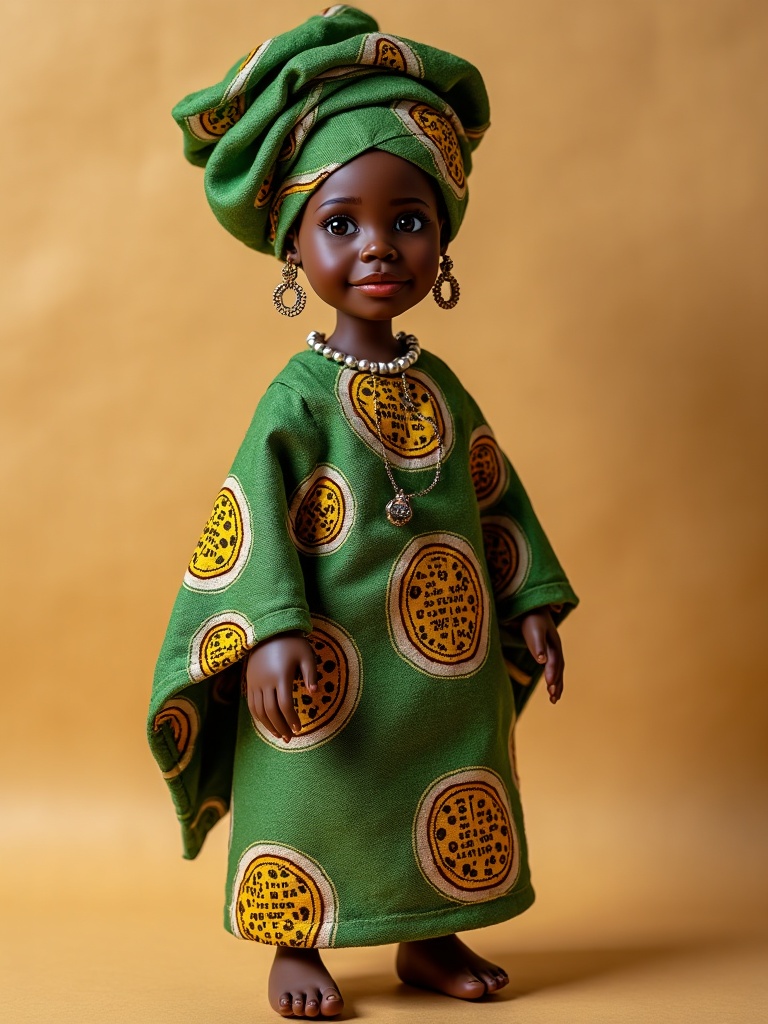
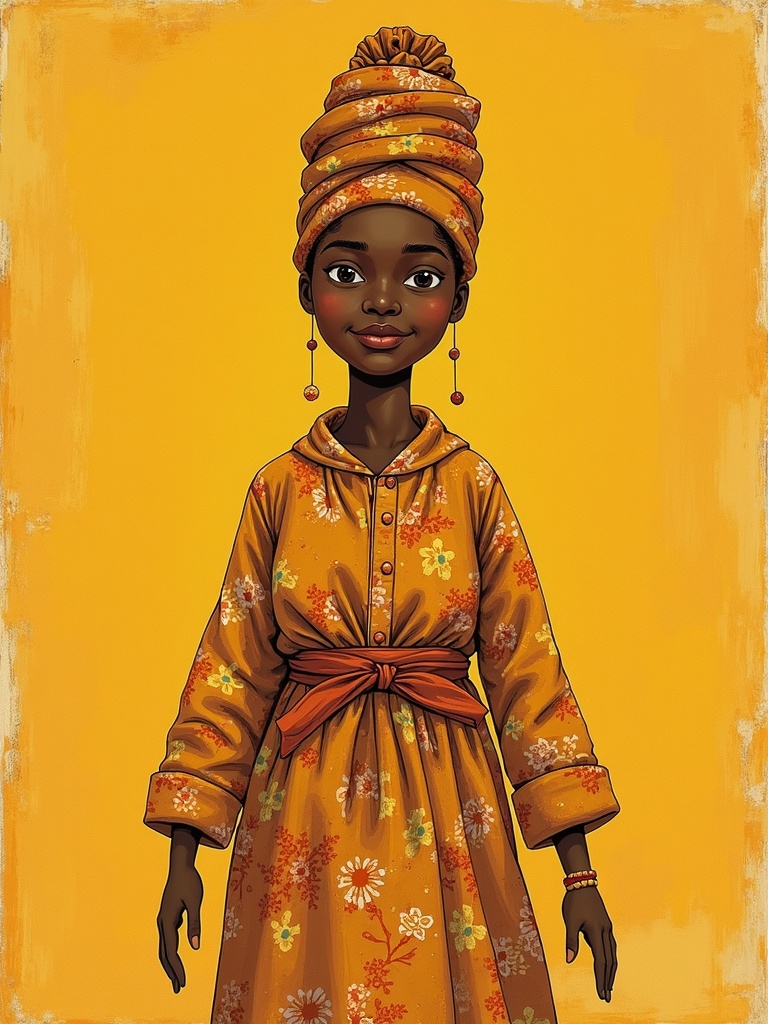
AI design preview — not a photo of the finished handmade doll
Mother of the Nation's Women
Bibi Titi Mohammed
She was a wedding singer who could fill a square with her voice — and she turned that voice into the engine of a nation's freedom, recruiting more than 5,000 women in three months for the party that won Tanganyika's independence.
- People
- Swahili (Tanganyika)
- Country
- Tanzania
- Region
- East Africa
- Era
- 1926–2000
- Theme
- Mother of the Nation's Women
⚖ A respectful concept
Bibi Titi Mohammed was a real Tanzanian leader (1926–2000); this doll is a respectful homage, not an exact likeness, and uses only documented quotes with sources. Her dignity is honoured throughout — including the honest naming of her 1969 treason trial and imprisonment — and nothing here depicts violence or suffering. Consent of her family and of Tanzanian national institutions that commemorate her (the road in Dar es Salaam, the 1991 'Heroine of Uhuru' recognition) is respectfully implied. This is a draft tribute for an educational children's project, not a finished or endorsed product.
Make your own
Design your Bibi Titi Mohammed
Pick a garment, a hairstyle and a scene, enter the PIN and generate a fresh image of Bibi Titi Mohammed with AI.
⚖ AI homage concept — not a likeness of the real person.
Each image is generated live with fal.ai.
Generated images
AI design preview — not a photo of the finished handmade doll
No images generated yet — be the first.
Tradition & Origin
She was a wedding singer who could fill a square with her voice — and she turned that voice into the engine of a nation's freedom, recruiting more than 5,000 women in three months for the party that won Tanganyika's independence.
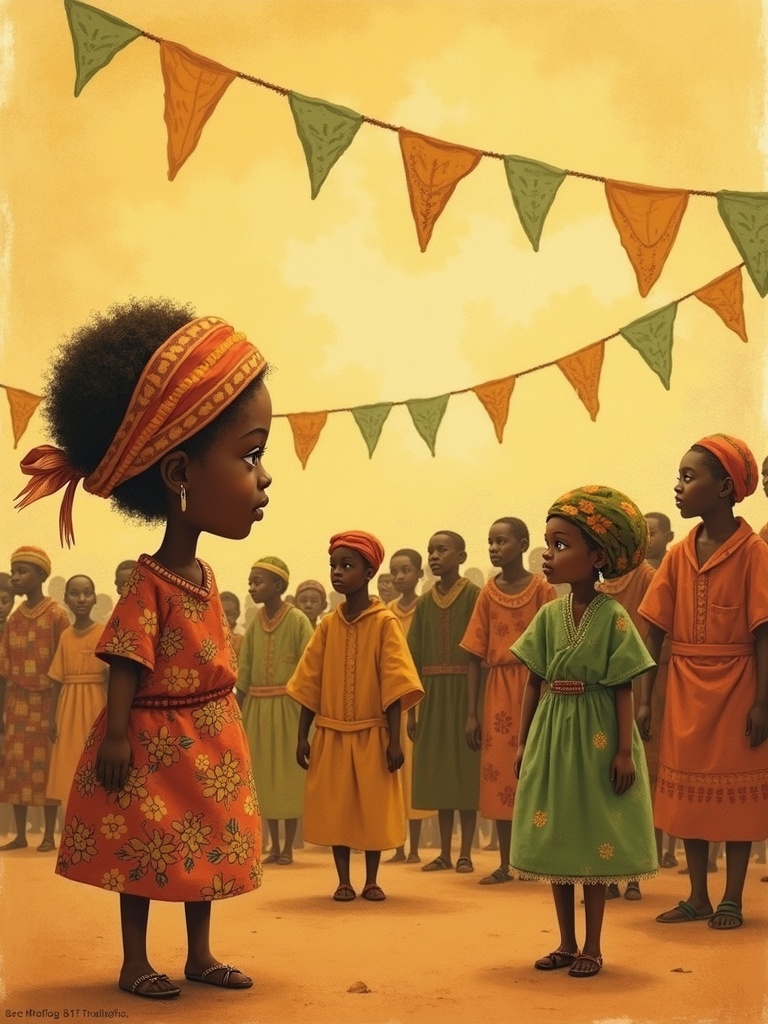
Bibi Titi Mohammed was born in June 1926 in Dar es Salaam, then the coastal capital of British-ruled Tanganyika. Her father at first refused to send her to school, fearing she might drift from Islam; she received only minimal primary education and, around puberty, entered purdah before being married at fourteen to an older man. Long before politics, she became locally famous as a lead singer in ngoma dance-and-song groups and at maulidi celebrations of the Prophet's birth — work that gave her public confidence, a feel for crowds, and access to networks of women across the city.
When the Tanganyika African National Union (TANU) formed in 1954, Julius Nyerere's young movement needed to reach the half of the population the male organisers could not: women. In 1955 Bibi Titi was asked to chair the women's wing, Umoja wa Wanawake wa Tanzania. Going from one ngoma group to the next and asking simply for space to speak, she enrolled over 5,000 women within three months. At rallies she warmed up the crowds before Nyerere spoke; she became the only woman in his innermost circle, and women's branches she built raised funds and took real risks for uhuru (freedom).
Independence came in 1961, and Bibi Titi stood on the platform. She helped write the 1964 constitution and served as junior minister for women and social affairs. But her story does not end in triumph: she lost her seat in 1965, resigned from the party's central committee in 1967 over an Arusha Declaration property rule, and in October 1969, in Tanzania's first treason trial, was accused of plotting to overthrow the government. After a 127-day trial she was sentenced to life imprisonment. She proclaimed her innocence throughout; allies fell away and her husband divorced her while she was inside. After two years, President Nyerere commuted the sentence and pardoned her.
She withdrew almost entirely from public life. Yet the country did not forget what she had built: in 1991, marking thirty years of independence, the ruling party's paper named her 'A Heroine of the Uhuru Struggle', and one of Dar es Salaam's main boulevards still carries her name. She died on 5 November 2000 — a reminder that the freedom of a whole nation rested, in part, on uneducated, mostly Muslim women who had been told their place was elsewhere.
Timeline
- 1926Born in June in Dar es Salaam, Tanganyika.
- 1955Appointed to chair TANU's women's wing; enrols over 5,000 women within three months.
- 1961Shares the platform at Tanganyika's independence declaration.
- 1964Helps write the national constitution; serves as junior minister for women and social affairs.
- 1969Tried for treason in Tanzania's first such trial; sentenced to life, then pardoned after two years.
- 2000Dies on 5 November in Johannesburg; honoured in 1991 as a 'Heroine of Uhuru', with a Dar es Salaam road in her name.
Did you know?
- Before she ever gave a political speech, Bibi Titi was a celebrated lead singer in ngoma groups — and used those very singing networks to reach the women she would recruit for TANU.DetailsEN
- She was the sole woman among Julius Nyerere's closest confidants and later helped write Tanzania's 1964 constitution.DetailsEN
- In a 1957 speech she argued that every man — bold or fearful — had been breastfed and raised by a woman, so women mattered just as much in the fight for freedom.DetailsEN
- Sentenced to life for treason in 1969, she maintained her innocence throughout two years in prison until President Nyerere commuted her sentence and pardoned her.DetailsEN
A girl married at fourteen with almost no schooling helped set a nation free — proof that the voice of the overlooked can carry a whole country.
Values & Capabilities
Capabilities
◆◆◆◆◆ shows how central a gift is — five diamonds mark a signature strength, fewer mark a supporting one.
Asked in 1955 to lead TANU's women, she enrolled more than 5,000 women as members within three months.
A former ngoma lead singer, she warmed up the crowds with song and speech before Nyerere spoke.
She reminded the new nation that the men who led it were all 'breastfed and raised by women.'
The only woman among Julius Nyerere's inner circle as Tanganyika moved toward independence.
Tried for treason in 1969 and given a life sentence, she maintained her innocence until her release.
Development
1 of 5 stages unlocked
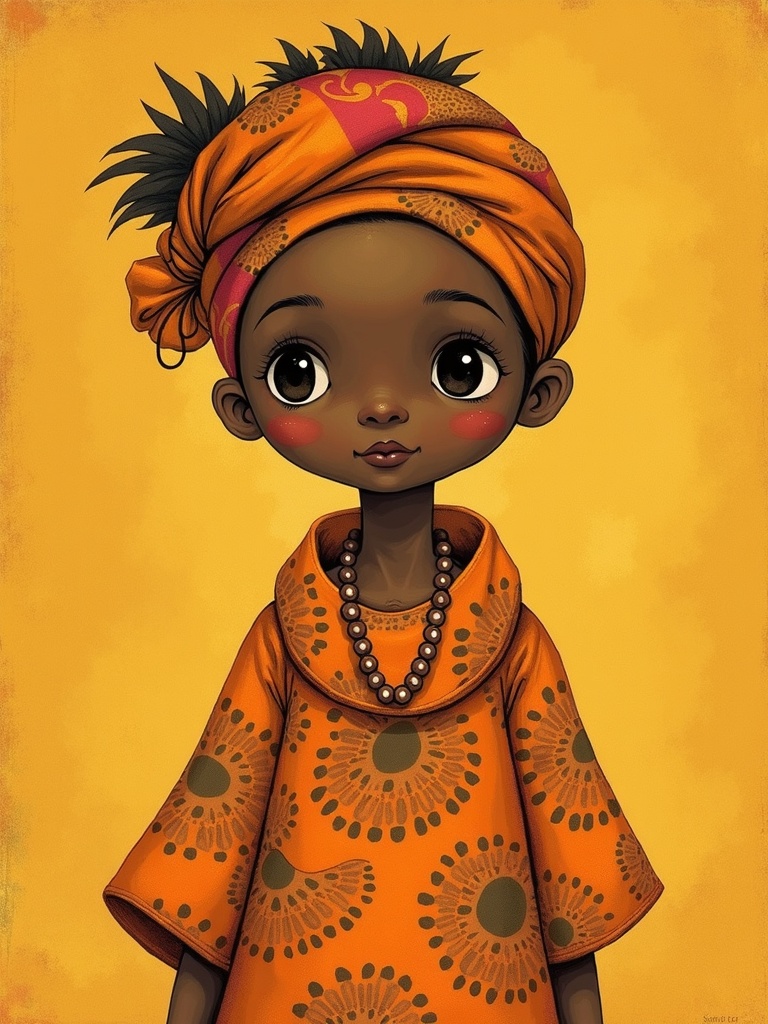
A young woman in Dar es Salaam, known and loved as a lead voice in ngoma song and dance.
Answer all three to unlock this stage.
Unlock the previous stage first.
Unlock the previous stage first.
Unlock the previous stage first.
Crafting the doll
The doll is built around real Swahili material culture: a printed cotton kanga, the rectangular cloth (about 1.5 m × 1 m) sold in matching pairs called a doti, with its four-sided border (pindo), distinct central field (mji) and a printed proverb (jina); traditionally batik-dyed, today usually roller-printed in bold colours. Her signature attribute is a kanga held open to show its proverb, paired with a small ngoma hand-drum recalling her years as a singer. An education card carries her honest story — the 5,000 women, the road in Dar es Salaam, and the 1969 trial named plainly. Sizes: Classic 32 / Kidogo 18–20 / Shule 28. A share of proceeds supports girls' civic education and community-history projects in Tanzania.
How this doll is made
Her look is built from everyday Swahili coastal dress — the printed cotton kanga worn as skirt, wrap and headcover — and the ngoma drum of her singing years.
- Garments 2
- Accessories 2
- Materials 2
- Techniques 3
Garments
Accessories
Materials
- Pure cotton clothKanga and kitenge are made of pure cotton — cool, breathable, and printed in bold colours suited to the coastal climate.DetailsEN
- Pindo & mjiThe kanga's design has a four-sided border (pindo) and a distinct central field (mji) — the structure a doll-maker must keep to read as authentic.DetailsEN
Techniques
- Batik dyeingKanga designs were traditionally made by the batik wax-resist dyeing technique before commercial printing.DetailsEN
- Roller printingToday most kanga are roller-printed commercially, allowing the bright, repeatable borders and central motifs.DetailsEN
- Wrapping & tyingNo stitching needed — the kanga is wrapped and tucked around waist, chest, shoulders or head, or used as a baby sling.DetailsEN
How it's made
Every doll is sewn by hand from natural materials — built to last a lifetime and to be repaired, not replaced. Here is the shopping list and the work steps. Sizes: Classic 32 cm (heirloom) · Kidogo 18–20 cm (toddlers, no small parts) · Shule 28 cm (school edition).
Shopping list
- Natural cotton or linen for the body (skin tone), ~0.5 m
- Wool or cotton stuffing — no plastic
- Cotton thread and embroidery floss in matching colours
- Garment fabric in this doll's colours (see the fabrics above)
- Yarn for the hairstyle
- Beads, cowrie shells and trims as shown
- Sharps and embroidery needles, pins, fabric scissors, fabric marker
Work instructions
- Trace and cut the body pattern at your chosen size (Classic 32 cm / Kidogo 18–20 cm / Shule 28 cm).
- Sew the body pieces right sides together, leave an opening, turn and stuff firmly with natural fibre, then close by hand.
- Embroider the face gently and with dignity — no plastic parts for the toddler line.
- Make the hair from yarn following the chosen hairstyle and attach it securely.
- Cut and sew the garment from this doll's fabric, then dress the doll.
- Add the beadwork, shells, trims and any attribute by hand.
- Check every seam and reinforce it — the doll should be lifelong and repairable, with no loose small parts for small children.
Origin & Ethics
How we know this
The core of this record — her ngoma singing, the 5,000 women in three months, her closeness to Nyerere, the 1961 independence platform, the 1964 constitution, and the October 1969 treason trial with its 127-day length, life sentence and two-year pardon — is well documented across multiple independent sources. The 'Where are the women?' exchange and the 1957 'breastfed and raised by women' speech are widely reported but attributed with care. This is a respectful homage, not an exact likeness, using documented quotes only.
This figure is offered as a homage drawn entirely from public historical record — Wikipedia, the African Feminist Forum, BlackPast, and scholarly and journalistic accounts of Tanganyikan independence. As Bibi Titi is a recently deceased real leader, the doll honours the consent of her family and of the Tanzanian national institutions that commemorate her (the official 1991 'Heroine of Uhuru' recognition and the Dar es Salaam road in her name). Only documented quotes are used, the likeness is deliberately non-exact, and the record names her imprisonment with dignity rather than sensation.
Sources
- Bibi Titi Mohammed — Wikipedia
- Bibi Titi Mohamed — African Feminist Forum
- Bibi Titi Mohammed — Infinite Women
- Bibi Titi Mohamed: The Unsung Hero in Tanzania Mainland Independence — Andariya
- Bibi Titi Mohammed (1926-2000) — BlackPast.org
- Mohamed, Bibi Titi — Oxford Research Encyclopedia of African History
- Dress in Tanzania and the Kanga — Jennie Van Schyndel, PhD (Medium)
- Tanzania traditional clothing: kanga, kitenge, shuka — Altezza Travel