Pan-African Youth & Unity
Aya Chebbi
From a teenager's blog called Proudly Tunisian to the very first African Union Youth Envoy, Aya Chebbi turned the courage of one revolution into a voice for an entire generation of young Africans.
- People
- Tunisian (Amazigh-Arab)
- Country
- Tunisia
- Region
- North Africa
- Era
- 1987–present
- Theme
- Pan-African Youth & Unity
⚖ A respectful concept
A respectful concept, not a finished product. Aya Chebbi is a living Tunisian diplomat and activist; a doll could exist only with her own explicit consent and that of the institutions she leads, such as the Nala Feminist Collective. This compendium uses only documented quotes with sources — never invented ones. It is a respectful homage, not an exact likeness, and her dignity is never tied to violence or suffering.
Make your own
Design your Aya Chebbi
Pick a garment, a hairstyle and a scene, enter the PIN and generate a fresh image of Aya Chebbi with AI.
⚖ AI homage concept — not a likeness of the real person.
Each image is generated live with fal.ai.
Generated images
No images generated yet — be the first.
Tradition & Origin
From a teenager's blog called Proudly Tunisian to the very first African Union Youth Envoy, Aya Chebbi turned the courage of one revolution into a voice for an entire generation of young Africans.
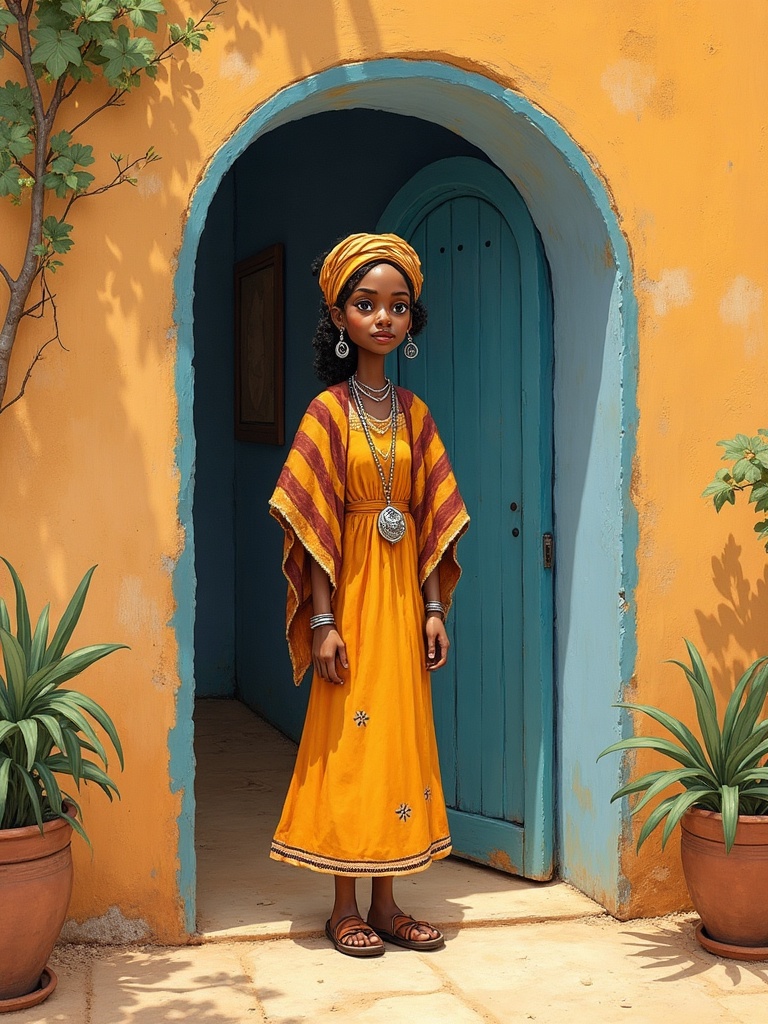
Gathered through Regional Barazas in October 2020 — each figure ≈ 100 co-authors.
DetailsENAya Chebbi was born in 1988 in Dahmani, a small town in northwest Tunisia. While still a university student of international relations, she started a personal blog she named Proudly Tunisian just before the country erupted in revolt. When the 2010–2011 Tunisian revolution that opened the Arab Spring swept the streets, she was among the young people who spent their days at the protests, documenting and sharing what was happening in writing and photography. Her words travelled far beyond Tunisia, and she became known as one of the first female bloggers of the Arab Spring.
Aya did not stop at her own country's borders. She came to believe that Africa's young people — the largest youth population on Earth — belonged at the centre of decisions about their own future. In 2015 she founded the Afrika Youth Movement, which grew into one of the continent's largest youth-led networks, linking thousands of young activists across dozens of countries through the idea of Pan-Africanism: that Africans, wherever they live, share one story and one destiny.
In November 2018 the African Union made history by appointing Aya Chebbi as its first-ever Special Envoy on Youth. At just 31 years old she became the youngest senior official in the organisation's history and the youngest diplomat in the Chairperson's cabinet, carrying the hopes of young Africans into rooms where decisions are made. During her mandate she gathered more than 1,500 young people from 44 countries to write the Africa Young Women's Beijing+25 Manifesto, a charter of what girls and women across the continent need to thrive.
After her term ended in 2021, Aya founded the Nala Feminist Collective, known as Nalafem — a multigenerational alliance of African women in politics and activism working together for change. Across her movements and campaigns, her message stays simple and bold: young people should not be guests at the table, but the ones helping to build it.
Timeline
- 1987born in Dahmani, north-west Tunisia
- 2010–11runs the 'Proudly Tunisian' blog through the revolution
- 2015founds the Afrika Youth Movement
- 2018appointed first-ever African Union Youth Envoy
- 2021founds the Nala Feminist Collective (Nalafem)
Did you know?
- During the revolution, Aya spent her days at the protests with a camera and a notebook, turning her blog into one of the world's windows onto what young Tunisians were living through.DetailsEN
- She founded the Afrika Youth Movement in 2015, which grew into one of Africa's largest youth-led networks connecting thousands of young activists across dozens of countries.DetailsEN
- Asked about youth and power, she said: “We no longer want youth to be invited to closing ceremonies but to be co-creators of the policies that shape their lives.”DetailsEN
One brave voice from a small town can speak for a whole continent's tomorrow.
Values & Capabilities
Capabilities
◆◆◆◆◆ shows how central a gift is — five diamonds mark a signature strength, fewer mark a supporting one.
She became the first-ever African Union Youth Envoy — and the youngest in the Chairperson's cabinet.
From her keyboard, a young blogger helped a country find its voice.
A Pan-Africanist who works every day to unite the continent's young people.
She built a multigenerational home for African women in politics and activism.
“We no longer want youth to be invited to closing ceremonies but to be co-creators of the policies that shape their lives.”
Development
1 of 4 stages unlocked
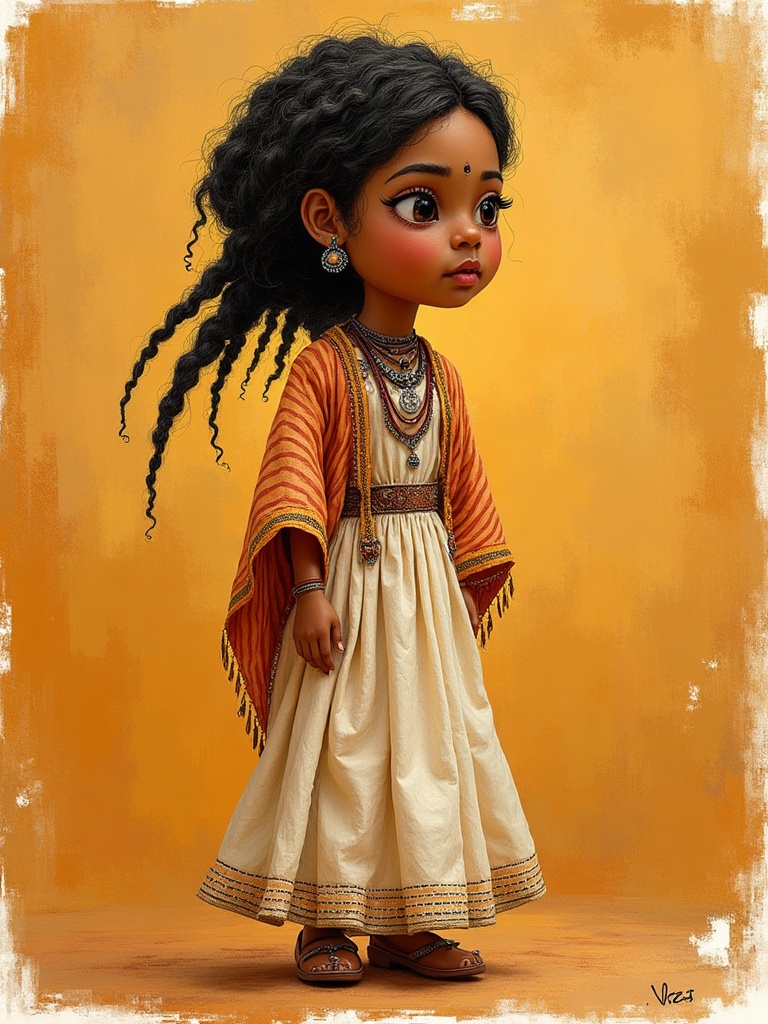
A girl in Tunisia whose family moved from town to town, learning early that home can be a whole country.
Answer all three to unlock this stage.
Unlock the previous stage first.
Unlock the previous stage first.
Crafting the doll
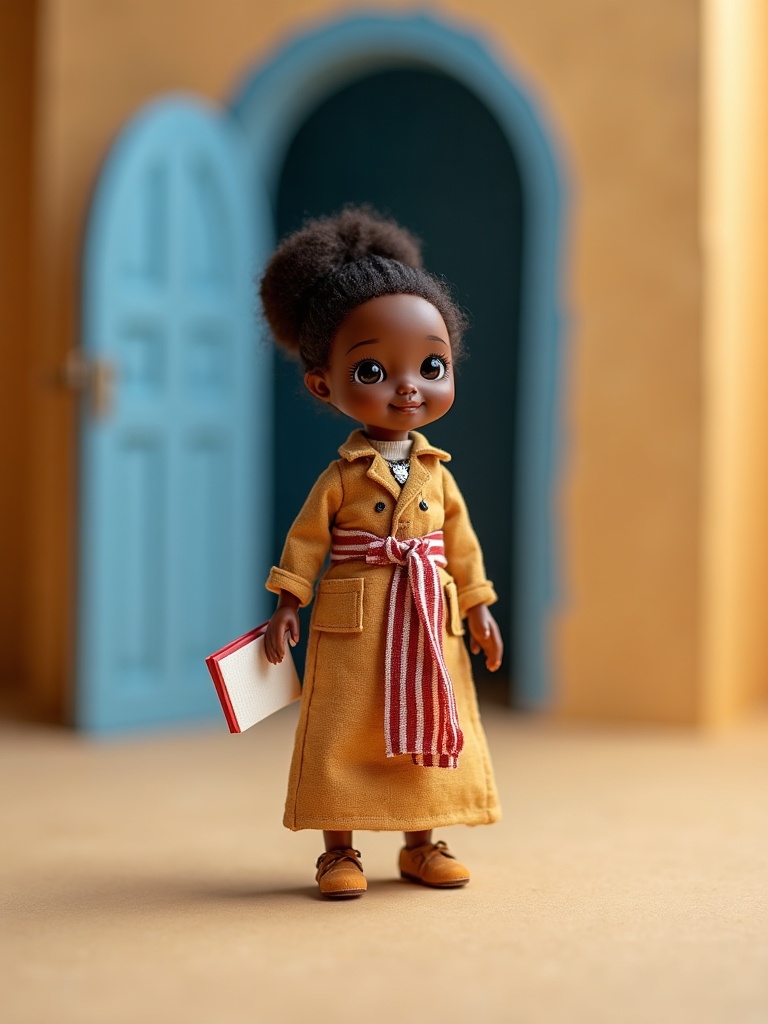
Garment: a modern tailored dress in cotton, accented with a handwoven striped Tunisian fouta (flat-woven cotton, hand-tied tassels) and, for festival looks, wool patterned with red-and-ochre Amazigh kilim motifs. Signature attribute: a silver Amazigh khomsa pendant or a fibula (khlel) brooch, plus a tiny notebook for her voice; optional felt African Union map. Education card: documented quotes only, with sources, and an honest short biography — plus a note on Tunisian fouta and Amazigh silver craft, and an invitation to write your own honest words. Sizes Classic 32 / Kidogo 18–20 / Shule 28. Proceeds → the Nala Feminist Collective and African youth-led organisations — supporting the work, not just the image.
How this doll is made
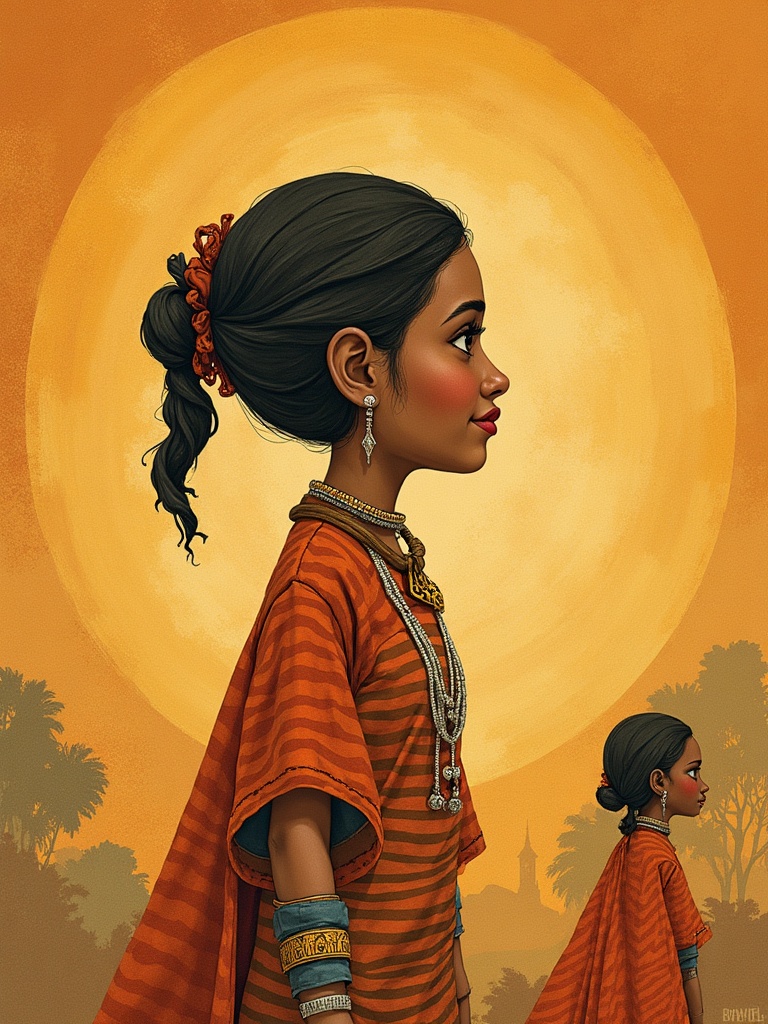
A respectful homage to Aya Chebbi, a living Tunisian Pan-African diplomat: her doll mixes modern dress with North-African heritage — the handwoven striped Tunisian fouta, the cream-white sefseri drape, red-and-ochre Amazigh kilim motifs and silver Berber jewellery — finished with a small African Union touch for her Pan-African work.
- Garments 3
- Accessories 2
- Materials 2
- Techniques 3
Garments
- Handwoven Tunisian foutaA flat-woven cotton cloth with striped patterning, historically a hammam (bath) towel and an everyday wrap, shawl and decorative textile. The warp is usually natural off-white cotton; coloured yarns are passed by hand to make the stripes, and the tassels are tied and twisted by hand. Worn here as a sash or shawl.DetailsEN
- Sefseri (Tunisian drape)A large rectangular drape (about 2–3 m) of lightweight cotton, silk or wool, most often cream-white, worn wrapped over the head and body. A centuries-old Tunisian garment blending Ottoman and Andalusian influences, today mostly worn by senior women — included here as a dignified heritage look.DetailsEN
- Kilim-patterned wool dressA festival dress carrying red-and-ochre Amazigh (Berber) kilim motifs — the bold geometric symbols woven by Amazigh women in villages such as Kesra and the Gafsa region of Tunisia, which can be 'read like a book' of signs.DetailsEN
Accessories
- Silver Amazigh fibula (khlel)A traditional silver brooch — a triangle beneath a ring or semicircle with a pin — used to fasten unsewn garments at the shoulder. In Tunisia and Libya it is called khlel; it is decorative, practical and protective for Amazigh women.DetailsEN
- Silver khomsa pendantThe khomsa (hand-of-Fatima) is a five-fingered silver charm worn across Tunisia as a protective amulet, here as the doll's neck pendant. Silver, often with engraving or coloured-glass enamel work that survives on the Tunisian island of Jerba.DetailsEN
Materials
- Handwoven cotton100% cotton — the core fibre of the fouta and the lighter sefseri. Lightweight, quick-drying and absorbent, originally local cotton sometimes dyed with natural pigments, woven on traditional looms.DetailsEN
- Handspun wool & silverAmazigh kilims are woven from 100% natural handspun wool in warm reds, ochres and creams; the jewellery is silver, the prized metal of Amazigh adornment, sometimes set with enamel and coloured glass.DetailsEN
Techniques
- Tunisian handloom weaving (fouta)A chain of specialised tasks: artisans prepare the warp in natural cotton, then pass coloured weft yarns by hand to build stripes; one towel can take one to five hours, after which women hand-tie and twist the tassels.DetailsEN
- Amazigh kilim flat-weavingA flat, pile-less weave: warp and weft are tightly interlocked in a weft-faced plain weave so geometric Amazigh symbols appear in the cloth. Woven by Amazigh women on traditional looms in Tunisian villages, a craft preserved for centuries.DetailsEN
- Amazigh silversmithing & enamelSilver is hammered, drawn and engraved into fibulae, khomsa amulets and pendants; coloured enamel and glass insets are still applied in a few Amazigh centres, including the island of Jerba in Tunisia.DetailsEN
How it's made
Every doll is sewn by hand from natural materials — built to last a lifetime and to be repaired, not replaced. Here is the shopping list and the work steps. Sizes: Classic 32 cm (heirloom) · Kidogo 18–20 cm (toddlers, no small parts) · Shule 28 cm (school edition).
Shopping list
- Natural cotton or linen for the body (skin tone), ~0.5 m
- Wool or cotton stuffing — no plastic
- Cotton thread and embroidery floss in matching colours
- Garment fabric in this doll's colours (see the fabrics above)
- Yarn for the hairstyle
- Beads, cowrie shells and trims as shown
- Sharps and embroidery needles, pins, fabric scissors, fabric marker
Work instructions
- Trace and cut the body pattern at your chosen size (Classic 32 cm / Kidogo 18–20 cm / Shule 28 cm).
- Sew the body pieces right sides together, leave an opening, turn and stuff firmly with natural fibre, then close by hand.
- Embroider the face gently and with dignity — no plastic parts for the toddler line.
- Make the hair from yarn following the chosen hairstyle and attach it securely.
- Cut and sew the garment from this doll's fabric, then dress the doll.
- Add the beadwork, shells, trims and any attribute by hand.
- Check every seam and reinforce it — the doll should be lifelong and repairable, with no loose small parts for small children.
Origin & Ethics
How we know this
On honesty: very well documented through her official bio, the African Union, the United Nations and reputable press; her roles (first AU Youth Envoy 2018–2021, founder of the Afrika Youth Movement and the Nala Feminist Collective) are a matter of public record. She is a living person, so this is rights-sensitive: documented quotes only, homage not likeness, and dignity never tied to suffering. The birth year is given here as 1987; some sources cite 1988.
Committee: Aya Chebbi herself (first and final voice, as a living person), the Nala Feminist Collective / Nalafem, and Tunisian and Amazigh cultural and craft bodies for the fouta, kilim and silver elements. Without her explicit consent, no image, no name, no doll. Documented quotes only; respectful homage, not exact likeness.
Sources
- Wikipedia — Aya Chebbi (born 1987/1988 Dahmani; first AU Youth Envoy 2018–2021; Proudly Tunisian blog 2010; Afrika Youth Movement 2015; SOAS)
- Africanews — Tunisian activist Aya Chebbi appointed African Union's Youth Envoy (Nov 2018)
- Aya Chebbi official site — Bio (Pan-African feminist, diplomat, blogger)
- Nalafem — Founder & President (first AU Special Envoy on Youth 2018–2021; youngest diplomat in the Chairperson's Cabinet; Nala Feminist Collective)
- United Nations — She Stands For Peace, Ep. 12: Pan-African Feminist Peacebuilding, interview with Aya Chebbi
- Global Perspectives — Interview with Aya Chebbi: 'co-creators of the policies that shape their lives' (2021, documented quote)
- Vital Voices — Aya Chebbi honoree profile (2024 Global Leadership Award)
- Wikipedia — Amazigh fibula (silver brooch, triangle-and-ring form, called khlel in Tunisia/Libya)
- Carthage Magazine — Tunisian Sefseri: Symbol of Modesty & Elegance
- Arabian Business — The Textile Studio Celebrating the Tunisian Fouta