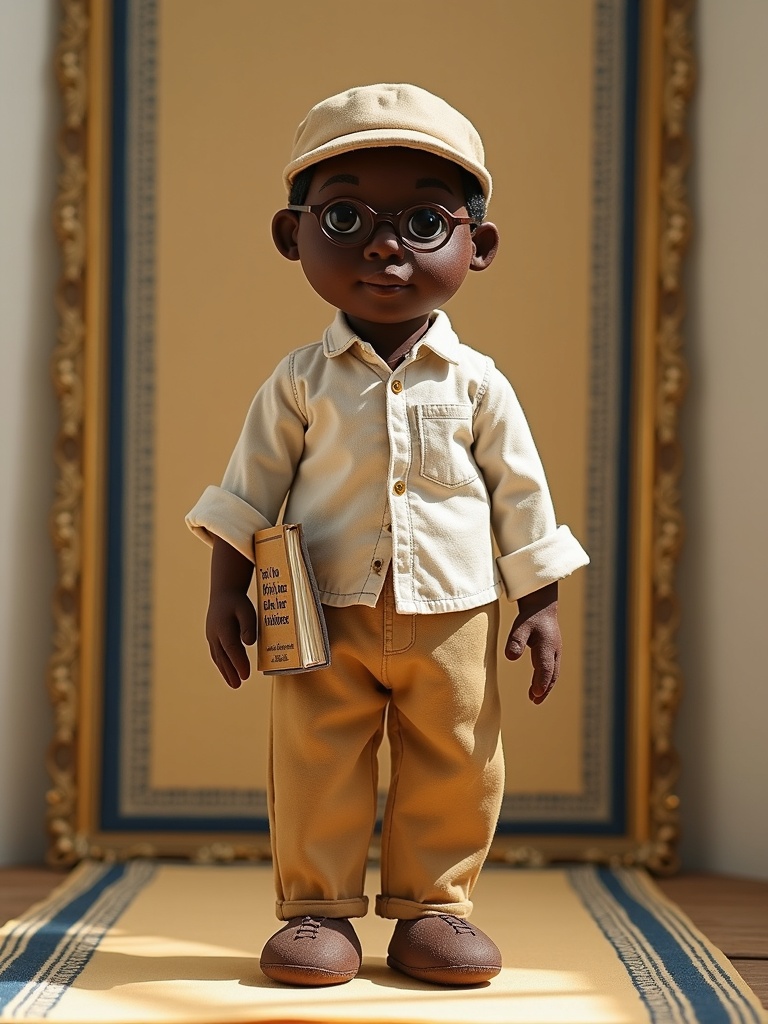
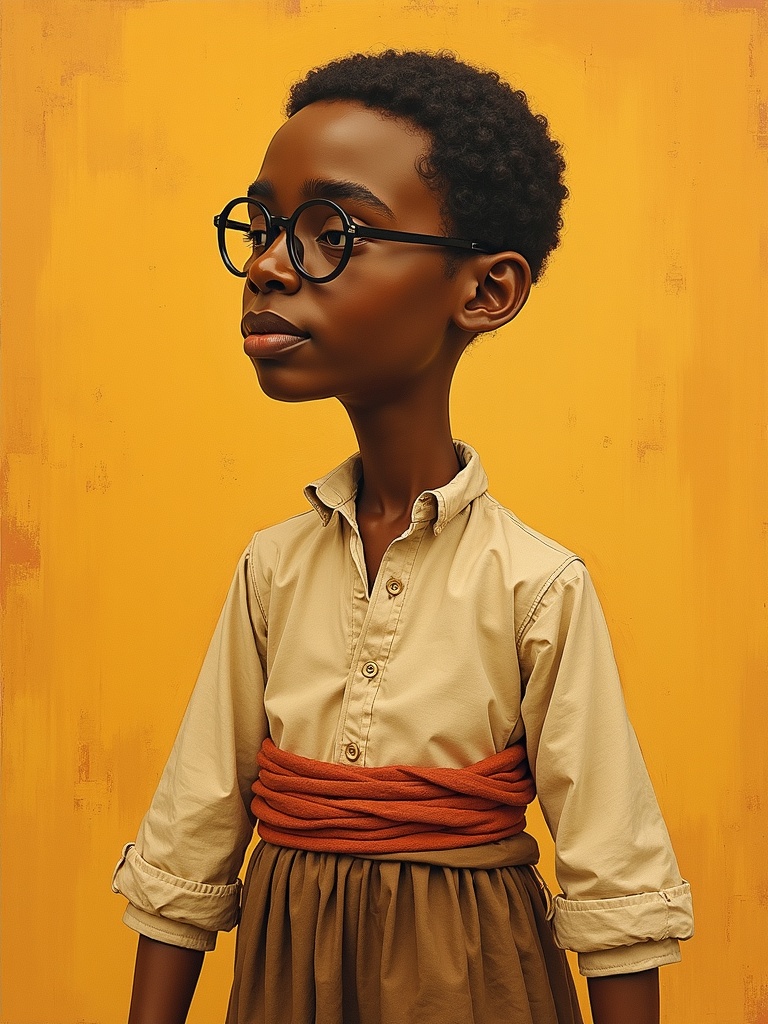
AI design preview — not a photo of the finished handmade doll
Liberation Thinker & Agronomist
Amílcar Cabral
Before he led a revolution, Amílcar Cabral measured soil and counted seeds — and he insisted that a people's own culture is a weapon no empire can confiscate.
- People
- Bissau-Guinean / Cape Verdean
- Country
- Guinea-Bissau
- Region
- West Africa
- Era
- 1924–1973
- Theme
- Liberation Thinker & Agronomist
⚖ A respectful concept
Amílcar Cabral is a documented historical figure who died in 1973; this doll is a respectful homage, not an exact likeness, and the quotes used are real and attributed to sources. He is shown with dignity as a thinker, teacher and agronomist — never in violence, suffering or death. The record honours his memory and the institutions that carry it (the Amílcar Cabral Foundation, the governments of Guinea-Bissau and Cape Verde); it is a respectful draft offered for review, not a finished or official product.
Make your own
Design your Amílcar Cabral
Pick a garment, a hairstyle and a scene, enter the PIN and generate a fresh image of Amílcar Cabral with AI.
⚖ AI homage concept — not a likeness of the real person.
Each image is generated live with fal.ai.
Generated images
AI design preview — not a photo of the finished handmade doll
No images generated yet — be the first.
Tradition & Origin
Before he led a revolution, Amílcar Cabral measured soil and counted seeds — and he insisted that a people's own culture is a weapon no empire can confiscate.
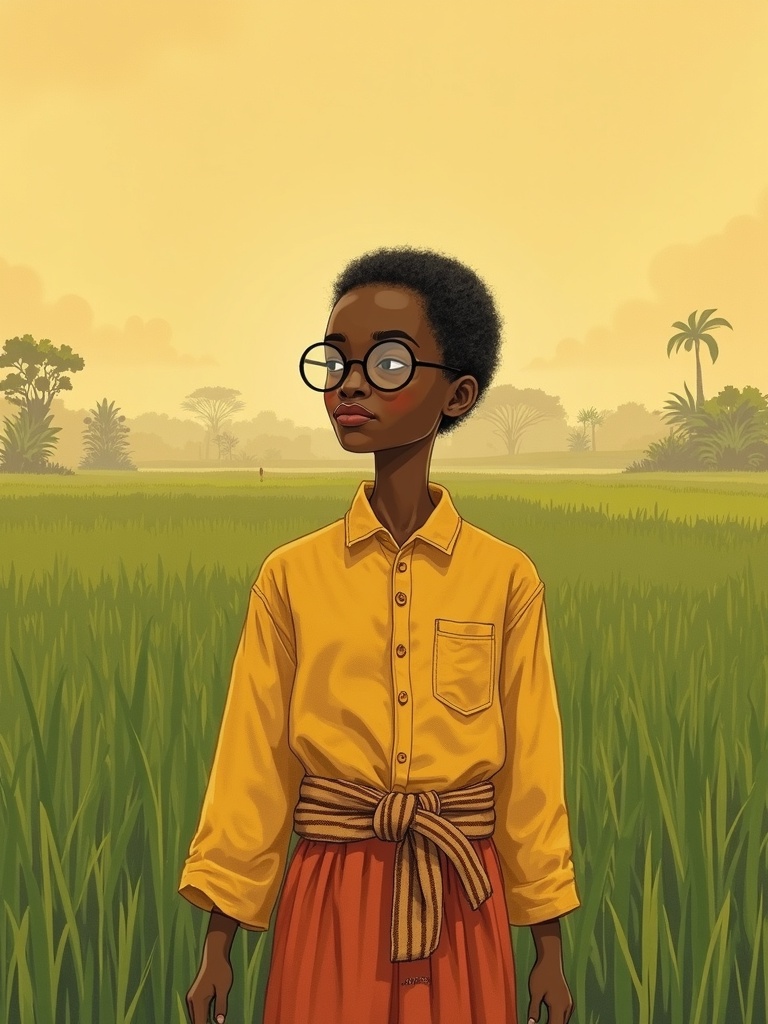
Cabral was born on 12 September 1924 in Bafatá, in Portuguese Guinea (today Guinea-Bissau), to Cape Verdean parents — a school teacher and a shopkeeper. That double belonging shaped him: he would devote his life to freeing two Portuguese colonies at once, the mainland of Guinea-Bissau and the Atlantic islands of Cape Verde. He studied agronomy in Lisbon, graduating as an engineer-agronomist in 1952, and there helped found a centre of African studies with fellow students from Portugal's colonies, among them the future Angolan president Agostinho Neto.
Sent back to survey the farmland of Portuguese Guinea, Cabral travelled more than 60,000 kilometres across the territory from 1953 — an agricultural census that became a political education. He came to know its rivers, rice paddies and many peoples, and he understood that liberation would have to grow from the villages up. In 1956 he founded the PAIGC, the African Party for the Independence of Guinea and Cape Verde. After peaceful protest met deadly force, the movement began an armed struggle in 1963 that would become one of the most successful wars of independence in modern African history.
Cabral built far more than an army. In the liberated zones the PAIGC ran village schools, mobile clinics, courts and 'people's stores' — a society taking shape inside a war. He was also one of Africa's deepest thinkers on culture. In his 1970 Syracuse lecture National Liberation and Culture, he argued that 'national liberation is necessarily an act of culture', and he called on Africans to 'return to the source' of their own languages, music and dignity. His honesty was as famous as his theory: 'Tell no lies, claim no easy victories.'
He did not live to see the flag raised. On 20 January 1973 he was assassinated in Conakry; eight months later, on 24 September 1973, the PAIGC declared Guinea-Bissau independent, recognised internationally in 1974, with Cape Verde following in 1975. Fifty years on, his birth centenary in 2024 was marked across Guinea-Bissau and Cape Verde and noted by UNESCO — proof that the ideas he planted still grow.
Timeline
- 1924Born on 12 September in Bafatá, Portuguese Guinea, to Cape Verdean parents.
- 1952Graduates as engineer-agronomist from the Instituto Superior de Agronomia in Lisbon.
- 1953Begins an agricultural census of Portuguese Guinea, travelling over 60,000 km.
- 1956Founds the PAIGC to win independence for Guinea and Cape Verde.
- 1963The armed liberation struggle begins; the PAIGC builds schools and clinics in liberated zones.
- 1973Assassinated in Conakry on 20 January; Guinea-Bissau declares independence in September.
Did you know?
- Being an agronomist, Cabral trained his guerrillas to teach farmers better growing techniques — so the same fighters who carried rifles also carried seeds.DetailsEN
- In the areas the PAIGC liberated, it built schools, mobile clinics and 'people's stores', running a government before independence had even arrived.DetailsEN
- His most quoted rule — 'Tell no lies, claim no easy victories' — asked his own movement to admit difficulties and mistakes rather than pretend.DetailsEN
- Cabral was assassinated in January 1973, but Guinea-Bissau declared independence just eight months later, in September 1973.DetailsEN
He counted the seeds, walked the land, and trusted that freedom — like a harvest — belongs to those who tend it honestly.
Values & Capabilities
Capabilities
◆◆◆◆◆ shows how central a gift is — five diamonds mark a signature strength, fewer mark a supporting one.
He turned the patience of an agronomist into a method for liberating two nations.
He walked and rode across his whole country listening before he ever led it.
He argued that a people's own culture is a weapon no empire can take away.
In the liberated zones he built schools, clinics and people's stores before independence even came.
His most famous rule asked his people to face hard truths instead of pretending.
Development
1 of 6 stages unlocked
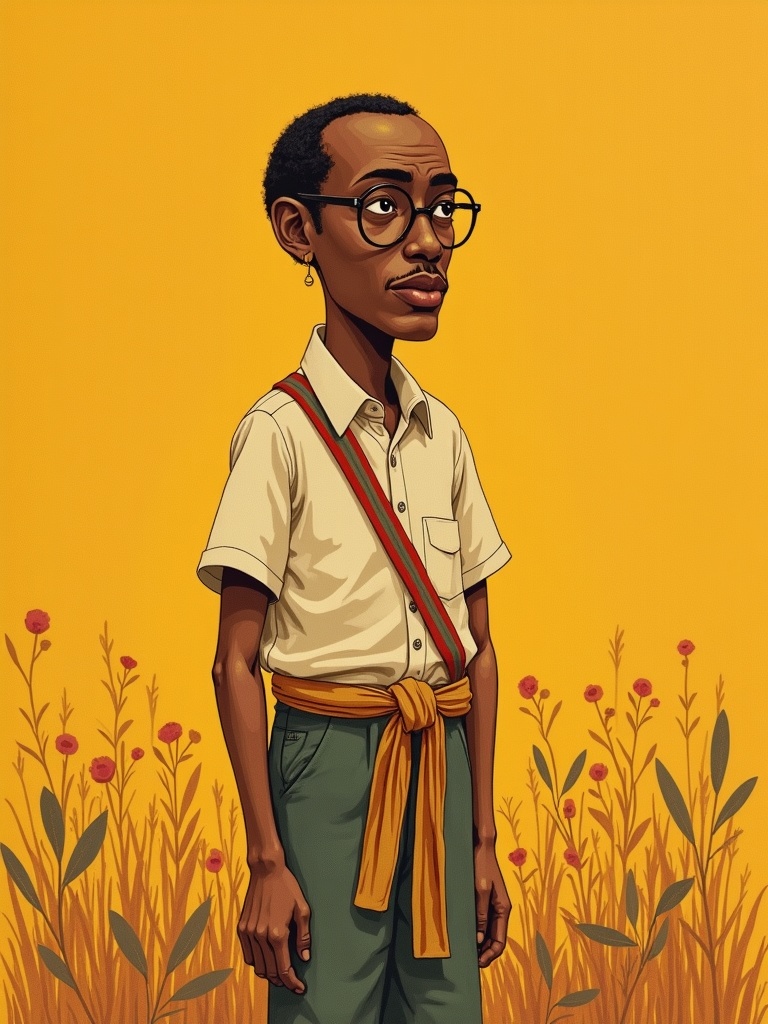
Born in 1924 in Bafatá to Cape Verdean parents, he grew up between two homelands he would one day help to free.
Answer all three to unlock this stage.
Unlock the previous stage first.
Unlock the previous stage first.
Unlock the previous stage first.
Unlock the previous stage first.
Crafting the doll
The doll is built from honest, natural materials in Cabral's own colours: indigo-blue and cream cotton echoing the strip-woven pano de pente / panu di pinti of Guinea-Bissau and the panu di téra of Cape Verde, with touches of red and gold. Real strip-woven geometric bands (woven on a narrow horizontal loom) trim the cloth, and the signature attribute is a tiny stitched open book bearing the line 'Tell no lies, claim no easy victories', paired with a small seed pouch for the agronomist. A small education card tucked behind the doll tells his honest story. Sizes Classic 32 / Kidogo 18–20 / Shule 28. A share of proceeds supports literacy and cultural-heritage projects in Guinea-Bissau and Cape Verde.
How this doll is made
Cabral's look grows from the material culture of Guinea-Bissau and Cape Verde — strip-woven indigo cloth, the plain field-dress of an agronomist, and the quiet emblems of a teacher and reader.
- Garments 3
- Accessories 3
- Materials 2
- Techniques 2
Garments
- Panu di Pinti clothCeremonial strip-woven cloth of Guinea-Bissau in indigo, white and red geometric bands, draped for dignity.DetailsEN
- Field shirt & capSimple light cotton field shirt with rolled sleeves and a soft cap, the working dress of the census agronomist.DetailsEN
- Pano d'Obra wrapCape Verdean panu di téra strips (15–20 cm teadas) in indigo and white, sewn edge to edge.DetailsEN
Accessories
- Round spectaclesSmall round wire-frame glasses, the quiet emblem of the reader and thinker.DetailsEN
- Seed pouch & spadeA small cloth seed pouch and hand spade, signs of the agronomist who taught farming to his troops.DetailsEN
- Open book of maximsA tiny stitched open book bearing 'Tell no lies, claim no easy victories'.DetailsEN
Materials
How it's made
Every doll is sewn by hand from natural materials — built to last a lifetime and to be repaired, not replaced. Here is the shopping list and the work steps. Sizes: Classic 32 cm (heirloom) · Kidogo 18–20 cm (toddlers, no small parts) · Shule 28 cm (school edition).
Shopping list
- Natural cotton or linen for the body (skin tone), ~0.5 m
- Wool or cotton stuffing — no plastic
- Cotton thread and embroidery floss in matching colours
- Garment fabric in this doll's colours (see the fabrics above)
- Yarn for the hairstyle
- Beads, cowrie shells and trims as shown
- Sharps and embroidery needles, pins, fabric scissors, fabric marker
Work instructions
- Trace and cut the body pattern at your chosen size (Classic 32 cm / Kidogo 18–20 cm / Shule 28 cm).
- Sew the body pieces right sides together, leave an opening, turn and stuff firmly with natural fibre, then close by hand.
- Embroider the face gently and with dignity — no plastic parts for the toddler line.
- Make the hair from yarn following the chosen hairstyle and attach it securely.
- Cut and sew the garment from this doll's fabric, then dress the doll.
- Add the beadwork, shells, trims and any attribute by hand.
- Check every seam and reinforce it — the doll should be lifelong and repairable, with no loose small parts for small children.
Origin & Ethics
How we know this
This record is well documented: Cabral is one of the most studied African liberation figures, and the dates, the 60,000 km census, the 1956 founding of the PAIGC, the 1970 culture speech and his 1973 assassination are all sourced below. The quotes used are real and attributed. Interpretations of his politics differ between sources, which we name rather than hide; nothing here depicts violence or his death.
This homage is offered for review by the cultural memory-keepers of Cabral's legacy — the Amílcar Cabral Foundation, and the educational and heritage bodies of Guinea-Bissau and Cape Verde, both of which declared and celebrated his 2024 centenary, with UNESCO including the commemoration on its calendar. As a documented recent figure, the doll uses only attributed quotes and respectful homage rather than exact likeness, in the spirit of a draft awaiting the consent and corrections of these institutions and his family.
Sources
- Amílcar Cabral — Wikipedia
- Britannica — Amílcar Lopes Cabral, biography
- Jacobin — The Socialist Agronomist Who Helped End Portuguese Colonialism
- Cabral, 'National Liberation and Culture' (1970) — Marxists Internet Archive
- Tricontinental — The PAIGC's Political Education for Liberation in Guinea-Bissau, 1963–74
- Liberation School — Amilcar Cabral and the national liberation movement of Guinea-Bissau and Cape Verde
- Janata Weekly — 'Tell No Lies, Claim No Easy Victories': Remembering Amílcar Cabral
- Bantumen — Panu di Pinti, cultural and artisanal wealth of Guinea-Bissau
- Leila Atelier — Pano d'Obra of Cabo Verde
- All-African People's Revolutionary Party — Amílcar Cabral Centenary