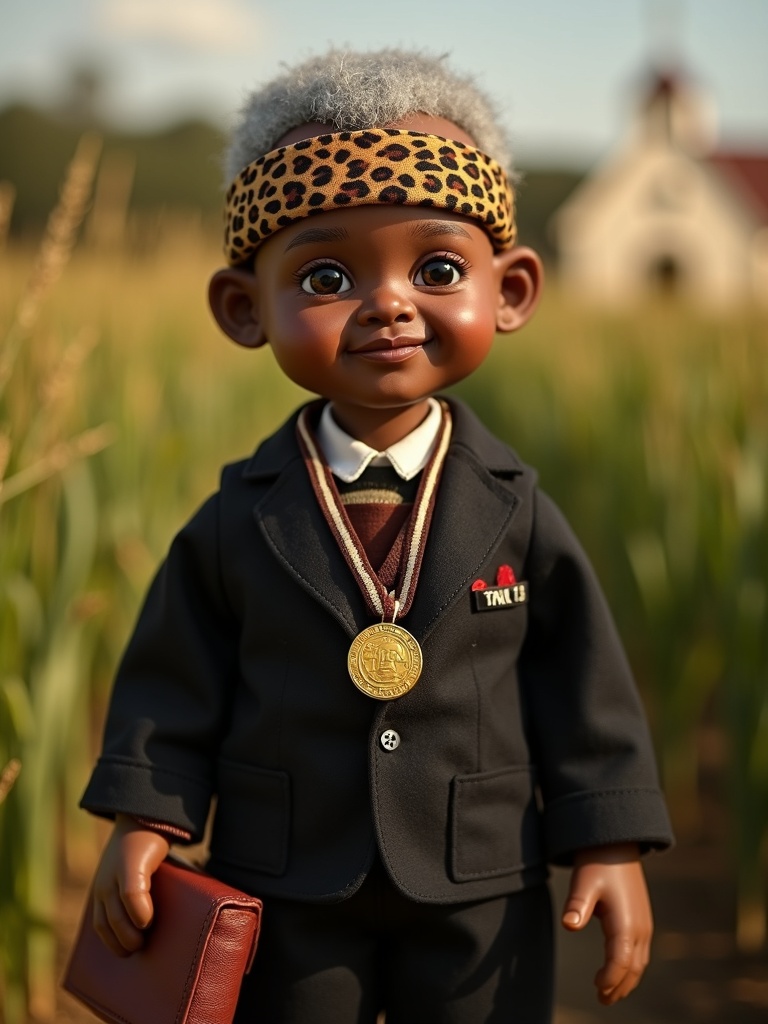
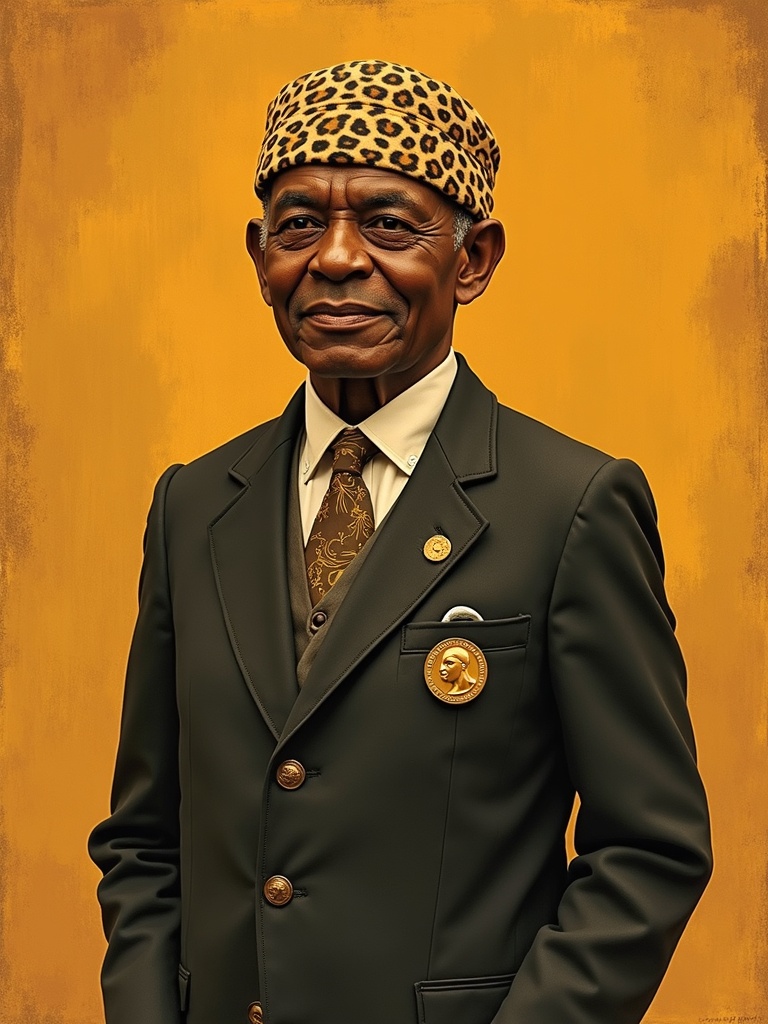
AI design preview — not a photo of the finished handmade doll
Nonviolence & the Nobel Peace Prize
Albert Luthuli
Albert Luthuli was a Zulu chief who gave up his title rather than betray his people — and became the first African ever to win the Nobel Peace Prize, all without ever raising a fist.
- People
- Zulu, South Africa
- Country
- South Africa
- Region
- Southern Africa
- Era
- 1898–1967
- Theme
- Nonviolence & the Nobel Peace Prize
⚖ A respectful concept
Albert Luthuli is a real, recent historical figure honoured here as a respectful homage, never an exact likeness. Any words placed in his mouth are documented public quotes with sources — chiefly from his autobiography and Nobel address — and his story is told with full dignity, never through violence or suffering. A finished figure honouring him would be made only with the consent of his family and the Luthuli Museum / Groutville community who keep his memory. This record is a respectful draft for review, not a finished product.
Make your own
Design your Albert Luthuli
Pick a garment, a hairstyle and a scene, enter the PIN and generate a fresh image of Albert Luthuli with AI.
⚖ AI homage concept — not a likeness of the real person.
Each image is generated live with fal.ai.
Generated images
AI design preview — not a photo of the finished handmade doll
No images generated yet — be the first.
Tradition & Origin
Albert Luthuli was a Zulu chief who gave up his title rather than betray his people — and became the first African ever to win the Nobel Peace Prize, all without ever raising a fist.
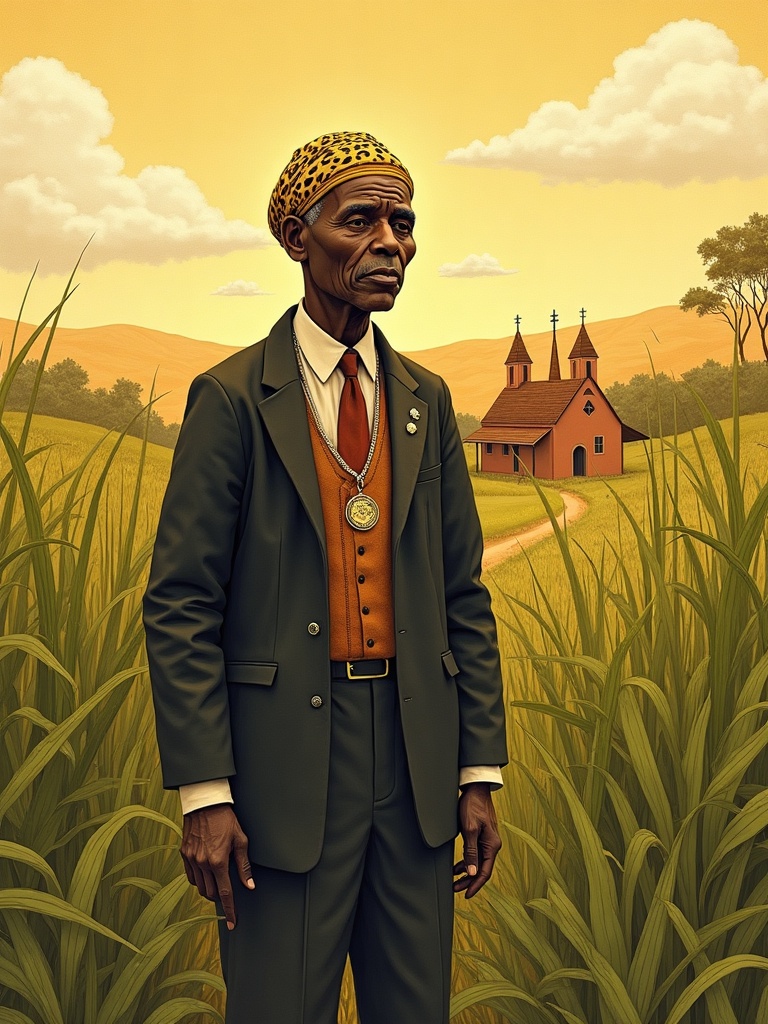
Albert John Mvumbi Luthuli was born around 1898 near Bulawayo, in what is now Zimbabwe, into a family of Zulu chiefs. After his father died he was raised at Groutville, a mission village among the sugar-cane fields of Natal, South Africa. He trained as a teacher and taught at Adams College, and grew into a devout Christian and lay preacher. His praise-name, Mvumbi, means ‘continuous rain’ — a sign of steady blessing.
In 1936 the people of the Umvoti Mission Reserve elected him their chief. He left the better-paid life of teaching to serve them, becoming known simply as ‘Chief Luthuli’. As South Africa’s government built the harsh system of apartheid, which divided people by the colour of their skin, Luthuli joined the African National Congress. In 1952 he was elected its president-general. When the government told him to choose between his chieftainship and the ANC, he refused to abandon his people — and was dismissed as chief. ‘The road to freedom,’ he said, ‘is via the cross.’
Inspired by Mahatma Gandhi, Luthuli insisted on nonviolence. He helped lead the peaceful Defiance Campaign and later told his country’s story plainly in his autobiography, Let My People Go. The government tried to silence him with repeated banning orders that confined him to Groutville — but in 1960 the world honoured his peaceful struggle with the Nobel Peace Prize, the first ever awarded to an African. He flew to Oslo to accept it in December 1961. He died in July 1967 near a railway bridge close to his home; the apartheid government called it an accident, but that account has been doubted ever since.
Timeline
- 1898Born near Bulawayo, Rhodesia, into a family of Zulu chiefs; raised at Groutville mission in Natal.
- 1936Elected and inaugurated chief of the Umvoti Mission Reserve at Groutville.
- 1952Elected president-general of the ANC; dismissed as chief for supporting the Defiance Campaign.
- 1960Awarded the Nobel Peace Prize — the first African ever to receive it.
- 1961Travels to Oslo to accept the prize on 10 December; publishes 'Let My People Go' the following year.
- 1967Dies in July near a railway bridge close to his Groutville home; the cause is long disputed.
Did you know?
- When the apartheid government ordered him to give up either his chieftainship or the ANC, Luthuli refused to abandon his people — so they stripped him of the title, but his community went on calling him ‘Chief’ for the rest of his life.DetailsEN
- He had to ask the government for special permission just to leave his own village, and he travelled to faraway Oslo to receive his Nobel Peace Prize in December 1961.DetailsEN
- Luthuli explained his peaceful path with the words ‘the road to freedom is via the cross’ — tying his struggle for justice to his deep Christian faith.DetailsEN
- More than fifty years after his death, South African courts reopened the inquest into how he really died in 1967 — because so many people had never believed the apartheid government’s account.DetailsEN
He showed that you can stand utterly firm against a wrong and still keep your hands — and your heart — open.
Values & Capabilities
Capabilities
◆◆◆◆◆ shows how central a gift is — five diamonds mark a signature strength, fewer mark a supporting one.
He led millions in standing up against injustice without ever raising a fist, choosing peaceful protest over revenge.
He gave a clear, dignified voice to people who were told they did not count, and asked the world to listen.
When the government told him to give up either his title or his cause, he gave up the title and kept his people.
A devoted Christian and lay preacher, he drew his calm strength from his faith and his belief in every person's worth.
The whole world honoured his peaceful struggle, and he carried that honour home to his banned and watched village.
Development
1 of 5 stages unlocked
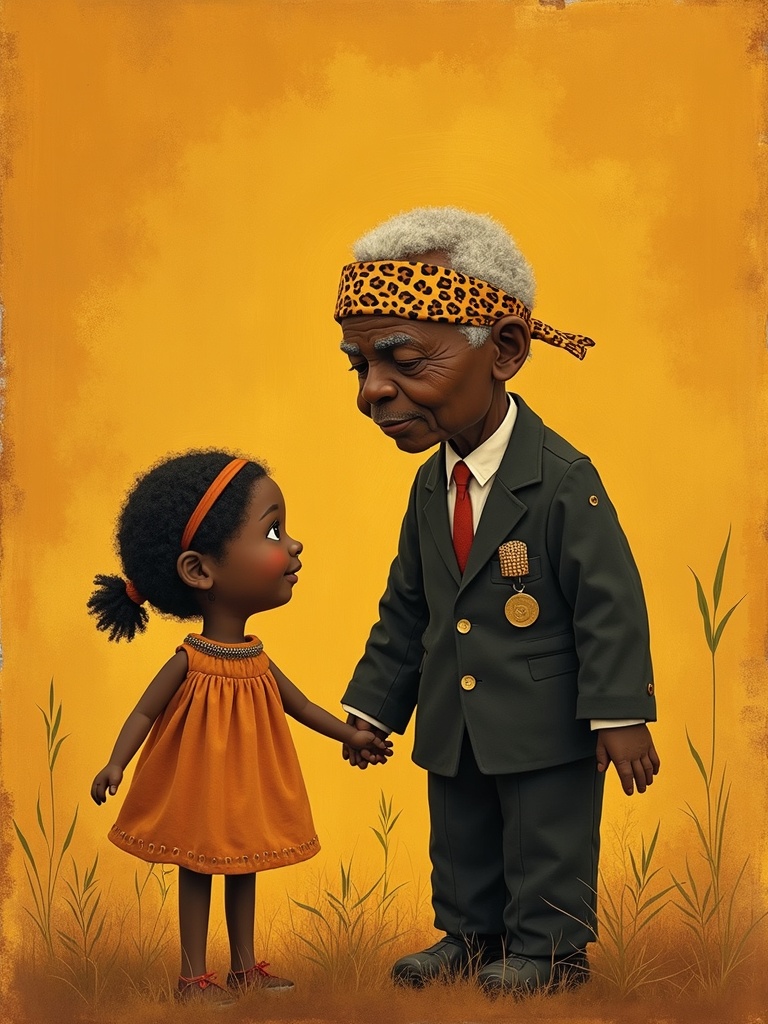
Born into a line of Zulu chiefs, he trained as a teacher and taught at Adams College in Natal.
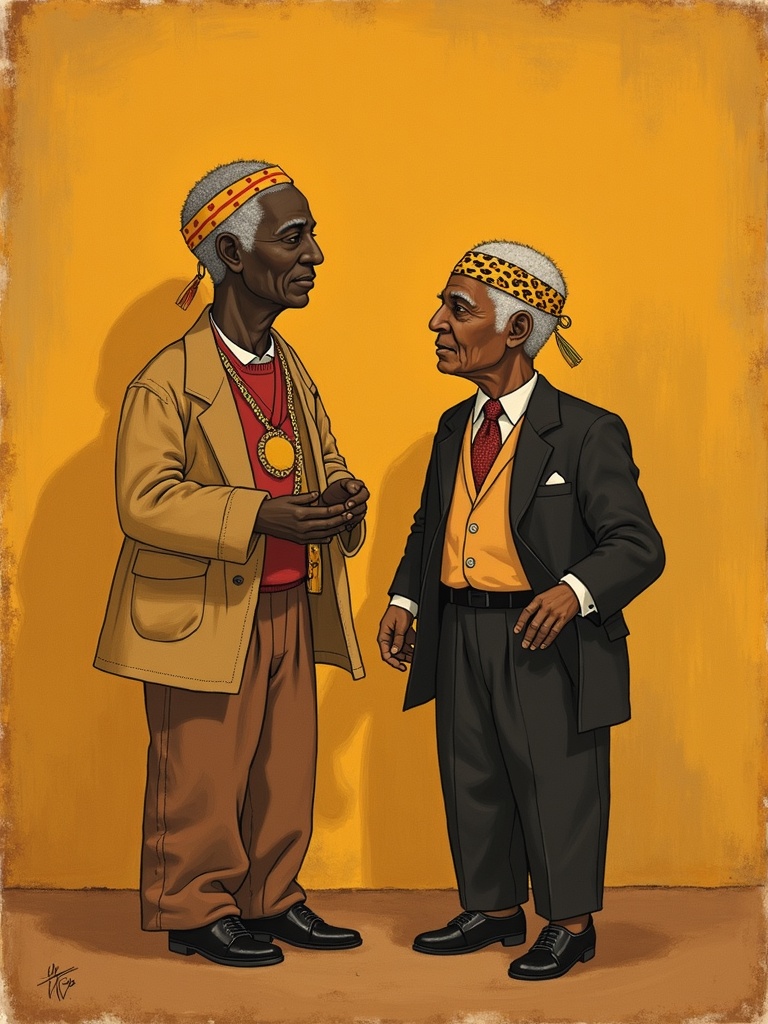
Answer all three to unlock this stage.
Unlock the previous stage first.
Unlock the previous stage first.
Unlock the previous stage first.
Crafting the doll
The doll's main look blends two worlds Luthuli lived in: the neat dark Sunday suit of a Christian teacher and lay preacher, and the heritage of a Zulu chief — a leopard-print fabric headband (umqhele), a calf-skin ibheshu apron and beaded ubuhlalu necklaces in green, red, black and white, each colour carrying meaning. The signature attribute is a small gold peace medallion on a ribbon, paired with a tiny cloth Bible and a carved chief's staff. The education card explains that this is a respectful homage to a real Nobel Peace laureate, never an exact likeness, and that the leopard print is woven fabric, not real fur. Sizes Classic 32 / Kidogo 18–20 / Shule 28. A share of proceeds supports peace education and South African heritage projects.
How this doll is made
A respectful homage to Albert Luthuli, the Zulu chief, Christian teacher and 1960 Nobel Peace laureate: his look blends the neat dark suit of a mission-school teacher and lay preacher with the heritage regalia of a Zulu chief — a leopard headband, calf-skin apron and meaningful beadwork — all rendered in safe fabric, never real fur or skin.
- Garments 2
- Accessories 4
- Materials 2
- Techniques 2
Garments
- Dark teacher's / preacher's suitA plain dark mid-century suit with white shirt and tie — the everyday dress of a mission-school teacher and Congregationalist lay preacher, the world Luthuli came from before he became chief.DetailsEN
- Ibheshu (calf-skin apron)The ibheshu is the men's apron worn at the waist in Zulu dress, made from soft calf-skin; older men wear a longer version. Worn here as a sign of his Zulu heritage.DetailsEN
Accessories
- Umqhele (leopard headband)A leopard-skin headband marks chiefly rank in Zulu dress — only the king, izinduna (generals) and chiefs may wear leopard, a chief often only as a headband. Shown as printed fabric, not real fur.DetailsEN
- Ubuhlalu beadwork necklacesBeaded necklaces whose colours carry meaning — green for new life, red for life's strength, black for resting, white for purity — a Zulu 'language' worn at the chest.DetailsEN
- Nobel peace medallionA small gold-coloured medal on a ribbon, a respectful (non-exact) nod to the 1960 Nobel Peace Prize, the first ever given to an African.DetailsEN
- Chief's staff (knobkerrie / iwisa)A short carved wooden staff carried as a sign of a chief's office and dignity, held upright — a mark of authority, not a weapon.DetailsEN
Materials
- Glass seed beadsSmall glass seed beads, threaded into the geometric patterns of ubuhlalu, in the colours that give Zulu beadwork its meaning.DetailsEN
- Tanned hide (isidwaba family)Traditional Zulu skirts and aprons are made from carefully prepared cowhide or goatskin — sun-dried, soaked, scraped, blackened with oil and ash, then softened — the same craft tradition behind the ibheshu.DetailsEN
Techniques
- Hide curing and softeningSkins for Zulu garments are sun-dried for days, soaked for a week, scraped of hair, dried again on milkwood, blackened with oil and wood ash, then rubbed with fat to soften and waterproof them.DetailsEN
- Zulu beadwork stringing (isishunka palette)Seed beads are strung and woven into bands and panels following set palettes such as isishunka (white, light blue, dark green, pale yellow, pink, red, black), each colour combination sending a message — beadwork as communication.DetailsEN
How it's made
Every doll is sewn by hand from natural materials — built to last a lifetime and to be repaired, not replaced. Here is the shopping list and the work steps. Sizes: Classic 32 cm (heirloom) · Kidogo 18–20 cm (toddlers, no small parts) · Shule 28 cm (school edition).
Shopping list
- Natural cotton or linen for the body (skin tone), ~0.5 m
- Wool or cotton stuffing — no plastic
- Cotton thread and embroidery floss in matching colours
- Garment fabric in this doll's colours (see the fabrics above)
- Yarn for the hairstyle
- Beads, cowrie shells and trims as shown
- Sharps and embroidery needles, pins, fabric scissors, fabric marker
Work instructions
- Trace and cut the body pattern at your chosen size (Classic 32 cm / Kidogo 18–20 cm / Shule 28 cm).
- Sew the body pieces right sides together, leave an opening, turn and stuff firmly with natural fibre, then close by hand.
- Embroider the face gently and with dignity — no plastic parts for the toddler line.
- Make the hair from yarn following the chosen hairstyle and attach it securely.
- Cut and sew the garment from this doll's fabric, then dress the doll.
- Add the beadwork, shells, trims and any attribute by hand.
- Check every seam and reinforce it — the doll should be lifelong and repairable, with no loose small parts for small children.
Origin & Ethics
How we know this
This record is well documented. Luthuli's birth (c. 1898), his election as chief of Groutville (1936) and dismissal (1952), his ANC presidency (1952–67), the 1960 Nobel Peace Prize accepted in Oslo in December 1961, and his autobiography 'Let My People Go' (1962) are all confirmed by Nobel, museum and reputable institutional sources. All quoted words are documented public statements. The exact circumstances of his death in July 1967 near a railway bridge remain genuinely disputed: the apartheid-era 'accident' verdict was long doubted, and the inquest was reopened in 2024–2025; we present this honestly via the balance note without any graphic detail.
Because Albert Luthuli is a real, recent historical figure, any finished figure honouring him would be produced only with the consent of his family and the Luthuli Museum at Groutville, which keeps his memory and archives. The Zulu cultural elements — the leopard headband, ibheshu and beadwork — would be shown with guidance from Zulu cultural advisors so that markers of chieftainship are represented respectfully and accurately, with woven fabric standing in for real leopard skin. This record is a respectful draft for review, not a finished product.
Sources
- NobelPrize.org, Albert Lutuli — Facts (1960 Nobel Peace Prize, first African laureate)
- NobelPrize.org, Albert Lutuli — Biographical
- South African History Online, Chief Albert John Mvumbi Luthuli
- Luthuli Museum, Legacy of an African Hero — Nobel Peace Prize 1960
- Encyclopaedia Britannica, Albert John Luthuli — Biography & Facts
- Wikipedia, Albert Luthuli
- Al Jazeera, How did Albert Luthuli, anti-apartheid hero, really die in 1967? (reopened inquest)
- The Conversation, Who was Albert Luthuli? The murdered South African leader who put his people above himself
- Eshowe, Traditional Zulu Clothing (umqhele, ibheshu, leopard skin and chiefly regalia)
- Wikipedia, Isidwaba (Zulu leather skirt; hide preparation)
- Zulu Bead Culture, Symbols and Meanings (ubuhlalu colour meanings)