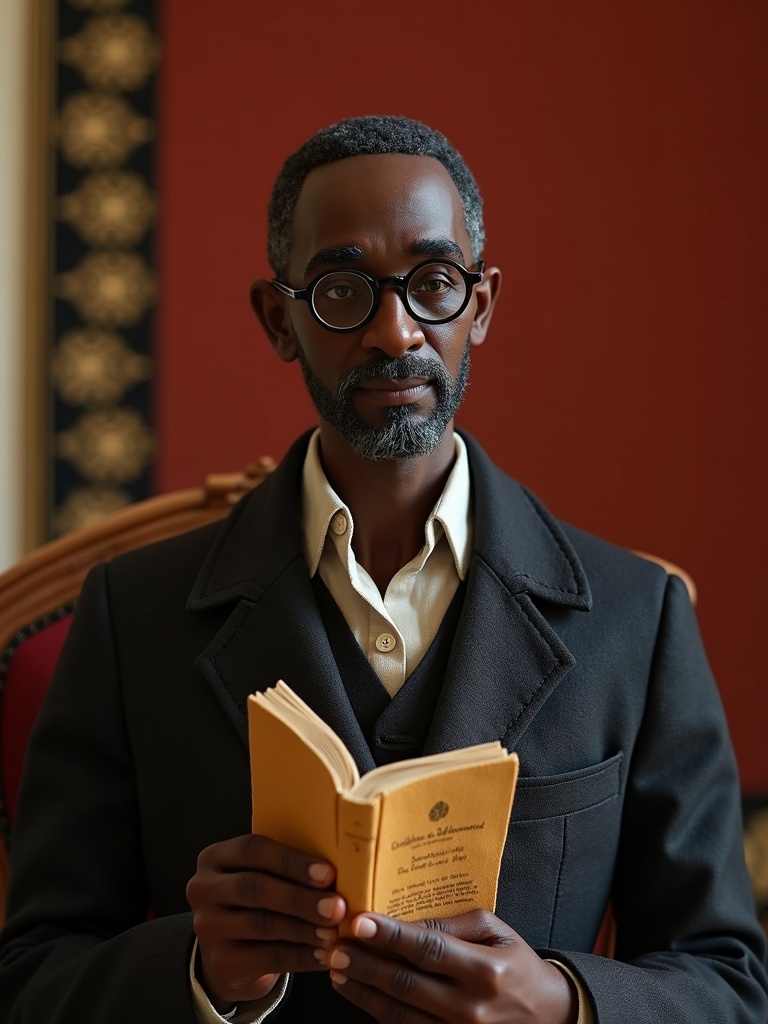
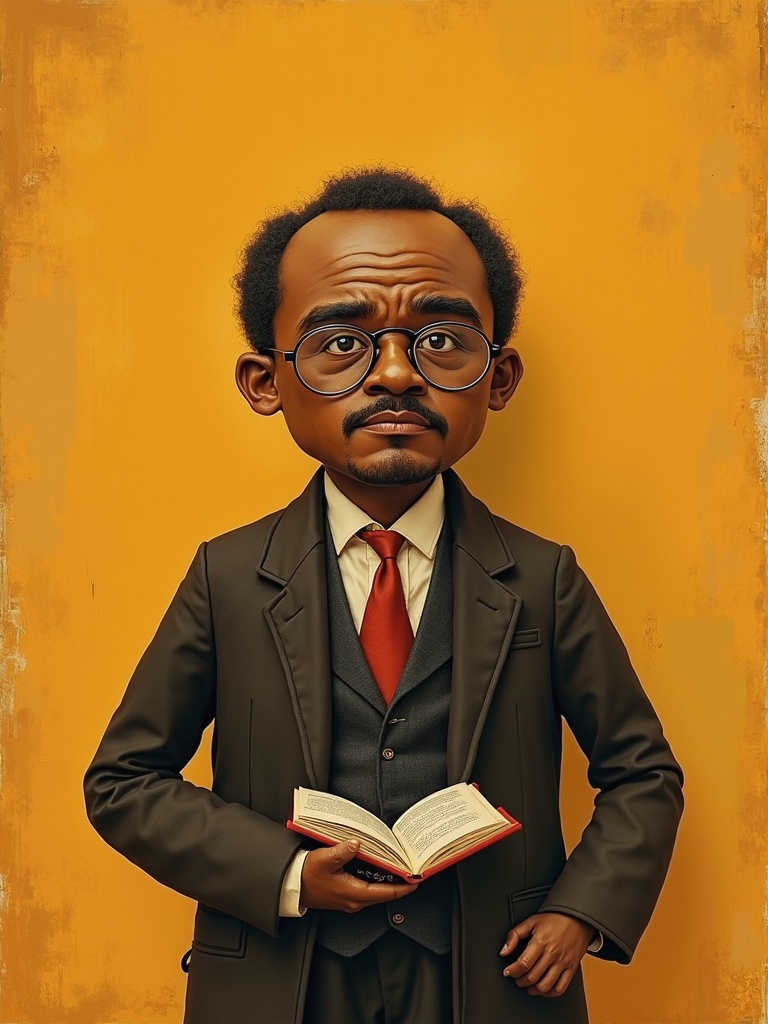
AI design preview — not a photo of the finished handmade doll
Poet & Father of Angola
Agostinho Neto
He was a doctor who studied to heal bodies, a poet who wrote a nation's hope from a prison cell, and the first president of a free Angola — three lives in one man.
- People
- Angolan (Kimbundu)
- Country
- Angola
- Region
- Central Africa
- Era
- 1922–1979
- Theme
- Poet & Father of Angola
⚖ A respectful concept
António Agostinho Neto is a documented historical figure who died in 1979 and is honoured as a national hero of Angola; this doll is a respectful homage, not an exact likeness, and the quotes used are real lines from his published poetry, attributed to their sources. He is shown with dignity as a physician, poet and statesman — never in violence, suffering or death. The record is offered as a respectful draft for the review and consent of his family and the national institutions that carry his memory (the Agostinho Neto Foundation, the Agostinho Neto University and the Angolan state), not as a finished or official product.
Make your own
Design your Agostinho Neto
Pick a garment, a hairstyle and a scene, enter the PIN and generate a fresh image of Agostinho Neto with AI.
⚖ AI homage concept — not a likeness of the real person.
Each image is generated live with fal.ai.
Generated images
AI design preview — not a photo of the finished handmade doll
No images generated yet — be the first.
Tradition & Origin
He was a doctor who studied to heal bodies, a poet who wrote a nation's hope from a prison cell, and the first president of a free Angola — three lives in one man.
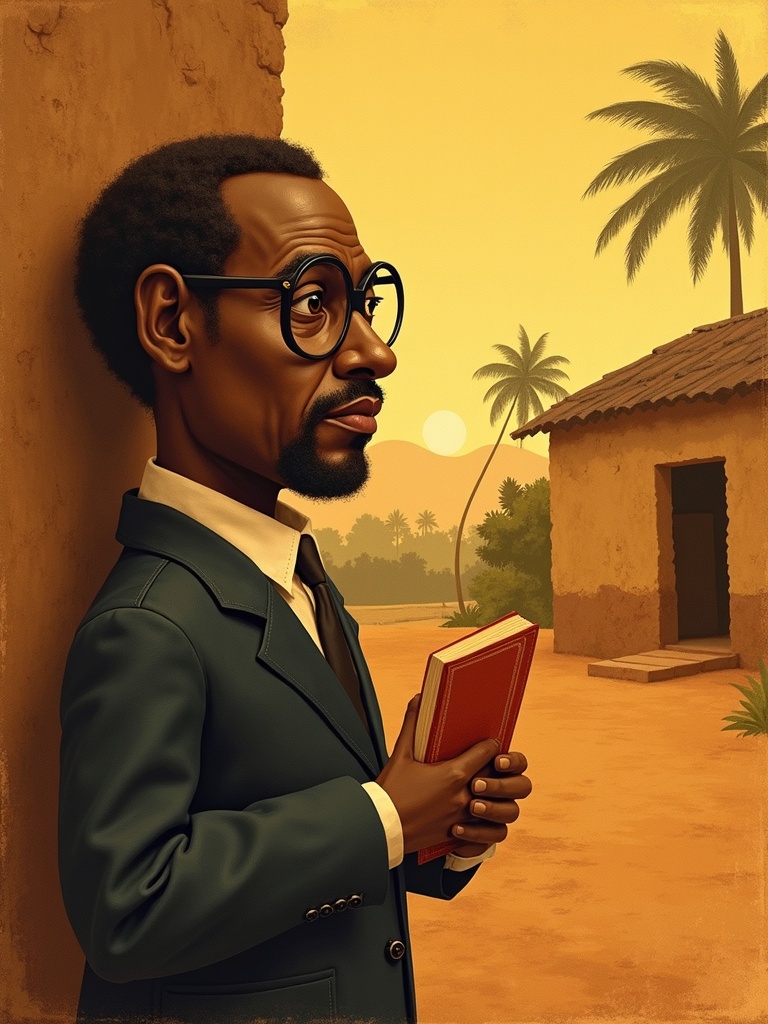
António Agostinho Neto was born on 17 September 1922 in Ícolo e Bengo, near Luanda, the son of two Methodist schoolteachers among the Kimbundu people of north-central Angola. Books and learning shaped him early, and in 1947 a church scholarship carried him to Portugal to study medicine at the universities of Coimbra and Lisbon, where he finally qualified as a physician in 1957.
But Neto was also a poet. In colonial Portugal he joined young Angolans determined to rediscover and honour their own culture, and his writing — sharpened by repeated arrests and imprisonment — became a quiet weapon. Much of his landmark 1974 collection 'Sagrada Esperança' (Sacred Hope) was composed in detention; in the poem 'Havemos de Voltar' ('We Shall Return') he promised exiles that they would come home to the houses, fields and beaches of a free Angola.
In 1962 Neto was elected president of the MPLA, the movement at the heart of Angola's struggle against Portuguese rule. When Portugal's empire collapsed, he stood before his people on 11 November 1975 and proclaimed the independence of the People's Republic of Angola, becoming its first president and the man Angolans call the Father of Modern Angola.
Independence brought no easy peace. That same year Angola plunged into a civil war between former liberation movements — the MPLA, UNITA and the FNLA — each backed by outside Cold War powers, with Cuban troops and Soviet support helping Neto's government hold the capital. He led the young, embattled nation as a one-party Marxist state until cancer took his life in Moscow on 10 September 1979. His birthday, 17 September, is now Angola's National Heroes' Day.
Timeline
- 1922Born on 17 September in Ícolo e Bengo, Portuguese Angola, to Methodist teacher parents.
- 1947Travels to Portugal on a church scholarship to study medicine.
- 1957Qualifies as a physician and returns to practise among his own people.
- 1962Elected president of the MPLA, the movement leading Angola's independence struggle.
- 1974Publishes 'Sagrada Esperança' (Sacred Hope), his landmark collection of poems.
- 1975Proclaims Angola's independence on 11 November and becomes its first president.
- 1979Dies of cancer in Moscow on 10 September; honoured as the Father of Modern Angola.
Did you know?
- Neto qualified as a medical doctor before he led a country — he first set out to heal people one patient at a time.DetailsEN
- Some of his most loved poems were written while he was a prisoner of the Portuguese colonial authorities.DetailsEN
- The Nigerian writer Chinua Achebe admired him so much that he wrote a poem simply titled 'Agostinho Neto'.DetailsEN
- The day Angola became free, 11 November 1975, it also slid into a long civil war among rival liberation movements backed by Cold War superpowers.DetailsEN
Some healers reach for a stethoscope, and some reach for a pen — Agostinho Neto reached for both.
Values & Capabilities
Capabilities
◆◆◆◆◆ shows how central a gift is — five diamonds mark a signature strength, fewer mark a supporting one.
He trained as a physician to heal bodies, then set out to heal a whole nation.
From a prison cell he wrote poems that became a country's heartbeat.
His most famous refrain promised exiles they would one day come home free.
He stood before his people and declared a brand-new nation into being.
He dreamed of weaving Angola's many peoples into a single shared home.
Development
1 of 6 stages unlocked
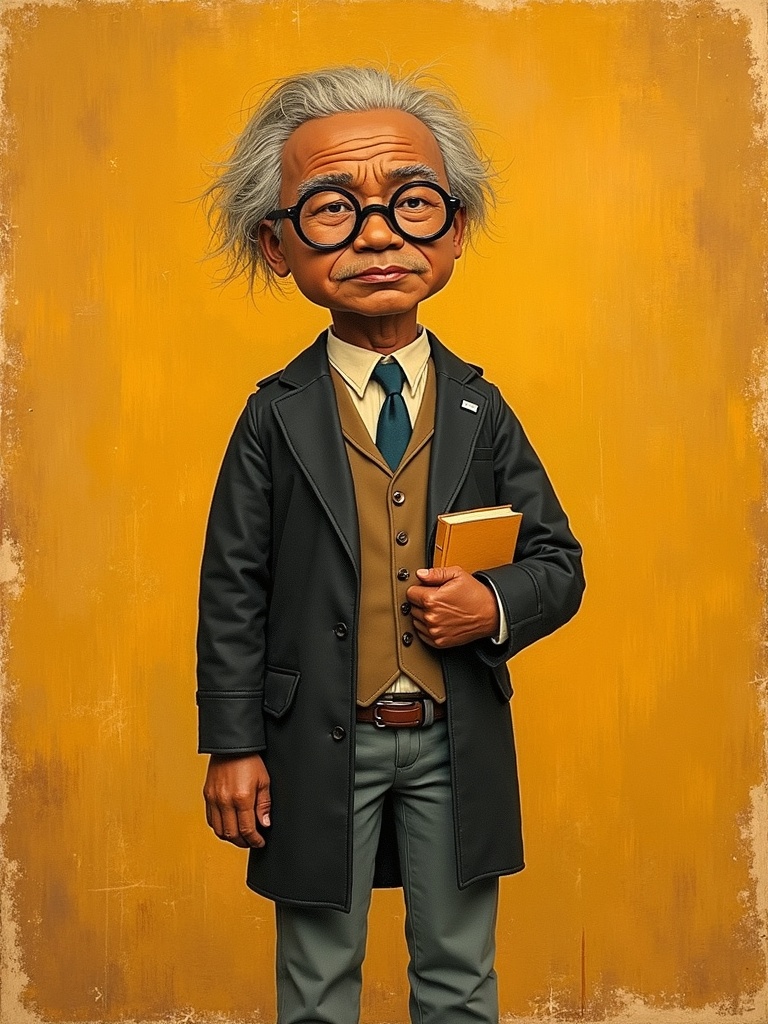
Born in 1922 to two Methodist teachers, he grew up among books and the rhythms of his Kimbundu homeland.
Answer all three to unlock this stage.
Unlock the previous stage first.
Unlock the previous stage first.
Unlock the previous stage first.
Unlock the previous stage first.
Crafting the doll
The doll is built from honest, natural materials in Angola's own colours: deep red, black and gold cotton echoing the bold samakaka cloth, whose black-red-white geometric prints carry traditional Angolan symbols, set against a parchment tone for the poet. A small white physician's coat and round wire spectacles mark the doctor, while the signature attribute is a tiny stitched book of poems reading 'Sagrada Esperança'. A small education card tucked behind the doll tells his honest story. Sizes Classic 32 / Kidogo 18–20 / Shule 28. A share of proceeds supports literacy, libraries and health projects in Angola.
How this doll is made
Neto's look grows from Angolan material culture and his own twin callings — the bold geometric samakaka cloth of his country, the plain coat of a physician, and the quiet emblems of a reader and poet.
- Garments 3
- Accessories 3
- Materials 2
- Techniques 2
Garments
- Samakaka clothBold Angolan cotton printed in black, red and white geometric symbols, draped for dignity over plain clothing.DetailsEN
- Physician's white coatA simple white cotton doctor's coat marking the man who trained to heal his people.DetailsEN
- Statesman's sashA narrow ceremonial sash in red, black and gold, the colours associated with independent Angola.DetailsEN
Accessories
- Round spectaclesSmall round wire-frame glasses, the shared emblem of the doctor, reader and poet.DetailsEN
- Book of Sacred HopeA tiny stitched book of poems lettered 'Sagrada Esperança', his landmark 1974 collection.DetailsES
- StethoscopeA small cloth-and-thread stethoscope, sign of the physician who chose his people over a private practice.DetailsEN
Materials
How it's made
Every doll is sewn by hand from natural materials — built to last a lifetime and to be repaired, not replaced. Here is the shopping list and the work steps. Sizes: Classic 32 cm (heirloom) · Kidogo 18–20 cm (toddlers, no small parts) · Shule 28 cm (school edition).
Shopping list
- Natural cotton or linen for the body (skin tone), ~0.5 m
- Wool or cotton stuffing — no plastic
- Cotton thread and embroidery floss in matching colours
- Garment fabric in this doll's colours (see the fabrics above)
- Yarn for the hairstyle
- Beads, cowrie shells and trims as shown
- Sharps and embroidery needles, pins, fabric scissors, fabric marker
Work instructions
- Trace and cut the body pattern at your chosen size (Classic 32 cm / Kidogo 18–20 cm / Shule 28 cm).
- Sew the body pieces right sides together, leave an opening, turn and stuff firmly with natural fibre, then close by hand.
- Embroider the face gently and with dignity — no plastic parts for the toddler line.
- Make the hair from yarn following the chosen hairstyle and attach it securely.
- Cut and sew the garment from this doll's fabric, then dress the doll.
- Add the beadwork, shells, trims and any attribute by hand.
- Check every seam and reinforce it — the doll should be lifelong and repairable, with no loose small parts for small children.
Origin & Ethics
How we know this
This record is well documented: Neto's medical training, his poetry, the 1974 'Sagrada Esperança', the 11 November 1975 proclamation of independence and his 1979 death are all sourced below, and the quoted lines are real, attributed verse. His politics — a one-party Marxist state born into a civil war fought by rival movements and Cold War backers — are read differently by different sources, which we name plainly rather than smooth over. Nothing here depicts violence or his death.
This homage is offered for the review and consent of the memory-keepers of Neto's legacy — his family, the Agostinho Neto Foundation, the Agostinho Neto University in Luanda, and the Angolan state, which honours him as a national hero and marks his birthday as National Heroes' Day. As a documented recent figure, the doll uses only attributed quotes from his published poetry and respectful homage rather than exact likeness, in the spirit of a draft awaiting the corrections of these institutions and his family.
Sources
- Agostinho Neto — Wikipedia
- Agostinho Neto — Britannica
- Agostinho Neto (1922–1979) — BlackPast.org
- História, política e prática poética em Angola: Agostinho Neto e Sagrada Esperança — Dialnet
- 'Havemos de Voltar' / 'We Shall Return' by Agostinho Neto — African Heritage
- The Angola Crisis 1974–75 — U.S. Department of State, Office of the Historian
- Angolan Civil War — Wikipedia
- Cultural Wear and Fabrics from Southern Africa (Samakaka) — Taste of Southern Africa
- Kongo textiles (raffia weaving of Kongo and Mbundu peoples) — Wikipedia